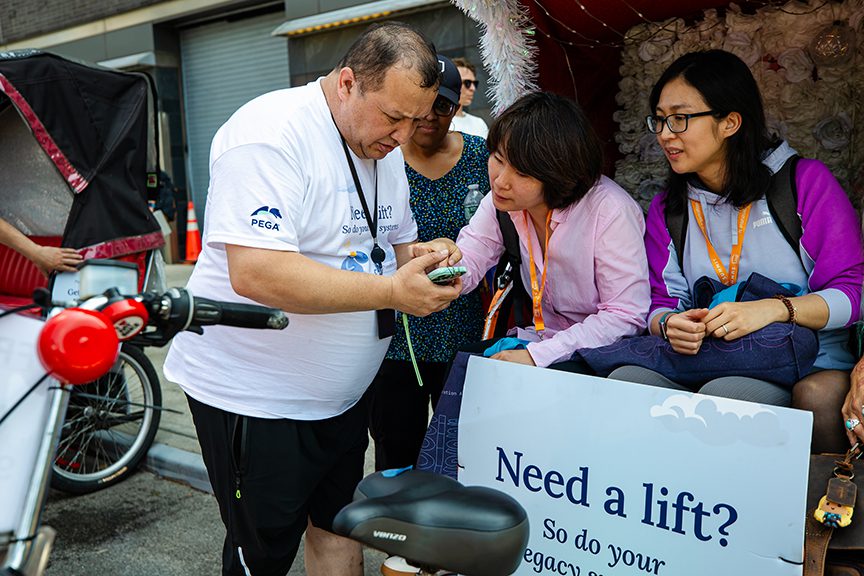
New York City pedicabs operate in a unique advertising environment. They move slowly through the most photographed, most pedestrian-dense zones in Manhattan, at eye level with the people walking alongside them, in contexts where conventional outdoor advertising either cannot reach (inside Central Park) or faces extreme competition (Times Square). A well-executed pedicab advertising program in NYC places brand messaging directly within the experience that tourists and leisure audiences are having, rather than trying to interrupt it from the side.
Pedicab advertising is not the right format for every campaign or every brand. The audience it reaches is heavily weighted toward tourists, leisure visitors, and the pedestrian traffic of Midtown Manhattan rather than the professional commuter population or outer borough residents. When the target audience and the geographic context align with where pedicabs operate, the format generates brand impressions that are highly memorable and often photographed and shared by the passengers and pedestrians who encounter them.
This guide covers how pedicab advertising works in New York City, where pedicabs operate and why those zones matter for campaign targeting, how to structure a pedicab campaign alongside complementary street-level formats, and what the operational requirements are for running a compliant pedicab advertising program in NYC.
How Pedicab Advertising Works in NYC
Pedicab advertising programs place brand creative on the exterior panels of pedicabs, which are three-wheeled, pedal-powered passenger vehicles licensed by the New York City Department of Consumer and Worker Protection. NYC pedicabs are licensed to carry passengers for hire and operate under a regulatory framework that requires operator licensing, vehicle inspection, and adherence to specific operational areas.
Brand creative on pedicabs appears on the rear hood panel, side panels, and in some configurations on the canopy and wheel covers of each vehicle. The typical viewing distance for pedicab advertising is three to fifteen feet, which is the distance at which pedestrians, cyclists, and slow-moving vehicles encounter the pedicab. This close-range viewing distance creates a visual impression that is more intimate and more memorable than a billboard or bus shelter panel viewed from across the street.
The Slow-Speed Advantage
Pedicabs move at the speed of bicycle traffic in a pedestrian environment, typically five to twelve miles per hour in the zones where they operate. This speed creates extended exposure time for viewers relative to any vehicle-based advertising format. A pedestrian who walks alongside a pedicab for half a block has several seconds of uninterrupted exposure to the brand creative on its panels. Compare this to a transit bus or delivery vehicle moving at twenty-five miles per hour: the exposure window is a fraction of a second. The slow-speed, eye-level nature of pedicab advertising is its primary differentiator from other mobile formats.
NYC Pedicab Operating Zones
Understanding where pedicabs operate in NYC is the foundation of evaluating whether the format fits a campaign’s geographic and audience targets. Pedicabs concentrate in Midtown Manhattan, specifically in the zones where their combination of slow speed, passenger capacity, and novelty creates a viable business model. These zones are also, not coincidentally, the highest-tourist-density zones in the city.
Central Park Perimeter
The streets surrounding Central Park, from 59th Street on the south to 110th Street on the north, and from Central Park West to Fifth Avenue, are the primary operating zone for NYC pedicabs. The park’s southern entrance at Columbus Circle and the blocks along Central Park South (59th Street) between Columbus Circle and the Plaza Hotel are the highest-density pedicab operating areas. Passengers take pedicab rides through and around the park, creating extended multi-block exposure for advertised brands at the slow speeds of park-appropriate travel.
Central Park is an environment where traditional outdoor advertising cannot reach. There are no billboards, bus shelters, or large-format panels within the park’s boundaries. A pedicab advertising program provides brand exposure within this otherwise advertising-free zone for the millions of tourists who visit Central Park annually.
Times Square and Theater District
Times Square and the Theater District between 42nd Street and 54th Street on the West Side generate extremely high pedicab activity, particularly in the pre-theater window from 5pm to 8pm and the post-theater period from 10pm to midnight. The combination of tourist concentration, evening entertainment activity, and pedestrian density makes this corridor one of the highest-visibility zones for pedicab advertising in the city. The extreme advertising saturation of Times Square itself means that moving pedicab creative at eye level has relative standout value against the static and digital OOH that covers every building surface in the zone.
High Line Approach Streets
The streets around the High Line on Manhattan’s west side, particularly along Hudson Yards, the Meatpacking District, and the Chelsea stretch of the High Line from Gansevoort Street to 34th Street, generate high pedicab activity from the tourist and leisure audiences visiting the High Line. The Meatpacking District and West Chelsea have strong creative and fashion industry audiences on weekday evenings and weekends, which makes the High Line zone relevant for brands targeting a higher-income, urban-professional demographic alongside the tourist population.
Integrating Pedicab Advertising with Street-Level Campaigns
Pedicab advertising works best as a component of a broader street-level campaign rather than a standalone format. The reach limitation of pedicab programs is real: even a fleet of twenty pedicabs operating over a week generates a fraction of the impressions that a wheatpaste poster campaign covering the same geographic zone would produce. The value of pedicab advertising is in the quality and context of the impression, not the volume.
The most effective program architectures pair pedicab advertising with complementary formats that extend reach while the pedicabs deliver high-quality impressions in specific zones. A typical integrated program for a product launch targeting the Midtown tourist market might combine: pedicab wraps providing eye-level presence in the Central Park and Times Square zones; sidewalk stencils on the approach routes to Central Park entrances; street team activations at high-foot-traffic pedestrian intersections on 59th Street and near Bethesda Fountain; and LED billboard trucks covering the broader Midtown corridor during evening peak hours.
Operational Requirements for NYC Pedicab Advertising
Pedicab advertising programs in NYC require coordination with licensed pedicab operators, creative production appropriate for outdoor vehicle application, and documentation that verifies operational coverage. We manage pedicab advertising programs as part of our broader guerrilla marketing services portfolio, handling operator coordination, creative production and application, GPS route verification, and post-campaign documentation and reporting.
Creative for pedicab panels must be produced in formats appropriate for outdoor vehicle application in UV-resistant materials. Standard panel dimensions vary by pedicab model, and creative templates should be confirmed against the specific pedicab fleet before production. We confirm vehicle specifications with the operator before creative production begins. Campaign duration for pedicab programs typically runs from one to four weeks to generate meaningful impression accumulation within the target zones.
Documentation and Reporting
Post-campaign reporting for pedicab advertising includes GPS route logs from the operating period, photographic documentation of wrapped vehicles in operation, and operator-provided rider counts where available. We compile this documentation into a post-campaign report delivered within five business days of campaign completion. Clients receive a clear record of operational coverage that supports post-campaign analysis and budget evaluation for future programs.
Brands That Perform Well with Pedicab Advertising
The format performs best for brands whose target audience overlaps significantly with the tourist and leisure visitor population of Midtown Manhattan. Broadway shows and theatrical productions, hotel and hospitality launches, international consumer goods brands entering the U.S. market through New York, tourism boards and destination marketing organizations, food and beverage brands targeting the tourist dining market, and fashion brands with luxury or tourist-facing positioning consistently find value in pedicab advertising as part of their NYC street-level campaigns.
Brands whose target audience is primarily the professional commuter or outer borough resident population will find pedicab advertising a poor format match. The format reaches the audiences that are in Midtown for leisure and tourism, not the audiences that move through Midtown as part of their daily work commute. Our campaign planning process always includes a format-audience alignment check to confirm that pedicab advertising is the right tool for each specific campaign objective.
Frequently Asked Questions
What is pedicab advertising in NYC?
Pedicab advertising in NYC places brand messaging on the exterior panels of the bicycle-powered passenger cabs that operate in Manhattan’s high-tourist zones, primarily around Central Park, Times Square, the Theater District, and the High Line. The format reaches a concentrated tourist and leisure audience at slow speeds and at eye level with pedestrians.
Where do pedicabs operate in New York City?
NYC pedicabs primarily operate in Midtown Manhattan, concentrating in the Central Park perimeter, the Times Square and Theater District corridor between 42nd and 54th Streets, the High Line approach streets on the west side, and along the main tourist corridors connecting these zones.
How much does pedicab advertising in NYC cost?
Pedicab advertising programs in NYC typically run $5,000 to $20,000 depending on the number of vehicles wrapped, campaign duration, and whether the program includes experiential elements. Contact our team for current pricing and program options.
What types of brands use pedicab advertising in NYC?
Tourism, hospitality, entertainment, fashion, consumer goods, and financial services brands with a Midtown Manhattan or tourist-facing audience use pedicab advertising in NYC. The format is particularly effective for Broadway shows, hotel launches, food and beverage brands, and international brands targeting the New York tourist market.
How does American Guerrilla Marketing manage pedicab campaigns in NYC?
We coordinate pedicab advertising programs with licensed NYC pedicab operators, handle creative production and vehicle wrapping, verify operational routes with GPS documentation, and deliver post-campaign photography and rider logs for client reporting. Our team is based at Industry City in Brooklyn, NY and manages NYC campaigns directly.