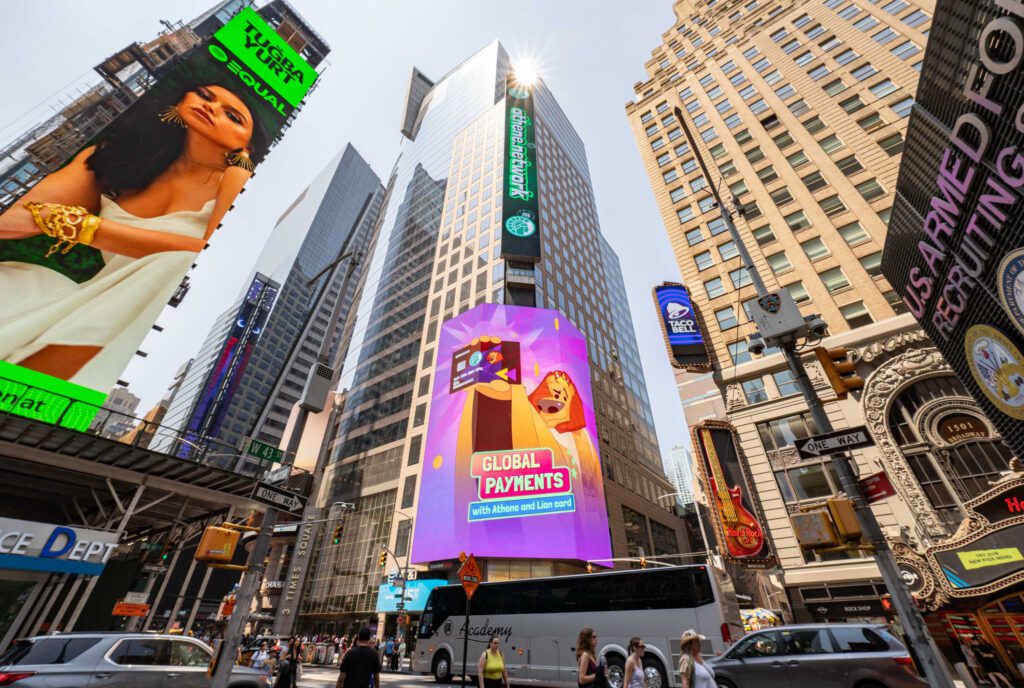
Out of home advertising is one of the oldest categories of marketing and one of the most misunderstood by buyers who came of age in the digital era. The category ranges from highway billboards that reach hundreds of thousands of vehicles per week to sidewalk stencils visible to a few hundred pedestrians on a specific block, and every format in between serves a distinct purpose in the campaign architecture. Choosing the wrong format for a campaign objective is one of the most common and most expensive mistakes brands make in OOH planning.
Our team plans and executes campaigns across the full OOH format spectrum. We have booked traditional billboard inventory, produced and deployed wheatpaste poster campaigns, executed street team programs across dozens of markets, and managed LED billboard truck deployments in major cities nationwide. The experience across this full format range gives us the perspective to recommend the right format for each campaign objective rather than defaulting to what is most familiar or easiest to sell.
This guide covers the primary OOH format categories, how to evaluate them against campaign objectives and budgets, how costs vary by format and market, and how to build a campaign architecture that uses multiple formats in coordination rather than relying on a single format to do all the work.
Large-Format Billboard Advertising
Billboards are the most recognized OOH format and the one that brands default to when they think about outdoor advertising. The format has real strengths: high visibility, broad reach across a geographic corridor, and extended exposure time as traffic moves past the same location repeatedly. The limitations are equally real: billboards require long lead times for space booking, creative production, and installation; they reach a broad audience rather than a targeted demographic; and the cost structure in premium markets puts them out of reach for many campaign budgets.
Static Bulletins and Posters
Static billboards are the traditional large-format OOH placement. Bulletins measure 14 feet by 48 feet and are the largest standard billboard format. Posters measure 12.5 by 25 feet. Both formats require four to six weeks of booking lead time in most markets and are priced by the period of the posting, typically four-week cycles. Cost ranges from under $1,000 per period in secondary markets to tens of thousands per month in premium locations in major cities.
Digital Out of Home (DOOH)
Digital billboards and digital OOH panels allow advertisers to buy specific time slots on a digital display rather than the entire posting period, enabling lower entry costs, faster campaign launch, and the ability to rotate creative or target specific dayparts. DOOH inventory is available in most major U.S. markets and is growing in secondary markets. The format can be booked with creative lead times as short as 24 to 48 hours for existing approved formats.
Transit Advertising Formats
Transit advertising reaches consumers during their daily commute, in contexts where dwell time creates strong creative exposure. The primary transit OOH formats are bus shelter panels, subway station displays, bus exterior wraps, and rail car interior cards.
Bus Shelter Advertising
Bus shelter panels reach the pedestrian population waiting at street-level transit stops. The format operates at eye level, creates extended dwell time exposure from waiting commuters, and is available in most major U.S. cities through the outdoor advertising companies that hold city franchise agreements for shelter maintenance. Lead times are typically four to six weeks. Creative requirements are more demanding than typical OOH because the format is viewed at close range by a stationary audience, which means production quality is clearly visible.
Subway and Metro Advertising
Subway station advertising in New York City, Chicago, Washington D.C., Boston, and other major metro systems provides access to the captive audience of commuters in the transit environment. Station domination programs that cover multiple surfaces within a single station create immersive brand experiences for commuters who encounter the campaign on platforms, stairs, and in corridors. These programs are high-impact but require substantial lead time and budget commitment.
Street-Level OOH: The Guerrilla Marketing Spectrum
Street-level OOH operates closest to the consumer, at eye level and within personal interaction distance. This proximity is what distinguishes street-level formats from large-format and transit OOH: the consumer experiences the advertising at the same scale as their surrounding environment, which creates a different quality of brand impression than a billboard or subway panel viewed from a distance.
Wheatpaste Poster Campaigns
Wheatpaste poster campaigns are the most widely deployed street-level OOH format and the foundation of most guerrilla marketing programs. The format applies large-format printed posters to permitted surfaces using wheat starch paste adhesive, creating placements that are persistent, highly visible, and weather-resistant for four to eight weeks under normal outdoor conditions. Our poster campaigns cover neighborhood-level deployments in major markets across the country, with geo-tagged photographic documentation for every placement.
Cost for wheatpaste campaigns typically runs $5,000 to $20,000 for a neighborhood-level deployment in a single market, with multi-market programs scaling from $25,000 to $100,000+ depending on the number of cities, neighborhoods per city, and campaign duration.
Sidewalk Stencils
Sidewalk stencil programs reach consumers at a different angle than vertical surface advertising: looking down. The format is particularly effective at high-foot-traffic pedestrian crossings, venue entrances, transit exit points, and commercial corridor intersections where pedestrians slow down or stop. Our sidewalk stencil programs use compliant removable materials in markets where chalk-based applications are permitted, and permanent paint on private surfaces with owner permission.
Poster campaigns
Poster campaigns programs (distinct from wheatpaste campaigns) cover construction site fences, plywood hoardings, and high-density urban posting areas with multiple posters applied in concentrated arrays. The format creates visual saturation at specific locations and is most effective in dense urban neighborhoods where multiple posters in proximity create a stronger collective impression than individual placements.
Mobile OOH Formats
Mobile OOH formats bring advertising to the audience rather than waiting for the audience to come to a fixed location. The primary mobile formats are LED billboard trucks, branded vehicle wraps, and mobile experiential units.
LED Billboard Trucks
Our LED billboard trucks deploy illuminated digital displays on vehicle-mounted panels that circulate through specified route maps in target markets. The format combines the mobility of vehicle advertising with the visual impact of digital display, allowing campaigns to concentrate impressions in specific neighborhoods during specific time windows. LED trucks are particularly effective for evening deployment in entertainment districts where their illuminated display stands out against the ambient environment.
Daily rates for LED billboard trucks typically run $1,500 to $4,000 per vehicle depending on market, hours, and display specifications. Multi-day programs in a single market generate cumulative route coverage that approaches saturation within the target geography.
Branded Vehicle Programs
Wrapped branded vehicles circulate through target markets as moving billboards. The format is lower impact than an LED truck but can be sustained for longer periods at lower cost, and the wrapped vehicle can serve dual purpose as a functional campaign support vehicle for product delivery, staff transport, or event support.
Experiential OOH: Street Teams and Ambient Activations
Experiential OOH adds human interaction to the format spectrum. Brand ambassador programs and ambient activations create direct audience engagement rather than passive exposure, which generates a qualitatively different type of brand impression.
Street team programs typically cost $3,000 to $8,000 per activation day depending on team size, market, and program complexity. The return is not measured in impression volume but in audience engagement quality: the number of direct brand interactions, samples distributed, and brand conversations initiated. For campaigns where audience engagement depth matters more than reach breadth, street teams outperform all other OOH formats on a per-engagement cost basis.
Building a Multi-Format OOH Campaign Architecture
The most effective OOH campaigns use multiple formats in coordination, with each format assigned to a specific function in the campaign architecture. A standard architecture for a product launch campaign in a single major market might look like this: wheatpaste posters establish broad visual presence across target neighborhoods two weeks before launch; street team activations in the week before launch build audience engagement at key pedestrian locations; LED trucks provide route coverage connecting the campaign zones on launch day; and sidewalk stencils at specific high-value locations create an additional touchpoint on the pedestrian approach to key retail or event locations.
Each format in this architecture does something that the others cannot. The posters create persistent, repeated impressions. The street team creates direct engagement. The LED truck covers mobile reach across the connective corridors. The stencil creates a ground-level touchpoint at the moment of decision. Removing any one format from the architecture reduces the campaign’s total effectiveness, but the architecture can be scaled up or down based on budget by adjusting the geographic scope of each format rather than eliminating formats entirely.
Frequently Asked Questions
What is out of home advertising?
Out of home advertising (OOH) refers to all advertising formats that reach consumers while they are outside their homes. This includes billboards, transit advertising on buses and subway stations, street-level media like wheatpaste posters and sidewalk stencils, mobile formats like LED billboard trucks, and experiential activations in public spaces.
What are the main types of out of home advertising?
The main OOH format categories are: large-format billboards (static and digital), transit advertising (bus shelters, subway stations, bus wraps), street-level media (wheatpaste posters, sidewalk stencils, kiosk panels), mobile formats (LED billboard trucks, branded vehicles), and experiential advertising (street teams, installations, event activations).
How much does out of home advertising cost?
OOH costs vary by format and market. A bulletin billboard in a secondary market runs $1,500 to $3,000 per month. Street-level wheatpaste campaigns start at $5,000 to $15,000 for neighborhood-level deployment. LED billboard trucks run $1,500 to $4,000 per day. Contact our team for specific market pricing.
What is the difference between traditional OOH and guerrilla marketing?
Traditional OOH uses established advertising inventory like billboards and bus shelters bought through standard media transactions. Guerrilla marketing uses non-traditional street-level tactics like wheatpaste posters, sidewalk stencils, and street team activations that operate at closer range with often lower cost per impression.
How do you measure out of home advertising effectiveness?
OOH measurement uses traffic data for impression estimates, mobile location data to measure consumer exposure and behavioral response, and campaign-specific metrics like QR code scans, promo code usage, and foot traffic changes. For street-level campaigns, we provide geo-tagged photographic documentation for every placement.
What lead time does out of home advertising require?
Traditional OOH requires six to eight weeks. Digital OOH can launch within 24 to 48 hours. Guerrilla and street-level formats can be planned and deployed in three to five weeks. Mobile formats often have shorter lead times depending on market and availability.