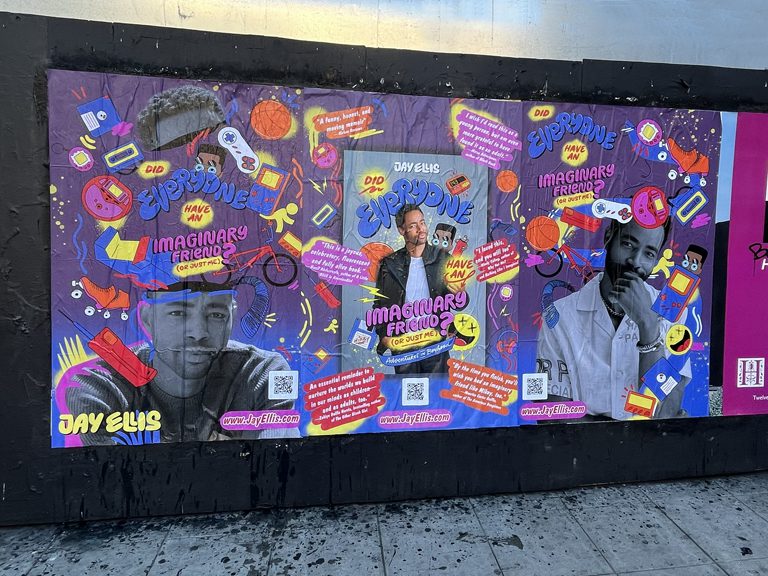
London is one of the world’s most complex and competitive OOH advertising markets. The density of pedestrian traffic, the extensive Underground network, the diversity of distinct districts each with their own consumer demographics, and the regulatory environment across 32 London Boroughs create a landscape that rewards local knowledge and punishes generic planning. Brands that succeed with OOH advertising in London approach it as a city-specific discipline, not a scaled copy of a campaign designed for another market.
At American Guerrilla Marketing, we work with U.S. brands on international campaign planning and execution, including London-specific activations that require understanding of local format options, borough-level permitting, district demographics, and the practical execution challenges of a street-level campaign in one of the world’s busiest cities. This guide covers the landscape: formats, districts, regulatory context, and what effective street-level campaigns actually look like on the ground in London.
Whether a brand is launching into the UK market with a full OOH program or running a targeted guerrilla activation around a specific event or retail moment, understanding London’s unique campaign environment is the starting point for effective planning.
The London OOH Landscape: Format Overview
London’s OOH market is one of the most developed in the world, encompassing multiple distinct format categories that operate at different scales, cost levels, and audience reach profiles.
London Underground Advertising
The Underground (the Tube) is the most distinctive London OOH format because it delivers something almost no other urban OOH environment can: captive dwell time. Commuters waiting on platforms and traveling in carriages have limited alternative activities, creating an attention environment that is fundamentally different from street-level formats. Advertising panels in Tube stations range from traditional printed panels and 48-sheet cross-track formats to digital escalator panels on the Elizabeth line and major interchange stations. Cross-track panels at high-footfall stations like Oxford Circus, King’s Cross, and Liverpool Street deliver mass exposure within specific demographic catchments defined by which lines and stations serve which neighborhoods.
Street-Level 6-Sheet and 48-Sheet Sites
Traditional roadside and pedestrian 6-sheet panels (roughly 1.2m x 1.8m, typically bus shelters and street furniture) and 48-sheet billboard formats are distributed across the city, with concentration in high-footfall commercial and entertainment corridors. These formats are managed by national outdoor media owners and are booked through standard OOH planning and buying processes. They deliver broad coverage across consumer demographics defined by geographic location rather than specific behavioral targeting.
Digital Out-of-Home in Key Corridors
London has significant digital OOH infrastructure, particularly in central commercial zones, shopping destinations, and major transport hubs. Digital screens at Westfield shopping centers, digital panels in Canary Wharf’s commercial core, and the expanding digital street furniture network across Zone 1 and Zone 2 allow for dynamic content, daypart-specific creative rotation, and programmatic buying with audience-based targeting overlays.
Guerrilla and Street-Level Formats
Street-level guerrilla formats in London include street team activations, product sampling, sticker and poster campaigns, sidewalk stenciling (subject to borough-specific regulations), pop-up installations, and experiential activations in high-footfall pedestrian zones. These formats are particularly effective in London’s many pedestrianized areas: Covent Garden’s piazza, Carnaby Street, Brick Lane, and other areas with concentrated pedestrian traffic that creates extended dwell time without vehicle traffic. Our guerrilla marketing services include international campaign coordination for brands planning London activations.
District-by-District Strategy: Matching Brand to Location
London is not a single market. Its neighborhoods are as demographically distinct as different cities, and effective OOH strategy treats them accordingly.
Shoreditch and the East End Creative Corridor
Shoreditch, Hoxton, and Bethnal Green are the center of London’s creative, tech, and independent brand culture. The demographic is predominantly 25 to 40, creative and professional, with above-average income and high receptivity to brands that demonstrate authenticity and cultural awareness. OOH formats in this area benefit from strong visual design and an understanding of the cultural references relevant to the community. Brick Lane and surrounds support street-level formats including stenciling and poster placement with a density of independent surfaces not available in more commercially managed central zones.
Soho, Covent Garden, and the West End
The West End is London’s highest-footfall retail and entertainment district. Soho is the center of the creative and media industry by day and a major entertainment destination by night. Covent Garden draws both tourists and London residents, with a piazza format that supports experiential activations, street performance integrations, and high-visibility pop-up installations. OOH campaigns in the West End reach the broadest demographic cross-section of any London district, making it the default choice for mainstream consumer brand launches requiring mass awareness.
King’s Cross and the Innovation Corridor
The King’s Cross redevelopment has created one of London’s most prominent commercial and cultural destinations, serving commuters through St. Pancras International (Eurostar access and multiple rail lines), Google’s UK headquarters, and a growing cluster of media, tech, and education institutions. OOH in the King’s Cross zone targets a high-income, professional demographic and is particularly relevant for brands seeking association with innovation, technology, and cultural leadership.
Chelsea, Kensington, and Luxury Brand Territory
Chelsea and Kensington maintain London’s highest concentration of luxury retail and high-net-worth residential population. OOH advertising in these districts supports luxury fashion, fine dining, premium home goods, and financial services brands targeting affluent consumers. Street-level activations in these areas require alignment with the aesthetic and tonal expectations of the neighborhood; formats that might perform well in Shoreditch can feel inappropriate in Chelsea.
Canary Wharf: The Financial District
Canary Wharf houses the European headquarters of many global financial institutions, drawing a concentrated professional and financial services audience. The Canary Wharf estate manages its own signage and advertising inventory, making direct estate coordination necessary for in-estate OOH placement. B2B brands, financial products, and premium professional services targeting London’s financial sector treat Canary Wharf as a distinct micro-market within the broader city.
Borough Permitting and Regulatory Considerations
London’s regulatory environment for OOH advertising and street-level marketing activity is managed at the London Borough level, with 32 separate boroughs each maintaining their own licensing and enforcement approaches. This creates significant complexity for brands planning multi-location campaigns across more than one borough.
Street Licensing and Activity Permits
Organized commercial street activity, including product sampling, street teams, and temporary installations, requires licensing from the relevant borough’s licensing or street management team. Requirements vary: some boroughs require formal license applications submitted weeks in advance, while others operate more permissive permit regimes for short-duration activity. Working with an agency that has established relationships with borough licensing teams reduces lead time and permit uncertainty.
Flyposting and Stenciling Restrictions
Unauthorized flyposting (poster placement without property owner consent) is illegal across London and actively enforced. Legitimate poster placements require either property owner agreements or use of licensed flyposting sites, a small network of approved surfaces managed by specialist providers. Stenciling restrictions vary by borough and by the permanence of the medium used. Water-soluble stenciling is treated more permissively than permanent paint in most jurisdictions.
What Effective Street-Level Campaigns Look Like in London
The most effective street-level campaigns in London combine the city’s existing OOH infrastructure with custom guerrilla formats that cut through where mass market OOH cannot. Brands that treat London purely as an OOH media buy miss the street-level engagement that the city’s pedestrian density makes possible.
Integrated Street Team and Poster Programs
The combination of neighborhood poster placement (through licensed surfaces or property agreements) with street team distribution in the same zones creates overlapping brand exposure that reinforces both elements. A consumer who walks past a poster on their morning commute and later receives a product sample from a street team member in the same area experiences compounding brand frequency that neither element produces alone. The street team marketing model we use in U.S. markets translates directly to London with local staff and borough-specific logistics.
Experiential Activations in Pedestrian Zones
London’s pedestrianized zones create extended dwell time that is unusual in most OOH environments. Covent Garden’s piazza, the South Bank along the Thames, and pedestrianized stretches of Oxford Street all support pop-up experiential activations that allow brands to deliver extended consumer interactions in high-footfall environments. Our experiential marketing team plans international activations including London-specific format and location strategies.
Transit-Adjacent Sampling for Consumer Products
Major Underground station exits, particularly at commuter-heavy stations on the Central, Jubilee, and Elizabeth lines, provide consistent morning and evening foot traffic profiles ideal for consumer product sampling. The commuter demographic at stations like Canary Wharf, Farringdon, and London Bridge is well-documented and predictable, enabling precise consumer profile targeting. Sampling programs at these locations operate under the relevant station-specific licensing requirements coordinated in advance with Transport for London.
Frequently Asked Questions
What OOH advertising formats are most effective in London?
London’s most effective OOH formats include London Underground digital and printed panels (particularly on the Elizabeth line and Central line), street-level 6-sheet and 48-sheet poster sites, bus shelter advertising, digital street furniture across high-footfall areas, and guerrilla street-level formats including sampling, street teams, and stenciling in pedestrianized zones. The Underground delivers unmatched dwell time; street-level formats deliver proximity to retail and dining decisions.
Which London districts are best for street-level OOH campaigns?
Shoreditch and the wider City Fringe for creative, tech, and consumer brand campaigns targeting 25-to-40 demographics. Soho and Covent Garden for retail, entertainment, and food and beverage. King’s Cross and Canary Wharf for financial services and B2B. Notting Hill, Chelsea, and Kensington for luxury and lifestyle brands. Camden for music, youth culture, and independent brands. Each district has distinct consumer demographics and foot traffic patterns.
Do you need a permit for OOH advertising in London?
Traditional poster and billboard sites require planning permission and are managed by outdoor media owners. Street-level guerrilla marketing activity requires coordination with the relevant London Borough’s street licensing or events team. The rules vary significantly by borough, and some central London areas have strict activity licensing requirements. Working with an agency that has local knowledge and established borough relationships prevents costly permit denials.
What is the average cost of an OOH advertising campaign in London?
London OOH costs vary widely by format and location. Underground panel campaigns for a two-week period run from approximately £10,000 to £50,000+ depending on the number of stations and panel types. Street-level poster campaigns using traditional formats run £2,000 to £15,000. Guerrilla street-level activations including sampling and street teams are priced by the program scope, typically £5,000 to £30,000 for a week-long campaign.
How does OOH advertising in London compare to digital advertising for brand awareness?
London OOH delivers highly contextual impressions to consumers in specific geographic and demographic zones, with zero ad-blocking and strong recall rates. Underground advertising is particularly effective because of the forced dwell time that eliminates the skipping behavior common in digital environments. Digital advertising offers targeting flexibility and lower floor cost but cannot match the physical scale and contextual relevance of well-placed London OOH.
Can American brands run OOH campaigns in London?
Yes. American brands regularly launch and run OOH campaigns in London, either as standalone UK market activations or as part of coordinated international campaigns. American Guerrilla Marketing works with U.S. brands on international campaign coordination, including London activations that align with U.S. campaign strategy and reporting standards.