Out-of-home advertising costs are famously opaque. Rates are rarely published. Negotiations vary by market, by timing, by vendor relationship, and by how urgently you need the space. The variance between a rate card number and an actual negotiated rate can be 30 to 50 percent. This guide cuts through the opacity with real ranges from our experience booking, planning, and executing OOH campaigns across every major format and 50+ U.S. markets.
We cover the full OOH landscape: traditional billboards (static and digital), transit formats (shelters, subway stations, bus wraps), street-level formats (wheatpaste, stencils, street teams, mobile billboards), and how to think about cost-per-impression across all of them. Where we have direct cost data from our own campaign execution, we use it. Where we rely on market estimates, we say so.
Traditional Billboard Costs
Static billboard costs are set by market, location, and inventory availability. National average rates obscure enormous variance between markets and even between specific locations within the same market. The numbers below reflect realistic negotiated rates, not published rate card figures.
Secondary markets (population 500,000 to 1.5 million): A standard 14 x 48 foot highway or arterial billboard typically runs $1,500 to $4,000 for a four-week period. Production (printing the vinyl) adds $300 to $600. Total all-in cost for a four-week secondary market billboard campaign: $2,000 to $5,000 per location.
Major markets (Chicago, Miami, Atlanta, Dallas, Seattle): Comparable static billboard placements in these markets run $4,000 to $20,000 per four-week period depending on location and traffic volume. High-visibility locations on major arterials with 100,000+ daily impressions run at the top of this range or above it.
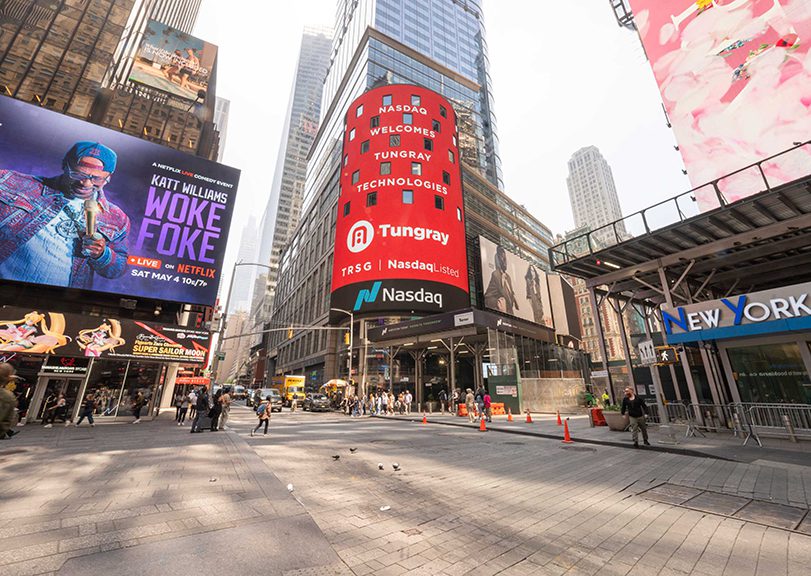
Top-tier markets (New York, Los Angeles): OOH costs in New York and Los Angeles are in a category of their own. Non-premium billboard inventory in outer boroughs or LA neighborhoods outside the Westside runs $5,000 to $30,000 per four-week period. Premium locations — Sunset Strip, Times Square adjacency, Manhattan bridge approaches — run $25,000 to $200,000+ per four-week period. Times Square spectaculars are priced by individual negotiation and can reach seven figures annually.
Digital Billboard Costs
Digital billboards rotate multiple advertisers through a loop, so each advertiser receives a fraction of the total daily impressions available at the location. A standard digital billboard loop includes 6 to 8 advertisers, with each advertiser receiving approximately 8 seconds of every minute — roughly 2,400 total display minutes per 24-hour period divided among all advertisers.
Digital billboard rates are typically lower per-period than static equivalents at the same location because the impression share is lower. A static billboard that would rent for $10,000 for four weeks might have a digital rotation slot available for $2,500 to $4,500 for the same period. The trade-off: you own the entire face on a static board; on a digital board, you own one rotation slot in a shared pool.
Programmatic digital OOH (DOOH) networks allow brands to buy digital billboard inventory by CPM across a curated network of screens. Programmatic DOOH CPMs typically range from $5 to $25 depending on screen type, location, and audience targeting parameters. This format allows smaller brands to access major-market digital OOH inventory at lower minimum spend thresholds than direct buys require.
Transit Advertising Costs
Transit advertising encompasses a wide range of formats with significantly different impression profiles and cost structures.
Bus shelter advertising: Single bus shelter locations in major markets run $1,500 to $8,000 per month. Comprehensive bus shelter networks covering a defined geography — a specific neighborhood or a transit corridor — typically involve buys of 15 to 50 individual locations. Full-neighborhood bus shelter programs in major markets run $25,000 to $150,000 per month for meaningful coverage.
Subway station advertising: Subway station formats range from individual platform posters ($150 to $800 per poster per four-week period) to station dominations where a single advertiser controls all format inventory within a station ($50,000 to $300,000+ for high-traffic stations in New York). Station dominations create the most powerful single-format impact available in transit advertising but require the largest per-unit investment.
Bus wraps: Full bus wraps — covering the exterior of a bus with brand advertising — run $4,000 to $18,000 per bus per month in major markets, not including production of the vinyl wrap (typically $2,000 to $5,000 per bus). A five-bus wrap program in New York or Los Angeles represents a $30,000 to $115,000 per-month commitment including production.
Subway car interior advertising: Interior card advertising in subway cars — the cards in the overhead panels or at eye level — is sold in large-quantity packages. Individual card rates run $50 to $250 per card per four-week period, but transit authorities typically require minimum buys of 25 to 100 cards per campaign. Full subway car interiors (complete card domination of a single car’s interior) run $3,000 to $15,000 per four-week period per car in major markets.
Street-Level and Guerrilla Marketing Costs
Street-level formats — wheatpaste poster campaigns, sidewalk stencils, street team programs, and LED billboard trucks — offer fundamentally different cost structures from traditional OOH. The primary advantage is cost-per-impression efficiency. The primary limitation is campaign duration: these formats are typically measured in days rather than months.
Wheatpaste poster campaigns: A professional wheatpaste poster campaign in a major market with 100 to 200 placements, covering two to three target neighborhoods over three to five days, typically runs $6,000 to $18,000 including print production, crew, and documentation. The impression volume from a well-executed campaign at this scale often matches or exceeds comparable transit shelter buys at lower total cost. Secondary market campaigns run $3,500 to $9,000 for similar coverage.
Sidewalk stencil campaigns: A 20 to 50 stencil deployment in a major market targeting one to two neighborhoods runs $3,500 to $8,000 including crew and documentation. Stencil campaigns are typically the most cost-efficient format per impression in high-foot-traffic environments, making them a strong choice for brands with tight budgets and defined geographic targets.
Street team programs: Brand ambassador programs are priced by team size and deployment duration. A three-person street team operating for a full eight-hour day in a major market runs $1,800 to $3,500 including supervisor, materials, and reporting. Multi-day programs with larger teams (six to twelve ambassadors) covering multiple zones run $8,000 to $25,000 per week depending on market and scope.
Mobile billboard trucks: Static billboard truck day rates run $800 to $1,500 per truck per day in major markets. LED truck day rates run $1,200 to $2,500 per truck per day. A five-day, single-truck LED campaign with GPS documentation and post-campaign reporting runs approximately $10,000 to $15,000 in a major market.
Cost-Per-Impression Comparison Across Formats
Comparing OOH formats on a cost-per-impression basis is imprecise because impression quality varies significantly — a 30-foot billboard at 65 mph produces a fundamentally different impression from a hand-received flyer, and both are different from a mural that a consumer photographs and posts to social media. That said, raw CPM comparisons are useful for initial budget allocation decisions.
Highway billboards in major markets: $3 to $12 CPM (cost per thousand impressions). Transit bus shelters in major markets: $4 to $15 CPM. Subway station dominations: $2 to $8 CPM at scale. Wheatpaste campaigns: $0.50 to $4 CPM in high-foot-traffic urban neighborhoods. Street team programs: $15 to $50 CPM by contact (much higher per impression but also much higher quality — direct human contact). Mobile billboard trucks: $1 to $6 CPM depending on route density.
The lowest CPM format is not always the right format. The question is which impression type produces the behavioral outcome the campaign is designed to drive. A wheatpaste campaign creates visual awareness in a neighborhood; a street team creates direct conversations; a billboard creates mass market reach at scale. The right cost structure depends on the campaign objective, not just the CPM metric.
Production Costs Across Formats
Production costs are often underestimated in OOH budget planning. Every format has production requirements beyond the media space cost.
Billboard vinyl production runs $300 to $700 per face for standard sizes, more for non-standard dimensions. Transit shelter creative adaptation (reformatting from primary creative to multiple transit formats) runs $1,500 to $4,000 at a professional design studio. Wheatpaste print production runs $0.40 to $1.20 per square foot depending on material and quantity. Street team materials (handbills, postcards, branded collateral) run $0.08 to $0.35 per piece at standard print quantities. Mobile billboard vinyl wraps run $400 to $900 per panel.
How to Allocate an OOH Budget
For brands new to OOH, the most common mistake is spreading budget across too many formats and markets at levels too low to achieve meaningful impact in any of them. A $50,000 OOH budget split across eight formats in five cities achieves nothing. The same budget concentrated in two markets across two complementary formats produces real campaign density.
Our approach to OOH budget allocation starts from the campaign objective and works backward: what behavior change are we trying to drive, where does the target audience concentrate, and what format reaches them most efficiently at the required frequency? From those answers, a coherent format mix emerges. Budget follows strategy, not the other way around.
For brands integrating street-level formats with traditional OOH, our guerrilla marketing services team can advise on format sequences that maximize the cross-format amplification effect — using wheatpaste to establish visual presence in target neighborhoods before a transit or digital OOH launch, then reinforcing with street team programs during the peak impression window.
OOH Advertising Cost Benchmarks by Market Size
OOH advertising cost varies so dramatically by market tier that national averages are nearly meaningless for campaign planning purposes. A brand planning a campaign in Omaha, Nebraska and New York City in the same quarter will encounter rates that differ by a factor of 8 to 15 for equivalent format types. Understanding market-tier cost structures is essential for realistic budget planning.
Tier 1 markets — New York, Los Angeles — command the highest rates across all OOH formats. New York’s density and demographic concentration make it the most expensive OOH market in North America by a significant margin. Los Angeles is close behind, particularly in the premium Westside and Hollywood zones. Tier 2 markets — Chicago, San Francisco, Miami, Seattle, Boston, Washington DC — run 40 to 70 percent of New York rates for comparable format placements. Tier 3 markets — Atlanta, Denver, Phoenix, Portland, Nashville — run 25 to 50 percent of New York rates. Secondary markets below the top 25 metro areas can run 15 to 30 percent of New York rates for equivalent placements.
For brands with national campaign footprints, the market tier cost structure means that the New York and Los Angeles budget allocations often consume a disproportionate share of the total OOH budget while covering a fraction of the geographic footprint. Smart budget allocation concentrates premium resources in the anchor markets and uses guerrilla marketing and lower-cost formats in secondary markets to maintain presence without overspending on premium inventory that the markets do not require.
Seasonal Pricing and Demand Cycles in OOH Advertising
OOH advertising costs are not static. They fluctuate with seasonal demand cycles that brands underestimate when planning annual advertising budgets. The Q4 holiday period from October through December is the highest-demand window for most OOH formats because retail advertisers flood the market ahead of the holiday shopping season. Brands that compete with retail advertisers for Q4 OOH inventory face premium pricing and constrained availability, particularly at prime urban locations.
The inverse is also true: Q1 (January through March) typically offers the lowest OOH rates of the year as the post-holiday advertising pullback reduces demand across most formats. Brands with flexible campaign timing that can shift into Q1 often access the same inventory at 20 to 35 percent below Q4 rates. Summer outdoor campaigns (June through August) run at moderate rates in most markets, though beach and vacation destination markets price at premiums during peak tourist season.
Event-driven OOH demand creates localized pricing spikes. Super Bowl host markets see OOH inventory prices spike 40 to 80 percent in the week before the game. SXSW in Austin, Art Basel in Miami, and major political conventions create similar localized demand spikes. Brands targeting these events should budget for premium rates and book significantly further in advance than they would for non-event campaign windows.
What Good Value Looks Like in OOH Planning
Good OOH value is not about finding the cheapest rate — it is about achieving the best impression quality per dollar for a specific campaign objective. A $5,000 wheatpaste campaign that reaches 50,000 highly profiled target consumers in the right neighborhood delivers better value than a $15,000 transit shelter buy that reaches 200,000 general consumers with weak audience targeting. The relevant metric is not raw CPM but targeted impression quality: how many of the people who see this campaign are actually the audience this campaign is designed to reach?
The brands that get the best OOH value are the ones that know exactly who they are trying to reach, know where those people are physically concentrated in each target market, and choose formats that reach that concentration efficiently. Broad market coverage is expensive and often wasteful. Neighborhood precision is more cost-efficient and produces stronger campaign performance by maximizing the percentage of impressions that reach the actual target audience.
Getting an Accurate OOH Budget Estimate
The fastest way to get an accurate cost estimate for any OOH format is to contact us with three pieces of information: the market or markets you are targeting, the campaign dates (or the event or objective driving the timing), and your estimated budget range. We will provide a realistic proposal within 48 hours that covers what is achievable at your budget level in your target markets, with realistic impression estimates and format recommendations based on your specific campaign objectives.
We do not provide estimate ranges that span factors of 10. We provide specific proposals for specific scopes because vague estimates lead to vague campaign planning and poor budget decisions. If your stated budget cannot fund a campaign that achieves your stated objective, we will tell you that directly, along with the actual budget required and a modified scope that fits your constraint.
Frequently Asked Questions
How much does a billboard cost to advertise on?
Billboard costs vary by market and location. A four-week static billboard in a secondary market runs $1,500 to $5,000. In major cities like Chicago or Miami: $5,000 to $25,000. High-visibility NYC and LA locations — Sunset Strip, Times Square — can run $25,000 to $200,000+ per four-week period.
How much does transit advertising cost?
Transit advertising costs include bus shelter ads ($1,500 to $8,000 per location per month in major markets), subway station dominations ($50,000 to $300,000 per station for full dominations), bus wraps ($4,000 to $18,000 per bus per month), and subway car interior cards ($50 to $250 per card per four-week period).
How much does guerrilla marketing cost compared to traditional OOH?
Guerrilla marketing formats offer dramatically lower cost-per-impression than most traditional OOH. A wheatpaste campaign generating 100,000 impressions over five days typically costs $5,000 to $12,000 — a fraction of a transit shelter buy with comparable impression volume. The trade-off is campaign duration: guerrilla formats are typically measured in days, not months.
What does digital OOH advertising cost?
Digital billboard day rates run $500 to $5,000 per location depending on market and traffic volume, though digital boards rotate multiple advertisers. Programmatic DOOH CPMs range from $5 to $25 depending on network and audience targeting parameters.
What is the most cost-efficient OOH format for a startup or small brand?
Guerrilla marketing formats — wheatpaste poster campaigns, sidewalk stencils, and street team programs — offer the most cost-efficient OOH entry points. A $5,000 to $15,000 wheatpaste campaign in the right neighborhood generates strong impression volume with professional documentation at a cost most startup brands can fund.
How far in advance do you need to book OOH advertising?
Traditional OOH formats require 6 to 8 weeks of lead time. Digital OOH can sometimes be booked and live within days. Guerrilla marketing formats typically require 2 to 4 weeks lead time. LED truck campaigns can sometimes be activated in 1 to 2 weeks depending on market availability.
Can OOH advertising be measured?
Yes. Modern OOH measurement uses mobile device location data to estimate reach and frequency, digital attribution platforms that match OOH exposure to downstream consumer behavior, and for guerrilla formats, GPS documentation and geo-tagged photography that provides verifiable placement records.