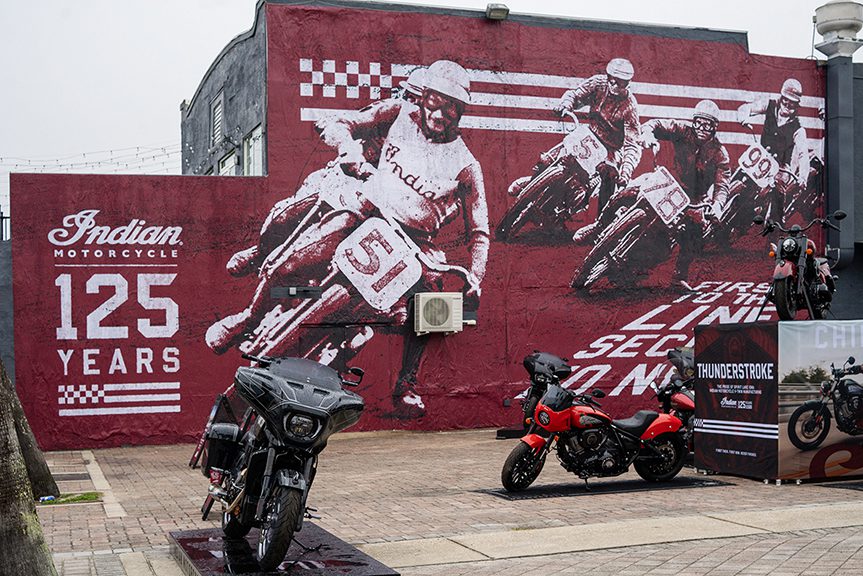
An OOH activation is not a placement you buy — it is a campaign you build. The outdoor environment is the medium, but the audience’s engagement is the point.
When people talk about OOH activations, they sometimes mean different things. A brand manager at a consumer goods company might mean a multi-city billboard push tied to a product launch. A startup founder might mean a one-day street team hit in a specific neighborhood. An event marketer might mean a digital installation outside a conference venue. What all of these have in common is that the outdoor environment is being used as an active campaign element, not just a passive media buy.
This article is about planning and executing OOH activations across the full spectrum of formats and budgets. We cover what the planning process actually involves, what goes wrong most often, and how to build a campaign that functions as a genuine piece of marketing work rather than a check-box on a media plan.
A well-run OOH activation is planned backwards from the audience experience. You start with the question of what you want a specific person to do, feel, or remember when they encounter your campaign — and then you build the format, location, creative, and execution around that answer.
Step One: Define the Behavioral Objective
Not “we want brand awareness.” That is an outcome, not an objective. The behavioral objective is specific: we want people who see this installation to photograph it and post it. We want people on this corner between 12 and 2 PM to try our product. We want people leaving this venue to connect with our brand on the way to transit. Each of these objectives points to a different execution.
A campaign that starts with a clear behavioral objective can be evaluated against that objective when it is done. A campaign that starts with “we want brand awareness” cannot be evaluated against anything specific, which is often why it produces inconclusive results.
Step Two: Identify the Audience and Their Location
Where is your target audience, physically, at the time your campaign will run? This is not a demographic description — it is a geographic one. Which neighborhoods? Which transit routes? Which venues? At what times of day? If you cannot answer these questions with reasonable specificity, you cannot plan the campaign. The location decisions follow from the audience location.
Step Three: Choose the Format
Once you know what you want people to do and where they are, the format becomes a logistics question. A high-foot-traffic pedestrian corridor might call for a large-format vinyl wrap or a painted installation. A commuter route might call for transit placements. An event perimeter might call for a moving billboard truck. The format should be the most effective delivery mechanism for the behavioral objective in the specific location.
Step Four: Plan the Creative
OOH creative has constraints that most other media do not. Reading time is measured in seconds, not minutes. Viewing conditions vary widely. Physical size, weather exposure, and viewing distance all affect how the creative reads in the field. Creative that looks excellent in a studio presentation may perform poorly in actual outdoor conditions.
The principles that hold across formats: one primary message, one focal point, high contrast, and a call to action that is simple enough to retain in a brief exposure. Everything beyond that is secondary.
Step Five: Execute and Document
Execution is where most activations either succeed or fall apart. The physical installation needs to be right. The timing needs to match the audience’s actual presence. Staff, if involved, need to be briefed and managed. Documentation needs to be captured systematically throughout the campaign, not reconstructed afterward from memory.
AGM Field Note: We treat documentation as a first-class deliverable on every activation. Before the campaign launches, we plan what documentation we will capture, where, and when. The post-campaign photo report is not optional — it is part of what the client is paying for.
OOH Activation Formats in Depth
The range of formats available for OOH activations is wider than most clients initially realize. Understanding the full environment helps you match the right tool to the objective.
Building Wraps and Large-Format Vinyl
Large-format vinyl — covering the facade of a building, a construction fence, or a major wall — creates a visual presence at a scale that smaller formats cannot match. A building wrap in a high-foot-traffic area is visible from a significant distance and creates a physical landmark quality. These placements are typically negotiated directly with property owners, since most major outdoor media companies do not control building-wrap inventory in the same way they control billboard faces.
Production for large-format vinyl is technically demanding. File preparation, color calibration, panel registration, and the physical installation all require experienced production partners. A botched installation is often obvious from a distance, which works against the brand. Quality control at the production stage saves problems at the installation stage.
High-volume placement of printed posters across multiple locations in a market. Wheat paste campaigns use a simple adhesive application that allows posters to be placed quickly across a large number of surfaces, creating a feeling of ubiquity in a given area. This format is most effective when the creative is striking enough that people notice the same image appearing repeatedly across different contexts — the repetition across multiple locations is part of the effect.
Wheat paste campaigns work best in dense urban environments where surfaces exist in sufficient quantity and proximity. The format is associated with music, entertainment, and culture-facing brands, but it works for any brand whose aesthetic fits the street-level context.
Street Level Placements: Bus Shelters and Urban Panels
Bus shelters, newsstands, and urban panels at street level put your creative at eye level with pedestrians. These are typically media-bought placements through outdoor advertising companies, not negotiated directly with property owners. The advantage is proximity — the audience is standing right in front of the creative, sometimes waiting for a bus or train, with full attention available. The format works particularly well in markets with high public transit usage.
Projection Mapping
Projecting imagery or video onto a building facade creates a temporary installation without any physical modification to the surface. Projection mapping campaigns run typically at night when the projection is visible, and they can be dramatic enough to draw crowds who specifically come to see them. The format is temporary by nature and requires scouting the projection site carefully — not every building surface accepts a high-quality projection equally.
Mobile and Moving Formats
Trucks with mounted billboard panels, LED vehicles, and branded mobile units that move through target areas on scheduled routes. The mobility allows one unit to cover multiple neighborhoods in a single operating day. This format is covered in depth in our moving billboards guide, but it is worth noting here as an activation element that can be layered with other formats in a multi-component campaign.
Multi-Channel OOH Activations
The most effective activations combine multiple outdoor formats into a campaign that surrounds the audience in the target market. A brand doing a major product launch in New York might run: a building wrap in SoHo as the flagship visual anchor; a wheat paste campaign through the surrounding neighborhoods to create street-level saturation; a moving billboard truck routing through the relevant areas on launch week; and a street team working specific corners to create direct audience contact. Each element reinforces the others.
The coordination of multiple formats requires careful logistics planning. All elements should run on a consistent creative platform — same visual language, same headline, same color palette — so that repeated exposure to different formats builds cumulative recognition rather than feeling like separate campaigns. Timing should be coordinated so the peak saturation across all formats happens simultaneously, not staggered across weeks.
AGM Field Note: Multi-format campaigns are where our coordination experience matters most. Managing a building wrap installation, a truck schedule, a wheat paste crew, and a street team in the same market on the same week requires production management that goes well beyond placing a single media buy. If you are running multiple formats simultaneously, make sure your vendor has actually done this before at the scale you need.
Timing OOH Activations Around Events
Events concentrate audiences. Fashion week, music festivals, sports championships, major conferences, film premieres — these moments bring large numbers of the right audience to specific locations on specific dates. OOH activations timed around events can reach that concentrated audience efficiently.
Event-period activations require early planning because venue perimeters, media inventory, and venue access all become more competitive in the weeks before major events. Brands that secure their placements two to three months before a major event have more options and better locations than brands that try to execute four weeks out.
The creative for event-period activations should speak to the event context without being generic about it. A brand running near a music festival should feel culturally relevant to that audience, not like a generic brand that happened to show up near the venue.
Comparing OOH Activation Elements
Element
Lead Time
Audience Density Required
Documentation Value
Best Combined With
Building wrap
4-8 weeks
High
Very high
Street team, mobile truck
Wheat paste campaign
1-2 weeks
Medium-high
Medium
Building wrap, street team
Bus shelter / urban panel
2-4 weeks
Medium
Medium
Transit marketing
Moving billboard truck
1-2 weeks
High (urban)
High
Building wrap, street team
Projection mapping
2-4 weeks
Medium-high
Very high
Social media push
Street team
1-2 weeks
High
Low
All formats
Common Mistakes in OOH Activation Planning
Most OOH activation failures trace back to a small set of recurring mistakes. Knowing them in advance makes them avoidable.
Starting with the Format Instead of the Objective
A client who comes in saying “we want a building wrap” before they have defined what they want that building wrap to accomplish is starting in the wrong place. The format should serve the objective. Starting with the format and working backward to justify it often produces campaigns that look impressive but do not achieve anything specific.
Choosing Locations Based on Availability Rather Than Audience
The cheapest available wall is not necessarily the right wall. The most prominent location in the city is not necessarily where your audience is. Location selection should be driven by where the target audience is present, not by what inventory is available or what the media sales team is pushing.
Underinvesting in Production Quality
A building wrap with visible registration errors, color that does not match the approved creative, or a physical installation that looks rough from close range actively harms the brand. Production quality in OOH is not optional. The audience is standing next to the work. Cut the run before cutting the production quality.
No Documentation Plan
An activation that does not produce usable documentation has wasted a significant portion of its potential value. The photo and video from a well-executed OOH activation is content — for social media, for future pitches, for case studies, for client reporting. Plan who captures it, when, and at which locations, before the activation launches.
No Contingency for Field Conditions
Weather, unexpected access restrictions, physical installation problems, staffing issues — these happen. Campaigns that have no contingency plan for field disruptions tend to produce weak results when something does not go as planned. Build contingency thinking into the brief, not the post-mortem.
Working with AGM on OOH Activations
American Guerrilla Marketing is a New York-based outdoor advertising agency with experience across the full range of OOH activation formats. We operate as a full-service partner — we can handle strategy, creative direction, production, media placement, on-site execution, and documentation — or we can plug into an existing campaign structure to handle specific elements.
Our core market is New York, where we have established relationships with property owners, production vendors, and local operators across multiple boroughs. We also coordinate campaigns in other major markets through our production network.
Every AGM activation comes with a post-campaign documentation package: geotagged, timestamped photos from throughout the campaign, a location and route summary, and field notes from on-site staff. This is not supplemental — it is part of what we deliver.
The Relationship Between OOH Activations and Brand Culture
Some of the most effective OOH activations of the past decade have worked not because they were clever or technically impressive but because they were genuinely culturally relevant to the audience they were targeting. The activation felt like something that belonged to the neighborhood and the moment, not something that had been deployed at the neighborhood from outside it.
This cultural alignment requires a level of market knowledge that goes beyond demographics and geographic targeting. It requires understanding what the specific community values, what it responds to, what it finds interesting or amusing, and what it would find tone-deaf or inappropriate. Campaigns that get this right are talked about within the community. Campaigns that get it wrong are often noticed and discussed — in the wrong direction.
Community-Embedded Creative
Activations that incorporate local artists, local cultural references, or neighborhood-specific creative elements tend to be received better by the communities where they appear than generic national campaigns dropped into local environments. Working with a street artist from Bushwick to create the mural in Bushwick creates a different product — and a different community reception — than importing a creative concept developed in a Manhattan agency and applying it to the same wall.
This approach also has practical production benefits. Local artists know the wall, know the neighborhood’s visual culture, and have relationships in the community that smooth the physical production process. The result tends to be work that reads as belonging to the space rather than occupying it.
Digital and OOH: The Feedback Loop
The relationship between OOH activations and digital advertising has become increasingly symbiotic. Rather than treating outdoor and digital as separate channels competing for budget, the most effective campaigns treat them as two phases of the same audience experience: the outdoor activation creates a physical moment, and the digital campaign amplifies and extends that moment to a wider audience.
OOH as Content Creation
Treating the OOH activation as a content creation exercise changes the production calculus. If the installation is going to be photographed and used in social posts, in digital ads, in email marketing, and in earned media coverage, the production value of the installation itself becomes a content production cost, not just a media cost. Brands that understand this investment perspective produce better physical work — because they know the photos will have a long campaign life beyond the physical activation window.
The behind-the-scenes content from an OOH activation — the process of painting the mural, the installation of the building wrap, the street team setting up for the day — is often as valuable as the finished product photography. Process documentation creates content that demonstrates investment, craft, and effort in ways that the finished image alone cannot. Brands that document the making of the activation as systematically as the finished piece itself extract more content value from the same production investment.
Retargeting Adjacent to OOH
Digital advertising that uses location data to identify people who were physically present near an OOH activation and retargets them with related digital ads creates a sequenced campaign that follows the audience from the physical encounter to the digital follow-up. This approach uses the attention created by the physical installation with the targeting precision and measurability of digital advertising. It is one of the most concrete ways to demonstrate that OOH and digital working together outperforms either alone.
What Separates Memorable Activations from Forgettable Ones
In a market where OOH activations are becoming more common as brands recognize the format’s value, the bar for what constitutes a memorable campaign has risen. The activations that people still talk about — the ones that become shorthand references in marketing conversations, the ones that are covered by design and culture publications, the ones that get cited as case studies years after they ran — share some consistent characteristics that are worth examining.
They Had a Clear, Specific Idea
Not a vague brand sentiment or an aspirational aesthetic, but a specific, articulable idea. The activation was about something you could describe in one sentence. That specificity is what makes work memorable rather than generic. Generic visual presence in public space does not stick; a specific, well-executed idea does.
They Earned Their Space in the Environment
The best OOH activations do not just occupy space — they add something to it. A mural that improves the visual quality of a blank wall. An installation that gives people something to enjoy. A creative display that surprises people who thought they had seen everything the urban advertising environment had to offer. The work that earns its space is the work that the neighborhood is glad is there, and that goodwill becomes part of the brand association.
They Were Executed Without Visible Compromise
Poor production quality destroys the intended impact of even strong creative concepts. A mural with visible paint drips, a building wrap with visible misalignment, a pop-up booth with visible cheap materials — these signal that the brand did not care enough to do the work properly. The physical quality of the execution communicates something about the brand’s standards, and it communicates it to everyone who sees the work.
They Were in the Right Place at the Right Time
Location and timing cannot save weak creative, but they can amplify strong creative enormously. The right installation in a neighborhood that was already talking about the relevant brand category, at a moment when that category was culturally prominent, with the right audience passing by — this combination produces results that are disproportionate to the production investment. The brands and campaigns that seem to have “gotten lucky” with their OOH activations typically made a series of very deliberate choices that positioned the work to look lucky when it landed.
Planning Timeline for a Major OOH Activation
Understanding the realistic planning timeline for a significant OOH activation helps prevent the budget and quality compromises that result from trying to compress a ten-week process into four weeks.
Week 1-2: Strategy and Brief Development. Defining the campaign objective, the target audience, the behavioral outcome, the geographic focus, and the budget parameters. This is where the brief gets written and the activation concept begins to take shape.
Week 3-4: Concept Development and Location Scouting. Developing the activation concept in parallel with scouting the physical environment for suitable locations. The concept and the location inform each other — some locations access specific creative possibilities; some concepts require specific physical conditions.
Week 5-6: Approval and Production Preparation. Getting the activation concept approved by decision-makers and community members and beginning the production process. For installations involving fabrication, painting, or physical build-out, this is when the production vendors are briefed and begin work.
Week 7-8: Production and Logistics. The physical production of the activation elements — printing, fabrication, painting, or whatever the format requires. Simultaneously, logistics are being confirmed: installation schedule, staffing plan, documentation plan, contingency plan.
Week 9: Installation and Pre-Launch Review. Physical installation of the activation elements. Quality review of the installed work before the public-facing window begins. Documentation of the installation process.
Week 10: Live Campaign and Documentation. The activation runs. Field staff document it systematically throughout the operating period. Social amplification begins. The brand social channels publish content from the activation.
Post-Activation: What to Do with What You Built
The physical activation window is not the end of the campaign — it is the production phase. The content created during the activation continues to work long after the installation has come down or the truck has stopped running. Managing that content lifecycle deliberately is what separates brands that get full value from their OOH activations from those that treat it as a standalone spend.
Post-activation content should be organized and made available to all channels that can use it: the brand’s owned social channels, the paid social creative team, the email marketing team, the PR team, the sales team for presentations. A well-documented OOH activation can generate content assets that are used for months after the campaign ends. Building that content pipeline into the planning process — rather than treating it as a post-hoc bonus — maximizes the return on the activation investment.
Working with American Guerrilla Marketing
American Guerrilla Marketing is a New York-based outdoor advertising agency specializing in street-level, alternative, and non-traditional OOH formats. We have built campaigns across all five New York City boroughs, in the surrounding metropolitan area, and in other major markets through our production network.
Our work spans building wraps and painted murals, mobile billboard campaigns, wheat paste and poster campaigns, street team activations, and multi-format campaigns that combine several of these elements into a coordinated market presence. Every campaign we build comes with full photo documentation delivered post-campaign, so clients have a complete record of what ran, where, and when.
If you have a campaign objective that requires physical presence in a specific urban market, we can build a plan around it. Start with the brief: who is the audience, what geographic area, what campaign window, and what does success look like. We will take it from there.
Frequently Asked Questions
How many locations does a typical OOH activation cover?
It depends on the format and budget. A focused guerrilla-scale activation might run at a single high-value location. A market-wide awareness campaign might involve five to fifteen placements across different neighborhoods. More locations do not automatically mean better results – the right location matters more than quantity.
What is the minimum budget for an OOH activation?
Small-format activations with printed creative and minimal staffing can run from a few thousand dollars. Most multi-element campaigns with significant media placements, production, and field coordination start in the range of $10,000 to $25,000 and scale up from there based on scope, duration, and market.
How far in advance should we plan an OOH activation?
For simple activations, two to four weeks is workable if creative is ready. For complex builds, event-tied campaigns, or anything requiring wall access or custom fabrication, eight to twelve weeks is more realistic. Rushing the planning phase creates avoidable problems in execution.
Does AGM handle both creative and media buying for OOH activations?
Yes. AGM can handle the full campaign build: strategy, creative direction, production, media placement, on-site execution, and post-campaign documentation. Clients can also bring their own creative and use AGM for media and execution only.
How does AGM document OOH activations?
We provide geotagged, timestamped photos from every activation day, a campaign summary with route or location maps, and field notes from on-site staff. This package is delivered post-campaign and gives clients a complete record of what ran, where, and when.
Can OOH activations run during events like fashion week or music festivals?
Yes, and event-period activations are often the most effective use of the format because the target audience is already concentrated in a specific area. Event-period campaigns require earlier planning and sometimes command higher rates from media owners who know demand is elevated.