Every media sales person who walks into a negotiation is operating from a rate card that represents the maximum they would like to charge you and, simultaneously, a set of flexibility parameters they are authorized to work within. The gap between what a media outlet asks for and what it will actually accept is real, it varies by medium, and it is accessible to buyers who understand how media sales organizations actually work. Negotiating with media outlets is not about being difficult or adversarial — it is about understanding what each party values and finding deal structures that create genuine value on both sides.
American Guerrilla Marketing plans and executes campaigns across street-level media, OOH, and paid digital channels. We negotiate with outdoor operators, transit authorities, landlords, event producers, and digital publishers regularly. Our team operates out of Industry City, Brooklyn, NY. We know which leverage points are real and which are theoretical, which timing windows produce genuine flexibility, and which deal structures consistently deliver better outcomes than simple rate-cutting conversations. This guide covers the practical negotiating framework we apply across media types.
The principles here apply across media formats — OOH, digital, broadcast, transit, and print — with specific tactical notes for each format where the dynamics differ meaningfully from the general framework.
The Foundation: Information and Leverage
Media negotiation without market knowledge is a game where one side knows the rules and the other is guessing. Before any media negotiation conversation begins, you need two things: an accurate understanding of what comparable buyers are actually paying in the current market, and a clear identification of where your leverage actually comes from. Without both, you are negotiating based on hope rather than information.
Market Rate Intelligence
Understanding real market rates — not rate card prices but actual transacted prices in current market conditions — requires access to comparable data. Sources for this data include: your own historical media purchases in the same markets and formats, industry reports from organizations like OAAA (for OOH), Nielsen, or Magna Global, the network knowledge of a professional media buying partner, and direct intelligence gathered through conversations with industry contacts who have recently transacted in the same markets. Without this data, you cannot evaluate whether any price being offered is fair, aggressive, or significantly above market.
Identifying Your Real Leverage
Buyer leverage in media negotiations comes from specific, concrete sources — not from negotiating aggression or perceived urgency. Real leverage in media buying comes from: the volume of your spend relative to the outlet’s capacity (more volume = more leverage), your flexibility on timing (willingness to accept off-peak windows that the outlet needs to fill), your ability to commit quickly to decisions (valuable to sellers managing quarter-end quotas), existing relationships with competing outlets (credible alternatives strengthen your position), and your track record as a buyer (reliable, professional buyers get preferential treatment over difficult or unreliable ones).
Timing Strategies for Better Media Deals
Timing is the single most powerful variable in media negotiation. The same placement at the same outlet can carry meaningfully different rates depending on when in the demand cycle you are buying. Understanding the demand cycles for each media type gives you a calendar of optimal buying windows that, if used consistently, can reduce your effective media costs by 15-30% over a full year’s buying compared to demand-indifferent purchasing.
End-of-Quarter Buying
Media sales organizations — OOH operators, broadcast stations, digital publishers — are organized around quarterly revenue targets. In the final two to three weeks of each quarter, sales teams with unmet targets have more flexibility to close deals at below-rate-card terms because booking revenue at a lower rate is preferable to ending the quarter short. Q1 end-of-quarter (late March), Q2 end (late June), and Q3 end (late September) are reliable windows for extracting concessions from sellers motivated by quarter-end quota pressure. Q4 end (late December) is complicated by high demand across most media types — many outlets are closing their strongest quarter and have less flexibility.
Post-Holiday Soft Demand
The two to four weeks following New Year’s represent the softest demand window across most U.S. media markets. National advertisers have exhausted their Q4 budgets. Campaign planning for the new year has not yet produced committed bookings. Outlets across media types are actively seeking January bookings to avoid starting the new year with significant vacancy. For media buying across OOH, digital, and broadcast, late December through mid-January placement conversations consistently produce the most favorable negotiating dynamics of the year.
Category-Specific Demand Cycles
Each media category has its own demand cycle beyond the general seasonal patterns. OOH demand is weakest in Q1 and typically peaks in Q3 and Q4. Television demand peaks around the upfronts (May-June) and Q4 holiday season. Radio demand peaks around commuter season and holiday promotions. Digital display demand peaks in Q4 around holiday shopping periods. Understanding the specific demand cycle for each channel in your media mix allows you to time purchases across channels to coincide with each channel’s demand trough rather than its peak.
Deal Structure: Beyond Rate Reduction
Rate reduction is the most obvious objective in media negotiation, but it is often not the most achievable or the most valuable. Outlets protect their published rates to maintain rate integrity across their customer base — a significant rate reduction for one buyer creates pressure on rates for every other buyer. Structural concessions — extended duration, added placements, enhanced reporting, bonus impressions — are often more achievable because they cost the outlet less than the headline rate reduction while delivering real value to the buyer.
Extended Duration for Rate Efficiency
For OOH and digital placements with per-week or per-period pricing, committing to longer runs typically unlocks better per-week rates. A 12-week OOH commitment costs less per week than a 4-week commitment on the same board. A 90-day digital campaign costs less per thousand impressions than a 30-day campaign on the same publisher. The rate advantage of extended commitments varies, but 10-20% per-unit cost improvement for doubling or tripling the commitment duration is common. For brands with consistent marketing calendars, planning extended commitments upfront consistently outperforms reactive short-run buying in rate efficiency.
Package Consolidation
Consolidating spend with fewer sellers — rather than spreading small budgets across many outlets — creates the volume relationships that generate meaningful pricing leverage. An outlet that receives $25,000 per year from a brand will negotiate at or near rate card. An outlet that receives $250,000 per year from a brand will provide preferred pricing, added value, priority access to premium inventory, and relationship service that a smaller buyer cannot access. This principle argues for concentrating spend at a level where you matter to each outlet as a buyer, rather than diluting across outlets where you are too small to generate meaningful leverage.
Multi-Market Package Deals
National operators — Clear Channel Outdoor, Outfront Media, Lamar Advertising in OOH; iHeart in radio; Nexstar in broadcast; large digital networks — offer multi-market package pricing where volume across markets produces rate advantages on individual market placements. If your campaign spans multiple markets, negotiating as a single multi-market package with a national operator often produces better per-market rates than negotiating individual markets with local operators. The operator values the administrative efficiency and revenue predictability of a single multi-market buyer relationship.
Added Value Negotiation
When headline rate reduction is resisted, shift the negotiation to added value — additional units, extended duration, bonus impressions, enhanced reporting, production support, or social amplification from the outlet’s channels. These concessions cost the outlet less than equivalent rate reductions (because they use existing capacity or resources rather than reducing margin) while delivering real value to the buyer. The most effective added value negotiation is specific: identify exactly what additional elements would add meaningful campaign value and request them explicitly, rather than asking for “whatever added value you can offer.”
Negotiating with OOH and Billboard Operators
OOH negotiation has specific dynamics that differ from digital and broadcast. OOH inventory is physical and fixed — a billboard that is not sold for a period represents permanently lost revenue for the operator. This creates different pressure dynamics than digital, where unsold inventory can be monetized through programmatic channels. OOH operators have genuine motivation to fill physical boards, especially during soft demand windows.
Location Flexibility as Negotiating Currency
For OOH campaigns, flexibility on exact location — accepting a board that is premium adjacent rather than the single most desirable unit — creates negotiating leverage that inflexible buyers do not have. If you specify that you need the single most visible board in a specific location, you have limited leverage. If you specify that you need strong visibility in a geographic zone and are open to multiple location options, you create competition among available units and give the operator flexibility to offer you better terms on units with vacancy pressure. For our guerrilla marketing and OOH campaigns, we regularly use location flexibility as a rate lever — our clients reach their audience at good rates by being the buyer who can work with what is available rather than insisting on the most sought-after specific unit.
Negotiating Poster campaigns and Street-Level OOH
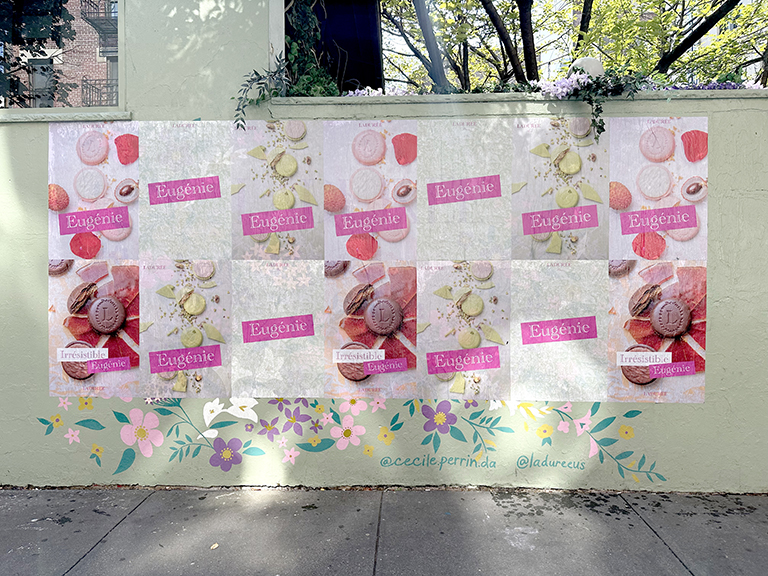
Street-level OOH — poster campaigns, sidewalk stencils, street team placements — operates on different negotiating dynamics than traditional billboard OOH. Pricing is typically more bespoke, with more flexibility around scope, duration, geographic coverage, and production. Package pricing that bundles production, installation, and documentation into a single deliverable is the standard structure and the most efficient comparison point across providers. When evaluating competing proposals for street-level OOH, ensure you are comparing equivalent scope — documentation quality, posting volume, geographic distribution, and installation standards vary significantly across providers and dramatically affect the value of ostensibly similar proposals.
LED Truck Negotiation
Our LED billboard truck deployments are priced by day or by route rather than by period impressions. Day-rate negotiation is most effective when committing to multi-day or multi-week runs, where per-day rates typically improve by 10-20% for longer commitments. Route flexibility — working with our team to identify the most efficient routes rather than specifying a single predetermined route — also improves value efficiency, because we can optimize routes around real-time traffic and event conditions to maximize impression delivery within the contracted deployment time.
Negotiating with Digital Publishers
Digital media negotiation has become more complex as programmatic buying has established market price floors for most standard inventory. Premium direct placements — homepage takeovers, native content partnerships, first-party audience buys — retain meaningful negotiating flexibility because they are outside the programmatic floor. Standard display and pre-roll running programmatically have less negotiating room, as programmatic pricing is market-determined rather than negotiated bilaterally.
Premium Direct Placement Negotiation
Premium digital placements — site skins, branded content, exclusive category buys, newsletter sponsorships, podcast host reads — are negotiated directly with publishers and have meaningful rate flexibility. The same timing and volume principles that apply to OOH apply here: Q1 buying, extended commitments, multi-property packages within a single publisher’s network, and added value orientation all produce better outcomes than rate-only negotiation on premium direct placements.
First-Party Data Upsell Negotiation
Publishers increasingly offer first-party audience data targeting as a premium upsell on digital campaigns. When this targeting is genuinely valuable to your campaign (access to a publisher’s verified subscriber data that matches your target audience), negotiate the targeting as part of the initial deal structure rather than adding it after rate is set. The publisher has more flexibility to include targeting as added value when rate is still in play than after the headline rate is agreed.
Building Long-Term Media Relationships
The most sustainable competitive advantage in media negotiation is not tactical — it is relational. Buyers who treat media sellers as long-term partners rather than transactional opponents consistently access better rates, better inventory, and better added value over time than buyers who optimize tactically on each individual transaction.
Paying on Time
This is unglamorous but real: buyers with excellent payment track records receive preferential treatment from sellers. A buyer who pays invoices on time, who does not dispute charges routinely, and who manages the administrative side of the relationship professionally is a seller’s preferred counterparty — and preferred counterparties receive relationship-based concessions that poor-payment buyers do not access.
Feedback and Reporting Reciprocity
Sharing campaign performance data — what worked, what drove measurable response, how the placement performed against your objectives — with media sellers creates the foundation for better future deals. Sellers who understand how their inventory actually performs for your business can help you optimize placement, timing, and format more effectively. This information exchange is not something most buyers do, which means buyers who do it differentiate themselves as professional partners rather than transactional buyers.
Frequently Asked Questions: Negotiating with Media Outlets
What is the most effective way to negotiate with media outlets?
Effective media negotiation combines market knowledge (knowing actual transacted rates, not just rate cards), timing leverage (buying in low-demand windows), volume consolidation (concentrating spend with fewer sellers), and deal structure sophistication (negotiating added value and structure alongside rate). Information asymmetry is the media seller’s primary advantage — eliminating that asymmetry is the foundation of effective buyer negotiation.
When is the best time to negotiate media advertising rates?
Q1 (post-holiday, January-March) and end-of-quarter periods (late March, late June, late September) are the strongest buyer negotiating windows across most media types. For OOH specifically, summer and early January are typically the softest demand periods outside of major event markets. Avoid initiating significant media negotiations in Q4, when demand is highest and seller flexibility is at its lowest.
What added value can be negotiated beyond rate reduction?
Extended run duration, additional placement units, bonus impressions, production assistance, enhanced reporting, audience targeting upgrades, social amplification, priority positioning, and first-call rights on premium inventory. These concessions are often more achievable than headline rate reductions because they use existing capacity or resources rather than reducing the seller’s margin on committed inventory.
How does working with a media buyer improve negotiating outcomes?
Media buyers with established outlet relationships and consistent volume access rates and deal structures unavailable to individual brand buyers. Volume pricing available to a buyer placing ten campaigns per year at a given outlet is not available to a brand placing one campaign. The buyer’s fee is typically recovered through the rate differential they achieve relative to the unrepresented buyer rate.
How do you negotiate with OOH and billboard operators?
Focus on timing (off-peak windows), duration (longer runs for better per-week rates), location flexibility (premium adjacent rather than insisting on single most desirable unit), package structure (multi-board or multi-market bundles), and added value. Rate card OOH prices are negotiable 10-30% in soft demand periods with genuine buyer leverage.
What is the biggest mistake brands make when negotiating media deals?
Negotiating without market rate intelligence. Not knowing what comparable buyers are actually paying means you cannot evaluate whether the offered rate is fair or inflated, and you cannot credibly challenge a seller’s rate justification. Informational parity — knowing the real market — is the prerequisite for effective negotiation regardless of the specific tactics used.
Frequently Asked Questions
What is negotiating with media outlets tips for getting the best deals?
American Guerrilla Marketing provides negotiating with media outlets tips for getting the best deals services across 50+ U.S. markets. Every campaign is planned, scouted, executed, and GPS-documented by our field teams. We work with regional brands and Fortune 500 companies on campaigns that require real street-level execution and documented proof of performance.
How does AGM approach best deals?
Our process starts with a market consultation to understand your goals, target audience, and budget. We then scout locations, handle any required permissions or permits, coordinate production and installation with our local crews, and provide a full GPS-tagged photo report after the campaign runs.
What markets does American Guerrilla Marketing cover for best deals?
We operate in 50+ U.S. markets including New York, Los Angeles, Chicago, Miami, Houston, Atlanta, Seattle, Denver, Boston, and dozens of secondary markets. Contact us to confirm availability and pricing for your specific market.
How much does a best deals campaign cost?
Campaign pricing depends on market, format, quantity, and duration. We work with budgets ranging from targeted single-market runs to national rollouts across multiple cities. Use our RFP Builder or contact us directly for a custom quote based on your specific campaign requirements.
How do I get started with best deals through AGM?
The fastest way to get started is to submit your campaign details through our RFP Builder at americanguerrillamarketing.com, or contact us directly at [email protected] or (646) 776-2770. Our team typically responds within one business day with availability and initial pricing.