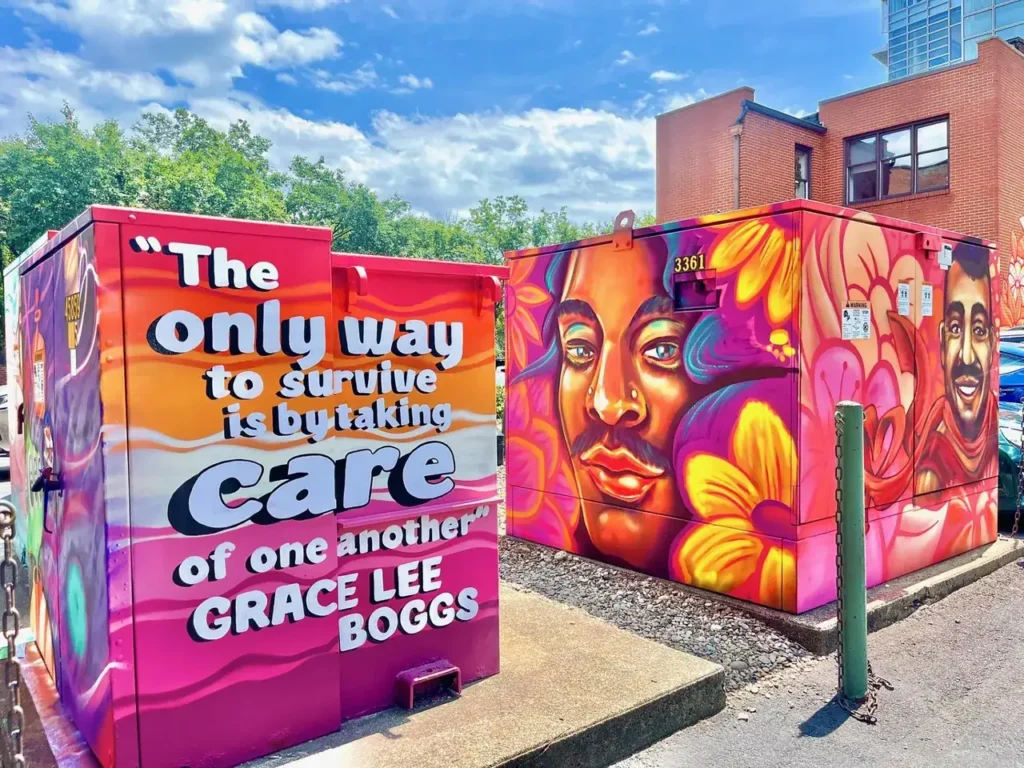
North Carolina is one of the most dynamic growth markets in the Southeast. Charlotte has become a major financial center and one of the fastest-growing large cities in the country. The Research Triangle of Raleigh, Durham, and Chapel Hill has assembled one of the highest concentrations of educated workers, technology companies, and research institutions in the South. Asheville has built a national reputation as a destination for arts, music, and outdoor recreation. All of these markets present genuine opportunities for mural advertising that builds lasting outdoor brand presence.
Our team at American Guerrilla Marketing plans and executes mural advertising campaigns across North Carolina and 50+ U.S. markets. We handle location scouting, property owner negotiations, permit applications, artist coordination, production, and post-installation documentation. Every campaign we run in North Carolina comes with the same accountability framework we apply in our most competitive markets.
This guide covers the strategic case for mural advertising in North Carolina, how we approach each major market, what production involves, and which brand categories see the strongest results.
Why North Carolina Is a Strong Mural Advertising Market
North Carolina’s combination of large urban markets with established mural cultures, rapidly growing suburban populations, strong tourism activity in western NC, and a diversified economic base creates a broad set of brand opportunities for outdoor advertising.
Urban Growth Driving Foot Traffic
Charlotte added more than 100,000 residents in the past decade. The Raleigh-Durham area is consistently ranked among the fastest-growing metros in the country. Both markets have seen downtown revitalization that’s generated new pedestrian activity, outdoor dining scenes, and arts districts where mural advertising performs best. NoDa and Plaza Midwood in Charlotte, the Warehouse District in Raleigh, and the American Tobacco Campus and East Durham in Durham are all examples of neighborhoods where brand murals now fit naturally in the visual landscape. Our mural advertising team identifies locations where the neighborhood growth trajectory maximizes the campaign’s long-term impression value.
Asheville’s Tourism Multiplier
Asheville receives millions of visitors annually from across the Southeast and the mid-Atlantic, driven by its Blue Ridge Parkway access, arts and music culture, culinary scene, and outdoor recreation. Murals in Asheville’s Wall Street area, the River Arts District, and downtown corridors reach a tourist audience that extends brand visibility far beyond the city’s 90,000-person permanent population. For national brands, a single Asheville mural placement functions as a touchpoint for consumers from dozens of states who visit the city annually.
Research Triangle’s Educated Consumer Base
The concentration of universities, research institutions, and technology employers in the Raleigh-Durham corridor has produced one of the most educated regional consumer bases in the South. This audience responds to brands that demonstrate intelligence, creativity, and genuine community investment. A well-executed mural in the right Research Triangle location signals all three. Pair with experiential marketing activations at North Carolina’s many university-adjacent venues for campaigns that layer physical brand presence with live consumer engagement.
North Carolina Markets We Target
Charlotte
Charlotte is North Carolina’s largest city and the country’s second-largest banking center. Its mural market is concentrated in a handful of neighborhoods that have transformed from industrial or overlooked to densely active in the past decade. NoDa, the arts and entertainment district north of downtown, has the highest concentration of murals in the city and draws steady foot traffic from creatives, young professionals, and arts-engaged residents. Plaza Midwood’s restaurant and bar scene creates evening pedestrian traffic that complements daytime commuter visibility. South End, along the light rail corridor, is Charlotte’s fastest-growing neighborhood and has rapidly developing mural culture. Our guerrilla marketing services cover all of Charlotte’s emerging and established neighborhoods.
Raleigh
Raleigh’s Warehouse District near downtown and the Glenwood South entertainment corridor are the primary mural location targets. The Warehouse District has attracted significant arts investment and food and beverage businesses that drive foot traffic throughout the week. Glenwood South concentrates Raleigh’s nightlife and restaurant scene in a walkable corridor. The Hillsborough Street corridor near NC State University creates additional targeting options for brands with a younger demographic focus. Raleigh’s strong technology and state government employment base creates purchasing power that supports premium brand campaigns.
Durham
Durham’s transformation from tobacco industry city to arts and innovation hub is one of the more remarkable civic stories in the South. The American Tobacco Campus, originally a Lucky Strike factory, is now a mixed-use development that concentrates creative industry tenants and generates consistent pedestrian traffic. East Durham’s Eastover and Old North Durham neighborhoods have active arts communities and accessible walls for brand murals. Duke University’s proximity adds an educational institution demographic to the broader Durham consumer mix.
Asheville
Asheville requires a specific approach given its unique arts culture and tourism economy. The River Arts District’s old warehouse buildings provide some of the best large-format mural surfaces in North Carolina. Downtown Wall Street alley and the surrounding blocks concentrate tourist and local foot traffic in the city’s arts-forward commercial core. Asheville’s arts community has high expectations for creative quality, and brands that commission genuinely exceptional murals in this market earn community advocacy that functions as organic brand amplification. Our brand ambassador programs work well in Asheville’s outdoor and festival event environments alongside mural campaigns.
Greensboro and Winston-Salem
The Triad’s two major cities serve as commercial centers for the Piedmont region. Greensboro’s downtown revitalization and the Proximity Hotel district create mural opportunities reaching both local residents and business travelers. Winston-Salem’s creative district and the RJ Reynolds arts complex create a market for brands targeting arts-engaged professionals. Both cities have the corporate and industrial employer base to support premium consumer brand campaigns.
The North Carolina Mural Production Process
Location Research and Selection
We research candidate walls using foot traffic data, demographic mapping, sight line analysis, and an inventory of available wall surfaces in your target North Carolina market. Charlotte’s South End development pace, Durham’s arts district evolution, and Asheville’s historic district constraints all require different scouting approaches. We present ranked location options with supporting data before any commitments are made. Typically two to five candidates per market are identified and presented to your team.
Property Agreements
We negotiate directly with property owners, bringing a professional proposal covering mural concept, timeline, display term, and compensation or community benefit arrangements. North Carolina’s active development markets mean that property owners in revitalizing neighborhoods are often eager for mural investment that improves building value and neighborhood character. We formalize every arrangement with a written license agreement before production begins.
Permit Applications
Charlotte’s Planning, Design, and Development department and Raleigh’s Development Services department each have commercial mural permit processes. Durham’s Planning Division and Asheville’s Development Services apply additional historic district review for certain locations. We handle research, application, and follow-up for all North Carolina permits as standard campaign planning, applying the same compliance approach we use for sidewalk stencil and wheatpasting campaigns across the state.
Artist Coordination and Design Development
North Carolina has a strong pool of mural artists, particularly in Charlotte, Durham, and Asheville. We source artists whose style aligns with your brand direction and whose technical experience ensures production quality at scale. Designs are presented as digital mockups on the actual building surface for your team’s review and approval. Revisions are accommodated before any paint is applied, ensuring the final mural matches your brand vision precisely.
Surface Preparation and Installation
North Carolina’s humid subtropical climate requires exterior-grade paint and moisture-protective sealants that address both high humidity and significant summer UV. Surface preparation includes thorough cleaning, removal of any deteriorating paint, and appropriate priming for the specific wall material and ambient conditions. A protective clear coat is applied after completion. Annual inspection and touch-up maintain mural quality through the full display term, which typically runs four to six years for a properly installed North Carolina mural.
Industries with the Strongest North Carolina Mural ROI
Technology and Financial Services
Charlotte’s banking and financial services sector and the Research Triangle’s technology economy create large, high-income consumer bases for brands in those categories. Mural advertising in Charlotte’s South End and Raleigh’s Warehouse District reaches these professionals during the off-hours when they’re making personal purchasing and lifestyle decisions. Technology companies use murals for both employer brand and consumer product marketing in these markets.
Food and Beverage
North Carolina’s craft brewery scene, restaurant market, and food production culture create natural alignment for food and beverage brand murals. Asheville’s food culture, Charlotte’s growing dining scene, and Durham’s reputation as a food destination all support mural campaigns for brands in this category. Integrate with street team sampling events at mural locations for launch campaigns that drive immediate trial alongside long-term brand visibility.
Healthcare Systems
North Carolina’s major health systems, including Atrium Health, UNC Health, and Duke Health, operate in markets where building community recognition directly drives patient preference. Neighborhood-facing mural advertising signals deep community presence and investment in ways that traditional healthcare advertising cannot. Community health campaigns and new facility announcements both benefit from mural placement in the neighborhoods they’re designed to serve.
Real Estate and Development
North Carolina’s extraordinary real estate growth has created active markets for developer brand advertising across Charlotte, Raleigh, and the surrounding suburbs. Murals near development sites, in transitioning neighborhoods, or along light rail corridors where new housing is concentrating all serve real estate and development brand-building needs. Our mobile billboard option complements mural campaigns for development projects that need rapid market saturation during pre-sales periods.
Frequently Asked Questions About Mural Advertising in North Carolina
What is mural advertising and how does it work in North Carolina?
Mural advertising places large-scale branded artwork on building exteriors in high-traffic North Carolina locations. We handle location scouting, property negotiations, permit applications, artist coordination, production, and documentation for brands targeting Charlotte, Raleigh, Durham, Asheville, and other North Carolina markets.
What North Carolina cities does AGM serve for mural campaigns?
We serve Charlotte, Raleigh, Durham, Greensboro, Winston-Salem, Asheville, Fayetteville, Wilmington, High Point, and Chapel Hill. Charlotte and Raleigh-Durham are our primary North Carolina markets given their density, economic growth, and established mural cultures.
Are permits required for mural advertising in North Carolina?
Yes. Charlotte, Raleigh, and Durham all regulate commercial murals under their local sign codes. Asheville has additional design review requirements in historic districts. Our team handles permit research and application for every North Carolina campaign location.
How long do murals last in North Carolina?
North Carolina’s humid subtropical climate and significant summer UV require exterior-grade, UV-resistant paint and moisture-protective sealants. Properly installed and maintained murals in North Carolina typically last four to six years. Annual inspection and touch-up are recommended.
What industries see the best results from mural advertising in North Carolina?
Technology and banking companies in Charlotte and the Research Triangle, food and beverage brands, healthcare systems, real estate developers, entertainment venues, and national consumer brands building Carolinas market presence all see strong ROI from North Carolina mural campaigns.
How much does mural advertising cost in North Carolina?
Mural advertising in North Carolina typically costs $7,000 to $40,000+ depending on market, wall size, design complexity, artist fees, and permit requirements. Charlotte and Raleigh premium locations run at the upper end. Contact our team for a site-specific quote.
Frequently Asked Questions
What is mural advertising north carolina?
American Guerrilla Marketing provides mural advertising north carolina services across 50+ U.S. markets. Every campaign is planned, scouted, executed, and GPS-documented by our field teams. We work with regional brands and Fortune 500 companies on campaigns that require real street-level execution and documented proof of performance.
How does AGM approach north carolina?
Our process starts with a market consultation to understand your goals, target audience, and budget. We then scout locations, handle any required permissions or permits, coordinate production and installation with our local crews, and provide a full GPS-tagged photo report after the campaign runs.
What markets does American Guerrilla Marketing cover for north carolina?
We operate in 50+ U.S. markets including New York, Los Angeles, Chicago, Miami, Houston, Atlanta, Seattle, Denver, Boston, and dozens of secondary markets. Contact us to confirm availability and pricing for your specific market.
How much does a north carolina campaign cost?
Campaign pricing depends on market, format, quantity, and duration. We work with budgets ranging from targeted single-market runs to national rollouts across multiple cities. Use our RFP Builder or contact us directly for a custom quote based on your specific campaign requirements.
How do I get started with north carolina through AGM?
The fastest way to get started is to submit your campaign details through our RFP Builder at americanguerrillamarketing.com, or contact us directly at [email protected] or (646) 776-2770. Our team typically responds within one business day with availability and initial pricing.