
September 12, 2026
Mobile Experiential Activations | American Guerrilla Marketing
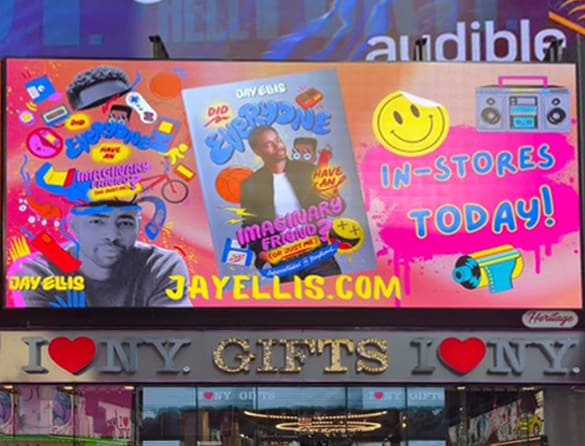
Mobile experiential activations deliver the depth of immersive brand engagement without the limitation of a single location. Here is how to build programs that scale across markets while maintaining consumer quality.
Mobile experiential activations solve a problem that stationary experiential programs cannot: scale. A beautifully built pop-up activation in one city reaches the consumers who happen to be in that city during that specific window. A mobile experiential program reaches consumers across five, ten, or twenty cities, at events and in neighborhoods that pre-select for the brand’s target audience. The brand comes to the consumer rather than requiring the consumer to seek out the brand.
The challenge is maintaining experiential quality at scale. Pure sampling tours can be scaled relatively easily because the consumer interaction is simple and replicable. Experiential activations, by definition, involve more complex consumer engagement: immersive environments, demonstrations, storytelling, interactive elements, multi-product exploration. Scaling that complexity requires careful design, rigorous staff training, and operational infrastructure that most agencies lack in more than a few markets.
At American Guerrilla Marketing, mobile experiential activations are among the most complex work we execute, and among the most rewarding when they work well. This guide explains the strategy, the design principles, and the operational realities of running mobile experiential programs that actually deliver on their promise.
The Distinction Between Mobile Sampling and Mobile Experiential
The terms are sometimes used interchangeably, but they describe fundamentally different consumer encounter types. Understanding the distinction is important for brands deciding what kind of program to invest in.
A mobile sampling activation is designed for volume. The consumer receives a product sample, perhaps exchanges a few words with brand staff, and moves on. The entire interaction might be thirty seconds. At the right location with the right product, this format can generate thousands of consumer contacts in a single activation day. The depth of the individual encounter is low; the volume is high.
A mobile experiential activation is designed for depth. The consumer enters or engages with a brand environment. They might try multiple products, receive a demonstration, participate in an activity, consume brand content, or have a substantive conversation with a knowledgeable brand representative. The individual encounter might last three to fifteen minutes. The volume per activation day is lower; the depth and quality of each consumer relationship is dramatically higher.
Neither is inherently superior. The right choice depends on the brand’s objective, the product category, and where the brand sits in its development. A well-funded national brand with strong awareness and wide distribution may want depth over volume, creating rich consumer relationships that deepen existing brand loyalty. An early-stage brand with limited retail distribution may need volume first, generating broad trial before depth can be built.
The most effective programs often combine elements of both: a mobile experiential environment that creates depth for consumers who choose to engage fully, with a sampling component that generates volume from the broader consumer population in the vicinity.
Designing a Mobile Experiential Unit
The physical design of the mobile experiential unit is a critical strategic decision. It determines what consumer experience is possible, what logistical constraints apply, and how the brand expresses itself in the activation environment.
Custom Vehicle Builds
For brands committed to mobile experiential as an ongoing investment, a custom-built vehicle designed specifically for the brand’s experiential requirements is the premium choice. Custom builds can incorporate serving counters, display cases, demonstration stations, integrated technology, climate control, branded interiors, and external structures that extend the activation footprint beyond the vehicle itself.
The investment in a custom build is significant: design, fabrication, and finishing for a serious custom vehicle can range from $75,000 to $400,000 or more depending on complexity. But for a brand running an extensive national tour over multiple years, the per-activation cost of a custom build can be competitive with repeatedly renting and configuring off-the-shelf vehicles. The brand also gets a consistent, purpose-built brand environment rather than a series of adapted compromises.
Configured Standard Vehicles
For brands that need mobile experiential capability without the custom build investment, standard vehicle types can be configured to support experiential programming. Step vans can be fitted with display shelving and serving equipment. Airstream trailers can be configured as tasting rooms or demonstration spaces. Sprinter vans can be adapted for demo programs. The limitation is that the vehicle’s form factor constrains what is experientially possible, and the configuration may need to be rebuilt for each tour if the vehicle is rented rather than owned.
Hybrid Setups with Exterior Extensions
Many of the most effective mobile experiential activations use the vehicle as a base and extend the brand environment through exterior structures: branded awnings, popup canopy systems, branded furniture, display tables, and decorative elements that create an activation footprint significantly larger than the vehicle itself. This hybrid approach allows a smaller vehicle to support a large activation environment, and the exterior elements can be configured specifically for each activation location.
The vehicle is not the activation. The vehicle is the logistics platform. The activation is what happens when a real consumer engages with your brand in the environment you have created around the vehicle. Design for the consumer experience, not for the vehicle itself.
Consumer Engagement Design
The physical unit creates the container. The consumer engagement design creates the experience. These are separate problems that need separate attention.
Entry and Welcome Moments
The first three seconds of a consumer encounter set the tone for everything that follows. How does the consumer become aware of the activation? What draws them in? What is the first thing they experience when they approach the unit? These entry moments need to be designed deliberately. A confused or unwelcoming entry experience, even if the rest of the activation is excellent, will result in consumers walking past without engaging.
Effective entry moments typically involve a combination of visual magnetism (the unit or surrounding environment is visually interesting and worth approaching), an immediate value offer (a sample, a demonstration, something freely given), and a welcoming human presence that signals that approaching is easy and rewarding rather than awkward or pressured.
The Core Experience
What does the consumer actually do inside the activation experience? This question requires the most detailed design work. Each element of the experience, tasting a product, watching a demonstration, engaging with a brand story, handling a product sample, should be sequenced and designed to build the consumer’s relationship with the brand in a specific direction. The experience should not be a random collection of brand touchpoints; it should be a designed arc that moves the consumer from initial interest to genuine engagement to a specific desired outcome.
Exit and Follow-Through
What does the consumer leave with? A physical sample, a coupon, a QR code to scan, branded materials, or simply a memory? The exit moment is the last opportunity to convert the activation encounter into a durable consumer relationship. Consumer who leave with a physical product they will use have a continuing touchpoint with the brand. Consumers who leave with a code to scan can be followed up digitally. Consumers who leave with nothing but a memory are relying on that memory alone to bridge the gap between the activation and the next purchase opportunity.
Location Strategy for Mobile Experiential Programs
Mobile experiential activations have more specific location requirements than simple sampling programs. The consumer interaction is longer and requires a consumer who is willing to stop and engage, which means the location needs to provide a context where stopping is natural rather than inconvenient.
Dwell-Time Environments
Locations where consumers naturally slow down or gather are superior for experiential activations: farmers markets, outdoor plazas, park areas, community event spaces, and event perimeters rather than transit corridors where consumers are in motion. The consumer who is already in a leisurely, exploratory mindset is far more likely to engage fully with an experiential activation than one who is moving with purpose and has limited time for a brand encounter.
Event Integration
Events provide pre-built dwell-time environments with concentrated consumer populations. A mobile experiential unit positioned inside or adjacent to an event has access to consumers who have already chosen to spend time in a social, exploratory environment. The event context also provides a cultural frame that can amplify the brand’s relevance if the brand’s values align with the event’s identity.
Neighborhood Selection
For non-event activations, neighborhood selection is critical. The right neighborhood for a mobile experiential activation is one with a high concentration of the target consumer, with pedestrian traffic patterns that create natural dwell time, and with a cultural identity that is consistent with the brand’s positioning. A premium wellness brand activating in a health-oriented neighborhood creates a contextual alignment that a premium wellness brand activating in a purely commercial district does not.
| Mobile Experiential Format | Consumer Depth | Volume Per Day | Best Location Type |
|---|---|---|---|
| Custom built brand environment | Very High | Low-Moderate | Events, plazas, markets |
| Configured vehicle with exterior | High | Moderate | Events, neighborhood parks |
| Demo station vehicle | High | Moderate | Specialty retail adjacency, events |
| Tasting room format | Very High | Low | Markets, cultural events |
| Sampling with experiential elements | Moderate | High | Transit, commercial corridors |
Staffing Mobile Experiential Activations
The staff requirements for mobile experiential activations are higher than for simple sampling programs. Consumer interactions are longer, more complex, and require deeper brand and product knowledge. The staff need to be capable of sustaining multiple simultaneous consumer engagements, managing the physical environment of the activation, and maintaining energy and brand enthusiasm across a full activation day.
Staff Roles on a Mobile Experiential Activation
A well-staffed mobile experiential activation typically includes a field manager responsible for overall activation management and real-time decision-making, primary brand representatives who lead consumer engagements and deliver the core brand experience, a support role responsible for maintaining product supply, managing setup and teardown, and handling operational logistics, and optionally a documentation role responsible for capturing photo and video content throughout the activation.
The ratio of staff to expected consumer volume is an important planning variable. Experiential activations require more staff per consumer contact than sampling activations because each interaction is longer and more labor-intensive. An understaffed experiential activation creates wait times that damage the consumer experience, or staff who rush encounters to manage volume, which defeats the purpose of the experiential format.
Training for Experiential Depth
Staff on mobile experiential activations need to be trained on the brand story, the full product range, the key product benefits and differentiators, the target consumer profile, the specific engagement protocols for the activation, and the documentation requirements. This training investment is significant but non-negotiable. An experiential activation staffed with people who do not know the brand deeply cannot deliver the depth of consumer engagement that the format promises.
Measuring Mobile Experiential Performance
Measuring experiential activation performance requires a more nuanced approach than measuring simple sampling volume. The outputs are not just counts of samples distributed; they include the quality of consumer engagements and the downstream consumer behaviors those engagements produce.
AGM tracks mobile experiential performance through a combination of metrics: activation stop count and deployment locations, consumer engagement volume (number of consumers who participated in the experience), consumer contact data where applicable (opt-ins, social follows, form completions), and photo documentation that captures the quality and depth of consumer interactions across all activation locations.
For brands with retail distribution, post-tour analysis of sell-through data in activated versus non-activated markets provides the most direct measurement of activation impact on purchase behavior. For brands building pre-launch trial, consumer contact data and post-activation follow-up conversion rates provide the measurement basis.
Mobile Experiential Activations for Specific Categories
Different product categories have different natural approaches to mobile experiential activation. Understanding the category-specific patterns helps brands avoid reinventing the wheel and build on formats that have proven effective in their category context.
Food and Beverage
For food and beverage brands, mobile experiential activations most often combine a tasting experience with product education. Consumers try one or more products while staff explain the sourcing, production, or key differentiating characteristics that make the product worth choosing over the alternatives. The tasting creates the sensory foundation; the education creates the context that makes the tasting meaningful. Together they produce a consumer who understands why the product is good, not just that it tastes good.
Cold chain management is the primary operational challenge for food and beverage mobile experiential programs. Products need to be kept at the right temperature throughout the activation day, from the initial product loading to the last sample served. This requires proper equipment and protocols that maintain product quality regardless of outdoor temperature conditions.
Apparel and Fashion
Mobile experiential activations for apparel and fashion brands focus on creating a brand environment that expresses the identity of the brand three-dimensionally. The consumer should feel the brand’s world, not just see its products on a rack. This requires investment in the aesthetic quality of the activation environment, including the vehicle presentation, the display design, the music, the staff styling, and the overall sensory experience of being in the brand’s space.
The challenge for apparel mobile experiential activations is the fitting and sizing element. Consumers who want to try on garments need a fitting space, which requires either a vehicle with interior consumer access or a portable fitting room structure adjacent to the vehicle. Planning for this element significantly affects both the vehicle selection and the activation footprint size.
Beauty and Personal Care
Beauty mobile experiential activations are among the most staff-intensive of any category because the consumer engagement requires skilled product application and personalized recommendation. Staff need to be trained on the full product range, on skin type and condition identification, and on the consultation process that helps consumers understand which products are right for their specific needs. This level of staff expertise cannot be achieved through a brief pre-campaign training session; it requires sustained investment in staff development.
Consumer Technology
Technology brands using mobile experiential activations need to solve the hands-on demo problem in an outdoor or semi-outdoor environment. The demonstration needs to be visible and compelling in variable lighting conditions. The product needs to work reliably under the full range of field conditions. The demo needs to be completable in a reasonable time window without requiring complex setup or instruction. Technology mobile experiential activations that solve these problems can create powerful consumer moments; those that do not solve them create consumer frustration that damages the brand.
Integrating Mobile Experiential with Digital Marketing
Mobile experiential activations generate significant opportunities for digital integration that brands often underutilize. Consumer opt-ins captured at mobile experiential events feed into CRM systems and enable post-event follow-up that extends the activation’s commercial impact beyond the event day itself. Social content shared by consumers during and after the activation amplifies the program’s reach far beyond the people who were physically present.
Building digital integration into mobile experiential programs from the start, rather than adding it as an afterthought, requires thinking through the consumer process beyond the activation moment. What happens to a consumer who opts into the brand’s database at the mobile experiential event? Do they receive a follow-up sequence that moves them toward purchase? Is there a retail coupon or e-commerce offer that converts the activation trial into a first purchase? Is the activation location and date connected to the brand’s digital advertising targeting, so that consumers who engaged with the mobile unit continue to see the brand’s message in their digital feed for the following two weeks?
AGM can support the development of these digital integration strategies as part of mobile experiential program planning, connecting the field activation to the brand’s digital infrastructure in ways that maximize the commercial return on the field investment.
Planning Mobile Experiential Activations for Specific Markets
Market-specific planning is where mobile experiential activation programs either demonstrate deep expertise or reveal their limitations. A program plan that treats all markets identically, prescribing the same locations, the same staff approach, and the same event selection regardless of city, is a plan built without genuine market knowledge. Strong programs adapt to each market’s specific consumer geography, event calendar, and cultural context.
New York has neighborhoods that are dramatically different from each other in consumer composition and cultural identity. The right location strategy for a premium wellness brand in New York looks nothing like the right strategy for the same brand in Chicago or Los Angeles. Williamsburg and Lincoln Park both attract health-oriented young professionals, but the cultural frame of each neighborhood is distinct enough that the same activation, deployed without adaptation, will feel natural in one and slightly off in the other.
AGM’s market-specific planning is built on years of direct operation in the cities where we work. Our field managers in New York know which event venues are worth pursuing in each borough and why. Our Chicago team knows which neighborhoods are underserved by brand activation programs and offer strong consumer quality with lower competitive clutter. This market knowledge is not something we synthesize from published data; it comes from being on the ground in these cities consistently over time.
When planning a mobile experiential activation in a market AGM has operated in, brands receive specific location recommendations with rationale, specific event recommendations with access pathway, and specific consumer context notes that inform the engagement approach for that market. This level of market specificity is the foundation of programs that feel native to each city rather than like a national template deployed without local adaptation.
Technology and Documentation in Mobile Experiential Programs
Modern mobile experiential activations benefit from technology integration that was not practical a decade ago. Real-time GPS tracking of vehicle deployment allows brands to verify that the activation is running as planned without requiring on-site supervisory presence. Mobile survey tools allow field teams to capture structured consumer feedback at each activation stop. QR codes and NFC technology create digital touchpoints within the physical activation that connect the field experience to the brand’s digital infrastructure.
These technology integrations need to be designed for reliability in the field environment, where connectivity is variable, power is limited, and equipment takes physical punishment over a multi-week program. The technology should enhance the activation without creating dependencies that cause problems when conditions are not ideal. A QR code that does not scan reliably in bright sunlight is worse than no QR code at all; it creates consumer frustration at the moment of maximum brand engagement.
AGM integrates technology into mobile experiential programs where it genuinely improves the program, and recommends against it where the operational complexity outweighs the benefit. Field experience with technology integration across many programs gives us a clear view of what works reliably in real activation conditions versus what sounds good in a briefing room but fails in the field.
Frequently Asked Questions
What are mobile experiential activations?
Mobile experiential activations combine the physical mobility of a touring brand unit with the depth of an experiential consumer engagement. Rather than stationary pop-ups, mobile experiential programs bring a brand environment to multiple consumer locations, events, and neighborhoods, delivering the depth of experiential engagement at scale across many markets.
How is a mobile experiential activation different from a standard mobile tour?
A standard mobile tour typically focuses on sampling and basic brand contact at high volume. A mobile experiential activation creates a more immersive encounter, with a configured brand environment inside or around the vehicle, demonstration opportunities, interactive elements, or curated brand storytelling that engages the consumer beyond a simple sample exchange.
How do you create a genuine experiential encounter from a mobile unit?
The key is designing the mobile unit and the consumer interaction protocol specifically for the brand and product, not just wrapping a vehicle in brand graphics. A genuinely experiential mobile activation has a configured interior or exterior environment that creates a brand context, staff who can deliver depth of product knowledge, and a consumer engagement format that produces a real brand relationship rather than a transaction.
What is the planning lead time for a mobile experiential activation?
Simple mobile experiential activations using standard vehicle configurations can be planned in four to six weeks. Custom vehicle builds for complex experiential programs typically require ten to sixteen weeks. Multi-city tours with large-scale custom environments may need up to six months of lead time for full build, testing, and logistics planning.
What markets does AGM cover for mobile experiential activations?
AGM covers all major U.S. markets including New York, Los Angeles, Chicago, Miami, Dallas, Atlanta, Houston, Boston, Philadelphia, Washington D.C., San Francisco, Seattle, Austin, Nashville, Denver, and beyond. We handle multi-market national programs from a single point of contact.

Ready to Run Your Campaign?
Call us or email us. We’ll tell you exactly what we can do in your market and what it costs.
Related Services
Explore similar advertising solutions offered by American Guerrilla Marketing.
American Guerrilla Marketing — Los Angeles
Street-level campaigns in Los Angeles and nationwide. Wheatpasting, LED trucks, street teams, and more.
(646) 776-2770
Related Articles
-
Street Poster Advertising Ottawa: A Complete Campaign Guide
September 17, 2026
-
Activation Marketing: How Brands Win at Street Level
September 13, 2026
-
Experiential Marketing Firms Chicago | American Guerrilla Marketing
September 12, 2026
-
Pop Up Experiential
September 12, 2026
-
Mobile Pop Up
September 12, 2026