
July 23, 2026
Convention Mobile Billboard Advertising: The Exact Routes Around LVCC, Javits, and McCormick Place
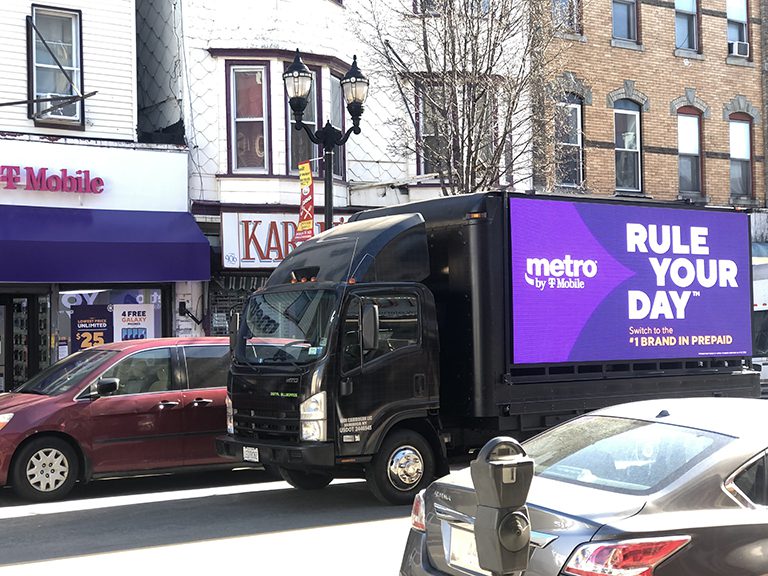
Every major convention center in the US has a specific geography that determines how mobile billboard trucks should be routed, what deployment windows produce the highest attendee impressions, and how the program should adapt across a multi-day show. Generic routes generate generic results. The LED truck that runs the right corridors at the Las Vegas Convention Center during CES is performing a fundamentally different operation from the truck that runs the same geography during a non-show day. Convention mobile billboard advertising requires event-specific planning, not standard urban routing.
At American Guerrilla Marketing, we have run mobile billboard programs at the LVCC, Javits Center, McCormick Place, the Orange County Convention Center, Moscone Center, and dozens of other major venues. We have documented the approach routes, hotel corridors, and evening networking zones that produce the highest per-impression returns at each venue, and we route every convention deployment based on that venue-specific knowledge rather than standard market media maps.
This guide covers the exact routing approach, deployment windows, and performance benchmarks for mobile billboard programs at the three highest-volume convention markets in the US: Las Vegas, New York, and Chicago.
Las Vegas Convention Center: Mobile Billboard Routes and Deployment Windows
The Las Vegas Convention Center complex serves as the primary venue for CES, SEMA, NAB, MAGIC, and dozens of other major trade shows. The LVCC’s location at the north end of the Strip corridor creates a distinctive attendee transit pattern: most attendees stay in Strip hotels and travel to the convention center by taxi, rideshare, the LVCC Loop tunnel system, or on foot along Las Vegas Boulevard and Paradise Road.
Primary LVCC Mobile Billboard Routes
The highest-converting route for LVCC mobile billboard deployments runs along Las Vegas Boulevard from Flamingo Road to the LVCC main North Hall entrance on Convention Center Drive. This Strip corridor route captures the maximum concentration of convention attendees in vehicles and on foot during the morning approach window (7:30 to 10 AM) and the evening departure window (5 to 8 PM). The route passes the front of 12 major Strip hotel properties, each hosting thousands of convention attendees per major show.
A secondary route runs along Paradise Road between the Flamingo Road intersection and the LVCC East Hall entrance, capturing the hotel properties on the east side of the convention center that are not served by the Strip Boulevard route. Paradise Road is particularly important for shows that activate the East Hall complex, as attendees staying at properties like the Renaissance, Marriott, and Hilton on Paradise Road use this corridor exclusively.
CES-Specific Mobile Billboard Deployment
CES is the most complex convention mobile billboard deployment in the US because the show uses multiple non-contiguous venues simultaneously: LVCC North, Central, and West Halls; the Venetian Expo; Mandalay Bay; and several hotel venues. A comprehensive CES mobile billboard program requires multiple trucks covering different venue corridors, with routes timed to the specific show schedule at each venue location. Our CES deployments typically include three trucks in simultaneous operation: one on the Strip Boulevard LVCC route, one on the Venetian/Convention Center connector corridor, and one in the Mandalay Bay district.
LVCC Evening Networking Routes
Las Vegas conventions produce intense evening networking activity along the Strip corridor, in the casino bars and restaurants adjacent to the major hotels, and in the Fremont Street area for some show populations. Our LED billboard truck evening routes for LVCC shows shift from the approach corridors to the entertainment district corridors, running the Strip from the LVCC south through the major casino properties and back during the 7 to 11 PM window.
Javits Center: Mobile Billboard Routes in Manhattan
The Javits Center’s Manhattan location creates both advantages and constraints for mobile billboard deployment. The dense urban street grid provides multiple routing options and high pedestrian traffic volumes. New York City’s permitting requirements for billboard trucks in Midtown add a coordination layer that requires advance planning.
Javits Core Routes
The primary Javits mobile billboard route runs on 11th Avenue between 30th and 42nd Street, covering the full length of the Javits Center’s street frontage and the adjacent Hudson Yards hotel properties to the south. A secondary route runs on 34th Street from Penn Station east portal to 11th Avenue, capturing the M34 bus corridor that serves as the primary public transit approach for Javits attendees from eastern Midtown and Penn Station.
A third route variation extends north on 9th and 10th Avenue into the Hell’s Kitchen restaurant district, targeting the lunch and evening networking audience that concentrates in this zone during Javits shows. This route is particularly valuable during the midday window when attendees scatter to local restaurants, as the LED truck passes through the restaurant cluster repeatedly during the lunch hour.
Manhattan Permitting for Convention Mobile Billboards
Mobile billboard trucks operating in Manhattan require DOT route approval and may require NYPD notification for certain deployment configurations. Our New York team, based in Industry City, Brooklyn, manages all permit coordination for Manhattan convention deployments. We have established relationships with the relevant city offices and standard processing timelines for the most common convention market permit types. Brands booking Javits shows should plan for a minimum four-week permit lead time, and ideally six to eight weeks for major national shows.
McCormick Place: Convention Mobile Billboard Routes in Chicago
McCormick Place on Chicago’s lakefront presents a unique routing challenge: the convention center’s geographic isolation from the primary hotel district means attendees move through a limited set of corridors rather than the broader urban grid used at more centrally located venues. That concentration is actually advantageous for mobile billboard deployment, because covering the key corridors captures an exceptionally high percentage of total convention attendees with a more focused route.
Martin Luther King Drive and the Shuttle Corridor
The Martin Luther King Drive corridor between the South Loop hotel cluster and McCormick Place is the primary road attendees travel in the morning approach window. Bus shuttles, taxis, and rideshare vehicles all move along this corridor during show days, creating a predictable, concentrated attendee transit window from 7:30 to 9:30 AM and again during the 5 to 7 PM departure window. An LED truck running MLK Drive during these windows passes the same audience repeatedly over a 30 to 45-minute route loop.
Cermak Road Lunch Zone Route
The restaurant cluster at the west end of Cermak Road, near the intersection with Michigan Avenue and Prairie Avenue, is the primary lunch destination for McCormick Place convention attendees who leave the venue during the midday break. An LED truck route through this zone during the 11:30 AM to 1:30 PM window reaches the lunch audience at its highest concentration, in a relaxed environment that produces high content engagement relative to the morning transit window.
Hyatt Regency McCormick Hotel Zone
The Hyatt Regency McCormick Place is the primary adjacent hotel for the convention center, connected by a pedestrian bridge that concentrates a significant portion of the attendee hotel population in a specific corridor. The hotel zone surrounding the Hyatt is productive for both afternoon and evening mobile billboard deployment, reaching in-house attendees moving between the convention center, hotel, and nearby food destinations.
Integrating Mobile Billboards with Convention Street Team Programs
Mobile billboard trucks produce the strongest convention marketing results when integrated with complementary street-level tactics. An attendee who walks past a sidewalk stencil on the approach corridor, receives a sample from a brand ambassador at the entrance plaza, and sees the brand’s LED truck during the lunch break has accumulated three distinct brand impressions before ever reaching the exhibit floor. That multi-touchpoint sequence is significantly more effective for booth traffic generation than any single tactic alone.
Our guerrilla marketing team designs integrated convention programs where the LED truck route is coordinated with ambassador deployment locations so the truck passes through areas where ground teams are actively working, reinforcing the street-level presence visually while the ambassador handles the direct interaction. This coordination is managed through a shared program calendar that all field crews operate from during the show days.
Multi-Day Convention Mobile Billboard Campaign Structure
Multi-day convention shows require a campaign structure that maintains brand presence throughout the full show duration without content fatigue. An LED truck running identical content on identical routes for three to five consecutive days produces diminishing returns as the attendee population becomes habituated to the same visual stimulus in the same locations. Effective multi-day mobile billboard campaigns are designed with daily variation in content and route emphasis to maintain novelty while preserving core brand consistency.
Day One: Maximum Awareness Reach
The first show day is the highest-value deployment day for convention mobile billboard programs because the attendee population has the freshest attention and has not yet been exposed to the volume of marketing that accumulates across subsequent show days. Day one routes prioritize the highest-traffic approach corridors and concentrate on morning approach timing to maximize reach. Content on day one should lead with clear brand identification and the booth location, establishing the brand’s convention presence early in the show.
Day Two: Route Variation and Engagement Deepening
Day two routes are varied from day one to reach the portions of the attendee population who were less present in the day one approach corridors, and to present a different visual experience to attendees who passed the truck on day one. Content on day two can shift from pure brand awareness to a more specific message: a product benefit, a conference-specific offer, or a dinner event or booth activation invitation for the evening. The deepening of message specificity on day two is possible because the brand awareness established on day one gives context for the more detailed day two content.
Day Three and Beyond: Evening Emphasis and Departure Capture
On day three and subsequent days of a longer show, the most productive deployment windows shift toward evening emphasis because show floor fatigue peaks and the evening networking environment becomes the primary locus of convention engagement for a growing percentage of attendees. LED truck routes on days three through five emphasize the evening hotel and restaurant zone deployments, reaching the networking audience rather than the approach-corridor audience that dominates the day one priority.
Coordinating Mobile Billboard Timing with Convention Floor Programming
The most effective convention mobile billboard programs are timed to align with the convention’s specific daily programming. When keynote sessions let out, the audience floods into the lobby and surrounding outdoor areas — a peak impression moment for nearby LED truck deployments. When the exhibit floor closes for a sponsored lunch event, the attendees migrating to lunch are a concentrated, identifiable audience on the approach routes to the lunch destination. Our program managers review the daily convention agenda and adjust route timing and emphasis to capture these programming-driven audience concentration moments.
At major conferences with published daily schedules, this programming alignment is systematic: we map the peak session end times, identify the likely post-session movement patterns, and position trucks accordingly. At conventions without rigid programming schedules, we use real-time field observation to identify when large crowd movements occur and adjust routes dynamically throughout the deployment day.
Performance and Reporting for Convention Mobile Billboard Programs
Every convention mobile billboard deployment is GPS-tracked. We deliver post-event route documentation showing the truck’s actual movement throughout each deployment day, with timestamps and location data at regular intervals. We calculate impression estimates based on traffic count data for each route segment, provided either from city transportation data sources or from our own field counts when standard data is unavailable for specific convention-period traffic conditions.
Photo documentation from multiple points on each route, combined with any available QR code engagement data, rounds out the post-event report. For integrated programs, we cross-reference LED truck impression data with ambassador distribution counts and booth traffic metrics to show the full convention district marketing picture in a single report.
Frequently Asked Questions
What are the best routes for mobile billboard trucks at the Las Vegas Convention Center?
The highest-performing LVCC routes run along Las Vegas Boulevard from the Spring Mountain Road hotel cluster to the convention center entrance, along Paradise Road connecting east-side hotels to the LVCC, and through the Strip entertainment corridor during evening networking hours. CES requires additional routes covering the Venetian Expo and Mandalay Bay venue corridors.
How do mobile billboard trucks perform at Javits Center conventions?
At Javits, LED trucks run on 11th Avenue between Hudson Yards and the main entrance, on 34th Street capturing M34 bus corridor traffic, and in the Hell’s Kitchen restaurant zone during evening hours. Typical impression counts at major Javits shows run 20,000 to 35,000 per deployment day.
What makes McCormick Place different from other convention center deployments?
McCormick Place’s lakefront isolation concentrates attendee movement on specific shuttle routes and the Metra station corridor. Routes focus tightly on the Martin Luther King Drive shuttle corridor and the Cermak Road restaurant zone rather than the broader urban grid used at other venues, which actually produces very efficient impression-per-mile ratios.
How much do convention mobile billboard programs cost?
Convention mobile billboard programs typically range from $3,500 to $8,000 per day for a single LED truck including content production, routing, and documentation. Multi-day programs receive volume pricing. Contact us at (646) 776-2770 for a specific estimate for your show and market.
Can mobile billboard trucks drive traffic to a specific booth or session?
Yes. Convention mobile billboard content regularly includes booth hall and number information, session times and locations, or specific venue directions. Content can be updated between deployment windows so morning creative features booth location and evening creative shifts to brand or networking messaging.
What is the lead time for booking a convention mobile billboard program?
For major shows at peak convention markets, we recommend booking 6 to 10 weeks in advance. This allows time for permit processing, content production, route finalization, and crew scheduling. For markets where we maintain standing operations, shorter lead times of 3 to 4 weeks are sometimes possible.

Ready to Run Your Campaign?
Call us or email us. We’ll tell you exactly what we can do in your market and what it costs.
Related Services
Explore similar advertising solutions offered by American Guerrilla Marketing.
American Guerrilla Marketing — Los Angeles
Street-level campaigns in Los Angeles and nationwide. Wheatpasting, LED trucks, street teams, and more.
(646) 776-2770
Related Articles
-
Street Poster Advertising Ottawa: A Complete Campaign Guide
September 17, 2026
-
Activation Marketing: How Brands Win at Street Level
September 13, 2026
-
Experiential Marketing Firms Chicago | American Guerrilla Marketing
September 12, 2026
-
Pop Up Experiential
September 12, 2026
-
Mobile Pop Up
September 12, 2026