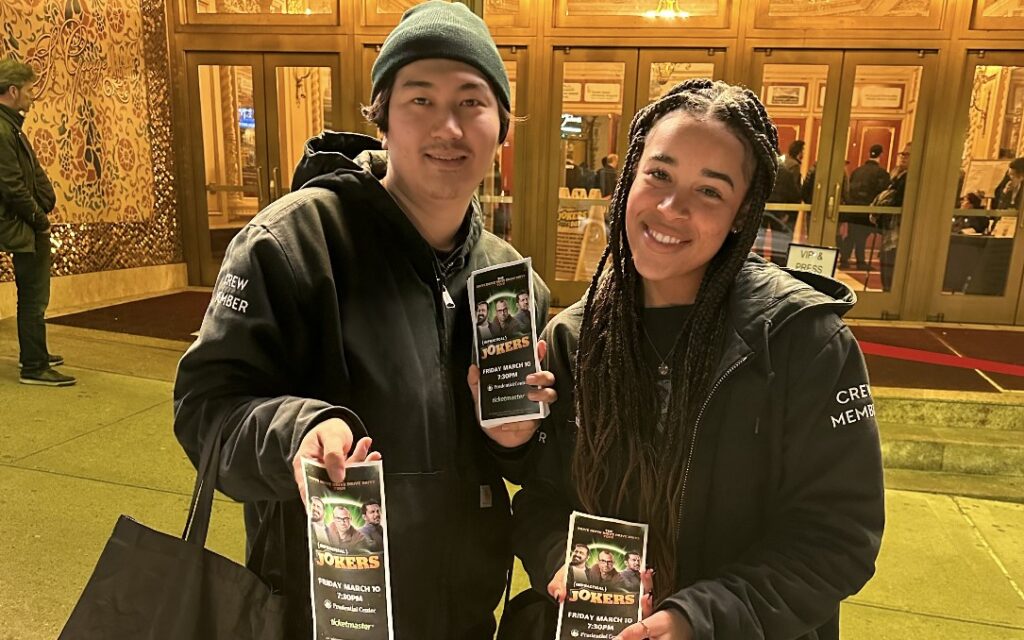
A marketing street team is the most direct form of brand contact available to a consumer-facing company. Real people, in real locations, representing your brand in live conversations with potential customers. No algorithm decides who sees it. No feed ranking buries it. No autoplay cuts it short. A street team shows up, engages, and leaves a memory that sticks in ways that digital formats rarely do.
We build and deploy marketing street teams for brands across North America. We have run street team campaigns in New York, Los Angeles, Chicago, Miami, Austin, Seattle, Philadelphia, Boston, Atlanta, Houston, and dozens of other markets. We know how to recruit the right people, train them for each specific campaign, and deploy them in the exact locations where your target consumer is moving, shopping, commuting, and making decisions.
This guide covers everything relevant to marketing street teams: how they work, what they cost, when to use them, and what separates a street team campaign that actually delivers results from one that burns budget without meaningful outcomes.
The core appeal of a street team is simple. When a trained person hands your product directly to a potential customer, looks them in the eye, and answers their questions on the spot, that interaction is categorically different from anything a digital ad can create. The consumer remembers it. They talk about it. They share it on social media. They buy. That sequence of events happens at a rate that no other marketing channel consistently produces at the same scale and cost.
We have been running these campaigns long enough to know exactly what makes them succeed and exactly what makes them fail. The difference almost always comes down to three things: the quality of the people, the precision of the placement, and the rigor of the management. Get those three right and a marketing street team will outperform most other marketing investments at a comparable budget level.
AGM Field Note: A well-deployed marketing street team generates more genuine brand contacts in a single day than most digital campaigns generate in a week, at a fraction of the cost per meaningful interaction.
What a Marketing Street Team Does
A marketing street team is a group of trained brand representatives who work public spaces, events, transit hubs, retail zones, and targeted neighborhoods on behalf of a brand. Their work is hands-on and direct. They distribute samples, start conversations, hand out collateral, drive sign-ups, collect consumer data, and create the kind of personal brand moment that scales through word of mouth and organic social sharing.
Street teams are used for a wide range of campaign objectives. Understanding which objective your campaign is designed to serve is the first step to building the right team and the right deployment plan.
Product Trial
Getting a product into a consumer’s hands is the most powerful driver of purchase intent that exists in consumer marketing. When someone tastes, touches, or uses your product and likes it, the conversion rate from that moment to a purchase is dramatically higher than from any advertisement. Street teams make trial happen at scale, in the right locations, with the right demographic. A team of five ambassadors deployed at a commuter hub on a Monday morning can generate hundreds of direct product trials in a single shift.
Brand Awareness
Awareness built through human interaction is stickier than awareness built through media exposure. When someone meets a person representing a brand and has a positive exchange, the brand memory that forms is deeper and more durable. Street team deployments in high-traffic neighborhoods build this kind of awareness efficiently. We identify where your target consumer spends time and put your brand there, in person.
Event Amplification
Any major event creates a concentration of exactly the people a brand wants to reach. A street team working the perimeter of a music festival, sporting event, or street fair captures consumer attention at the peak of their engagement and openness. We plan deployments around major events in each market and time them for maximum impact.
Data Collection
Street teams are one of the most cost-effective ways to collect first-party consumer data. An ambassador who can have a real conversation with a consumer and explain exactly why sharing an email address or completing a survey benefits them will generate higher-quality data than any digital pop-up or form. We have run data collection campaigns that generated tens of thousands of qualified leads across multi-week deployments.
Competitive Positioning
When a competitor has strong visibility in a specific neighborhood or retail zone, a street team deployed in that exact territory creates direct comparison moments with consumers who are already in a purchasing mindset. We have used this tactic effectively across categories including beverages, snacks, personal care, and wellness products.
How We Build and Deploy a Marketing Street Team
Our process for building a marketing street team covers every element from first conversation to final report. Here is how it works from the inside.
Campaign Brief and Strategy
Every campaign starts with a clear understanding of what you are trying to accomplish and who you are trying to reach. We ask specific questions about your target consumer, your campaign timeline, your geographic priorities, and the metrics that matter most to you. The answers shape every decision that follows. We do not apply a generic template to every campaign because generic templates produce generic results.
Recruitment
We recruit brand ambassadors who match your target consumer demographic and who can represent your brand voice authentically. For a premium fitness brand, we look for people who live an active lifestyle and can speak about health and wellness from personal experience. For a tech brand, we look for people who are genuinely comfortable with technology and who appeal visually and personally to the target user. Recruitment is not a formality in our process. It is one of the most important decisions in the campaign. The wrong ambassador can undermine everything that follows.
Brand Training
Every ambassador goes through brand-specific training before they work a single shift. Training covers product knowledge, brand voice, key messages, common consumer questions and how to address them, territory management, reporting protocols, and safety procedures. We do not put anyone on the street who has not been thoroughly prepared to represent your brand.
Deployment Planning
We map every deployment to your target consumer’s actual patterns of movement. We identify the neighborhoods, transit stops, retail clusters, and event perimeters where your target consumer is concentrated at the times of day when they are most receptive to engagement. We plan routes for each ambassador, assign territories to eliminate overlap, and schedule shifts around peak traffic windows. Deployment planning is where a lot of agencies cut corners. We do not.
Field Management
We manage active campaigns throughout every shift. Field supervisors monitor ambassador performance, check in at regular intervals, and adjust deployment in real time when conditions change. If a location is underperforming, we move resources to higher-performing areas. If a consumer question is coming up repeatedly, we brief the team on how to handle it. Active management is what separates a campaign that optimizes itself as it runs from one that loses hours to underperformance.
Reporting
At the end of each deployment day, we compile field data into a daily report covering samples distributed, interactions logged, locations covered, social content generated, consumer feedback, and any field observations worth acting on. At campaign close, we deliver a full summary document that becomes the foundation for the next campaign.
When a Marketing Street Team Is the Right Call
Street teams are not the right tactic for every situation or every brand. Here is when they deliver maximum value and when they may not be the best primary investment.
Street teams work best when the brand is consumer-facing, when the product benefits from physical trial, and when the target consumer can be found in concentrated public locations. Categories where we see consistently strong results include food and beverage, beauty and personal care, fitness and wellness, spirits and adult beverages, entertainment and live events, consumer electronics and apps, and retail fashion.
Street teams are less effective as a primary channel when the product has a long and complex sales cycle, when the target consumer is extremely narrow and cannot be concentrated in accessible locations, or when the campaign timeline is too short to generate meaningful accumulation of consumer contacts.
The best street team campaigns we have run have been integrated with other channels. A poster campaign running in the same neighborhood creates brand recognition before a consumer encounters an ambassador. A social media campaign running simultaneously drives motivated consumers to a physical location. A retail promotion tied to the street team deployment gives consumers a direct and immediate reason to purchase. Integration multiplies the return of every dollar spent on the street team itself.
AGM Field Note: The brands that see the highest return from street team campaigns are the ones that treat field marketing as a channel, not a one-time stunt. Consistency of presence builds consumer familiarity. Familiarity drives preference. Preference drives purchase.
Marketing Street Team Pricing
Street team campaign pricing is based on team size, shift length, market, campaign duration, and scope of materials and logistics. We offer two standard tiers as starting points, with all campaigns quoted individually based on specific parameters.
Our Standard Street Team tier starts at $389.99 per 6-hour shift per team member and includes hand-to-hand outreach, mapped movement and routing, GPS pins and photo proof, briefing and talking-point preparation. A minimum of five deployment days applies. Mileage is billed at the current federal rate.
Our Premium Street Team tier starts at $589.99 per 6-hour shift per team member and includes stronger communication skills and multi-location coverage, hourly check-ins, enhanced field reporting, appearance-matched selection, and an on-site field manager. A minimum of three deployment days applies.
Add-ons available across both tiers include additional team members at the applicable tier rate, overtime at $65 per hour, travel days at $275 per day, and hotel per diem at $65 per day. Custom signage, props, and photo and video capture are available at quoted rates.
For multi-market campaigns, campaigns exceeding two weeks, and campaigns requiring specialized logistics or equipment, we build custom quotes based on your specific requirements. Contact us for a detailed proposal.
Common Street Team Campaign Mistakes
We see the same mistakes repeated across agencies and brands that manage street teams without field marketing expertise. Here is what to avoid.
Under-training ambassadors. An ambassador who cannot answer basic product questions or who represents the brand inconsistently in conversation does active damage. Training is not optional. It is the foundation of every effective deployment.
Location selection by volume rather than match. The busiest corner in a city is not necessarily the right location. High foot traffic only matters when a meaningful percentage of that traffic is your target consumer. We always match location to consumer profile, not to raw footfall data.
No follow-through mechanism for the consumer. A consumer who samples your product and likes it needs a clear next step. If there is no coupon, no QR code leading to a purchase page, no social follow prompt, no easy path forward, the positive experience does not translate into purchase behavior. Always give consumers something actionable to take with them.
No real-time management. Conditions change during a deployment. A location might be blocked by a competing event. An ambassador might run into an issue that needs guidance. Weather can change consumer patterns. A campaign with no active management loses time it cannot recover. We manage every campaign actively from the first shift to the last.
No measurement framework. If you are not tracking what the team is doing and what it is producing, you have no basis for optimization and no evidence to justify the next campaign. Measurement is built into our process from day one.
Marketing Street Team Industry Applications
Different industries use marketing street teams in different ways. Here is how we adapt the core tactic across major consumer categories.
Food and Beverage
Sampling is the primary tactic. The goal is to get the product into hands and into mouths. If the product is good, the taste does the selling. The ambassador’s job is to create the moment of trial, answer questions about ingredients and sourcing, and give the consumer a clear next step to purchase. We run food and beverage campaigns in grocery store perimeters, farmer’s markets, transit hubs, and event zones depending on the brand’s target consumer profile.
Beauty and Personal Care
Beauty brands use street teams to drive sampling and social engagement simultaneously. Ambassadors who match the brand’s aesthetic represent the brand authentically to consumers who are often highly sensitive to brand personality and presentation. We have run campaigns for skincare, haircare, cosmetics, and fragrance brands with strong results in both direct trial and social content generation.
Fitness and Wellness
We deploy near gyms, yoga studios, running trails, and athletic events. Ambassadors represent the lifestyle the brand is selling, not just the product. Training is intensive for wellness campaigns because consumers ask detailed questions about formulations, certifications, and performance claims that require accurate and credible answers.
Entertainment and Live Events
Street teams for entertainment campaigns focus on urgency and excitement. They drive ticket sales, streaming sign-ups, app downloads, and event attendance. The interaction needs to be energetic and concise. A QR code that goes directly to a purchase page is essential. We time these deployments to maximize contact with the audience most likely to act immediately.
Technology and Apps
Tech street teams work best at events and in neighborhoods with high concentrations of the target user. They drive free trial sign-ups, app downloads, and demo bookings. For complex products, we create simple demonstration setups that let ambassadors show the product rather than describe it. A live demonstration is worth ten minutes of description.
Getting Started with Your Street Team Campaign
The best street team campaigns start with a clear objective, a specific target consumer, and a realistic timeline. Bring those three things to the first conversation and we can build a campaign plan that matches your budget and your goals.
We are direct about what is feasible, what costs what, and what you can realistically expect from a campaign of a given size and duration. We do not over-promise to win a booking. We build campaigns that produce results you can measure and repeat.
Call us or email us to start the conversation. We move fast, we build good campaigns, and we report everything. That is how we work.
Street Team Marketing in Different Seasons
Street team marketing is not a seasonless tactic. Consumer behavior in January is different from consumer behavior in July, and the right deployment strategy accounts for those differences. Here is how we adapt street team marketing across the seasons in major North American markets.
Spring
Spring is one of the most productive windows for street team marketing. Consumers who have been indoors through the winter are newly motivated to be outside. Farmers markets restart. Outdoor exercise picks up. Urban foot traffic rises. Product launches timed to spring benefit from a consumer population that is primed for new experiences and actively seeking them. We see higher trial acceptance rates in street-level programs during the March through May window than in almost any other period of the year.
Summer
Summer concentrates consumer activity around outdoor events, beach and park environments, and festival seasons. The outdoor venue density in summer is the highest of the year. For brands targeting active, social consumers, summer street team deployments generate some of the highest contact volumes available. The challenge is heat management for perishable products and keeping ambassadors energized through long outdoor shifts. We plan for both.
Fall
Fall brings the back-to-school window, the start of the holiday season, and a return to urban commercial activity after the summer dispersal. It is one of the strongest consumer engagement periods of the year for most product categories. Fall street team campaigns benefit from a consumer base that is back in routine, back in the city, and in a purchasing mindset that the summer’s casual lifestyle does not always produce.
Winter
Winter street team marketing shifts toward transit hubs, indoor retail environments, and holiday market activations where consumers are concentrated despite the cold. Consumer purchasing intent is highest in November and December for many categories. Sampling at holiday markets and gift fairs, and ambassador presence near major retail corridors during the holiday shopping period, can be extremely productive.
Integrating Street Teams With Other Marketing Channels
Street teams perform best as part of a broader marketing network. Here is how we integrate street team activity with the other channels a brand is typically running.
When a brand is running digital advertising in the same market as a street team deployment, the digital ads can prime consumers for the street team encounter. A consumer who has seen your brand on social media three times in the past week and then encounters your ambassador on the street is in a completely different mental position than a consumer encountering the brand for the first time. The digital channel builds familiarity. The street team converts it.
Out-of-home advertising running in the same neighborhood as a street team creates a layered presence that makes the brand feel ubiquitous without requiring the budget of a full market saturation buy. A poster on the block where the ambassador is working reinforces the brand name in the consumer’s memory at exactly the moment the ambassador makes a personal connection.
For more on this topic, see our guide to snipe advertising.
PR and earned media from street team activations, particularly if the activation involves a creative or newsworthy element, extend the reach of the field campaign into audiences that the team itself could not physically reach. We design activations with earned media potential built in when a brand has the resources to pursue that outcome.
Frequently Asked Questions
How many people do I need on a marketing street team?
The right team size depends on your geographic scope and campaign objectives. A focused single-neighborhood campaign can work well with two to three ambassadors. A city-wide deployment covering multiple neighborhoods simultaneously needs eight to fifteen or more. For multi-city launches, we scale teams independently in each market. We help you model different team-size scenarios against your budget to find the best balance of coverage and cost per interaction.
How long should a street team campaign run?
The minimum effective duration is three to five deployment days. Below that threshold, you generate contacts but rarely generate enough repetition for brand memory to form in a meaningful way. Most of our most effective campaigns run one to three weeks. For brands with ongoing market presence goals, we recommend rolling monthly deployments that maintain continuous visibility without requiring a full campaign launch cycle each time.
Can you run street teams in multiple cities simultaneously?
Yes. We have the field network and management infrastructure to run coordinated simultaneous deployments across multiple North American cities. Unified briefing documents, consistent reporting formats, and centralized field management keep multi-market campaigns aligned and comparable in their data output. We have run campaigns spanning eight cities simultaneously.
What do brand ambassadors wear during deployments?
Branded uniforms or branded gear developed specifically for each campaign. The range goes from a simple branded t-shirt to a full branded kit including jacket, hat, bag, and custom accessories depending on the campaign’s aesthetic requirements and the brand’s visual standards. We work with you to develop the right look and can produce branded uniforms as part of the campaign package.
How do you ensure the quality of the ambassadors you deploy?
Through disciplined recruitment, thorough brand-specific training, and active field management. We screen candidates carefully against criteria established for each campaign, conduct brand-specific training before any ambassador goes live, and monitor performance actively during deployments. Poor-performing ambassadors are identified quickly and replaced. We are not an agency that trains once and walks away.
What kind of brands work best with street teams?
Consumer-facing brands with a product or service that benefits from personal trial or direct explanation. New brands launching into a market, established brands entering new cities, and mature brands refreshing their consumer presence have all used street teams effectively. The tactic is adaptable to almost any consumer category when the brief is clear and the deployment is planned properly.
Can a street team campaign work for a digital product?
Yes, and we have run them successfully for apps, streaming platforms, SaaS tools, and digital subscription services. The ambassador drives downloads, sign-ups, and free trial activations through personal explanation and demonstration. Digital products that are difficult to explain through advertising often benefit significantly from having a real person walk a potential user through the value proposition on the spot.
What is included in the daily field report?
Our daily reports include: total ambassador hours worked, locations covered with GPS confirmation, samples distributed or collateral handed, interaction count by location, social content generated and tagged, notable consumer feedback and questions, and any field observations from the management team. The data is structured for easy comparison across deployment days so you can see how the campaign is trending in real time.
How far in advance do I need to book a street team campaign?
We recommend a minimum of two to three weeks for standard deployments in most markets. Campaigns requiring specialized materials, custom uniforms, or logistics coordination may need four to six weeks of lead time. For urgent launch windows, contact us directly. We have moved quickly on time-sensitive launches before and we will always tell you honestly what is feasible within your timeline.