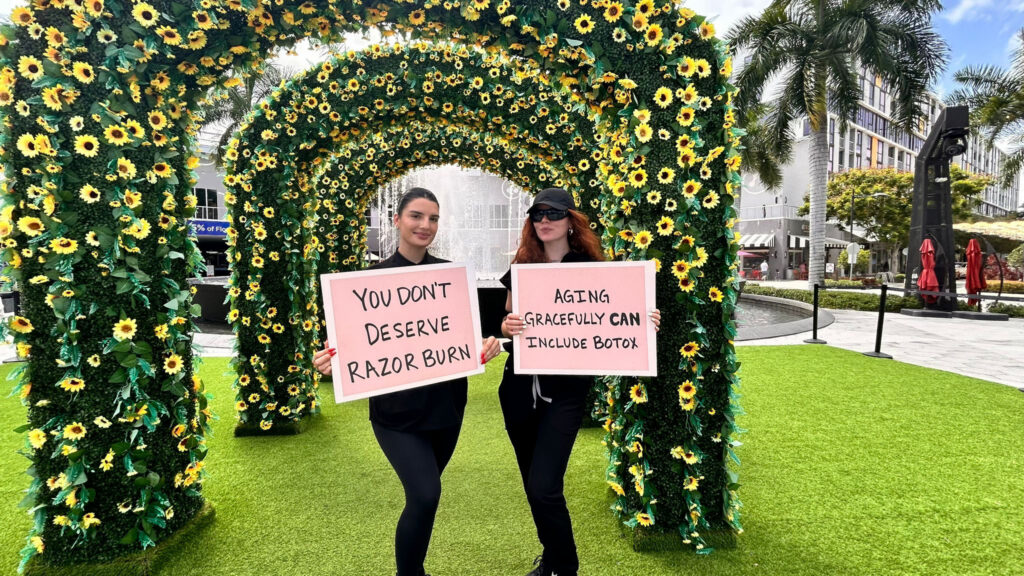
Human directionals are one of the most underestimated and most cost-effective guerrilla marketing tools available for businesses that depend on foot traffic. A person standing at the right intersection, holding a well-designed sign, pointing clearly toward your location, converts passing pedestrian traffic into entering customers at a rate that no passive signage can match. They are mobile, adaptable, immediately deployable, and measurably effective in ways that most other location-based advertising formats are not.
We are American Guerrilla Marketing. We deploy human directionals as part of larger guerrilla marketing programs and as standalone foot traffic programs for retail businesses, restaurants, real estate offices, medical practices, event venues, pop-ups, and any other location that needs to convert pedestrian traffic into visitors. This guide covers how human directionals work, where they work best, how to design the sign and the position, and what to expect from the results.
A human directional is a person holding or wearing a sign that directs pedestrian traffic toward a specific location or event. The sign typically contains a clear directional message, an arrow, and enough brand identification to communicate what the person is directing traffic toward. The directional person is positioned at the highest-traffic approach points to the target location during the windows when foot traffic is highest.
The mechanism is simple: a person in motion with a visible sign generates significantly more attention than a static sign at the same location. The human element introduces visual interest, motion, and a social element (a person engaging with the environment) that the passive sign cannot create. When the directional person is energetic and engaged, the effect amplifies further because people are instinctively drawn to look at active human behavior in their environment.
Sign spinning is the most energetic form of human directional work: the person rotates, tosses, and performs with the sign while maintaining the directional message. Sign spinning generates substantially more attention than static sign holding because the movement is eye-catching at distance and creates genuine curiosity in the people who see it. A skilled sign spinner with a well-designed sign at the right location drives measurably more foot traffic than a person simply holding the same sign.
Where Human Directionals Work Best
Near-Location Approach Intersections
The most effective position for a human directional is the intersection nearest to the target location where traffic is diverted by the street grid. If pedestrians naturally pass an intersection two blocks north of a restaurant, a directional at that intersection intercepts them before they continue past the point where they would naturally turn. The directional person catches the traffic at the decision point, not after it has passed.
High-Foot-Traffic Commercial Corridors
A directional on a high-foot-traffic commercial street near the target location generates brand awareness and direction for everyone passing through the corridor. The sign creates ambient awareness of the location’s existence and direction even among pedestrians who are not making an immediate decision, building recognition that influences later decisions.
Transit Approach Points
Subway exits, bus stops, and other transit delivery points are natural directional positions because they are where people emerge from transit and begin navigating to their next destination. A directional at a subway exit near a retail location or restaurant catches commuters and visitors at the moment of maximum navigation intent.
Event and Venue Perimeters
Events with multiple entrance points, parking areas, or complex navigation challenges use directionals to move attendees efficiently from arrival points to entry. A directional network at the key approach and decision points of a venue or event helps manage crowd flow and reduces the confusion that leads attendees to give up and leave before entering.
AGM Field Note: The most cost-effective foot traffic programs we have run for local businesses are human directional programs at the nearest high-traffic intersection to the business during peak hours. The businesses that attribute the highest return on this investment are the ones with a genuinely good offer (a strong lunch special, a clearance sale, a free service trial) that the directional message communicates clearly. The directional brings people to the door. The offer brings them through it. Both elements have to be right for the program to deliver.
Designing an Effective Human Directional Sign
The sign is the primary communication vehicle in a human directional program. Its design determines whether the pedestrians who see it understand immediately where they are being directed and why they should go there. Here is what effective directional sign design requires.
One Message, One Direction
A directional sign should communicate one thing: where to go. “Restaurant name, one block right.” “Sample sale, open now, around the corner.” The message should be readable in two seconds from fifteen feet while the viewer is in motion. More than one message creates confusion and reduces the directional effectiveness of the sign.
Bold, High-Contrast Color
Directional signs compete with the visual complexity of a busy commercial street. Bold, high-contrast color combinations that stand out from the background environment are essential. The sign should be immediately visible at distance, not discovered only at close range.
A Clear Arrow
The directional arrow is the most important element on the sign after the location name. It should be large, clear, and unambiguous in its directional indication. Small or stylized arrows that require interpretation from a moving pedestrian fail at their core function.
A Compelling Hook When Appropriate
For retail and food service directionals, adding a compelling hook to the directional message significantly increases conversion rate. “Outdoor sale, 50% off, one block left” converts better than “Outdoor sale, one block left.” The hook gives a reason to divert, not just a direction to divert toward.
Brand Identification
The brand name or logo should be clearly present on the sign so that the brand encounter, even from a passing glance, builds recognition. A directional that successfully routes a consumer to a location but does not create brand recognition has accomplished half its job.
Sign Element
Requirement
Why It Matters
Message
One message only, readable in 2 seconds
Moving pedestrians cannot process more
Color
High contrast, bold, visible at 30 feet
Must stand out from visual environment
Arrow
Large, clear, unambiguous direction
Core function of the directional
Hook (optional)
One compelling reason to divert
Increases conversion from awareness to action
Brand identity
Name or logo clearly present
Builds recognition even from passing viewers
Deploying Human Directionals: Operational Considerations
Running an effective human directionals program requires attention to several operational variables that determine whether the deployment is effective or wasted.
Position Selection
The directional person’s position is as important as the sign design. The position must be at the right place in the pedestrian traffic flow to intercept people at the point where the direction to the target location is most useful. We assess positions based on actual foot traffic patterns and test position effectiveness before committing to a deployment schedule.
Timing
A directional person at an intersection with no pedestrian traffic is not a directional program. It is a person standing with a sign. We deploy human directionals during the specific windows when the target pedestrian traffic is highest: lunch hour for restaurant directionals, evening rush for retail directionals, weekend morning for event directionals. The deployment schedule is built around the audience’s actual traffic patterns.
Energy and Engagement
A directional person who is energetic, engaged, and visibly active at their position generates significantly more attention than one who is standing passively with a sign. We train directional personnel on how to maintain energy and engagement throughout a deployment shift, including the body language and physical animation that maximizes sign visibility from a distance.
Multi-Point Directional Networks
For locations with complex navigation challenges or for events with multiple approach routes, a network of human directionals at each key decision point creates a comprehensive routing system. Each directional handles the specific navigational challenge at their position, and the pedestrian is guided through a sequence of clear directions from arrival to destination. We design and manage multi-point networks for events and venues with complex pedestrian routing needs.
AGM Field Note: Human directionals work best when the sign does not have to do all the work alone. A directional person who makes eye contact, who responds to someone who looks uncertain about where to go, who can answer a quick “how far is it?” or “what is the sale about?” converts at a meaningfully higher rate than one who simply holds a sign and stares ahead. The interaction capability of the human element is the directional format’s secondary advantage over static signage. We train for it.
Human Directionals for Specific Business Types
Restaurants
Human directionals drive meaningful foot traffic for restaurants during lunch and dinner service hours when the directional is positioned correctly and the sign message communicates a clear and compelling hook. A restaurant directional that simply says “Restaurant name this way” converts far less than one that says “Restaurant name, lunch special $12, half block left.” We help design directional messages that maximize the conversion from awareness to entry.
Retail and Pop-Up Shops
Retail directionals are particularly valuable for pop-up shops and temporary retail locations that consumers have not yet discovered and that cannot rely on an established location reputation. A directional program during the opening weekend of a pop-up drives the initial traffic that starts the word-of-mouth chain that sustains the location’s traffic over time.
Real Estate
Open house directionals are a standard real estate marketing tool. A network of directionals at the key intersections approaching an open house address guides arriving visitors and generates walk-in traffic from people who were not aware of the open house before encountering the directionals. Real estate directionals are one of the most directly measurable forms of human advertising because the foot traffic conversion is immediately attributable to the directional program.
Events and Concerts
Events with pedestrian approaches from multiple directions, or events at venues with complex access situations, use directional networks to manage crowd arrival efficiently. Well-designed directional networks prevent the frustration of attendees who cannot find the entrance, and they prevent the early abandonment that happens when people arrive at an unfamiliar venue and cannot quickly orient themselves to the entrance and check-in process.
Frequently Asked Questions About Human Directionals
How far from the target location should a human directional be positioned?
The optimal position depends on the specific navigation challenge. For a location that is visible from a high-traffic corridor, a directional at the nearest entry point off the corridor is typically best. For a location that is hidden from the main corridor or requires a turn off the main street, a directional at the decision point, the intersection where the turn must be made, is the most effective position. We assess each location and recommend positions based on the actual pedestrian approach patterns.
How many hours per day should a human directional operate?
For lunch-driven businesses, the two-hour window before and during peak lunch service is the highest-value deployment window. For retail locations, the full business day or the peak shopping hours in the local market are typical deployment windows. For events, the two hours before the event start and for some events the period immediately after are the highest-value windows. We build deployment schedules around the specific traffic patterns of each client’s situation.
What is sign spinning and is it more effective than standard sign holding?
Sign spinning is the technique of rotating, tossing, and performing with the directional sign while maintaining visibility of the directional message. Sign spinning generates substantially more attention than static sign holding because the movement creates visual interest and curiosity at a distance that a static sign cannot generate. For high-competition commercial environments where standing out is critical, sign spinning is meaningfully more effective. We have trained sign spinners available for deployments where the format is appropriate.
Do human directionals need permits?
In some jurisdictions, handing out materials or conducting commercial activity on public sidewalks requires permits. Sign holding on a public sidewalk is typically protected under free speech provisions and does not require a permit in most jurisdictions, but local ordinances vary. We research permit requirements for every market and ensure compliance before deployment.
How do you measure the effectiveness of a human directionals program?
The most direct measurement is foot traffic counts at the target location before, during, and after deployment days. For retail and restaurant clients, point-of-sale data during deployment periods compared to baseline provides direct revenue attribution. We also track field observations from the directional person: how many people acknowledged the sign, how many turned in the directed direction, any notable interactions. All of this goes into the deployment report.
Can human directionals be combined with other street team tactics?
Yes. Combining a human directional with a street team member distributing coupons or promotional materials at the same position creates a dual-function deployment: the directional drives foot traffic toward the location, and the street team member provides a compelling reason to act on the directional immediately. The combination consistently outperforms either format alone at the same position and time.
What is the best sign format for a human directional in a windy urban environment?
Lighter-weight corrugated plastic or foam board signs are more manageable in wind conditions than heavy rigid signs. We also consider the aerodynamics of the sign shape when designing for environments with regular wind. Very large flat signs create significant wind resistance in outdoor urban environments. We adjust sign materials and dimensions based on the deployment environment and the local weather conditions.
How quickly can you deploy human directionals for an urgent need?
For markets where we have standing rosters of trained directional personnel, we can mobilize a deployment in as little as 24 to 48 hours for urgent situations. Sign production adds lead time: simple printed signs can typically be produced within two to three business days. For truly urgent situations with minimal lead time, we work with whatever can be produced quickly and optimize the full setup for the follow-on deployment days.
Deploy Human Directionals for Your Business or Event
Human directionals are one of the most accessible and most measurably effective guerrilla marketing tools available for location-dependent businesses and events. Call us and we will design a directional program that fits your location, your business type, and your foot traffic objective.
The AGM Approach: Strategy First, Execution Always
Every program we plan starts with a strategic brief, not a tactical checklist. We want to understand the brand, the product, the target consumer, the market, and the objective before we recommend any tactical approach. A brief that starts with the objective gives us the latitude to recommend the right program. A brief that starts with the tactical specification constrains us to executing something that may or may not be the right approach for the stated goal.
We bring genuine opinions to every brief we receive. If the approach being requested is not the best way to achieve the stated objective, we say so and recommend an alternative. If the budget is insufficient for the program scope being discussed, we say so and recommend an adjustment. If the timeline is too compressed for quality execution, we say so and recommend a realistic alternative. We are a partner, not a vendor. Partners tell you what you need to know, not just what you want to hear.
Our execution standards are professional in the specific, non-generic sense: we have specific standards for rider training, for creative review, for field management, for sample quality, for reporting content, and for client communication throughout the program. These standards exist because we have learned through field experience what determines the difference between programs that deliver and programs that disappoint. We apply them consistently because consistency is how good programs become reliably good programs rather than variable ones.
We are reachable throughout every program we run. Field issues are communicated to clients in real time. Weekly program updates go out during multi-week programs. Post-program reports arrive within five business days of the final deployment day. We do not disappear after a program is sold and reappear with a report at the end. We are present throughout the program at a level of engagement that keeps clients informed and gives us the information we need to manage the program actively rather than reactively.
If any of this describes what you are looking for in a field marketing partner, call us at (646) 776-2770 or email [email protected]. We will schedule a direct conversation about your program and give you an honest assessment of whether we are the right choice for it.
Building a Program That Delivers in the Real World
The gap between a field marketing program that delivers genuine results and one that generates an expensive activity report with nothing to show for it comes down to three variables: strategic clarity in the brief, professional quality in the execution, and honest accountability in the reporting. When all three are present, field marketing programs create meaningful, measurable brand outcomes. When any of the three is missing, the budget gets spent without proportional returns.
We start every program engagement with a strategic conversation, not a price negotiation. We need to understand the brand deeply enough to make genuinely useful strategic recommendations. That means understanding the product, the target consumer, the competitive environment the brand operates in, the specific market we are activating in, and the specific outcome the client needs the program to produce. Without that understanding, we can execute tactics competently but we cannot build a program that is strategically sound.
Professional execution is what we are known for and what we protect as the foundation of every client relationship we have. Our field teams are trained, briefed, supervised, and held to clear performance standards. We do not deploy teams without field management. We do not finalize programs without creative review. We do not accept sample quality that does not represent the brand accurately. We do not allow route drift without field supervisor intervention. These standards exist because field marketing quality is the only thing that determines whether a program generates genuine consumer impact or generates the appearance of activity.
Honest reporting is the accountability mechanism that makes the whole system function. We deliver reports that tell clients what actually happened: where the program was strong, where it was weak, what we did to address problems when they arose, and what we recommend for the next program cycle based on what we learned. We do not optimize our reports for optics. We optimize them for usefulness. A client who gets an honest, useful report from a program that underperformed in specific areas can make better decisions with that information than a client who gets a glowing report that conceals what went wrong.
Field Marketing Program Economics: Getting Value from Your Investment
Field marketing programs are an investment, and like any investment, they require a clear-eyed view of what they return relative to what they cost. Here is how we think about the economics of field marketing across the main program types we execute.
Street team programs generate a specific type of value: direct, human-scale brand encounters with the target consumer in the physical environments where they spend their time. The cost of a six-hour shift with a trained, briefed, supervised street team member running from $389.99 at the standard tier to $589.99 at the premium tier reflects the cost of a professional who represents your brand competently in every interaction they conduct during that shift. The return on that investment is the number and quality of direct brand encounters generated during the shift and the downstream brand recognition and purchase consideration that those encounters produce over time.
Sampling programs generate a different type of value: direct product trial among the target consumer in contextually appropriate environments. The cost of a sampling program includes specialist staffing, sample production and logistics, equipment, field management, and reporting. The return is measured in trial volume, purchase intent lift, retailer velocity data, and long-term brand adoption among the consumers who had a positive first product experience. For brands with genuinely strong products, the ROI on well-executed sampling programs is among the highest in the marketing mix.
Mobile advertising programs, including billboard bikes, LED display bikes, and vehicle-based advertising, generate the value of brand presence in premium access environments. The cost reflects the unique access value of the format: being in Central Park, on the Lakefront Trail, at a major outdoor market is not the same as being on a commercial street. The premium access environment is what the format delivers and what justifies the investment relative to static or vehicle-restricted formats.
Across all program types, the most reliable way to maximize return on investment is to be specific about the objective, design the program specifically to achieve that objective, execute at a professional standard, and measure against the specific outcome the program was designed to produce. Generic programs generate generic results. Specifically designed, professionally executed programs generate the specific outcomes they were built for.
Common Questions We Get from Brands Starting Field Marketing Programs
We have introductory conversations with brands evaluating field marketing programs every week. Here are the questions we hear most often and the honest answers we give.
“How much does a field marketing program cost?” It depends entirely on the scope. A two-person street team for one week in one market is a modest investment. A twenty-city sampling program with twenty specialists per market and full field management is a significant one. We size programs based on objectives and build budgets based on the specific scope required to achieve them. We do not have a standard package price because no two programs are the same.
“How do I know if field marketing will work for my brand?” We evaluate fit based on the brand, the product, the target consumer, and the specific objective. For consumer brands with genuinely strong products targeting specific urban demographics in environments where field marketing operates effectively, it almost always works when it is executed at quality. For brands where the fit is less clear, we say so and recommend whether a test program or a different approach makes more sense.
“How do you ensure the team represents our brand appropriately?” Through recruitment based on genuine product-audience fit, thorough pre-deployment training, active field management throughout every shift, and honest performance reporting that holds teams and supervisors accountable for quality. We have multiple layers of accountability built into every program precisely because brand representation quality is the non-negotiable foundation of field marketing value.
“What if we are not happy with the results?” We have a direct conversation about it. We review the program data together, assess what worked and what did not, and make a recommendation about how to adjust the next program cycle to address the shortcomings of the current one. We do not tell clients that disappointing results are an inherent limitation of the format. We assess whether the issue was strategic, creative, or executional and address it specifically in the next program design.
Next Steps: Building Your Program with AGM
Field marketing programs start with a conversation. Call us at (646) 776-2770 or email [email protected] and we will schedule a direct discussion about your brand, your target market, your campaign objectives, and your timeline. We will ask specific questions about the program you need and give you honest answers about what the right approach looks like for your situation.
From that initial conversation, we build a program recommendation that reflects genuine strategic thinking about how to achieve your specific objective in your specific market with your specific target consumer. We do not deliver a one-size-fits-all proposal and invite you to pick the package that is closest to what you need. We design programs from the ground up based on what each client’s situation actually requires.
Our production timelines are realistic. We tell you what we need from you at each stage of production and when we need it. We tell you what the program will cost before we begin. We execute to the plan we have agreed to and we communicate transparently when real-world conditions require any adjustment to that plan. We deliver the program report within five business days of the final deployment day.
We are a team of people who care about field marketing done right. Not because it is a job, but because we have seen what well-executed guerrilla and field marketing programs accomplish for the brands we represent and we take pride in being the team that delivers those results. We invite you to experience that difference directly. Call us today.