Marketing Activation Agency: What We Do and Why It Works 2026
We get this question a lot: “What exactly does a marketing activation agency do that a regular marketing agency doesn’t?” It’s a fair question, and the honest answer is that most marketing agencies plan campaigns. A marketing activation agency executes them in the physical world, where the audience actually lives, works, and moves.
We’ve spent years putting campaigns on the streets of New York, in the parks and plazas of Los Angeles, along the riverfronts of Chicago, and in the neighborhoods of Miami. We’ve run activations in airport terminals, at music festivals in Brooklyn Bridge Park, on the boardwalk at Coney Island, inside food halls at Essex Crossing, and on the sidewalks outside record stores on MacDougal Street in the Village. The work is physical, real-time, and demanding. When it’s done right, it creates the kind of brand moment that people remember months later.
This guide covers what a marketing activation agency actually does, how to evaluate whether one is right for your campaign, what different activation formats look like in practice, and how to measure whether you’re getting value for your investment.
What a Marketing Activation Agency Does That Others Don’t
Traditional marketing agencies are built for media planning, creative development, and brand strategy. These are valuable disciplines. A marketing activation agency does something different: it translates the strategy and creative into real-world experiences that audiences encounter directly, without the mediation of a screen or a broadcast channel.
The Activation Mandate
Activation, at its core, means making something happen. It means taking a brand that exists on a website, in a commercial, or in a retail package and creating a moment where a real person encounters that brand in an unexpected, engaging, and memorable way. That moment might be a product sample handed over on the corner of 14th Street and 8th Avenue in Chelsea. It might be a pop-up installation in the lobby of the Whitney Museum’s café corridor. It might be a street team deploying custom branded content outside the Barclays Center on the night of a major show.
The execution requires different skills than planning requires. It requires field management, staff training, real-time logistics, contingency thinking, and physical production capabilities. Most traditional agencies outsource activation execution to specialists. We are the specialists.
The Difference Between Awareness and Activation
Awareness campaigns reach people when they’re passive. They see the billboard on the BQE, the banner ad before the video, the sponsored post in the feed. Passive exposure builds familiarity over time if the frequency is high enough. Activation does something different: it creates an active experience where the person does something, tastes something, touches something, goes somewhere, talks to someone. Active experiences create stronger memory encoding, higher brand favorability, and faster conversion to purchase or trial.
This isn’t a theoretical position. It’s what we see in campaign data and client feedback over years of work. The customer who received a sample from our street team outside the Atlantic Center and then purchased a product the next week at Target in Flatbush is a different kind of convert than the customer who saw the same brand’s Instagram ad four times. Both matter. Activation generates the former.
Our Core Activation Formats
A marketing activation agency worth hiring should be able to execute across a range of formats and know which one fits each campaign objective. Here’s how we use each of the primary formats in our toolkit.
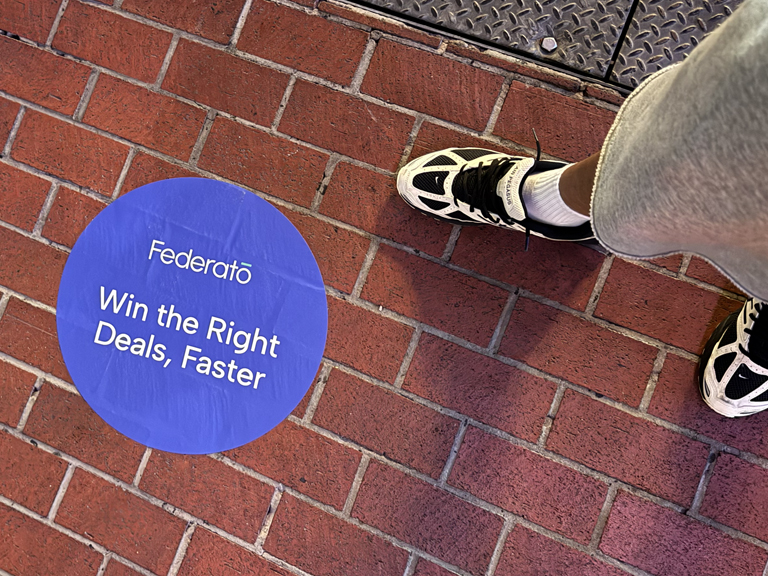
Street teams are groups of trained brand ambassadors deployed to specific locations to create direct brand encounters. We’ve managed street team programs in every major corridor in New York, from the Madison Square Park perimeter to the blocks surrounding the Bushwick Collective, from the weekend market at Grand Army Plaza to the noon rush on 42nd Street at Bryant Park.
The format is flexible. Street teams can distribute product samples, drive QR code scans and app downloads, collect lead information, hand out event tickets, direct foot traffic to a nearby pop-up, or simply create visible brand presence through branded attire and high-energy engagement. The key variable in every street team program is staff quality: their ability to engage warmly without being aggressive, represent the brand’s tone accurately, and move fluidly through the challenges that come up in a real street environment.
We recruit staff who fit the brand’s demographic profile, train them specifically for each campaign, and deploy field supervisors who monitor engagement quality and distribution pace throughout the campaign day. This isn’t something we leave to chance or to a general staffing agency. It’s a core competency.
Pop-Up Events and Experiential Installations
Pop-up events create a physical space where your brand can be experienced. We’ve built pop-ups in vacant storefronts on Bleecker Street and in Cobble Hill, on the plaza at Gansevoort Market in the Meatpacking District, in the courtyard of the Brooklyn Museum, and in the public space at the base of One World Trade Center. The environment shapes the experience, and finding the right environment for each campaign is as important as designing the event itself.
A strong pop-up activation has several elements: a clear moment, the one thing attendees will remember and photograph and describe to their friends, a friction-free flow, the ability to deliver the moment to every visitor without bottlenecks or awkward waits, and a shareable visual element, something that people want to photograph and post, which turns your audience into your distribution network.
Sampling and Trial Programs
Product trial is one of the most direct paths to conversion that exists in consumer marketing. Getting your product into someone’s hands, giving them the chance to taste, smell, feel, or use it before they make a purchase decision, removes the risk barrier that prevents trial from digital advertising alone.
We’ve run sampling campaigns for food and beverage brands at the 72nd Street subway station entrance on Broadway, at the Whole Foods Market on Houston Street, along the running path in Riverside Park, and at the entrance to the Brooklyn Public Library on Grand Army Plaza. Location selection is everything in a sampling program. A great product in the wrong location produces low engagement. The same product in the right location builds conversion rates that justify the campaign cost many times over.
Guerrilla and Ambient Activations
Guerrilla activations create unexpected moments in public spaces. The unexpected nature is the point: surprise generates social sharing, and social sharing is the most cost-efficient media amplification available. We’ve executed guerrilla campaigns in the plaza at Foley Square in downtown Manhattan, on the boardwalk at Brighton Beach, in the underpass at Atlantic-Barclays Center, and in the public spaces around the High Line between Gansevoort and 14th Street.
The design of a guerrilla activation starts with the question: why would someone stop and photograph this? If the answer isn’t clear, the activation isn’t ready. The most effective guerrilla activations we’ve run have been built around that question and answered it definitively before anything was produced or deployed.
Marketing Activation Agency Pricing: What to Expect
Marketing Activation Agency Services: Format and Investment Guide
Activation Format
Typical Investment Range
Duration
Best Audience Size
Key Success Metrics
Street Team (single day, single neighborhood)
$3,000 to $8,000
6 to 8 hours
500 to 2,000 direct engagements
Engagements, samples distributed, QR scans
Street Team (multi-day, multi-neighborhood)
$12,000 to $35,000
3 to 7 days
3,000 to 15,000 direct engagements
Total engagements, conversion tracking
Pop-Up Event (single location, 1 day)
$20,000 to $75,000
Full day event
200 to 1,500 attendees
Attendance, dwell time, social exposures
Ambient / Guerrilla Installation
$8,000 to $40,000
1 to 7 days
High variable (earned media driven)
Organic social reach, press mentions
Multi-City Campaign
$50,000 to $250,000+
1 to 4 weeks
20,000 to 100,000+ combined engagements
Market-by-market engagement, unified reach
Sampling Program (product launch)
$10,000 to $45,000
2 to 10 days
2,000 to 20,000 trial units
Units distributed, post-campaign purchase lift
How Budget Allocation Affects Outcomes
Budget size matters less than budget allocation in activation work. We’ve seen $40,000 activations deliver stronger results than $200,000 activations because the smaller budget was allocated almost entirely to field execution, while the larger budget was distributed across agency overhead, venue production, and fabrication that didn’t directly improve the audience experience.
When evaluating any agency’s proposal, ask for a line-item budget that shows how each dollar is allocated. Understand what percentage of your investment is going to direct execution costs, what percentage to production and materials, and what percentage to agency fees and overhead. A proposal that can’t answer that question clearly isn’t built on solid ground.
How We Plan Activations: Our Process from Brief to Report
Every activation we run starts with a brief and ends with a report. Here’s what happens in between.
Campaign Brief and Objective Alignment
We start every engagement with a campaign brief that defines the target audience, the campaign objective, the geographic scope, the timing constraints, and the success metrics. Objective alignment is the most important part of this conversation. An activation optimized for social exposures looks different from one optimized for product trial, which looks different again from one optimized for lead capture. Getting the objective right before anything else moves is what separates campaigns that succeed from campaigns that deliver beautiful execution against the wrong goal.
Strategy Development and Format Selection
Once the objective is clear, we develop the activation strategy. This covers format selection, location plan, staff profile, creative requirements, timing, and measurement methodology. We present the strategy with clear rationale for each decision so the client understands why we’re recommending what we’re recommending, more than what we’re recommending.
Format selection is where experience matters most. We’ve run enough campaigns in enough markets to know that a sampling program on a Tuesday afternoon in Long Island City performs differently from the same program on a Saturday in SoHo. We know which environments create dwell time and which create pass-through traffic. We know which staff profiles engage which audiences. We bring that knowledge to every strategy we develop.
Production, Permitting, and Logistics
Production covers everything physical that the activation requires: collateral, branded materials, sampling equipment, event infrastructure, or fabricated elements. We manage vendor sourcing, production timelines, and quality control for all production elements. We also handle permit research and application for activations in public spaces, parks, and plazas where permits are required. New York’s permitting environment is complex, with different requirements for city parks, DOT-managed public spaces, and privately-owned public spaces. We know the requirements for each.
Staff Recruitment and Training
Staff selection is based on demographic fit with the target audience and category experience. We don’t pull from a generic ambassador pool and hand them a product brief the morning of the event. We recruit for each campaign, run a focused training session covering brand background, product knowledge, messaging, conversation guidelines, and logistics, and confirm staff is ready before they deploy. Field supervisors rotate through all active locations during the campaign and handle real-time issues as they arise.
Execution and Real-Time Coordination
On campaign days, our operations team is in the field. We don’t manage from an office. Field supervisors maintain contact with all crews, monitor engagement pace, address any logistical issues, and make real-time decisions about staff redeployment if locations are over- or underperforming against the plan. Clients have a direct line to the campaign lead throughout the campaign day.
Reporting and Post-Campaign Analysis
Our post-campaign report covers all primary metrics, with location-level breakdowns where applicable. We include field observations on audience response, photography documentation, and lessons learned for future campaigns. The report is delivered within five business days of campaign completion and is designed to be usable in internal brand presentations, more than filed away as vendor documentation.
Multi-City Activation Campaigns: Planning and Execution at Scale
The brands that get the most out of marketing activation agencies are increasingly those running campaigns in multiple cities at the same time or in rapid succession. We’ve run concurrent campaigns in New York, Los Angeles, Chicago, and Miami, and coordinated sequential market launches across eight cities over a six-week window. Here’s what we’ve learned about doing this well.
Unified Strategy, Local Execution
Multi-city campaigns require a strategy that is consistent at the brand level and adapted at the local level. The core experience, the key messages, the brand standards, the staff training, must be consistent. The specific locations, the local cultural references, the timing relative to local events and rhythms, must adapt to each market.
A campaign that treats Los Angeles like New York or Chicago like Miami will underperform in all three because it doesn’t reflect the real street culture of any of them. Our multi-city campaigns are built on a unified strategy document with market-specific execution plans for each city, developed with local knowledge rather than extrapolated from the New York model.
Single Point of Contact for Multi-Market Coordination
One of the most common complaints brands have about multi-city activation campaigns is that they end up managing five different vendor relationships across five different markets. We solve this by serving as the single point of contact for all markets. You talk to one account lead who coordinates everything. The field execution in each city is managed by local teams, but the client relationship is centralized.
Unified Reporting with Market-Level Visibility
Multi-city reporting aggregates all markets into a single document with the ability to drill down by city, by day, and by location. Campaign leadership can see how Chicago compares to Miami compares to New York in a single view rather than reconciling five separate reports. We design reporting formats with the brand’s internal decision-makers in mind because we know the report often travels upstream to people who weren’t in the campaign planning conversations.
How to Evaluate a Marketing Activation Agency Before You Hire One
Not every agency that calls itself a marketing activation agency has the field experience, staff quality, or logistical infrastructure to execute at the level you need. These questions help you find out before you sign.
Ask for Campaigns in Your Category
Category experience matters. An agency that has run 30 food and beverage sampling campaigns understands temperature logistics, health department requirements, and consumption-rate planning in ways that a generalist agency doesn’t. Ask to see examples from your specific category and ask what challenges they encountered and how they handled them.
Ask Who Manages the Campaign on the Day
Many agencies pitch with senior people and execute with junior staff. Ask to meet the person who will actually manage your activation in the field. Ask about their specific experience managing campaigns of similar scale and format. The day-of manager is your most important relationship, even if they’re not the one who wrote the proposal.
Ask for a Line-Item Budget
Every credible activation agency can show you where your money goes. If the proposal only shows a total project fee without a breakdown, push for the line items. Understanding the allocation between production, staffing, management, and agency overhead tells you a lot about how the campaign will be executed and where the value is actually being delivered.
Ask About Contingency Planning
What happens if it rains? What if the venue changes? What if the print delivery is late? What if a key staff member calls out the morning of the activation? A prepared agency has answers to all of these questions, because they’ve dealt with all of them. An unprepared agency will improvise, and improvisation in field activation usually produces results that nobody is proud of.
Frequently Asked Questions
What does a marketing activation agency do?
A marketing activation agency plans and executes campaigns that move audiences from awareness to action — through street-level marketing, experiential activations, sampling programs, and field marketing that puts brands in front of consumers in real environments.
How is a marketing activation agency different from a traditional ad agency?
Traditional ad agencies focus on media buying and creative production. A marketing activation agency focuses on real-world execution — getting teams, materials, and brand experiences into the field where audiences actually are.
What markets does AGM activate in?
AGM runs marketing activation programs in major US markets including New York, Los Angeles, Chicago, Houston, Atlanta, Philadelphia, Austin, and dozens of secondary markets. We also coordinate international activations through our operator network.
How do I start a marketing activation campaign with AGM?
Contact us at [email protected] or call (646) 776-2770. We’ll review your objectives, target markets, and timing, then build a campaign plan around what you need to accomplish.