South Carolina is a state of contrasts — coastal resort towns packed with tourists, mid-size cities anchored by universities and government, and a suburban sprawl connecting it all. Local advertising here is not a one-size-fits-all game. What moves the needle on King Street in Charleston is not what works in Five Points in Columbia, and neither translates cleanly to Myrtle Beach in summer. Smart local advertising in South Carolina means understanding those differences and deploying tactics that match each market’s character.
American Guerrilla Marketing has run campaigns across South Carolina for brands of every size — regional retailers, national consumer goods companies, nonprofits, entertainment launches, and political organizations. What we’ve learned is that South Carolina audiences respond to advertising that feels like it belongs to the place. The state has strong community identity, and campaigns that tap into that identity outperform generic national pushes every time.
This guide breaks down how local advertising in South Carolina actually works: the markets, the tactics, the formats that drive recall, and how to build a campaign that earns attention in the Palmetto State without wasting budget on impressions that don’t convert.
Why South Carolina Requires a Market-Specific Advertising Approach
Most national advertisers treat South Carolina as an afterthought — a flyover state that gets lumped into a Southeast regional buy. That’s a mistake, and it’s why national brands consistently underperform here relative to regional competitors who know the terrain.
South Carolina has distinct audience clusters. Charleston is affluent, culturally active, and heavily tourist-influenced. Columbia is a government and university city with a younger, price-sensitive demographic. Greenville is a fast-growing manufacturing and tech hub that has attracted significant corporate relocation. Myrtle Beach is seasonal, transient, and driven by tourism dollars. Each of these markets rewards a different approach.
Advertising that acknowledges South Carolina’s specific identity — its history, its coastal culture, its college football obsession, its growing tech scene in Greenville — punches well above its weight compared to generic creative. Our team builds campaigns around that local knowledge, and it shows in the results.
Street-Level Guerrilla Advertising in South Carolina Cities
Guerrilla marketing is not just for New York and Los Angeles. The same principles that make street-level advertising work in dense urban environments apply in South Carolina’s most walkable corridors — you just need to know where those corridors are.
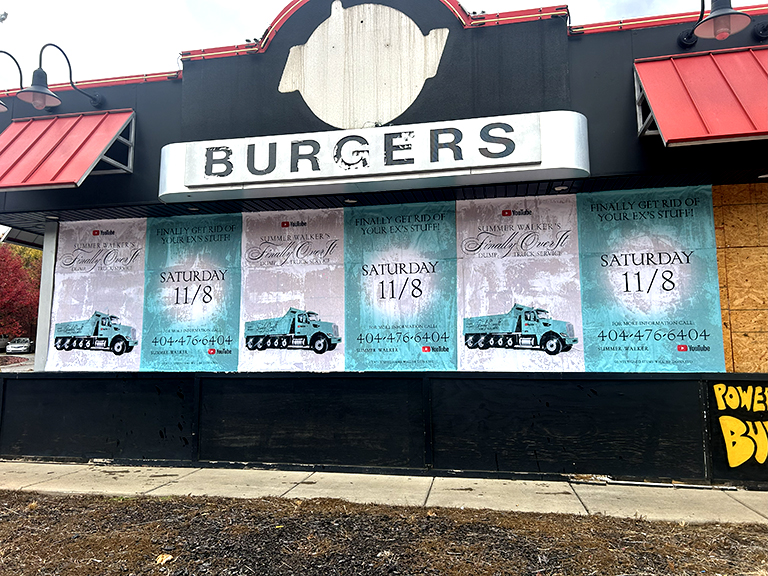
In Charleston, King Street is the axis of commercial and cultural life. The stretch from Broad Street north through the upper King design district concentrates foot traffic in a way that rivals many larger cities. Installations, wheatpaste poster campaigns, and branded experiences placed here reach a curated mix of locals, visitors, and the young professional demographic that has moved into the peninsula in large numbers.
Columbia’s Five Points neighborhood and the Main Street corridor near the State House offer dense pedestrian traffic anchored by USC students, state employees, and downtown residents. A campaign running these two corridors simultaneously reaches two very different audience segments with a single deployment.
Greenville’s revitalized downtown — particularly around Falls Park and Main Street — has become one of the most walkable downtowns in the South. The city’s rapid growth means brands that establish a presence here now are building recognition ahead of a demographic wave.
Key Advertising Formats for South Carolina Markets
Not every format works in every market. Here is how the primary guerrilla and street-level advertising formats perform across South Carolina’s key cities.
Wheatpaste and Poster Campaigns
High-visual-impact wheatpasting campaigns work well in Charleston’s upper King corridor, Columbia’s Five Points, and Greenville’s Main Street district. Posters in these locations stay up, get photographed, and generate organic social sharing. We handle permitting and location scouting for every market.
Sidewalk Stencils
Sidewalk stenciling is one of the most cost-effective local advertising formats available. In South Carolina, it works especially well in college-adjacent neighborhoods and tourist corridors where pedestrian attention is high and brand messages get repeated exposures through foot traffic patterns. It’s temporary, eco-friendly, and highly targeted.
LED Billboard Trucks
LED billboard trucks give you mobile, programmable outdoor advertising that reaches multiple neighborhoods in a single deployment. In South Carolina, we route these through peak-traffic corridors in Charleston, Columbia, and Greenville — including stadium traffic for Gamecock and Clemson games, beach access routes in the Grand Strand area, and downtown entertainment districts on weekends.
Brand Ambassadors
Face-to-face marketing remains one of the highest-conversion formats in South Carolina, particularly in environments where consumers are in a discovery mindset. Our brand ambassador programs place trained staff in high-traffic retail, event, and public space environments to create direct brand conversations. College campuses in Columbia and Greenville are particularly strong ambassador deployment markets.
Guerrilla Installations and Experiential
Pop-up installations, branded structures, and interactive experiences work well in South Carolina’s event-heavy calendar. Charleston’s festival season, Columbia’s Famously Hot New Year celebration, and Myrtle Beach’s summer tourism cycle all create windows for high-impact experiential activations that generate press and social coverage far beyond the immediate audience.
South Carolina Market-by-Market Breakdown
Understanding where South Carolina’s advertising opportunities concentrate is essential to budget allocation. Here is how we approach each major market.
Charleston
Charleston is South Carolina’s advertising prize. The combination of affluent residents, high tourist volume, and a strong local media ecosystem makes it the state’s most competitive advertising market. King Street placements, waterfront activations, and presence at Charleston events carry disproportionate weight. National brands testing South Carolina often start here.
Columbia
Columbia’s value is in its concentration of state government employees, USC’s 35,000-plus student population, and its central location within the state. Campaigns in Columbia that sync with the USC academic calendar and football season reach a young, high-engagement audience at peak attention windows. The Five Points and Vista neighborhoods are the primary activation zones.
Greenville
Greenville is the fastest-growing market in South Carolina and the most under-advertised relative to its purchasing power. The city’s downtown is a genuine destination, its corporate relocations have brought significant disposable income, and its population skews toward the 30-50 demographic that makes brand decisions. Early presence here builds significant equity.
Myrtle Beach and the Grand Strand
Myrtle Beach advertising requires seasonal strategy. Summer brings 14 million annual visitors, creating a tourism-fueled advertising environment unlike any other in the state. Local advertising here in June through August can reach more transient consumers per dollar than almost anywhere in the Southeast. Shoulder season targets the large permanent and near-permanent resident population in Horry County.
Spartanburg and the Upstate
The Upstate corridor — Spartanburg, Anderson, and surrounding communities — is a manufacturing-heavy market with strong blue-collar purchasing power and growing corporate presence. This market is frequently overlooked by regional advertisers, creating lower competition and higher relative impact for campaigns that do show up here.
Timing Your South Carolina Advertising Campaign
South Carolina has clear advertising rhythms that smart campaigns sync with. The college football season — USC Gamecocks and Clemson Tigers — concentrates massive amounts of foot traffic and consumer attention from late August through December. Campaigns timed around home game weekends in Columbia and Clemson reach audiences that are in a high-excitement, high-engagement state.
Charleston’s spring festival season, running March through May, draws large crowds to an already foot-traffic-rich environment. Summer peaks for coastal markets. The holiday shopping season is strong in Greenville’s downtown, which has developed into a regional retail and dining destination. Plan campaigns around these windows and your spend works harder.
Combining Guerrilla Tactics with Digital for Maximum Impact
Street-level advertising works best when it drives consumers to a trackable digital touchpoint. Our team builds campaigns that connect offline presence to online conversion — QR codes in poster campaigns, geo-targeted social ads that layer on top of installation zones, and event activations that encourage social sharing with branded hashtags.
In South Carolina, where social media adoption is strong across all demographics and local Facebook groups function as community hubs, an offline campaign that generates social content creates secondary reach that multiplies the original investment. A great installation in Charleston gets photographed and shared dozens of times per day. That organic amplification is built into how we design executions.
Pairing guerrilla marketing services with targeted digital followup creates a full-funnel approach — street-level for awareness, digital for conversion and retargeting. We plan both components together so messaging is consistent and the handoff is smooth.
Measuring Local Advertising Performance in South Carolina
Accountability is not optional. Every campaign we run in South Carolina is GPS-tracked, photographed, and documented. You receive a post-campaign report showing exactly where placements went, when they went up, and what they looked like in the field. This documentation serves two purposes: it proves the work happened, and it provides the baseline data for optimizing the next campaign.
Beyond documentation, we measure campaigns through the metrics that matter for your specific objective. Brand awareness campaigns track reach and frequency estimates based on foot traffic data. Conversion-focused campaigns track digital touchpoints downstream of the street-level exposure. Event activations track attendee counts and engagement metrics.
South Carolina brands that commit to a quarterly or ongoing campaign cadence build the baseline data over time to understand which markets, formats, and placements deliver the best return. That compounding knowledge becomes a competitive advantage.
Budget Considerations for South Carolina Local Advertising
Local advertising in South Carolina does not require a national media budget. Guerrilla marketing and street-level tactics are specifically designed to deliver high-impact awareness at a fraction of the cost of traditional outdoor, radio, or television buys.
A focused single-market campaign — one city, one activation format, four-week run — can be executed for a fraction of what a comparable traditional outdoor campaign would cost. Multi-city campaigns that hit Charleston, Columbia, and Greenville simultaneously scale efficiently because our team is already operating in all three markets.
The key to South Carolina budget efficiency is concentration. Pick your best market, deploy with enough presence to be unavoidable, and measure results before expanding. Thin presence across five cities simultaneously delivers mediocre results in all five. Concentrated presence in two delivers real awareness in both.
Frequently Asked Questions About Local Advertising in South Carolina
What types of local advertising work best in South Carolina?
Street-level tactics like poster campaigns, sidewalk stencils, and guerrilla installations work extremely well in high-foot-traffic corridors like King Street in Charleston and Main Street in Columbia. Outdoor advertising combined with experiential activations drives the strongest recall.
Does American Guerrilla Marketing operate in South Carolina?
Yes. Our team executes campaigns across South Carolina including Charleston, Columbia, Greenville, Myrtle Beach, and surrounding markets. Every campaign is GPS-tracked and fully documented.
How much does a local advertising campaign in South Carolina cost?
Campaign costs vary based on scope, market, and format. A focused single-city guerrilla push can start in the low thousands, while multi-city statewide campaigns scale accordingly. Contact our team for a custom quote.
What makes guerrilla marketing effective for South Carolina brands?
South Carolina has a mix of dense urban corridors, college towns, and tourist-heavy coastal markets. Guerrilla tactics cut through the noise in all three environments, reaching audiences who ignore digital ads and traditional outdoor.
How long does it take to launch a campaign in South Carolina?
Most campaigns can be planned, permitted where required, and deployed within two to four weeks. Rush timelines are possible for time-sensitive launches or event-based activations.
Do you provide proof that campaigns ran?
Yes. Every American Guerrilla Marketing campaign includes GPS-tagged photos, timestamps, and a full post-campaign documentation report so you have proof of performance.
Frequently Asked Questions
What is local advertising in south carolina?
American Guerrilla Marketing provides local advertising in south carolina services across 50+ U.S. markets. Every campaign is planned, scouted, executed, and GPS-documented by our field teams. We work with regional brands and Fortune 500 companies on campaigns that require real street-level execution and documented proof of performance.
How does AGM approach south carolina?
Our process starts with a market consultation to understand your goals, target audience, and budget. We then scout locations, handle any required permissions or permits, coordinate production and installation with our local crews, and provide a full GPS-tagged photo report after the campaign runs.
What markets does American Guerrilla Marketing cover for south carolina?
We operate in 50+ U.S. markets including New York, Los Angeles, Chicago, Miami, Houston, Atlanta, Seattle, Denver, Boston, and dozens of secondary markets. Contact us to confirm availability and pricing for your specific market.
How much does a south carolina campaign cost?
Campaign pricing depends on market, format, quantity, and duration. We work with budgets ranging from targeted single-market runs to national rollouts across multiple cities. Use our RFP Builder or contact us directly for a custom quote based on your specific campaign requirements.
How do I get started with south carolina through AGM?
The fastest way to get started is to submit your campaign details through our RFP Builder at americanguerrillamarketing.com, or contact us directly at [email protected] or (646) 776-2770. Our team typically responds within one business day with availability and initial pricing.