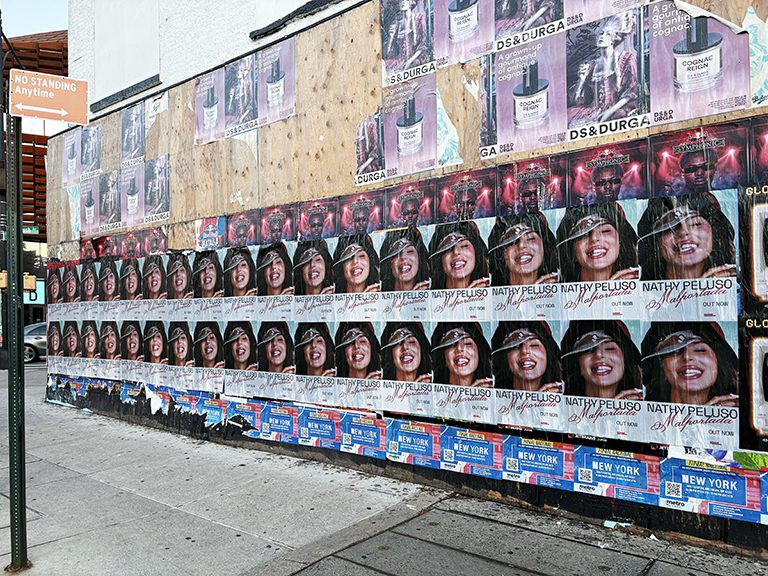
Local Advertising in Los Angeles only works when the plan fits the street, the audience, and the market. This field guide shows how AGM approaches it in real conditions instead of theory.
Local Advertising in Los Angeles only works when the team behind it understands how people move through Los Angeles. That sounds obvious, but most plans still start in a conference room instead of on the block. At AGM we build from the ground up. We look at who the audience is, what they are doing when they encounter the message, how long they have to process it, and whether the placement feels native to the area. Those details decide whether a campaign gets ignored, photographed, talked about, or remembered.
The street is honest. A weak headline gets passed in half a second. Bad route planning shows up the first day. Crew timing that looked fine in a deck falls apart once foot traffic moves somewhere else. Local Advertising in Los Angeles is strongest when every part of the job stays tied to real conditions: the block, the weather, the time of day, the local rhythm, and the type of person the brand is trying to reach. That is why field experience matters more than glossy language.
AGM treats local advertising in los angeles as an operating discipline. We source routes, plan installations, brief crews, review creative for distance and pace, and build a measurement plan that makes sense for public media. The goal is not to make the campaign sound bigger than it is. The goal is to make it perform in Los Angeles, then document the work clearly enough that the client can see what happened and what should come next.
Los Angeles has spread-out geography with a few corridors that concentrate foot traffic hard enough to matter. That shapes how quickly a message must read, how often a person might see it again, and which tactics are worth the production effort. A format that performs well in one city can underperform badly in another if the movement pattern is wrong. We do not assume a tactic travels untouched. We rebuild the route, the timing, and often the creative emphasis for each market.
The audience here is residents, creators, commuters, shoppers, and entertainment-adjacent crowds who respond to visual punch. That matters because public media is always judged against the environment around it. On a polished shopping street, rough execution looks careless. In a gritty music corridor, a too-corporate treatment can feel disconnected from the block. The strong version of the work matches the tone of the area without pretending to be something it is not.
We also look at concentration. Not every city gives you high-value density in the same way. Some places reward neighborhood saturation in a small radius. Others need a chain of routes that connect several nodes. In Los Angeles, the campaign usually performs best when the brand knows whether it needs domination in one corridor or a linked sequence of appearances across several parts of town.
That is where field teams earn their keep. They know which blocks are active at lunch, which ones wake up after 7 p.m., which ones are flooded with visitors on weekends, and which ones only matter during an event run. That knowledge is the difference between checking a placement box and building actual recall.
Where This Work Actually Lands
Route selection is where most weak campaigns get exposed. The right audience still has to encounter the message in a place where they can absorb it. We look at visibility, dwell time, repeat movement, nearby retail or venue context, and whether the surrounding area reinforces or undermines the brand. In this category, the strongest zones often include Sunset Boulevard, Melrose Avenue, Abbot Kinney, Hollywood Boulevard, and Downtown event corridors.
Silver Lake and Los Feliz
Sunset Boulevard gives creative brands a long, slow-moving corridor where people walk, queue, park, and photograph what catches their eye.
Hollywood and East Hollywood
Tourist volume plus local repeat traffic make these blocks useful when a campaign needs scale without losing cultural edge.
Downtown LA and the Arts District
Office workers, residents, restaurant traffic, and nightlife all overlap here, which helps multi-format campaigns hold attention across the day.
Venice and Abbot Kinney
These streets are useful when a brand wants affluent consumer traffic and a strong chance of organic photo sharing.
Koreatown and Fairfax
Dense activity, long operating hours, and strong retail intent make these corridors reliable for repetition and recall.
AGM field note: the best route is rarely the route with the highest raw traffic. The best route is the one where the right people have enough time and enough context to actually notice the brand.
Formats That Fit the Job
Not every public-facing format solves the same problem. Some are built for fast awareness. Some are better for conversation. Some create depth only if staff, timing, and product fit are all strong. We match the format to the buying path. If the audience just needs to recognize the brand, the answer may be route density. If the audience needs a product explanation, a live interaction may matter more.
Poster campaigns are usually the backbone because they create repeat visibility without forcing a person into a long interaction. Street teams are useful when the brand has a simple offer and a crew that can communicate it quickly. Pop-ups and installations work when a public gathering point exists and the brand can earn more than a glance. Projection or night work can create drama, but only if the placement is strong enough to justify the effort.
Digital support should reinforce what happened in public. Someone sees the brand on the block, searches later, and finds a page or profile that confirms the memory. When digital and street work say different things, the campaign loses clarity. When they echo each other, recall becomes easier and the audience feels a stronger sense that the brand is actually present.
Format Comparison
Format
Best Use
What Drives Results
AGM Field Note
Poster campaigns
Fast frequency in walkable corridors
Short copy, bold contrast, repeat notice
Best when routes match where the audience already spends time
Street teams
Direct conversation and sampling
Crew quality, timing, and location choice
Works when the offer is easy to explain in a few seconds
Installations and pop-ups
Depth of engagement
Site flow, staffing, and public curiosity
A smaller footprint often works better than an oversized build
Projections or night takeovers
High-drama awareness moments
Clean sightlines and event timing
Use selectively so the placement feels earned, not noisy
Digital support
Follow-up after the street encounter
Audience retargeting and message consistency
Digital should echo the field message instead of trying to replace it
How AGM Builds the Program
1. Brief and market read
We start by clarifying what the campaign must achieve in plain language. Is the job awareness, local trust, launch energy, route support, or market entry? Then we compare that goal to the actual movement pattern of the audience in Los Angeles. That keeps the plan from drifting into activity that looks busy but does not solve the real problem.
2. Route or site selection
Next we identify the blocks, venues, station approaches, or retail strips that can carry the message. We evaluate sightlines, timing windows, surrounding businesses, competing visuals, and whether the environment helps the message or fights it. Route work is never generic. The same street can perform differently on Tuesday lunch, Friday night, or a holiday weekend.
3. Creative review for distance and pace
Creative that looks strong on a monitor can fail outside. We review text load, contrast, image scale, logo size, and the order in which a passerby will read the information. Street-facing creative has to win attention fast, explain itself with very few words, and still leave enough brand memory that the audience can recall it later.
4. Production and crew planning
Production schedules, print specs, staffing, transport, and field timing all get aligned before launch. If the plan includes multiple formats, we build the calendar so installs, staffing, and recap documentation stay coordinated. This is the stage where hidden errors usually appear, so we pressure-test the plan before the public ever sees it.
5. Live execution
Once the campaign goes live, the work becomes operational. Crews need clear assignments, backup contacts, route notes, and escalation paths if weather, foot traffic, or site conditions change. A lot of field credibility comes from solving those issues without turning them into drama. Calm execution keeps the campaign clean.
6. Recap and next-step planning
After launch we organize the proof: photo documentation, route maps, timing notes, and a straightforward summary of what worked best. Good recaps are practical. They help the client decide whether to expand, tighten, change neighborhoods, or test a different format next time.
AGM field note: most brands do not need more tactics. They need fewer tactics executed with tighter route logic and better timing.
Creative Standards That Hold Up Outside
Street-facing creative lives in motion. That means one main idea, readable contrast, and a clear visual hierarchy. We are not trying to cram every selling point onto the asset. We want the audience to understand the brand, remember one strong idea, and know what to do next if the moment calls for action.
Color choices matter because public environments are already visually crowded. Neutral palettes can get swallowed. Fine type disappears. Long copy turns into texture. We want bold contrast, disciplined spacing, and enough breathing room that the key message stays readable from the real viewing distance instead of from a laptop at arm’s length.
The other standard is relevance. A campaign in Los Angeles should feel aware of the place where it appears. That does not mean fake slang or forced references. It means honest context: neighborhood naming when it helps, timing that makes sense for the local rhythm, and creative choices that look intentional in the environment instead of imported without thought.
Finally, we protect consistency. The route, the handout, the landing page, and the follow-up digital message should all feel like parts of one campaign. When every touchpoint repeats the same priority and tone, the brand feels more established even if the total media footprint is not huge.
How We Measure the Work
Public media does not need fake certainty to be useful. We track what can actually be observed and reported honestly. That includes route completion, timing notes, photo documentation, field observations, inbound activity tied to campaign windows, location-specific response patterns, and whether certain blocks produced more visible audience behavior than others.
For multi-channel programs we also watch what happens after the street encounter. Did branded search volume rise in the target area? Did location pages get more direct traffic? Did staff mention hearing the same question repeatedly from new prospects? Those signals are often more useful than inflated numbers that make a slide look busy but do not help the next decision.
When the campaign includes neighborhood testing, the recap should show which corridor earned the strongest reaction and why. Sometimes the winning route is the one with slightly lower volume but better dwell and less visual clutter. Sometimes a smaller activation outperforms a larger one because the staff interaction is cleaner. The lesson is in the pattern, not the performance theater.
That is why AGM recaps stay plainspoken. We want the client to know what the crew did, where the work ran, what we observed, and what deserves another round. Field reporting should create confidence, not fog.
What Usually Goes Wrong
The mistakes are predictable, which is good news because predictable mistakes can be avoided. Most failures come from planning shortcuts rather than from the format itself. When we audit weak campaigns, we keep seeing the same issues:
Choosing routes for vanity instead of audience fit.
Approving creative that needs too much reading time.
Stacking too many formats into one launch without enough crew control.
Ignoring the difference between lunch traffic, commuter traffic, and nightlife traffic.
Letting the street campaign say one thing while the landing page says another.
Failing to keep clean proof and recap notes for the client and internal team.
A disciplined team can prevent almost all of those problems before launch. The challenge is that prevention is not flashy. It looks like route notes, clear approvals, restrained copy, backup plans, and honest reporting. That is exactly the kind of work AGM is built to do.
How AGM Handles Field Execution
We approach field work like operators, not spectators. That means real route research, production coordination, crew management, and a recap process that stays connected to the original goal. Our clients do not need more performance. They need fewer surprises once the campaign is live.
Because we have worked across cities, we know that local nuance matters more than general brand language. The crew notes for Los Angeles should not be copied from another market. Timing, traffic, and neighborhood tone all change the job. We tailor the plan to the market and keep the operating instructions practical enough that people in the field can use them.
We also stay realistic about scale. A smaller, cleaner campaign in the right corridor beats a sprawling plan that spreads too thin and loses discipline. If the brief points toward focus, we say so. That honesty protects the budget and usually improves the result.
The last piece is follow-through. We close the loop with route maps, photo documentation, summary reports, and a direct recommendation for the next move. That gives the brand a useful record and gives our team a better starting point for the next round.
AGM field note: strong street work feels simple to the audience because the messy operational work was handled before launch.
When This Approach Makes Sense
Local Advertising in Los Angeles is a strong fit when a brand needs local visibility, repeated notice, or a public-facing signal that says it is active in the market. It is especially useful when the audience spends time in predictable corridors and the brand has a message that can be understood quickly.
It is a weaker fit when the offer is extremely technical, the audience is too dispersed, or the client expects one public activation to solve a deep sales problem on its own. Street media is a force multiplier. It can create memory, trust, and urgency, but it still needs the rest of the buying path to hold up.
That is why we like a short planning conversation before a launch. We can usually tell quickly whether the right answer is route density, a live activation, a poster program, stronger local search support, or a hybrid plan that keeps the brand visible in more than one way.
Frequently Asked Questions
How long does local advertising in los angeles usually take to plan?
Timing depends on market complexity, creative readiness, and production needs, but most programs in Los Angeles need at least a few weeks to scout routes, lock assets, and stage field operations cleanly.
How do you choose neighborhoods or routes?
We start with the audience, then map where those people actually move. That means looking at retail patterns, commute paths, event timing, and where repeat notice is realistic in Los Angeles.
What does AGM measure after launch?
We document route coverage, field timing, photo proof, audience response patterns, and the practical signals that show whether the program held attention in the real world.
Can this work alongside digital media?
Yes. The street often creates the first memory, and digital helps reinforce it later. The message should stay consistent so the audience feels one campaign rather than two disconnected ideas.
Weak route planning, creative that reads too slowly, crews placed at the wrong time of day, and a plan that looks good on paper but ignores the actual pace of the street.