Insurance is one of the most expensive and most cluttered digital advertising categories in the United States. Auto insurance keywords cost $50-80 per click on Google. Health insurance open enrollment drives digital CPMs to levels that make efficient reach nearly impossible for any brand except the largest national carriers. In this environment, the brands that break through are increasingly the ones that show up in the physical world — in the communities where their prospects live, work, and make spending decisions — and build the kind of familiarity that insurance purchases require.
Insurance is fundamentally a trust category. Consumers buy insurance from brands they feel they know, brands that feel local and accessible, brands whose name they recognize from sources other than a pop-up ad. Street-level marketing builds that recognition in a way that no digital format can replicate because it places the brand in the physical environment that the consumer inhabits — their neighborhood, their daily commute route, their local market. That familiarity is a trust signal. Trust is what closes insurance sales.
Our team executes insurance brand marketing programs for health, auto, home, renters, and life insurance brands across major urban markets. This guide covers the specific formats, neighborhoods, and campaign approaches that work for insurance marketing — and why physical presence matters so much in a category where digital advertising costs are at peak and consumer skepticism of digital insurance advertising is high.
Why Insurance Needs Street-Level Marketing
The digital advertising environment for insurance has become so competitive and so expensive that many mid-size insurance brands can no longer compete effectively on click economics alone. The largest national carriers dominate search and display inventory. The comparison platforms that promise lower-funnel efficiency are increasingly expensive to appear on and increasingly commoditizing the category by reducing all insurance purchases to price comparisons.
Street-level marketing creates a different competitive dynamic. The physical brand presence that a consistent guerrilla marketing program creates in a target market is not buyable by national competitors at scale — it requires local operational infrastructure and market-specific deployment. A local or regional insurance brand that runs consistent poster campaigns, community event activations, and street team programs in their core market builds a physical brand presence that the national digital-only brands cannot easily replicate.
For national brands, guerrilla marketing delivers the local presence that national campaigns cannot produce. A national health insurance brand running enrollment campaigns in a specific city can use neighborhood-level wheat paste and street team programs to reach the high-uninsured-rate corridors where the campaign’s impact is highest — precision that national digital campaigns, optimized for broad reach, typically cannot achieve at the neighborhood level.
Street Team Programs for Insurance Brand Building
Street team activations are the most effective single format for insurance brand marketing because they allow the trust-building conversation that insurance purchases require. A well-briefed brand ambassador team deployed at a community environment — a farmers market, a transit hub, a community event, a local festival — can have direct, informative conversations with prospects that address their specific questions about coverage, cost, and enrollment process.
Insurance street team programs differ from consumer product programs in important ways. The goal is not a transaction on the spot (insurance requires a quote and deliberation) but a warm introduction that primes the prospect for the digital or in-person sales conversation that follows. The ambassador’s role is to be genuinely helpful and informative — to answer questions, provide resources, and make the brand feel approachable — rather than to close. Insurance prospects respond to genuine helpfulness; they recoil from sales pressure in the physical environment as much as in digital.
We brief insurance street teams specifically on the product, the target demographic, and the market-specific context. A health insurance enrollment campaign targets a different conversation style than an auto insurance awareness campaign. Each ambassador is trained on the specific information architecture for the product category and the specific demographic engagement approach for the target community.
Wheat Paste Poster Campaigns for Insurance Awareness
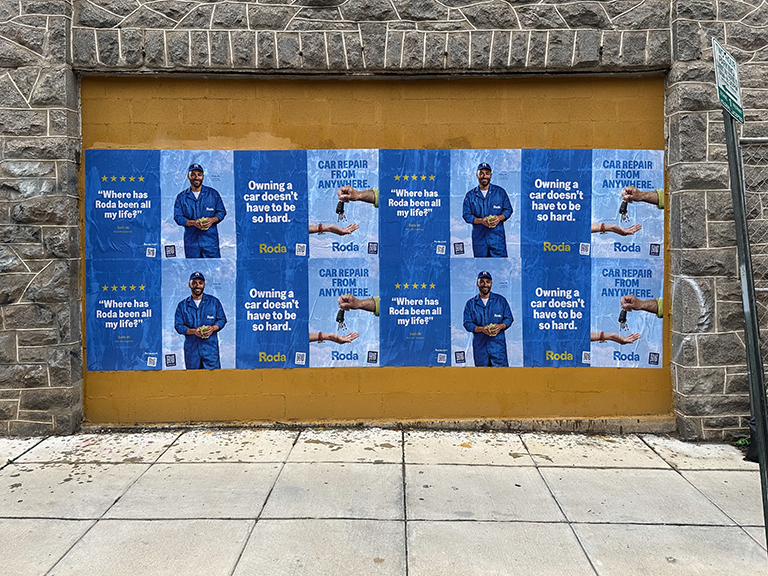
Wheat paste poster campaigns in target neighborhoods build pre-awareness that makes street team interactions and digital follow-up more effective. When a prospect has already seen the insurance brand’s poster in their neighborhood, the subsequent digital ad or street team interaction lands on an already-primed audience rather than a cold one. This sequencing — physical awareness building followed by digital and direct-channel capture — is the most efficient architecture for insurance brand campaigns in urban markets.
Insurance poster campaigns work best with a single, clear message: a benefit statement, a pricing reference point, or a call to action for the specific target audience. “Renters insurance from $X/month” works in neighborhoods with high concentrations of first-time renters. “Get covered before [enrollment deadline]” works for health insurance open enrollment windows. The message must be specific and immediately relevant — generic insurance awareness messaging performs poorly in the physical format because it provides no reason to engage.
Neighborhood Targeting for Insurance Products
Health Insurance
Health insurance guerrilla marketing concentrates in two types of neighborhoods: high-uninsured-rate communities (often lower-income urban areas where enrollment campaign impact is highest) and young professional corridors (where 25-35 year-olds transitioning off parent plans represent the highest-volume new enrollment opportunity). We use census data and health insurance enrollment statistics by census tract to identify the specific corridors within each target city where campaign impact is highest.
Renters Insurance
Renters insurance campaigns target neighborhoods with high concentrations of young renters: university corridors, new development neighborhoods, gentrifying areas where first-time independent renters are concentrated. These neighborhoods often have high foot traffic on evenings and weekends when resident activity is highest. Poster campaigns in these corridors reach residents during the phase of life when renters insurance consideration is highest — first apartment, new city, independent for the first time.
Auto Insurance
Auto insurance campaigns target commuter corridors and transit hubs where the daily presence of the target driving demographic is consistent. Transit hub campaigns reach commuters at a moment of brand receptivity (waiting, transitioning) and associate the insurance brand with the daily mobility experience. Neighborhood campaigns in high-car-ownership suburbs reach the auto insurance renewal audience in their primary residential environment.
Life Insurance
Life insurance campaigns target family-formation neighborhoods — areas with high concentrations of 30-45 year-olds with children, in neighborhoods near schools, parks, and family-oriented retail. This demographic is in the life-stage where life insurance consideration is highest. Community events in these neighborhoods provide natural activation contexts for life insurance brand ambassador programs.
LED Billboard Trucks for Insurance Market Presence
For insurance brands competing for attention in dense urban markets, LED billboard trucks provide high-visibility reach in the corridors where target demographics are most concentrated. A truck running a route through a target neighborhood during peak evening hours creates multiple impressions for commuters, residents, and foot traffic in the campaign zone — building brand recognition through repeated visual exposure over the campaign period.
LED truck routes for insurance campaigns are designed around the specific product’s target geography. A health insurance campaign in a major city might route the truck through the transit corridors serving the highest-uninsured neighborhoods and the young professional districts during the open enrollment window. An auto insurance campaign routes through commuter corridors and the approaches to high-volume DMV and registration locations.
Campaign Integration and Measurement
Insurance guerrilla marketing campaigns are most effective when integrated with the brand’s digital channels. QR codes on poster campaigns and ambassador materials link directly to quote request pages or enrollment portals with campaign-specific UTM tracking. This creates a direct measurement link between physical campaign impressions and downstream digital conversion — the most reliable attribution available for street-level insurance marketing.
We design campaign measurement frameworks at the brief stage so that the digital tracking architecture is in place before the campaign launches. Post-campaign reports include GPS-tagged documentation of every placement and activation, distribution counts from street team programs, and QR code scan data if campaign materials include tracked links. This documentation provides the evidence base for campaign ROI analysis and future budget planning.
Our guerrilla marketing services are available across 50+ U.S. markets. Contact our team at (646) 776-2770 to discuss an insurance brand marketing program tailored to your specific product, target demographic, and market footprint.
Frequently Asked Questions
Why do insurance brands use guerrilla marketing?
Insurance is a high-competition, low-differentiation category where digital advertising costs are extremely high and consumer trust is a primary purchase driver. Guerrilla marketing creates physical brand presence in the communities where prospects live and work — building the familiarity and trust that insurance purchases require in an environment that feels less transactional than digital advertising.
What street-level formats work best for insurance brand marketing?
Street team programs in community environments are the strongest format for insurance brands because they allow direct, trust-building conversations with prospects. Wheat paste poster campaigns in target neighborhoods build pre-awareness. LED mobile billboard trucks create broad visual presence. Community event activations tie the brand to local experiences prospects value.
How does guerrilla marketing help insurance brands build trust?
Physical brand presence in a community environment creates familiarity that digital advertising cannot produce. When an insurance brand shows up at a neighborhood event or maintains a consistent poster presence in a community corridor, it communicates that the brand is part of the local environment — not just a name in a browser tab. That familiarity is a trust signal that influences the purchase decision when consideration begins.
What neighborhoods and locations work best for insurance street marketing?
Target neighborhood selection is driven by the specific insurance product. Health insurance campaigns target high-uninsured-rate communities and young professional corridors. Home and renters insurance campaigns target neighborhoods with high concentrations of first-time renters or new homeowners. Auto insurance campaigns target commuter corridors and transit hubs.
How do insurance brands measure guerrilla marketing ROI?
Insurance brand guerrilla marketing ROI is measured through QR code scan data, branded URL traffic from campaign materials, branded search volume lift in campaign markets, and quote request volume changes during and after the campaign window. We document every campaign element with GPS-tagged photography and deliver post-campaign reports within 48-72 hours.
Can guerrilla marketing work for both large insurance companies and smaller regional brands?
Yes. Large insurance companies use guerrilla marketing to reach specific demographic communities identified as high-value prospects. Smaller regional brands use it as their primary awareness channel in their core markets, competing through physical presence in communities where national brands are less visible at the street level.
How does AGM plan an insurance brand marketing campaign?
We start with a clear audience brief — the specific insurance product, the target prospect profile, and the geographic target at neighborhood level. From that brief, we design a campaign architecture selecting the right formats for the audience and environment, identify specific deployment locations through physical scouting, and plan the campaign timeline to match the target market’s insurance consideration cycle.