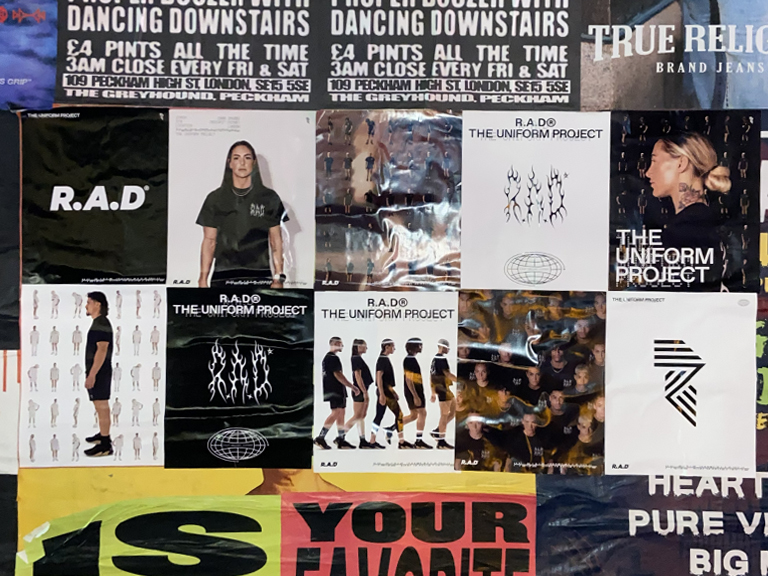
Illinois is one of the most complex and consequential states for protest organizing in America. Chicago alone — with its dense, highly engaged neighborhoods, rich history of labor and civil rights activism, and some of the busiest street-level foot traffic in the country — offers protest organizers a marketing environment unlike anywhere else in the Midwest. Add in Springfield’s political significance, Champaign-Urbana’s student population, and Rockford’s working-class community corridors, and you have a state that rewards organizers who understand how to deploy their message across varied geographies and audiences.
Digital organizing has its place. But in Illinois — especially Chicago — the streets have always been the primary stage for social movements. The history of protest in this state is physically embedded in its neighborhoods, and that tradition creates a cultural receptivity to visible, ground-level campaigns that few other states can match. The challenge is executing those campaigns with precision: the right locations, the right materials, the right timing, and the right legal framework.
American Guerrilla Marketing has executed campaigns across Illinois from the North Shore to the South Side, from Wicker Park to Wabash. Here’s what impactful protest marketing looks like in this state — and how our team helps organizers build campaigns that convert attention into action.
Chicago’s Neighborhoods as Campaign Infrastructure
No city in the Midwest concentrates protest marketing opportunity the way Chicago does. The city’s neighborhood structure — 77 distinct communities, each with its own identity, foot traffic patterns, and community anchors — means organizers must make deliberate geographic choices rather than blanketing the whole city.
The Loop and Near North Side see the highest daytime foot traffic, making them prime locations for visibility among commuters and downtown workers. Wicker Park, Logan Square, and Pilsen have strong activist and arts communities where cause-based materials are expected and respected. South Side neighborhoods like Bronzeville, Woodlawn, and Hyde Park carry significant civic and academic engagement. Humboldt Park and Little Village offer deep community connectivity in their respective Latino and Puerto Rican communities.
Effective Illinois protest campaigns typically concentrate in two to four neighborhoods matched to their specific audience, rather than spreading thin across the whole city. We help organizers map their target communities against foot traffic data and community event calendars to identify the highest-yield deployment zones.
Chicago Transit Corridors: Repeat-Impression Gold
The Chicago Transit Authority’s L system carries roughly 600,000 riders on a typical weekday. Station areas, platform surrounds, and neighborhood blocks near major L stops are among the highest-density foot traffic locations in the entire Midwest. For protest organizers, these corridors offer something invaluable: repeat impressions. People who use the same station every day see a poster multiple times — and repeated exposure is what builds recall and drives action.
Our wheatpasting and poster campaigns are particularly effective in transit-adjacent locations. We identify approved posting surfaces near stations on the Red, Blue, Green, and Brown lines, secure necessary permissions, and deploy materials that communicate clearly at transit speeds — where someone has only a few seconds to absorb a message while walking to or from a train.
Material design for transit-corridor placement needs to prioritize: immediate legibility of the core message at distance, a single actionable call to action, and a visual that registers even in peripheral vision. We advise on these design requirements before materials go to print, saving clients from costly reprints.
Wheatpasting Across Illinois: From Chicago to Champaign
Wheatpasted posters are the signature format of street-level advocacy marketing. The format has a cultural lineage in protest communication that gives it immediate credibility — people recognize wheatpasted posters as a marker of authentic grassroots energy, not corporate messaging. For cause-based campaigns, that distinction matters enormously.
In Chicago, wheatpasting is most effective in dense commercial and mixed-use corridors — Milwaukee Avenue in Logan Square, 18th Street in Pilsen, 63rd Street on the South Side. In Champaign-Urbana, University Avenue and Green Street near campus are the primary corridors. In Rockford, State Street and the Broadway corridor offer the best foot traffic for mid-state placements.
Our team coordinates with property owners and commercial businesses to secure legal posting surfaces in every market. We never post on surfaces without authorization — not because we don’t understand the tradition, but because unauthorized posting creates legal exposure for organizers and hands opponents an easy counter-narrative. A campaign that stays clean, legal, and well-documented is a campaign that can keep running.
Sidewalk Stencils: Ground-Level Impact at Scale
Illinois cities have used sidewalk stenciling as both a commercial and activist format for decades. When done well, a stencil campaign creates a visual trail — a series of related messages that guide people toward a destination, reinforce a theme, or create a geographic sense of movement and momentum.
Our sidewalk stencil campaigns use biodegradable chalk-based materials that meet most Illinois municipal requirements for temporary surface application. We research applicable city codes before deployment and design stencil copy that communicates clearly at ground level — where foot traffic is naturally directed and attention is already present.
For protest organizers, stencil campaigns work particularly well in the days and hours leading up to a march or rally. A series of stencils marking a route, counting down to an event, or repeating a key slogan creates environmental anticipation that builds energy before participants even arrive. Paired with poster campaigns running on adjacent surfaces, stencils contribute to a layered street presence that’s difficult to ignore.
Brand Ambassadors and Street Teams Across Illinois
No format creates human connection the way a direct handoff does. A trained street team member who makes eye contact, offers a flyer, and says two sentences about a cause can convert a passerby into a participant in a way that no poster can. For Illinois protest organizers, street teams are an essential component of any serious campaign.
Our brand ambassador agency deploys trained teams across Chicago and downstate Illinois. We match team size to location density and foot traffic volume, develop messaging scripts, and equip teams with the materials and talking points they need to have productive conversations.
High-yield deployment locations in Illinois include: the Chicago Riverwalk on warm weekdays, Millennium Park during public programming, the University of Illinois quad in Champaign-Urbana during class change periods, the Lincoln Park Farmers Market in Chicago, and the Abe Lincoln Presidential Library area in Springfield during legislative sessions and public events.
LED Billboard Trucks: Statewide Mobile Visibility
When a protest campaign needs to reach mass audiences quickly — for a major action, a legislative hearing, or a time-sensitive moment — mobile LED billboard trucks deliver immediate, unmissable presence. In Chicago, a truck running a four-hour route through the Loop, River North, and Streeterville can generate six-figure impressions in a single day.
Our LED billboard truck fleet is deployed with GPS-tracked route planning and full documentation. We design routes based on foot traffic data and campaign objectives. For Illinois protest campaigns, trucks can be positioned to reach government buildings, media outlets, corporate headquarters, or public gathering spaces depending on the campaign’s strategic goals.
Across downstate Illinois, trucks cover Springfield’s state capitol area effectively during legislative sessions — where the audience of legislators, lobbyists, and state workers is both concentrated and politically relevant. For campaigns with policy objectives, this kind of targeted proximity advertising can be as valuable as any lobbying effort.
University Markets: Champaign-Urbana and Beyond
Illinois has a rich network of public and private universities that represent concentrated, engaged audiences for cause-based marketing. The University of Illinois at Urbana-Champaign, Northwestern University, DePaul, Loyola, UIC, Illinois State, and Northern Illinois University all host student populations historically receptive to social cause content.
Campus-adjacent marketing — on public streets surrounding campuses, at off-campus community spaces, and through community bulletin boards in student-heavy neighborhoods — offers high engagement at lower cost than many other formats. We map each university market’s key corridors and identify the highest-density student traffic zones for targeted deployment.
Student audiences also serve as natural amplifiers: when campus-adjacent materials resonate, they get photographed, shared, and spread through student networks in ways that multiply the original campaign’s reach significantly beyond the physical placements.
Planning a Statewide Illinois Protest Marketing Campaign
For organizations with statewide reach and statewide goals, Illinois campaigns require coordination across multiple city-specific plans. A Springfield legislative campaign has different logistics than a Chicago community organizing push. A downstate labor campaign in Peoria or Decatur requires different location intelligence than a Chicago Loop campaign.
Our process for statewide Illinois campaigns begins with a strategy session to define geographic priorities, audience targets, and campaign objectives. From there, we develop city-specific deployment plans that share a unified visual identity and message while adapting format and location selection to each market’s specific conditions.
We assign local crews in each market, coordinate centralized printing and materials logistics, and run parallel deployment across multiple cities when campaign timing requires simultaneous saturation. Post-campaign, we aggregate reporting across all markets into a unified summary that gives organizers a complete picture of statewide campaign reach and impact.
Legal Compliance: The Non-Negotiable Foundation
Illinois, and Chicago specifically, has well-developed regulatory frameworks around outdoor advertising and public space use. Violating these frameworks creates legal exposure for organizers and gives opponents an easy way to delegitimize a cause. Our team researches applicable ordinances, permit requirements, and property authorization needs before every deployment.
In Chicago, this means understanding the specific rules governing commercial and residential zoning for posted materials, the permit requirements for sidewalk use, and the distinction between posting on city-controlled surfaces versus private property. Outside Chicago, each municipality has its own framework — Springfield, Rockford, Aurora, and Peoria all have distinct rules that require individual research.
Operating within legal boundaries is not a constraint on effective protest marketing — it’s a prerequisite for campaigns that can run their full course without interruption, legal distraction, or negative media coverage that undermines the message.
Measurement and Accountability for Illinois Campaigns
Every Illinois protest marketing campaign we execute is fully documented. GPS-stamped photography at each placement location, time-coded deployment logs, and post-campaign summary reports give organizers a complete record of what ran, where, and when. This documentation serves multiple purposes: accountability to coalition partners and funders, content for social media and press outreach, and data for planning future campaigns.
Our guerrilla marketing services include post-campaign analysis that connects placement geography to attendance or petition data where available, helping organizers understand which markets and formats drove the most engagement. Over multiple campaigns, this data builds into an institutional knowledge base that makes each successive effort more efficient and effective.
FAQ: Marketing for Protest Organizers in Illinois
What street-level marketing strategies are most effective for protest organizers in Illinois?
In Illinois, the most effective strategies combine wheatpasting and poster campaigns in Chicago’s dense neighborhoods, sidewalk stenciling near transit stations, targeted flyering at community events, and LED billboard trucks for event-day mass visibility. The Chicago L and Metra commuter corridors offer exceptional repeat-impression opportunities for organizers targeting commuter audiences.
What permits do protest organizers need for outdoor marketing in Chicago?
Chicago has specific ordinances governing posting on public surfaces, sidewalk use, and commercial signage. Most outdoor marketing requires either city permits or written permission from property owners. American Guerrilla Marketing researches all applicable requirements before deploying in Chicago or any Illinois market to ensure every placement is legally clean.
How does American Guerrilla Marketing cover Illinois outside of Chicago?
We deploy across the full state, including Rockford, Aurora, Naperville, Joliet, Springfield, Champaign-Urbana, and Peoria. Each market receives a tailored location plan based on local foot traffic patterns, community hubs, and permitting requirements. We assign local crews familiar with each market’s specific geography and regulatory environment.
Can street marketing campaigns in Illinois be documented for accountability purposes?
Yes. Every placement is GPS-stamped and photographed. We provide post-campaign reports with location data, time stamps, material counts, and coverage maps — suitable for coalition reporting, donor transparency, or grant documentation. All materials are archived for client records.
How early should Illinois protest organizers begin planning their marketing campaigns?
For campaigns in Chicago, we recommend starting six to eight weeks out due to the city’s permitting complexity and crew coordination requirements. For other Illinois markets, four to six weeks is typically sufficient. Rush campaigns can sometimes be executed in two to three weeks with existing creative assets and simplified deployment scopes.
What is the most cost-effective street marketing format for Illinois protest campaigns?
Poster and wheatpaste campaigns typically deliver the highest impression volume per dollar in Illinois, especially in dense Chicago neighborhoods where a single strategically placed poster can be seen by hundreds of people per day. Flyering at transit hubs adds direct handoff engagement at relatively low incremental cost, making the combination especially efficient for budget-conscious campaigns.
Frequently Asked Questions
What is impactful strategies for marketing for protest organizers in illinois?
American Guerrilla Marketing provides impactful strategies for marketing for protest organizers in illinois services across 50+ U.S. markets. Every campaign is planned, scouted, executed, and GPS-documented by our field teams. We work with regional brands and Fortune 500 companies on campaigns that require real street-level execution and documented proof of performance.
How does AGM approach in illinois?
Our process starts with a market consultation to understand your goals, target audience, and budget. We then scout locations, handle any required permissions or permits, coordinate production and installation with our local crews, and provide a full GPS-tagged photo report after the campaign runs.
What markets does American Guerrilla Marketing cover for in illinois?
We operate in 50+ U.S. markets including New York, Los Angeles, Chicago, Miami, Houston, Atlanta, Seattle, Denver, Boston, and dozens of secondary markets. Contact us to confirm availability and pricing for your specific market.
How much does a in illinois campaign cost?
Campaign pricing depends on market, format, quantity, and duration. We work with budgets ranging from targeted single-market runs to national rollouts across multiple cities. Use our RFP Builder or contact us directly for a custom quote based on your specific campaign requirements.
How do I get started with in illinois through AGM?
The fastest way to get started is to submit your campaign details through our RFP Builder at americanguerrillamarketing.com, or contact us directly at [email protected] or (646) 776-2770. Our team typically responds within one business day with availability and initial pricing.