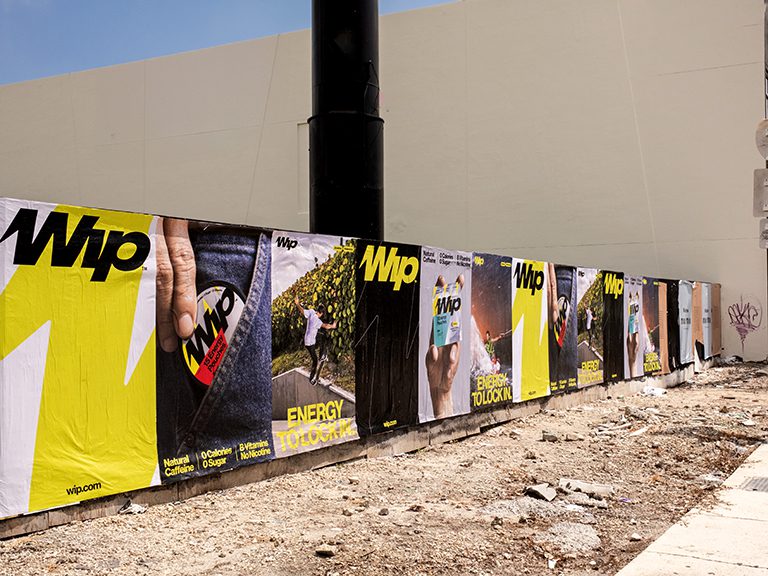
Digital advertising has reached saturation. Consumers scroll past hundreds of brand messages daily, and the mental filter that blocks those messages has become extremely effective. An immersive brand experience operates in a completely different register: it puts a brand in the physical world, requires active participation from the consumer, and creates a memory tied to a real moment rather than a two-second digital impression. That memory persists in ways that impressions do not, and it generates social sharing, word of mouth, and brand advocacy that no paid digital format can replicate at comparable cost.
At American Guerrilla Marketing, we plan and execute immersive brand experiences that live in the street environment: pop-up installations, product demonstrations, physical brand environments, and multi-format activations that engage consumers in their actual daily movement. Our base at Industry City in Brooklyn, NY sits at the intersection of where experiential concepts are designed and where the field teams who execute them operate. We know what works in a dense urban environment and what does not survive contact with real pedestrian traffic.
This guide covers the design principles that make immersive experiences effective, the street-level formats that translate best from concept to execution, and the measurement frameworks that justify investment in physical brand engagement against purely digital alternatives.
Why Physical Immersion Creates Stronger Brand Memory Than Digital Exposure
Neuroscience and consumer research consistently show that memories formed through active physical participation are more durable than memories formed through passive observation. This is not an abstract principle. It has direct implications for marketing effectiveness.
The Autobiographical Memory Advantage
When a consumer actively participates in a brand experience, the memory is stored autobiographically, connected to the specific time, place, and emotional context of the interaction. “I tried this at that crazy installation on 14th Street last spring” is a fundamentally different memory structure than “I saw an ad for this.” The autobiographical memory retrieves the brand in the context of a positive personal experience rather than as a neutral or interruptive message.
Sensory Engagement and Memory Encoding
Immersive experiences engage multiple senses simultaneously: sight, sound, touch, smell, and taste are all available in a physical environment. Each additional sense engaged during brand exposure increases the probability of memory formation and later recall. A consumer who tasted a food product at a pop-up, heard a signature sound, and held the actual packaging has encoded the brand across multiple sensory channels. A digital ad engages at most two, and typically with significantly reduced attention.
Social Sharing as Organic Amplification
A well-designed immersive experience is inherently shareable. When something is visually compelling, physically interactive, or genuinely surprising in a public space, people document it. That documentation, distributed organically through social channels, extends the experience’s reach far beyond the consumers physically present. Our experiential marketing team designs activations with content creation in mind: what will someone photograph, why will they share it, and what does that content communicate about the brand?
Design Principles for Effective Street-Level Immersive Experiences
An immersive experience that works in a controlled studio environment may completely fail on a busy urban street. The street environment imposes constraints that require specific design thinking.
Five-Second Legibility
In a busy street environment, a consumer has approximately five seconds to notice and decide whether to engage with an activation. The visual design of the experience must communicate what it is, whether it is welcoming, and whether it is worth stopping for, within that window. Activations that require reading a paragraph of text to understand what is happening typically do not stop foot traffic. Bold visual design, clear participation signals, and obvious entry points are non-negotiable for street-level immersive installations.
Low Barrier to Entry
The best street-level immersive experiences require no prior knowledge, no commitment to a long interaction, and no embarrassing first step. A consumer who can drift into the experience naturally, engage at whatever depth they choose, and exit without obligation is far more likely to participate than one who feels pressured or confused about how to begin. Design the experience so the first step is obvious and low-commitment.
Designed for Real Weather and Real Crowds
Every element of a street-level experience must function in real outdoor conditions. Materials need to handle direct sunlight, moderate rain, wind, and the physical contact of many participants. Staffing plans need to account for high-density moments when crowd management becomes part of the activation experience. Our team conducts site visits and weather planning as standard pre-execution protocol for every immersive brand experience.
Street-Level Formats That Create Immersive Brand Engagement
Immersive brand experiences at street level take multiple forms. Format selection depends on the brand’s category, message, target consumer, and available budget.
Pop-Up Brand Environments
A branded pop-up space in a high-foot-traffic location creates a physical environment that consumers can enter, explore, and interact with over an extended period. The most effective pop-ups are visually distinctive from the surrounding environment, have a clear reason for existing (product launch, seasonal campaign, community activation), and offer something of value to participants beyond brand messaging alone: a free product sample, a useful service, an entertaining experience, or content that consumers want to share.
Interactive Product Demonstrations
For brands where product quality is the strongest selling point, a demonstration that allows consumers to experience the product under ideal conditions creates trial at scale in public. Food and beverage tastings, technology demonstrations, beauty product applications, and fitness product trials all translate well to street-level activation when designed with participation flow and appropriate staffing. Our brand ambassador programs include trained demonstration staff for product-specific activation formats.
Branded Physical Installations
Large-scale physical installations in public spaces that transform the environment create the highest-impact immersive experiences when executed at sufficient scale. Branded murals, large-format art installations sponsored by a brand, and sculptural elements that invite interaction or photography all create immersive environments without requiring ongoing staffing for each consumer interaction. Installations positioned in high-foot-traffic zones accumulate impressions continuously throughout the day.
Multi-Sensory Sampling Moments
For CPG brands, designing the sampling moment to be immersive rather than transactional produces meaningfully better results. Instead of an ambassador handing a sample from a table, an immersive sampling moment brings the consumer into the brand’s environment: a pop-up recreation of the relevant use context, a sensory demonstration that explains the product’s benefit, or a tasting experience that recreates the moment the product is designed for. The guerrilla marketing services we provide include custom sampling environment design for brands that want to go beyond table distribution.
Location Strategy for Immersive Brand Experiences
The physical location of an immersive activation shapes everything about how it is experienced. High-foot-traffic does not automatically mean the right traffic, and the best location is the one where the target consumer is already present and has the temporal availability to engage.
Matching Consumer Profile to Location Context
A beauty brand’s immersive experience belongs in a fashion or lifestyle neighborhood where the target consumer is already present in a discovery mindset. A fitness brand’s activation belongs near gyms, parks, and running paths where the target consumer is already thinking about health and performance. Mismatches between brand category and location context produce low engagement regardless of how well the activation is designed.
Dwell Time Environments vs. Transit Environments
Transit environments (subway exits, commuter stations, busy street corners) produce high-volume rapid exposure but limited interaction depth. Dwell time environments (parks, outdoor markets, plazas, event corridors) allow extended consumer engagement with more complex immersive elements. The right environment depends on whether the campaign goal is maximum impressions or maximum experience depth per participant. Most programs require a combination: high-visibility poster and stencil coverage using sidewalk stenciling in transit zones, with deeper immersive experiences in dwell time locations.
Connecting Physical Experiences to Digital Brand Ecosystems
An immersive street-level experience that exists only in the physical moment captures a fraction of its potential impact. Connecting the physical experience to digital channels, CRM systems, and social amplification programs extends its reach and creates measurable attribution.
Social Sharing Infrastructure
Designing dedicated photography moments, providing branded props for participant photos, and creating visual elements that are genuinely compelling in a social feed are all part of the immersive experience design. When participants share their experience organically, that content reaches their social networks with authentic endorsement that no paid advertisement can replicate. Professional activation design accounts for this social layer from the outset, not as an afterthought.
Digital Touchpoints Within the Physical Experience
QR codes that extend the physical experience into a digital interaction (a brand story, a product locator, a limited offer, an augmented reality layer) bridge the physical and digital brand environments. The best implementations give participants a reason to scan that is directly relevant to the experience they just had, rather than a generic “learn more” prompt disconnected from the physical activation.
Data Capture and CRM Integration
Immersive experiences that include a value exchange (a free product, a personalized result, a content asset) in return for an email or phone number create a data capture opportunity with high consent quality. Consumers who opted in because they genuinely engaged with the experience are substantially more likely to be responsive email subscribers than those captured through generic digital lead forms. Post-activation email sequences that reference the physical experience they had maintain the brand relationship started in person.
Frequently Asked Questions
What makes an immersive brand experience effective?
The most effective immersive brand experiences engage multiple senses, require active participation rather than passive observation, and create a clear connection between the experience and the brand’s core identity. Physical interactions that consumers initiate rather than receive passively generate significantly stronger brand memory and social sharing behavior.
How does an immersive experience differ from a standard brand activation?
A standard brand activation delivers a brand message. An immersive experience puts the consumer inside the brand world. The difference is participation depth: passive receipt of information versus active engagement with a designed environment, narrative, or physical interaction. Immersive experiences create autobiographical memories tied to the brand, which is more durable than any message recall.
What formats work best for immersive street-level brand experiences?
Pop-up environments, interactive installations, brand ambassador-led product demonstrations, experiential sampling moments designed around the product’s use case, and branded physical transformations of public spaces all work well. The best format depends on the brand’s category, budget, target consumer, and available public spaces in the target market.
How do you design an immersive brand experience for a street environment?
Design starts with the consumer journey: how will someone approach, notice, engage, and leave the experience? Each phase needs intentional design. The experience should require minimal explanation, invite participation visually, and create a clear brand connection without relying on text-heavy explanation. Most successful street-level immersive experiences can be understood within five seconds of first visual contact.
What is the typical cost range for an immersive brand experience?
Street-level immersive activations range from $15,000 for a single-day pop-up with custom fabrication to $150,000 or more for multi-week installations with staffing, permitting, and fabrication in major markets. The investment range is broad because the format is flexible. Most brand experience campaigns are scoped to specific objectives and budgets rather than standardized packages.
How do you measure the impact of an immersive brand experience?
Measurement includes total dwell time, consumer participation counts, social media content generated from the experience, brand sentiment change measured pre and post, QR code engagement with digital extensions of the physical experience, and earned media coverage generated. The goal is to capture both reach (how many) and depth (how meaningfully they engaged).