Human Billboard Advertising | American Guerrilla Marketing
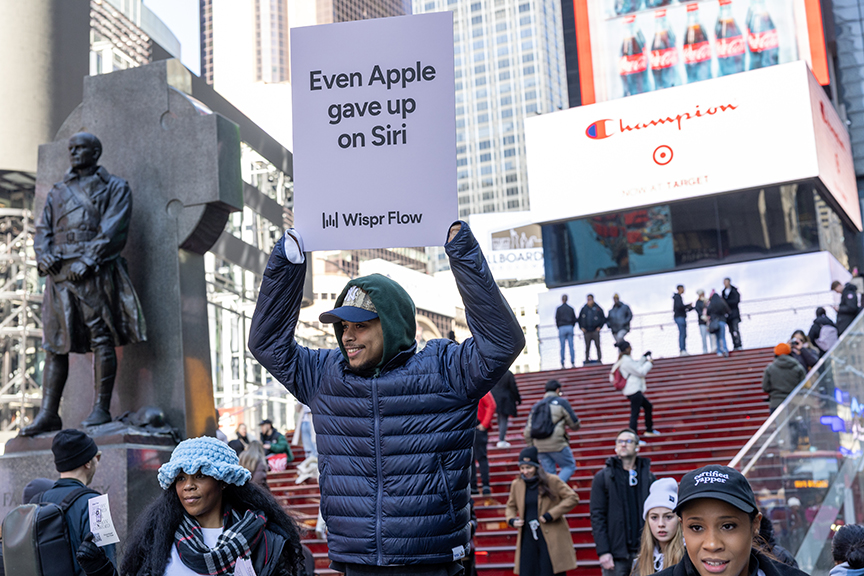
Human billboard advertising is the practice of having people carry, wear, or display brand signage in public spaces. It is mobile, flexible, immediate, and deeply personal in a way that fixed formats simply cannot match.
Human billboard advertising is the practice of having people carry, wear, or display brand signage in public spaces. It is mobile, flexible, immediate, and deeply personal in a way that fixed formats simply cannot match.
Human billboard advertising is one of the most direct forms of brand contact available in the outdoor advertising toolkit. A person wearing or carrying a brand message moves through the same physical spaces as the target audience. There is no buffer. There is no screen. There is no algorithm deciding whether the person qualifies to see the ad. The message is right there, in front of them, carried by a real human being in the middle of their day.
This is not a new idea. Sandwich board carriers have walked city streets for well over a hundred years. Sign spinners have been a fixture outside car dealerships and retail stores for decades. LED backpack billboard carriers are the modern iteration of a format that has always worked precisely because it is so direct and so human.
At American Guerrilla Marketing, we run human billboard advertising campaigns in New York City and major markets across the country. We recruit, brief, and manage teams of carriers and deploy them to the locations where the target audience is densest. We build the signs and manage the logistics. We document every deployment with photos and timestamps. This guide explains everything about how human billboard advertising works and when it makes sense to invest in it.
What Human Billboard Advertising Actually Looks Like
Human billboard advertising takes several specific forms. Each format has different strengths and fits different campaign objectives.
Sandwich Board Carriers
The sandwich board is the original human billboard format. Two sign panels are connected at the top and hang over the carrier’s shoulders, one panel in front and one behind. This design provides 360-degree brand visibility as the carrier moves through pedestrian areas. Passersby on both sides of the street see the message. Modern sandwich boards use lightweight corrugated materials or foam board, which keep the format comfortable for extended wearing periods. LED-illuminated edges are available for enhanced visibility in low-light conditions and evening deployments.
Sandwich board carriers work particularly well for retail businesses trying to drive foot traffic, restaurant promotions, event directional campaigns, and any situation where the carrier needs to move through a crowd rather than stand in one place. A carrier moving through the lunch crowd on a busy commercial street generates more brand contacts per hour than a carrier standing at a single intersection.
Sign Spinners
Sign spinners hold and spin large printed signs, typically double-sided boards ranging from 18 inches by 24 inches to 3 feet by 4 feet. The spinning motion creates a dynamic visual effect that catches peripheral vision from greater distances than a static sign. Sign spinners are most effective at high-traffic intersections where vehicle and pedestrian traffic converge. The movement attracts attention from drivers and pedestrians at the same time and is especially effective at directing people to nearby retail locations.
Good sign spinners are energetic, branded in the client’s colors or uniform, and positioned at the specific decision points where a driver or pedestrian might choose which direction to go. A sign spinner at a key intersection four blocks from a retail location can meaningfully increase walk-in traffic on a campaign day.
LED Backpack Billboard Carriers
LED backpack billboard systems are the most technologically current form of human billboard advertising. The carrier wears a backpack with a mounted LED display panel, often double-sided, that shows static or animated brand content. The screen is bright enough to compete with ambient urban lighting. Content can be pre-programmed or changed via a connected device. Some systems support remote content management, allowing creative teams to update the display content in real time during a campaign deployment.
LED backpack billboards are particularly effective in entertainment districts, at nighttime events, and in areas with high ambient light where printed signs lose contrast. A carrier in Times Square with an LED backpack billboard stands out even in one of the most advertising-saturated environments in the world because the screen generates its own light. For campaigns that benefit from animated content, multiple message rotation, or time-specific creative, LED backpack systems are the superior choice within the human billboard format.
Human Billboard Characters and Branded Costumes
Some human billboard advertising campaigns use costumed brand characters instead of sign carriers. The person wearing the costume becomes an embodiment of the brand rather than simply a carrier for a sign. Brand mascot appearances, product-shaped costumes for food and beverage brands, and fully branded character appearances in relevant public spaces create engagement and photo opportunities that generate social media coverage far beyond the direct exposures from the costume’s presence in the space.
Where to Deploy Human Billboard Advertising
The location is everything in human billboard advertising. The best sign in the world, carried by the most energetic person available, generates zero value at an empty street corner. Location selection is where campaign experience translates directly into campaign performance.
High-Pedestrian Commercial Corridors
The prime locations for human billboard deployment in New York City include the Bedford Avenue commercial corridor in Williamsburg, the 14th Street Union Square area, the Herald Square pedestrian zone, and the Fulton Street Mall in downtown Brooklyn. These corridors generate the dense, sustained pedestrian flow that makes human billboard advertising produce meaningful impression volume. We know the foot traffic patterns on these streets at different times of day because we have deployed on them repeatedly.
Event Perimeters and Approach Routes
The blocks surrounding major events create concentrated, time-specific audience density that makes human billboard advertising highly efficient. Deploying carriers on the approach routes to a concert at Barclays Center, a game at Madison Square Garden, or a street festival in Prospect Park puts the brand message in front of tens of thousands of engaged consumers in a compressed time window. Event perimeter deployments generate some of the highest per-hour impression rates of any format we use.
Transit Hubs and Station Exits
Morning and evening rush hour deployments at high-volume transit station exits generate predictable, repeating audience contact. A carrier positioned at the exit of a major subway station during peak morning commute hours reaches thousands of people in a two-hour window. The audience is concentrated, moving at pedestrian pace, and often looking for any stimulus to break the monotony of the commute. A well-placed, energetic human billboard carrier at a station exit during rush hour is genuinely hard to miss.
College Campuses and University Areas
For brands targeting young adults and students, human billboard deployments near major university campuses reach a highly concentrated, demographic-specific audience. The areas around NYU in Greenwich Village and the East Village, Columbia University in Morningside Heights, and Fordham at Lincoln Center all have heavy foot traffic from exactly the audience that consumer brands targeting 18 to 24 year olds want to reach.
Timing matters as much as location: The same corner at 11 AM and 6 PM can produce dramatically different impression volumes. We time all our human billboard deployments to peak traffic windows at each specific location. Showing up at the wrong time is as bad as showing up at the wrong place.
Designing Signage for Human Billboard Campaigns
Sign design for human billboard campaigns operates under strict constraints. The audience is moving. The viewing window is measured in seconds. The sign is seen from multiple distances and angles at the same time. These conditions demand design discipline that is different from any other format.
Design Element
Human Billboard Requirement
Why It Matters
Typography
Bold, 72pt minimum, high contrast
Readable at 20-30 feet in 1-2 seconds
Message Length
Maximum 7 words on primary face
Longer messages cannot be read at walking speed
Color Contrast
Dark on light or light on dark only
Mid-tone combinations disappear in outdoor light
Logo Placement
Top third of sign, large
Brand ID must register before the rest is read
Call to Action
One, simple, clear
Multiple CTAs dilute response
Sign Dimensions
Minimum 24″ x 36″ for sandwich boards
Smaller signs lose visibility at distance
Managing a Human Billboard Campaign
Executing a human billboard campaign effectively requires operational management that most brands underestimate. The quality of the team, the accuracy of the location assignments, and the discipline of the deployment schedule all directly affect what the client gets out of the investment.
We manage every aspect of our campaigns. We brief all carriers on brand standards, location protocols, and engagement rules before every deployment. We have field supervisors who visit each location during the campaign to check sign condition, team energy, and position accuracy. We photograph every carrier at their location and provide clients with time-stamped documentation of the full deployment.
Carriers who are disengaged, holding signs at wrong angles, or positioned in the wrong spot are more than wasted labor. They actively harm the brand impression. A person looking bored and holding a brand sign sideways tells passing consumers something about that brand. We train our teams because the quality of the human element determines the quality of the campaign.
Human Billboard vs. Other Mobile Advertising Formats
Human billboard advertising is sometimes compared to vehicle-mounted mobile billboard trucks and other mobile OOH formats. Each has distinct strengths. Here is how human billboard advertising compares.
Mobile billboard trucks reach vehicle traffic along pre-programmed routes. They are effective for mass market vehicle audience reach and work well for awareness campaigns in markets where vehicle traffic is high. But they cannot enter pedestrian-only zones. They cannot follow the audience into a park, a plaza, or a festival grounds. And they create a transactional brand impression, a truck with a sign, rather than a human-presence brand impression.
Human billboard carriers can go anywhere a person can walk. They can enter a pedestrian plaza, a festival, a market, a campus, a park, or a transit station. They create direct person-to-person brand contact that a vehicle cannot replicate. The human element changes the audience’s relationship with the message. A person carrying a sign is more approachable, more memorable, and more socially engaging than a truck driving past.
For campaigns where access to specific pedestrian spaces is important, or where the human element of the brand contact is a strategic advantage, human billboard advertising outperforms vehicle-based mobile formats.
Human billboards and street teams are better together: Pairing a human billboard carrier with a street team distributing samples or materials at the same location creates a two-layer engagement. The carrier builds visual brand presence. The street team creates direct one-to-one contact. Both working together produces more than either one produces independently.
Measuring Human Billboard Campaign Results
Impression measurement for human billboard advertising is grounded in foot traffic data at the deployment locations during campaign hours. We use publicly available pedestrian count data, proprietary foot traffic analytics from location data providers, and our own field observation to estimate impression volumes for each campaign.
For campaigns with specific response goals, unique QR codes or promotional offers printed on the signage allow direct response tracking. We have run campaigns where QR codes on human-carried signs drove thousands of scans over a weekend deployment. When the QR code is tied to a specific offer or landing page, we can measure conversion from scan through to completed action.
Human billboard advertising is not as precisely measurable as programmatic digital advertising. But it is measurable. And the things it is measuring, direct physical brand contacts with a specific target audience in a specific location, are genuinely valuable in ways that click-through rates do not capture.
Frequently Asked Questions
What is human billboard advertising?
Human billboard advertising is the practice of having people carry, wear, or display brand signage in public spaces as a form of mobile street advertising. Common formats include sandwich board carriers, sign spinners, LED backpack billboard operators, and branded costume characters.
How much does human billboard advertising cost?
A single human billboard carrier for a full-day deployment in a major market typically costs between $250 and $500 per person, including the sign and management oversight. A three-person team deployed for a weekend event campaign typically runs between $1,500 and $4,000.
What sign formats work best for human billboard advertising?
Sandwich boards are the most versatile format for pedestrian environments. Sign spinner boards work best at fixed intersection positions. LED backpack billboards are best for nighttime or multi-message campaigns. Branded costumes work best for campaigns that want social media engagement in addition to direct contacts.
How quickly can a human billboard campaign launch?
With pre-approved creative and standard sign formats, we can deploy in two to three business days in New York City. For campaigns requiring custom sign production or LED backpack systems, allow five to seven business days.