
September 12, 2026
How Experiential Marketing Drives Brand Culture | American Guerrilla Marketing
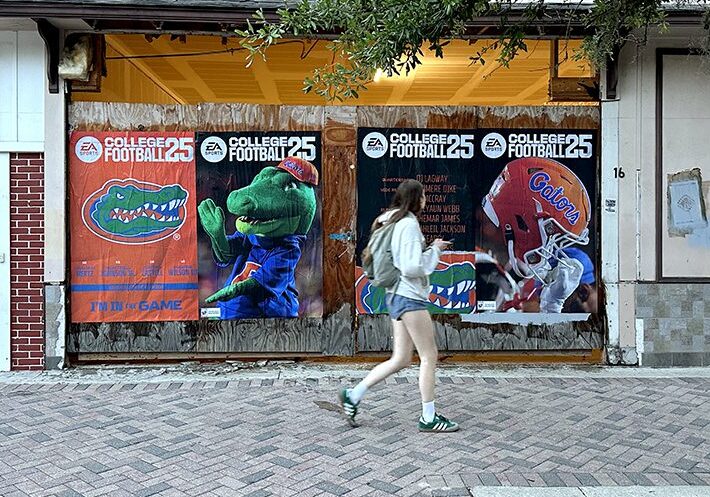
Brand culture is not built in advertising. It is built in the physical moments where consumers encounter the brand as part of their real lives. Experiential marketing is the primary tool for creating those moments deliberately.
Brand culture is the least tangible and most durable form of brand equity. It is what makes Apple users identify as Apple people, what makes certain sneaker brands have community-like followings, what makes some coffee brands feel like they belong to a city rather than being a corporation operating in it. Brand culture is the shared set of values, experiences, and identities that consumers associate with a brand and feel some ownership of.
Advertising can communicate brand values. It can show the lifestyle the brand aspires to represent. It can generate the broad awareness that creates brand recognition. What advertising cannot do is create the felt experience of being part of the brand’s community. That requires actual experience. That requires the physical presence of the brand in contexts that matter to the consumer — at the events they attend, in the neighborhoods they inhabit, at the cultural moments they participate in.
Experiential marketing is the discipline that creates those physical brand moments. When it is done consistently, over time, in the right contexts, it builds brand culture — the shared experience that makes consumers feel a genuine connection to the brand rather than a purely transactional relationship with it.
What Brand Culture Actually Is
Brand culture is the informal shared understanding among a brand’s consumers about what the brand stands for, who the brand is for, and what belonging to the brand’s community means. It is not formally defined. It is not controlled by the brand’s marketing department. It emerges from the sum of consumer experiences with the brand, filtered through the social networks and cultural contexts in which those consumers operate.
A brand with strong culture has consumers who consider themselves members of something, not just purchasers of something. They recommend the brand to others not because they were incentivized to but because they feel genuine identification with it. They notice when the brand does something that contradicts the culture they have associated with it. They defend it against critics. They participate in the brand’s community not because the brand asked them to but because the community feels genuinely theirs.
Building this kind of consumer relationship requires sustained, authentic engagement at the experience level. You cannot instruct consumers to feel culture. You have to create the conditions for culture to form, and then get out of the way.
The Mechanics: How Experiential Marketing Creates Culture
Physical Context Creates Emotional Association
Human memory and emotion are deeply tied to physical context. The setting in which we encounter something shapes how we remember and feel about it. A brand that is consistently present at the music festivals, sporting events, community gatherings, and cultural moments that matter to its target consumer becomes associated with the positive emotional register of those contexts.
This is not a trick. It is the way emotional memory formation works. When a consumer tastes a brand’s product at a music festival they love, on a summer evening surrounded by friends, the memory of that tasting is stored in the emotional context of the festival experience. The brand and the feeling become linked. Repeated consistently, across multiple high-meaning contexts, that linkage becomes a stable brand association.
Shared Experience Creates Community Identity
Community forms around shared experience. The consumers who all attended the same brand activation — who all got the same sample, who all experienced the same installation, who all participated in the same event — have a shared reference point. That shared reference creates community identity. “Did you see that pop-up?” is a community-forming conversation. The brand is the catalyst for a genuine social connection between consumers.
The brands that have built the strongest culture through experiential marketing are the ones that used activation to genuinely contribute to the communities their consumers belonged to — not to extract attention from those communities. The question that drives culture-building experiential strategy is: what can this brand add to this community that the community would miss if the brand disappeared? If you can answer that question, you have the foundation for a culture-building activation program.
Ambassador Staff Embody Brand Culture
The brand ambassadors who staff activations are the living representation of brand culture. They are not just there to distribute product. They are there to embody what the brand stands for in a way that consumers can experience directly. A brand ambassador who is genuinely aligned with the brand’s values, who uses the product personally, who participates in the cultural community the brand is activating in, communicates brand culture in every interaction. An ambassador who is not aligned with those things communicates the opposite.
This is why staffing decisions for culture-building activations require more than skill assessment. They require cultural fit assessment. The question is not just “can this person conduct a friendly brand interaction?” but “does this person actually embody what this brand is about?” The answers to these questions are different, and the second one matters more for culture building.
Experiential Programs That Built Measurable Brand Culture
Red Bull’s cultural marketing approach — creating and sponsoring events that are genuinely part of the action sports and music culture their audience inhabits, rather than inserting the brand into pre-existing cultural events — built a brand culture so strong that many consumers identify the brand with the lifestyle rather than the product. The events Red Bull creates and supports are genuine cultural property. Consumers experience them as belonging to the community, not to the brand.
Nike’s running community events — the morning run clubs, the city marathon activations, the running route installations — built Nike’s brand not as a shoe company but as a running community leader. The community is the brand. The product serves the community. Consumers who run Nike’s routes and participate in Nike’s run clubs experience Nike as part of their running identity, not just their footwear choice.
Patagonia’s in-store events, film screenings, and community activations around environmental causes built a brand culture that makes Patagonia customers feel like they are part of a movement, not just a customer base. The brand’s values are experienced directly at these events, not just communicated in advertising. Consumers who participate come away with a direct experiential sense of what Patagonia stands for.
Designing Activations for Culture, Not Just Transactions
Activations designed primarily for transaction metrics — how many samples distributed, how many consumer interactions completed — can generate impressive short-term numbers without building brand culture. The consumer who received a sample has tried the product. The consumer who participated in a genuinely meaningful brand experience has potentially joined the brand community.
Designing for culture means asking: what do we want consumers to feel about this brand after this encounter, and will this activation create that feeling? The answer requires understanding what the specific consumer community values, what kind of experience would make them feel the brand is genuinely part of their world, and what the brand can do — as a product, a company, a community member — that genuinely aligns with those values.
Culture-building activations are not necessarily more expensive than transactional ones. They are more deliberate. The investment is not primarily in production scale but in the quality of the consumer experience, the authenticity of the brand representation, and the sustained consistency of presence in the communities that matter.
Consistency Over Time: The Key to Culture Building
Brand culture is not built in a single activation. It is built through the accumulated experience of consistent brand presence over time. A brand that activates in the same community contexts year after year, that is reliably present at the same events, that shows up consistently at the moments and places that matter to its consumer community, builds familiarity and then belonging that a one-time activation cannot create.
The implication for activation planning is that culture-building experiential programs should be treated as multi-year commitments, not annual experiments. The budget for a recurring annual activation at a specific community event is more valuable for culture building than the same total budget spent on a single larger activation that occurs once and is not repeated.
Measuring Brand Culture Through Experiential Marketing
| Indicator | What It Tells You | How to Track |
|---|---|---|
| Unprompted brand advocacy | Consumers recommending brand in natural conversation | Social listening, community observation |
| Organic documentation of activations | Consumers sharing brand experiences without prompting | Hashtag tracking, image search monitoring |
| Repeat activation engagement | Consumers seeking out the brand at repeated events | Staff observation, CRM data where collected |
| Brand mention in community context | Brand appearing naturally in community discussions | Social listening, community monitoring |
| Post-activation purchase behavior | Activation converting to trial and repurchase | Promo code tracking, retailer data |
Execution Quality: The Defining Variable
The single variable that most determines whether an experiential marketing campaign delivers its intended outcomes is execution quality. Not the creative concept. Not the production budget. Not the marketing strategy. Execution quality — the quality of what actually happens in the field when the campaign is running — is what determines whether the investment generates the consumer relationships it was intended to create.
This matters because execution quality is also the variable that is most frequently underestimated during campaign planning. Brands spend months developing the creative concept and weeks reviewing the production specifications. They often spend days reviewing the staffing plan and hours briefing the brand ambassadors. The imbalance in planning effort does not match the imbalance in outcome impact.
A strong creative concept executed poorly produces poor results. A modest creative concept executed excellently produces strong results. The brands that consistently generate strong outcomes from their experiential programs are the ones that invest in execution quality as deliberately as they invest in creative quality — selecting high-quality staff, ensuring genuine product knowledge training, managing the field execution directly rather than trusting that everything will work without oversight, and capturing documentation systematically.
Building an Internal Capability vs. Working with an Agency
Brands that run frequent, large experiential programs face a recurring choice: invest in building internal experiential marketing capability or continue working with external agencies. Both approaches have legitimate merits, and the right choice depends on program frequency, budget scale, and the degree to which experiential marketing is a sustained strategic priority rather than an occasional channel investment.
Internal capability investment makes sense for brands that run programs in the same markets repeatedly, with the same consumer profiles, at consistent program scales. An internal experiential team builds the local market relationships, permit knowledge, and staffing networks that take an external agency time to establish in each new program. Over time, internal teams often develop execution quality advantages in their core markets that exceed what external agencies can reliably provide.
External agency partnerships make sense for brands that run programs in new markets, at irregular intervals, or with program requirements that exceed the internal team’s capability. An external agency with deep experience in a specific market, format type, or consumer category provides the specialized knowledge and established relationships that the internal team would need significant time to develop independently. The best brand marketing programs often combine internal strategic ownership with external execution capability in specific markets or for specific program types.
Documentation as a Business Asset
The photo and video documentation from experiential campaigns is a legitimate business asset that most brands undervalue. A well-documented activation campaign produces hundreds of usable images and video clips that serve as brand content across social channels, website, sales presentations, investor communications, and media outreach for months or years after the campaign runs.
The cost of producing equivalent creative content through a traditional photo shoot — with models, location fees, art direction, and post-production — would be a significant independent budget item. The documentation from a well-run activation campaign produces that content as a byproduct of executing the campaign properly, at no additional cost beyond the dedicated photographer whose day rate is a small fraction of the total program budget.
Brands that plan their documentation requirements explicitly — defining what shots need to be captured, what environments should be photographed, what consumer interaction moments are most valuable — produce documentation libraries that serve the brand consistently for extended periods. Brands that treat documentation as an afterthought produce thin, inconsistent photo sets that are quickly exhausted and require new production to supplement.
Seasonal Planning for Experiential Programs
Experiential marketing programs are affected by seasonality in ways that digital marketing channels are not. Outdoor activations are weather-dependent. Consumer behavior patterns shift across seasons. Events that anchor activation planning occur at fixed points in the annual calendar. Planning experiential programs with seasonal considerations built into the strategy — rather than as an afterthought when weather or consumer patterns create problems — produces more consistent consumer engagement quality throughout the year.
Q1 (January through March) in Northern markets is the most challenging period for outdoor activation. Cold weather reduces consumer willingness to stop and engage at street-level activations. Indoor venues — retail environments, fitness studios, corporate events — are more productive for brands that need to activate in Northern markets during winter months. Q2 and Q3 are the peak outdoor activation seasons in most US markets. Q4 brings holiday retail activation opportunities and the end-of-year event season.
Understanding the seasonal activation calendar for specific markets allows brands to plan programs that take advantage of the periods when outdoor consumer engagement is most productive and shift to alternative formats during periods when outdoor conditions are less favorable. This kind of proactive seasonal planning produces better consumer reach across the full annual program than simply activating whenever the brief is ready regardless of the season.
Budget Allocation and Program Investment Decisions
Effective experiential marketing investment requires understanding the real cost drivers in any given program and allocating budget against them in proportion to their impact on outcomes. The most common budget allocation mistakes are: over-investing in fabrication quality relative to staffing quality (a beautiful activation staffed poorly produces worse results than a simpler activation staffed brilliantly), under-investing in documentation relative to total program cost (documentation produces assets that serve the brand long after the activation ends), and under-investing in permit and location quality (saving money on permits by accepting poor locations destroys the consumer reach the program was designed to generate).
A useful framework for experiential program budget allocation is the 30-30-20-10-10 rule: approximately 30% of the production budget on fabrication and physical build, 30% on staffing (brand ambassadors, tour manager, production management), 20% on logistics and permits, 10% on documentation, and 10% held as contingency for operational surprises. This allocation can shift based on specific program requirements — a vehicle tour program allocates more to logistics; a festival activation may allocate more to fabrication — but the framework helps prevent the common over-investment in build at the expense of other critical program elements.
Brand Activation as Part of the Broader Marketing Mix
Experiential marketing works best when it is designed as part of a broader marketing strategy rather than as a standalone channel. The consumer who encounters a brand at a street activation and then sees the brand’s advertising reinforcement in the following days has a deeper and more durable brand impression than the consumer who encountered the brand only once through one channel.
Coordination between the experiential activation and the brand’s digital, retail, and advertising programs creates a surround-sound effect that amplifies the impact of each individual touchpoint. The activation generates awareness and trial. Digital advertising reinforces the brand identity and drives the consumer toward purchase. Retail promotions capture the consumer at the point of purchase decision. Each channel does what it does best, and the consumer’s process from awareness to preference to purchase is supported at every stage.
Brands that treat experiential as a standalone budget item rather than an integrated component of a coordinated marketing strategy consistently underperform brands that design experiential within a broader consumer process framework. The activation does not need to do all of the marketing work. It needs to do the specific work that physical consumer engagement does best — create direct brand encounter and product trial — while the other channels handle the work they do best.
Measuring Long-Term Brand Value from Experiential Programs
The immediate, measurable outputs of an experiential program — consumer interaction counts, product units sampled, social content generated — capture only a portion of the program’s actual value. The long-term brand value created by a well-executed experiential program extends beyond any single metric into the consumer brand relationships that influence purchasing behavior over months and years.
Tracking brand health metrics — unaided awareness, brand favorability, purchase intent — in the markets where experiential programs run against control markets where they have not run provides the most direct evidence of long-term brand value generation. This type of research requires investment and planning beyond the activation itself, but it produces the evidence that marketing leadership needs to evaluate experiential as a long-term brand investment rather than a short-term engagement tactic.
Brands that have run sustained experiential programs over multiple years in the same markets and tracked brand health metrics over time consistently observe measurable brand equity improvements that correlate with experiential investment levels. This correlation does not always rise to clear causation in the research design, but the directional evidence across multiple brands and categories is consistent: sustained, well-executed experiential presence in a market builds brand equity that outlasts any individual activation by a significant margin.
Working With the Right Agency Partner for Your Program
The decision to work with an experiential marketing agency is a decision about operational capability, not just creative capability. The best agency partners are the ones who have genuinely done the work you are asking them to do — who have operated in the specific markets you need to reach, who have managed the specific format you are planning, and who can demonstrate that capability through real program examples and credible client references rather than well-produced case study videos.
The process of selecting the right agency partner requires active due diligence: asking specific operational questions, reviewing actual post-campaign reports rather than highlight reels, speaking directly with clients who ran comparable programs, and verifying the agency’s claimed market-specific relationships by asking for names and descriptions of specific permit contacts, staffing companies, and venue partnerships. Agencies with genuine operational depth answer these questions specifically. Agencies that rely primarily on creative quality to win business often cannot.
The return on a strong agency partnership compounds over time. An agency that learns your brand, your standards, and your consumer profile through one program executes the next one more efficiently and with higher quality. The relationship investment — briefing the agency thoroughly, providing honest feedback after each campaign, treating them as a strategic partner rather than a vendor executing a spec — produces better programs over time. The brands that generate the strongest long-term results from experiential marketing are almost always the ones with sustained agency relationships built on mutual investment and honest communication.
Frequently Asked Questions
How does experiential marketing build brand culture?
Experiential marketing builds brand culture by creating shared experiences that consumers associate with the brand. When people encounter a brand in a meaningful physical context — at a cultural event, in a community they belong to, through a service that helps them — the brand becomes associated with that context and the positive feelings it generates.
What is brand culture and why does it matter?
Brand culture is the set of values, behaviors, and shared experiences that define a brand’s community. Brands with strong culture retain customers longer, attract brand advocates who recruit new customers organically, and are more resilient to competitive pressure because their relationship with consumers is not purely transactional.
Can a small brand build culture through experiential marketing?
Yes. Brand culture is built through the depth of consumer connection, not the scale of the campaign. A small brand that runs consistent, high-quality local activations in its home community can build stronger brand culture than a large brand running superficial national campaigns.
How do you measure brand culture built through experiential marketing?
Brand culture is measured through qualitative indicators: the quality of consumer advocacy (not just satisfaction), unprompted brand mentions in communities the brand has activated in, repeat engagement from consumers who encountered the brand through activations, and the brand’s organic presence in cultural conversations it did not initiate.

Ready to Run Your Campaign?
Call us or email us. We’ll tell you exactly what we can do in your market and what it costs.
Related Services
Explore similar advertising solutions offered by American Guerrilla Marketing.
American Guerrilla Marketing — Los Angeles
Street-level campaigns in Los Angeles and nationwide. Wheatpasting, LED trucks, street teams, and more.
(646) 776-2770
Related Articles
-
Street Poster Advertising Ottawa: A Complete Campaign Guide
September 17, 2026
-
Activation Marketing: How Brands Win at Street Level
September 13, 2026
-
Experiential Marketing Firms Chicago | American Guerrilla Marketing
September 12, 2026
-
Pop Up Experiential
September 12, 2026
-
Mobile Pop Up
September 12, 2026