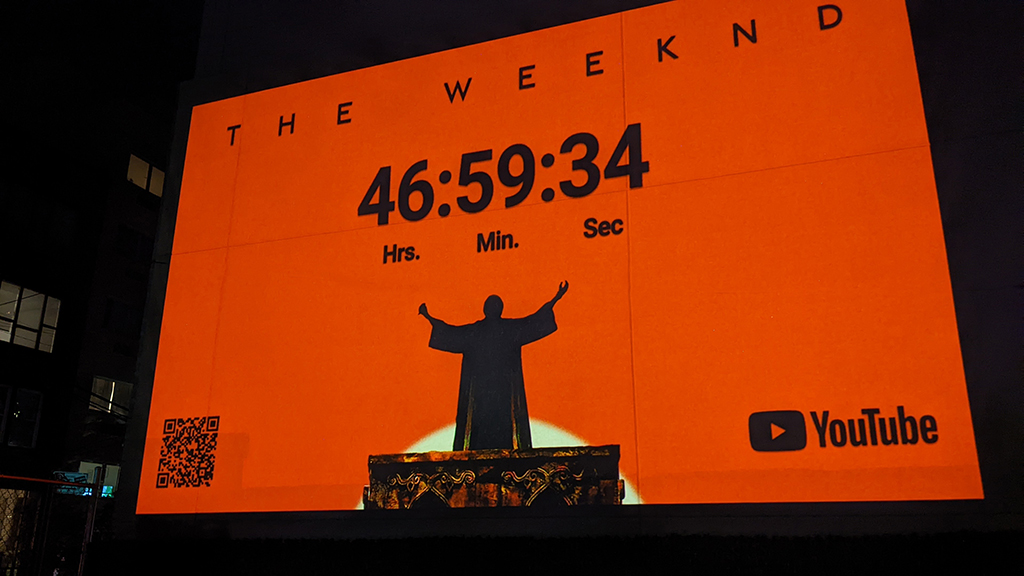
Building projection advertising sits at the intersection of outdoor marketing and spectacle. When a high-lumen projector throws a brand’s creative across the facade of a building in SoHo, on a warehouse wall in Williamsburg, or on the side of a landmark building in any major U.S. city, it creates the kind of visual event that stops pedestrians, generates photographs, earns social shares, and occasionally attracts press coverage. Done well, it is one of the highest-impact per-impression formats in the guerrilla marketing arsenal. Done poorly, it produces a muddy image that no one photographs and no one remembers.
This guide covers how guerrilla projection advertising actually works: the technology requirements, surface selection criteria, location planning, permit and compliance considerations, creative optimization, and the campaign contexts where this format delivers against its potential. Our team at American Guerrilla Marketing evaluates projection advertising as part of the broader format toolkit we deploy across 50+ U.S. markets.
We operate from Industry City, Brooklyn, NY. Reach our team at (646) 776-2770 for campaign planning discussions.
What Guerrilla Projection Advertising Is and How It Works
Projection advertising uses high-lumen projectors mounted on vehicles, mobile platforms, or fixed positions to display brand creative on large surfaces. The projector throws an image onto a building facade, parking structure wall, or any large flat surface visible to the target audience. Unlike LED trucks or static posters, projection advertising is inherently temporary and site-specific: it exists only during the projection window and disappears completely when the projector is turned off or moved. This ephemerality is part of its strategic value.
The Technology Requirements
The most common point of failure in projection advertising campaigns is underpowered equipment. Professional outdoor building projections in urban environments require 10,000 to 30,000 lumens at minimum, with the specific lumen requirement determined by projection distance, target surface size, ambient light conditions, and the color values in the creative. A standard consumer projector in the 3,000 to 5,000 lumen range produces an image that is visible in a darkened room but is completely washed out in even moderate outdoor ambient light conditions.
Projection Distance and Image Size
Projection throw distance determines the achievable image size. At 50 feet of throw distance, a professional high-lumen projector can fill a 25-to-40-foot wide surface area. At 100 feet of throw distance, the image can fill a 50-to-80-foot surface area depending on projector optics. Knowing the exact throw distance from the planned projector position to the target surface is essential for specifying the right equipment and predicting image size and brightness before the campaign launches.
Surface Selection: Where Projection Campaigns Win and Where They Fail
The target surface is the second most critical variable after equipment specification. Surface selection errors that seem minor in planning create field problems that cannot be corrected once the crew is deployed.
Optimal Projection Surfaces
Light-colored, smooth, flat building facades deliver the sharpest and most vivid projection images. White concrete, light gray stone or stucco, light-colored painted brick, and smooth industrial cladding all provide sufficient reflectivity for professional-grade images. The brighter the surface base color, the more vivid the projected creative will appear.
Problem Surfaces
Dark-colored building facades absorb projected light and produce images that appear dim and washed out regardless of projector lumen output. Heavily textured brick or stone creates visual noise that blurs image detail at reading distance. Surfaces with significant relief or three-dimensional architectural features create shadow and distortion patterns that can obscure creative elements. Windows create reflective hotspots that interrupt the projected image. Surfaces that are not perpendicular to the projection angle cause keystoning that distorts the image geometry.
Scout Before You Commit
Our team scouts every projection location before committing to a campaign execution plan. This means visiting the location during the planned projection hours, evaluating the ambient light conditions, confirming the surface characteristics, measuring the throw distance from planned projector positions, identifying the optimal projector placement, and confirming that the required power access or generator placement is achievable. A scout visit that reveals a problem with the planned surface saves the entire campaign budget from being spent on an execution that cannot deliver.
Location Planning: Where Campaigns Earn Their Audience
The audience for a building projection is the foot traffic that passes the projection surface during the projection window. Location planning should start with where the target audience is concentrated at night and work backward to identify surfaces in those locations that meet the technical and access requirements.
High-Foot-Traffic Urban Locations
Dense urban corridors with evening foot traffic are the most productive projection locations. Entertainment districts, restaurant and bar corridors, transit hub perimeters, shopping districts, and cultural venue approaches all concentrate potential audience during the evening hours when projection conditions are optimal. In New York City, this means SoHo, Williamsburg, the Meatpacking District, or Midtown event corridors. In Los Angeles, it means Silver Lake, DTLA Arts District, or West Hollywood. In Chicago, it means River North, Wicker Park, or the Loop event corridor.
Event-Adjacent Projection Campaigns
Projection campaigns tied to specific events, film premieres, album launches, product announcements, or major sporting events deliver audience concentration that general location campaigns cannot achieve. The predictable concentration of the right audience at a specific location at a specific time makes event-adjacent projections one of the most efficient uses of this format. Our guerrilla marketing services team coordinates event-adjacent projection campaigns with timing that maximizes the overlap between the projected audience window and the event approach or departure traffic surge.
Permit and Compliance Requirements
The legal framework for projection advertising varies significantly by city, surface ownership, and the specific character of the installation. This is not a format category where the compliance picture is uniform across markets.
Surface Owner Permission
Projecting onto a privately owned building requires the building owner’s permission in most legal interpretations. Without owner permission, projection onto private property carries risk of enforcement action and creates brand liability that professional campaigns cannot accept. Our team secures surface owner permission or identifies publicly accessible surfaces before committing to any projection location.
City Permit Considerations
Some U.S. cities have specific regulations around illuminated outdoor advertising that may apply to building projections. Projecting from a vehicle on a public street may trigger additional permit requirements related to vehicle use and commercial activity in the public right of way. We research city-specific requirements for every projection campaign location and brief clients on the applicable regulatory environment before committing to execution.
Power and Generator Logistics
High-lumen professional projectors draw significant electrical load. Campaigns that cannot access direct electrical power from a building source require generator deployment. Generator placement, noise, and the logistics of fueling for multi-hour projections all require operational planning. Our team accounts for power logistics as part of the location planning and equipment specification process.
Creative Optimization for Projection Campaigns
Creative designed for LED screen display does not translate directly to building projection. The production characteristics of the format require specific creative considerations to maximize impact.
Color and Contrast
High-contrast creative with bold color blocks and strong background-to-foreground differentiation reads clearly in projection. Fine detail, thin typography, and color gradients that work on a backlit screen often lose legibility on a projected surface. Design for maximum contrast and clarity at the projected image size, not at the design file size on a monitor.
Animation and Video Content
Projected content does not need to be static. High-lumen projectors can display video content and animation that creates dynamic visual interest beyond what static images deliver. For event-adjacent projection campaigns designed around social media documentation, animated content creates more compelling photography opportunities than static images because it creates multiple visual states that photographers can capture over time.
Message Legibility at Distance
Test creative at the actual projected image size before the campaign launches. Text that reads clearly at 24 points on a design file may be illegible at street level when projected across a 40-foot building wall at 100 feet of throw distance. Minimum text size, brand mark visibility, and overall message hierarchy should all be evaluated at scale before the crew deploys.
The Social Media Documentation Value of Projection Campaigns
One of projection advertising’s distinct strategic values is its organic social media documentation potential. A compelling building projection in a high-foot-traffic urban location stops people. They look up, they take photos, and they share what they’ve captured with audiences that extend far beyond the physical footprint of the projection location.
Planning Around Documentation Potential
Campaigns designed to maximize organic social documentation should plan the projection timing around peak foot traffic, brief the team on optimal photography angles from pedestrian-accessible positions, and ensure the creative includes clear brand identification that reads in a photograph. Our team coordinates with brands on pre-launch influencer seeding for projection events to ensure that the initial documentation is captured and shared by accounts with significant reach, amplifying the organic wave.
Behind-the-Scenes Content Value
The setup process, the moment the projection first appears on the building wall, and the street-level reaction from pedestrians who encounter the projection all create content that brands can use independently from the projection itself. Documenting the activation process produces content that demonstrates creative ambition and executional capability beyond what the final projection image alone delivers.
When to Use Projection Advertising vs. Other Formats
Projection advertising is not the right format for every campaign objective. Understanding when it outperforms other formats and when it underperforms is essential for using it strategically rather than novelty-seeking.
Best Use Cases
Projection advertising delivers outsized value for product and entertainment launch campaigns where the visual drama of the format creates the “event” quality that earns press and social coverage. It is well-suited for campaigns with specific one-night or short-window execution plans tied to event audiences. It works well for campaigns designed to generate organic social documentation from a design-aware or culturally engaged audience. It complements wheat paste poster campaigns and LED billboard trucks as a high-impact complement format in multi-format campaign architectures.
When Other Formats Are More Efficient
For campaigns that need sustained multi-week presence, wheat paste posters deliver more efficient per-day impression value than a nightly projection campaign. For campaigns targeting broad market coverage across a geographically spread-out audience, LED trucks reach more total impressions per campaign dollar than fixed-location projections. Projection excels at concentration and spectacle, not at reach and duration.
Frequently Asked Questions
What is guerrilla projection advertising?
Guerrilla projection advertising uses high-lumen projectors to display brand creative, video content, or messaging on building facades, large public surfaces, or any large flat surface visible to pedestrians and vehicles. Projections run during nighttime hours when ambient light is low enough for the projected image to be vivid and readable. The format creates dramatic visual scale that generates social media documentation, earned media coverage, and strong audience recall.
How powerful does a projector need to be for building projection advertising?
Effective outdoor building projections in urban environments require 10,000 to 30,000 lumens or more depending on projection distance, ambient light environment, and surface size. Standard consumer projectors in the 3,000 to 5,000 lumen range are insufficient for outdoor urban projection campaigns. Professional campaign projectors are purpose-built for outdoor deployment and weatherproofed for overnight operation.
Is projection advertising legal?
The legal status of projection advertising varies by city, surface, and specific projection setup. Projecting onto privately owned surfaces generally requires property owner permission. Projecting from private property onto other buildings may have additional permit requirements. Some cities have specific regulations around illuminated signage and projection as advertising. American Guerrilla Marketing evaluates permit requirements for every projection campaign location before execution begins.
What surfaces work best for building projections?
Light-colored, smooth, flat building facades deliver the best projection quality. White or light gray concrete, stone, and stucco surfaces provide excellent reflectivity. Dark surfaces, textured brick, and irregular facade geometry reduce image clarity and brightness significantly. The projection angle relative to the surface is also critical: surfaces facing the projector at a perpendicular angle deliver sharper images than off-axis projections that create keystoning distortion.
How much does guerrilla projection advertising cost?
Projection advertising campaigns typically range from $5,000 to $25,000 or more per execution depending on projector specifications, setup complexity, location, duration, permit requirements, and crew requirements. Single-night projections at lower production complexity can be executed in the $5,000 to $10,000 range. Multi-night or multi-location campaigns scale accordingly. Contact American Guerrilla Marketing at (646) 776-2770 for a custom quote.
What brands use projection advertising effectively?
Entertainment companies for film and streaming launches and album releases, fashion brands, technology companies, and any brand seeking high-impact visual presence during a specific launch window use projection advertising effectively. The format is particularly well-suited for one-night events, product launches, and campaigns designed to generate social media documentation and earned media coverage from compelling street-level spectacle.
Can projection advertising generate social media content?
Yes, and this is one of the format’s primary strategic values. A well-executed building projection in a high-foot-traffic urban location generates significant organic social documentation from pedestrians who encounter it. The dramatic scale and unexpected visual impact make it highly shareable. Planning the activation around peak foot traffic hours and seeding coverage with relevant influencers maximizes the organic documentation and amplification opportunity.