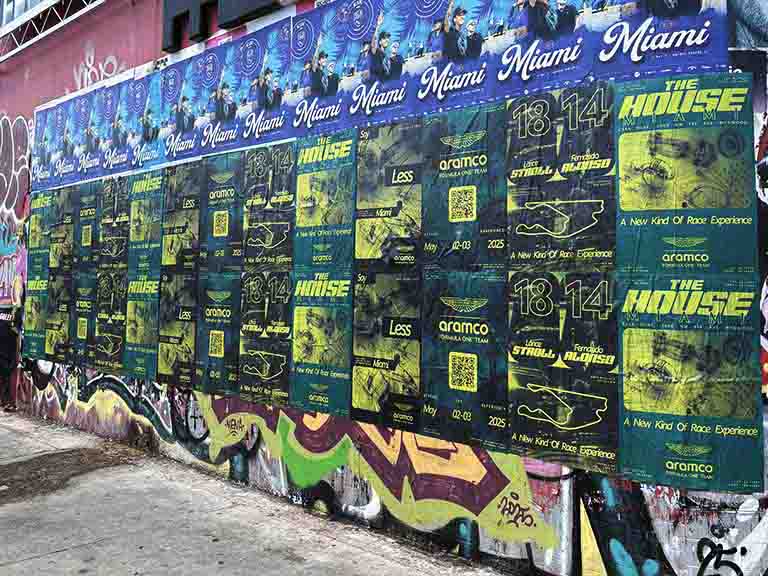
Most advertising in London goes unseen. Tube passengers scroll past banner ads. Pedestrians walk past billboards without registering them. Digital display networks serve exposures to people who have trained themselves not to look. The brands that actually break through in the UK market are the ones willing to show up where their audience already is, at street level, in the neighborhoods they walk through every day, with something worth stopping for. That’s what our team at American Guerrilla Marketing does in London, and across the wider UK, every week.
We’re a guerrilla marketing agency based at Industry City in Brooklyn, and we execute campaigns internationally, with London as one of our most active international markets. The UK’s advertising culture is demanding. Londoners especially have a sharp eye for what’s authentic and what’s trying too hard. We’ve learned which neighborhoods respond to which formats, which walls get the most foot traffic, and how to build a campaign that earns attention without overstaying its welcome.
Why Guerrilla Marketing Works Particularly Well in the UK
The UK has a strong tradition of street culture, from the Banksy era in Bristol to the mural corridors of Shoreditch. British audiences, particularly in London, are visually literate. They notice things on walls. They photograph interesting street-level installations. They share them. That social amplification layer is what makes guerrilla marketing especially potent in major UK cities.
There’s also an over-saturation problem with traditional media. The London digital out-of-home market is one of the most cluttered in the world. Brands running standard billboard or digital screen campaigns in high-footfall areas are competing with dozens of other advertisers for a few seconds of attention. A well-executed wheatpaste poster campaign or a surprise street-level activation stands out precisely because it doesn’t look like the rest of the advertising environment.
Street Culture as Campaign Infrastructure
London’s street art culture isn’t just aesthetic. It’s a genuine community that includes photographers, bloggers, culture journalists, and hundreds of thousands of social media accounts dedicated to documenting what’s happening on walls across Shoreditch, Brick Lane, and Hackney. When we deploy a well-designed wheatpaste campaign in these areas, it gets documented and shared organically, extending the campaign’s reach far beyond the physical installation itself.
The Geography of Attention
Different UK cities have different concentration points. In London, it’s the cultural neighbourhoods and transit corridors. In Manchester, it’s the Northern Quarter and Ancoats. In Glasgow, it’s the Merchant City and West End. Our team studies movement patterns, pedestrian density, and audience concentration before selecting deployment zones. We don’t post randomly. Every placement is deliberate.
What We Deploy in the UK Market
The UK market calls for a mix of formats depending on the campaign’s audience, budget, and objectives. Here’s what we bring to British campaigns.
Wheatpaste Poster Campaigns
Wheatpasting is one of the most cost-effective formats for high-density urban markets. We work with approved walls and approved surfaces across London and other UK cities, deploying large-format posters overnight that generate immediate street presence. In Shoreditch and Brick Lane, a well-executed wheatpaste campaign can accumulate thousands of organic social shares within 48 hours. We handle design coordination, printing, and deployment with our local crew network.
Street Team Activations
Our brand ambassadors work UK markets regularly, deployed at transit hubs, cultural events, university corridors, and commercial high streets. Street teams in London operate differently than in US cities. Londoners respond better to genuine engagement than scripted pitches. We train our teams accordingly, with product knowledge, clear messaging, and the ability to have real conversations rather than deliver rehearsed lines.
Sidewalk Stencils and Ground Graphics
High-footfall areas like Carnaby Street, Covent Garden, and Oxford Circus see millions of pedestrians per week. Sidewalk stencils placed in these zones get looked at simply because people look down when they walk. We use washable, aligned with site rules materials that create impact without creating problems.
Projection Advertising
Projection advertising is particularly effective in London’s older architectural areas where traditional installation is difficult. Evening projections onto prominent buildings in Soho, the City, or South Bank generate significant attention and photograph beautifully for social content.
Mobile LED Trucks
Our LED billboard trucks operate in London and can be routed through specific postcodes, around event venues, or along commuter corridors. The dynamic content capability means we can adapt messaging throughout the campaign day, targeting morning commuters differently than evening pedestrians.
London Neighborhoods We Know Best
Every London neighborhood has its own audience, atmosphere, and tolerance for different types of marketing. Treating them all the same is a mistake. Here’s how we approach the city’s most important creative and cultural areas.
Shoreditch and Brick Lane
This is where street culture lives in London. The Brick Lane and Shoreditch corridor is home to the city’s most photographed walls, a dense creative and tech worker population, and a strong influencer and media presence. Campaigns here get noticed and documented. We’ve executed wheatpaste programs in this area for fashion brands, tech products, and music releases. The key is creative quality. Low-effort work gets ignored or covered over quickly. Strong creative gets preserved and photographed.
Camden
Camden is one of London’s highest-footfall areas for youth culture, music, and alternative brands. The market areas around Camden Lock and Chalk Farm Road see enormous weekend traffic. Street-level campaigns here work best for brands targeting 18 to 35-year-olds in music, fashion, and lifestyle categories.
Brixton
Brixton has a distinct cultural identity and a tight-knit community that recognizes when a brand is genuinely present compared with just using the postcode for credibility. Street team programs in Brixton work well for community-oriented brands, food and drink launches, and music-adjacent campaigns. The market areas around Brixton Village are particularly high-value for activation work.
Hackney and Dalston
East London’s Hackney corridor, including Dalston, Stoke Newington, and London Fields, is home to a dense concentration of creative professionals, media workers, and culture-forward consumers. This is one of the best areas in London for reaching an educated, brand-conscious audience in a relaxed, community-oriented environment.
Soho and Central London
Central London, including Soho, Covent Garden, and the South Bank, offers the highest raw footfall numbers in the city. Campaigns here reach a broader cross-section of Londoners and tourists. These areas are best for mass awareness objectives where demographic breadth matters more than hyper-targeted reach.
Running Multi-City UK Campaigns
Many of our UK clients want national reach, not just London coverage. We’ve executed campaigns that span London alongside Manchester, Birmingham, Leeds, Glasgow, and Edinburgh. Managing this kind of footprint requires a logistics infrastructure that most single-market agencies don’t have.
Crew Network and Local Knowledge
We maintain a vetted crew network in major UK cities. These aren’t generalist contractors. They’re people who know the specific walls, zones, and neighborhoods in their city. Manchester’s Northern Quarter has its own distinct culture. Glasgow’s Merchant City is completely different from Camden. Local knowledge is what makes a multi-city deployment feel cohesive rather than generic.
site approval and site-rule alignment Coordination
UK outdoor advertising has specific site-rule requirements that vary by borough in London and by council in other cities. Our team manages site-rule alignment coordination for each market, working with approved surfaces and approved zones. We don’t put our clients in positions where a campaign creates site-rule problems.
Production and Print Logistics
Large-format printing for UK campaigns can be sourced locally or shipped from our US production network, depending on timeline and specification. For campaigns requiring simultaneous deployment across multiple cities, we coordinate production timelines so everything goes up within the same 24 to 48-hour window.
International Brands Entering the UK Market
A significant portion of our UK work comes from American and international brands launching or expanding into the British market. Guerrilla marketing is a particularly efficient entry strategy for brands that want to build genuine street-level presence before committing to expensive traditional media buys.
Why Street-Level Works for Market Entry
A new brand in London doesn’t have the recognition that justifies billboard spending in premium locations. But a well-executed wheatpaste campaign in the right neighborhoods can generate genuine organic interest, press coverage, and social discussion at a fraction of the cost. We’ve helped American fashion brands, tech startups, and food and beverage companies build UK presence through this approach.
Connecting to UK Culture
The creative approach for UK campaigns needs to be adapted, not just transplanted. British humor, cultural references, and aesthetic sensibility are different from American ones. Our team works with UK-based creative partners when needed to ensure the campaign feels native rather than imported.
UK Campaign Planning Timeline
Planning a guerrilla campaign in the UK follows a clear sequence. Understanding the timeline helps clients set realistic expectations and coordinate with their broader marketing calendars.
Brief to Launch
For a standard single-city wheatpaste campaign in London, the timeline from approved brief to deployment is typically two to three weeks. This covers material production, crew coordination, location scouting, and site approval processing where required. Multi-city campaigns or those involving multiple formats run four to six weeks.
Campaign Duration and Maintenance
Wheatpaste installations in London typically last two to four weeks depending on location and weather conditions. High-traffic areas with active street art cultures see faster turnover. We offer maintenance sweeps for campaigns where longevity is a priority. Street team programs can run for any duration, from a single day to an ongoing weekly presence.
Documentation and Reporting
Every UK campaign we execute includes photographic documentation of installations and activations. For wheatpaste campaigns, we provide before/after imagery, geo-tagged installation photos, and exposures estimates based on verified footfall data for each location. For street team programs, we track distribution numbers, engagement interactions, and lead or data capture where applicable.
Ready to Launch Your Campaign?
What Makes AGM Different in the UK Market
There are UK-based agencies doing street marketing. Most specialize in one format. A few do wheatpasting. Others do street teams. Very few have the full-service capability to design, produce, deploy, and document campaigns across multiple formats and multiple cities simultaneously. That’s where we sit in the market.
Our background is in the densest, most demanding urban market in the world: New York City. The operational standards and creative quality we developed there translate directly to London. We understand high-footfall urban environments, tight site approval windows, overnight deployments, and how to build campaigns that earn attention rather than demand it.
Results-Focused Approach
We don’t sell exposures. We sell outcomes. Every campaign we design starts with a clear question: what do we want people to do, feel, or remember after encountering this? That objective shapes every tactical decision, from which neighborhoods we target to what size posters we print to how we brief our street teams. The creative serves the goal, not the other way around.
Transparent Process
Clients working with us on UK campaigns have full visibility into the process. We share location scouting findings, confirm deployment schedules, and provide real-time documentation as campaigns go up. We treat UK clients the same way we treat our New York clients: with full transparency and consistent communication from brief to wrap report.
UK Market Entry Through Street-Level Campaigns: A Framework
For American and international brands entering the UK market, guerrilla marketing offers a specific strategic advantage: it builds genuine street-level presence before the brand has the recognition to justify premium traditional media spend. Here’s how we think about using guerrilla marketing as a market entry tool in the UK.
Phase One: Cultural Neighborhood Seeding
The first phase of a UK market entry campaign concentrates on the cultural neighborhoods where brand awareness spreads most efficiently. For most categories, this means Shoreditch and Brick Lane as the primary zone, with Camden, Hackney, and Brixton as secondary zones. A well-executed wheatpaste campaign in these neighborhoods, running for three to four weeks, creates the initial impression of presence that gives early adopters something to talk about. This is the seeding phase: the brand appears, the visually engaged audience notices it, and word begins to spread through social documentation and peer conversation.
Phase Two: Expanded Coverage
Once the cultural neighborhood seeding has established a baseline of awareness among London’s early adopter population, phase two expands coverage into higher-volume areas: Soho, the South Bank, and the Oxford Street corridor for consumer campaigns; the City and Canary Wharf for B2B programs. This phase scales reach to a broader London audience that’s been primed by the cultural neighborhood activity.
Phase Three: Multi-City UK Rollout
For brands that confirm positive London market response, phase three takes the campaign to Manchester, Birmingham, Glasgow, and other major UK cities. The London learning from phases one and two informs the tactical approach in each new market, avoiding the expensive creative and location learning curve in markets where the brand is also paying for deployment.
UK Campaign Measurement and ROI
One of the most common questions we get from brands considering UK guerrilla campaigns is how to measure impact. The honest answer is that street-level campaigns are an awareness medium, and measuring awareness requires an awareness-appropriate framework rather than expecting direct-response metrics.
Impression Estimates by Location
For every location in our UK network, we use verified pedestrian count data to estimate gross exposures per week. A wall on Brick Lane with documented daily pedestrian counts generates verifiable weekly impression numbers. These aren’t modelled theoretical audiences. They’re based on actual footfall data for the specific street segments where our installations are placed. We report these numbers honestly and label them as estimates rather than guaranteed figures.
Organic Social Amplification
In London’s active street art documentation community, particularly in Shoreditch and Camden, organic social sharing extends a campaign’s reach well beyond the physical footfall count. We monitor Instagram, TikTok, and Twitter in the weeks following installation for posts that document the campaign. These organic shares are included in our wrap reports as earned media value, giving clients visibility into the amplification layer that traditional OOH measurement doesn’t capture.
Brand Recall Correlation
For clients running parallel digital or survey-based brand tracking, we can align campaign windows with tracking periods to measure any correlation between street campaign activity and brand recall scores. Out-of-home guerrilla formats have been shown in independent studies to increase brand recall by 31% compared to digital-only campaigns. We don’t claim this figure as a guarantee for every deployment, but we do encourage clients to build measurement into their campaign planning so the evidence can accumulate over time.
Working With AGM on a UK Campaign: What to Expect
Clients who are new to working with us on UK campaigns sometimes wonder how the process works across the Atlantic. Here’s a straightforward account of what the working relationship looks like.
Single Point of Contact
You work with one account manager throughout the campaign, from initial brief through wrap report. That person coordinates the UK crew, manages production timelines, handles any site-rule alignment questions that arise, and is reachable during UK deployment hours regardless of where the client is based. We don’t offshore UK campaigns to a third-party subcontractor. Our team manages UK programs the same way we manage New York programs.
Creative Collaboration
We review all creative before it goes to production. For clients bringing their own artwork, this means a file quality review and any format adaptation needed for specific surfaces. For clients who want creative development support, we work with UK-based design partners when the campaign requires cultural localization beyond what our in-house team can deliver from Brooklyn. We’re transparent about when local creative input adds value compared with when it’s an unnecessary cost.
Post-Campaign Reporting
Every UK campaign ends with a wrap report delivered within one week of campaign close. This covers geo-tagged installation photography, impression estimates by location, street team interaction data where applicable, and a summary of any organic social documentation activity during the campaign window. We include an honest assessment of what worked and what we’d recommend differently for a future deployment.
Does American Guerrilla Marketing operate in the UK?
Yes. Our team runs campaigns across London and other major UK cities including Manchester, Birmingham, Glasgow, and Edinburgh. We work with UK-based brands and international companies entering the British market.
What guerrilla marketing tactics do you use in the UK?
We deploy wheatpaste poster campaigns, street team activations, experiential brand moments, sidewalk stencils, projection advertising, and LED billboard trucks depending on the location and campaign objectives.
How long does it take to launch a UK guerrilla campaign?
Single-tactic campaigns in London can launch within two to three weeks of brief approval. Multi-city UK campaigns typically require four to six weeks for production, logistics, and crew coordination.
What neighborhoods in London do you cover?
We cover Shoreditch, Camden, Brixton, Hackney, Soho, Notting Hill, Portobello Road, Carnaby Street, Borough Market, and Dalston, among others. We select locations based on your target audience’s movement patterns.
Can you handle both B2B and B2C campaigns in the UK?
Yes. We regularly run B2C street-level campaigns alongside B2B conference and trade show programs. The tactics differ, but the approach is the same: get your brand in front of the right people at the right moment.
What is your minimum budget for a UK guerrilla marketing campaign?
UK campaigns typically start around $8,000 for a focused single-neighbourhood wheatpaste or street team deployment. Multi-borough or multi-city campaigns scale from there depending on scope and duration.
Official Wheatpaste Pricing
We only quote from AGM’s published rate cards or from a custom scope tied to the actual market, route, staffing plan, and production load.
- 24×36 wheatpaste campaign, 100 posters: $4,500
- 24×36 wheatpaste campaign, 200 posters: $5,500
- 48×72 wheatpaste campaign, 100 posters: $10,500
- 48×72 wheatpaste campaign, 200 posters: $13,500
- Optional maintenance for the final two weeks of a monthly run: $3,500
If your campaign needs a different city mix, custom fabrication, or rush timing, contact AGM for a quote built from the same rate-card logic.
How AGM scopes Guerrilla Marketing Agency UK: American Guerrilla Marketing in London
Every wheatpaste deployment plan starts with the same field questions. Where will the audience actually see the work, how long will the message stay in view, what kind of crew does the job need, and what proof will the client want after the run is live. We scope those answers before we talk about volume. That keeps the program grounded in real conditions instead of broad theory. For guerrilla marketing agency uk: american guerrilla marketing in london, the planning work matters because one weak choice at the start can waste the whole run. A strong route, a realistic install pace, and a clean recap process are what make the campaign feel sharp in the street instead of rushed.
What changes performance in the field
Performance usually comes down to placement, timing, and repetition. The best campaigns do not chase every possible block. They pick the blocks, venues, walls, stations, storefronts, or pedestrian paths that line up with the right audience behavior. We watch how people move through a neighborhood, what side of the street they face, how long they dwell, and what else is competing for attention. For guerrilla marketing agency uk: american guerrilla marketing in london, that means the visible details, sightline, lighting, install condition, and recap quality all matter. Good field work looks obvious after the fact, but it only feels obvious because the plan was tight before the crew ever rolled.
Budget and timing without guesswork
AGM does not pad numbers with vague ranges. We tie budgets to rate cards where a public rate exists, then fill in the rest with real production needs, staffing, route density, timing, and market conditions. That keeps the conversation honest. On guerrilla marketing agency uk: american guerrilla marketing in london jobs, timing is often shaped by access windows, weather, production lead time, and how much documentation the client wants back. If a project is simple, the schedule stays simple. If it has many neighborhoods, many surfaces, or several city teams moving at once, the schedule expands because the work on the ground expands. That is a normal operations decision, not filler.
How we document results
Clients do not just need the work done. They need to know where it landed, how it looked, and whether the rollout matched the brief. Our recap process is built around timestamped photos, neighborhood notes, route summaries, and clear proof of completion. On guerrilla marketing agency uk: american guerrilla marketing in london work, recap quality often decides whether a client books the next run. Clean reporting also helps the next wave because the team can see what held up, what drew the strongest response, and which placements deserve a second pass. The recap is not an afterthought. It is part of the product.
Common mistakes brands make with Guerrilla Marketing Agency UK: American Guerrilla Marketing in London
The most common mistake is chasing surface area without enough planning. Brands sometimes assume that more units or more neighborhoods always means better results. In practice, sloppy spread kills recall. Another mistake is forcing creative that is too dense for the setting. Street work needs clear hierarchy, strong contrast, and a message that makes sense at the distance where the audience sees it. A third mistake is underestimating production details. The stock, finish, weather window, shift timing, and recap expectations all shape the outcome. Strong campaigns respect the boring details because the boring details decide whether the visible work looks premium.
Why this topic matters to AGM clients
Clients hire AGM because they need people who understand street conditions, not just ad concepts. Guerrilla Marketing Agency UK: American Guerrilla Marketing in London is valuable when it turns a broad brand idea into something that holds up in a real place, in front of moving people, with real constraints. That is where execution matters. A page like this should leave you with a clear sense of what the work involves, what can go wrong, and what a disciplined rollout looks like. If the campaign needs city selection, route design, crew planning, printing, fabrication, staffing, reporting, or a combined package, AGM can scope it from one operating plan instead of handing the job off across five vendors.
Frequently Asked Questions
How early should a brand start planning?
For most campaigns, the smart move is to start planning at least two to four weeks before the launch window so production, routing, staffing, and reporting are all lined up.
What makes one market perform better than another?
Market fit depends on audience density, neighborhood behavior, route efficiency, and whether the creative belongs in that setting. The busiest city is not always the best city.
Can AGM bundle this with other services?
Yes. AGM often combines this work with supporting formats so the campaign has stronger repetition and cleaner reporting across the whole run.
How does AGM quote pages like this?
We quote from official rate cards where they apply, then scope the remaining production, staffing, and routing details to the actual job.