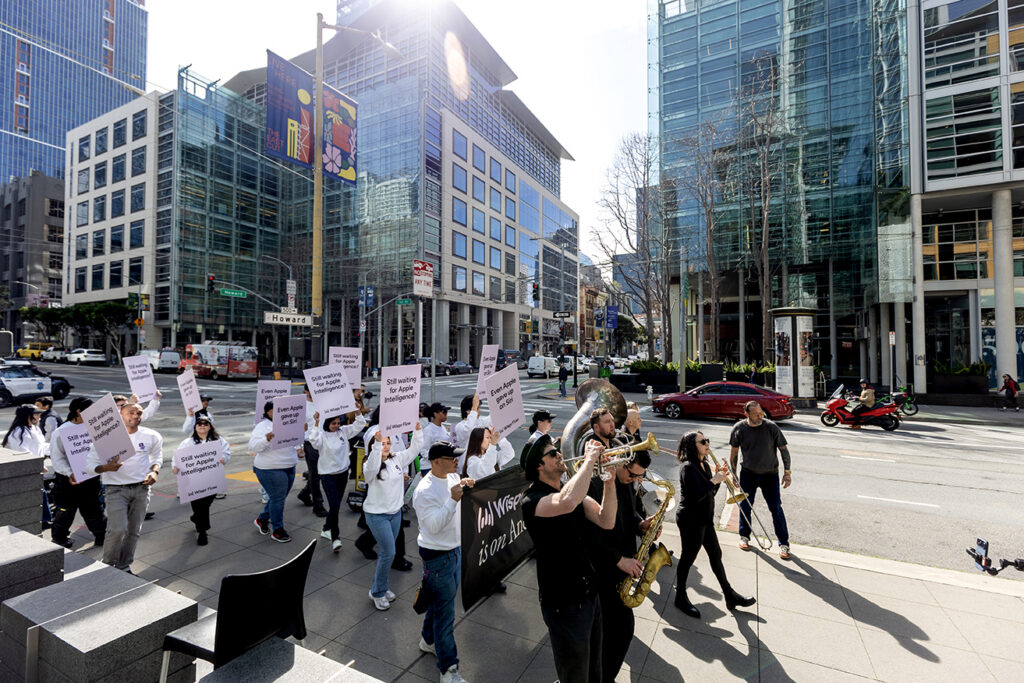
Guerilla Marketing: The Complete 2025 Guide to Street-Level Brand Impact
Most advertising budgets get eaten alive by platforms that optimize for clicks and charge you whether anyone cares or not. We take a different approach. Our crews work the streets of New York, Los Angeles, Chicago, and Miami. We put brand messages in front of real people at real moments, in places they can’t scroll past. That’s guerilla marketing. It’s been our entire focus for over a decade, and this guide covers everything you need to know before planning your next campaign.
Guerilla marketing is the term used for unexpected, unconventional brand experiences that show up in everyday public spaces. The word comes from guerrilla warfare tactics. Small, mobile units move fast, strike precisely, and disappear before the opposition can respond. The same logic applies here. You don’t need a massive budget to make a massive impression. You need creativity, execution, and the right people who know how to deploy it.
This guide covers what guerilla marketing actually is, the different formats our teams run in the field, what makes a campaign work, how to budget for it, and what you should expect when you bring us on to run yours.
The term gets thrown around a lot. Some marketing departments call anything unconventional “guerilla” even if it’s just a paid social campaign with a funny caption. That’s not it. Real guerilla marketing is physical, unexpected, and happens where people live their lives.
When our crew wraps a phone booth on 14th Street and 8th Avenue in full campaign artwork, and someone stops mid-coffee to photograph it and share it, that’s guerilla marketing. When we do a pop-up stunt outside Madison Square Garden before a concert, where thousands of people are already in an elevated, social mood, that’s guerilla marketing. The shared characteristic is surprise in context.
The Core Elements That Make It Work
Every effective guerilla campaign we’ve run shares four things. First, it meets people where they already are. We don’t ask anyone to visit a website or watch a video. We show up at the corner they walk past every morning. Second, it earns attention rather than buying it. Third, it gives people a reason to share it. A great installation on Bedford Avenue in Williamsburg might reach 20,000 people in person, but if ten of them post it, the reach multiplies fast. Fourth, it creates a memory. A billboard gets forgotten. An experience sticks.
What Separates Guerilla from Traditional Advertising
Traditional outdoor advertising, TV spots, and paid digital all share the same model. You pay to interrupt someone. The bigger your budget, the more you interrupt. Guerilla marketing inverts that. Done well, people seek out the experience, share it, and talk about it. The medium is part of the message. Showing up on the corner of Grand Street and Broadway in SoHo with a chalk art installation that looks like it bubbles up from the sidewalk says something about your brand that a 30-second pre-roll ad simply cannot.
The Main Formats We Run
After years of running campaigns across New York’s five boroughs and beyond, we’ve built expertise across every major format. Here’s how we break them down and when we recommend each one.
Wheat paste poster work is one of the highest-impact, most cost-efficient formats we offer. Our production team prints large-format posters, anywhere from 24×36 inches to full building-side murals. Our crews apply them overnight using a flour-and-water paste that bonds to most surfaces and weathers extremely well. A well-placed poster on a construction hoardings panel along Atlantic Avenue in Brooklyn can hold its position and visibility for weeks. We map routes by foot traffic data, then execute in tightly coordinated runs. A single overnight run can cover 50 to 200 locations across a target neighborhood.
Street teams are humans, and humans create connection. Our teams work events, transit hubs, college campuses, and high-traffic neighborhoods. We’ve run activations outside Barclays Center during playoff runs, along the High Line on summer weekends, and at NYU and Columbia at the start of each semester. Street teams hand out products, collect leads, create photo moments, and carry your message into actual conversations. We train every team member on your brand before they hit the street.
Sticker and Decal Campaigns
Stickers travel. A die-cut sticker placed on the right surface in the right neighborhood becomes permanent brand real estate. We’ve placed sticker campaigns that lasted years on lamp posts along Bedford Avenue in Williamsburg, on signal boxes in Crown Heights, and on utility panels in the East Village. Volume, quality, and placement selection determine results. We source premium weatherproof vinyl and treat placement as a craft, not a chore.
Projection and Ambient Installations
For brands that want something truly impossible to ignore, projection and ambient work deliver. We’ve projected campaign imagery onto the facades of buildings on the corner of Houston and Bowery, onto warehouse walls in the Meatpacking District, and across the surface of parking garages in Long Island City. Nighttime projections generate enormous organic social content. People stop. They film. They post. The impression count on a single strong projection night can rival a full week of digital spend.
Wrapped Vehicles and Mobile Billboards
We operate fully wrapped vehicle fleets for brands that need mobility. A custom-wrapped truck or van driving a route through Midtown, stopping near Penn Station during commute hours, circling Times Square, then parking outside a venue in the West Village for an evening event covers extraordinary ground. We track routes using GPS and provide full proof-of-performance documentation.
Conquesting and Competitor Zone Campaigns
One of the most effective tactics we run is positioning campaigns directly adjacent to competitors. If your competitor is spending big on signage at a specific location, our crews can saturate the surrounding three-block radius with your messaging. We’ve done this in Midtown around flagship retail locations, in Williamsburg near restaurant clusters, and in the Financial District around professional services firms. The strategy is simple. Show up where your competitor’s customers are already looking.
Where Guerilla Marketing Works Best in New York City
New York is the best city in the world for this kind of work. The density is unmatched. Millions of people walk streets, ride the subway, and exist in public space every single day. But not all neighborhoods are equal. After hundreds of campaigns across the five boroughs, here’s how we think about location selection.
Manhattan’s High-Density Corridors
The stretch of Broadway from Canal Street to 34th Street is some of the highest-volume pedestrian territory on the planet. SoHo’s Greene Street and Mercer Street see a demographic that skews affluent, creative, and social-media-active, making it ideal for brand launches and cultural campaigns. The area around Penn Station and Herald Square draws a working commuter audience. Union Square is the crossroads of downtown and generates foot traffic from multiple different demographics throughout the day.
Brooklyn’s Creative Neighborhoods
Williamsburg, along Metropolitan Avenue and Wythe Avenue, is the first neighborhood we recommend for brands targeting 25 to 40-year-old consumers with disposable income. Bushwick, specifically around Myrtle Avenue and Jefferson Street, reaches a younger, arts-oriented crowd. Downtown Brooklyn’s Fulton Street corridor is high-volume retail and transit traffic. Park Slope’s 5th and 7th Avenues deliver a family-oriented, highly educated demographic.
Queens and the Bronx
Astoria along Steinway Street and 31st Avenue gives access to a dense, culturally diverse audience. Long Island City is developing fast and has a growing young professional population around the Court Square area. The Bronx’s Fordham Road is one of the highest-footfall retail corridors in the city and is often overlooked by brands focused on Manhattan and Brooklyn.
Choosing the Right Location for Your Brand
We pull pedestrian traffic data, transit ridership numbers, and demographic profiles for every zone we consider. Then we walk it. Data tells you how many people pass through. Walking it tells you where they look, where they pause, where they photograph, and where your campaign will actually land. We never plan a campaign from a desk alone.
Guerilla Marketing Pricing: What to Expect
Pricing varies significantly based on format, scale, duration, and geography. The table below reflects typical ranges for campaigns in the New York metropolitan area based on our current production costs and crew rates.
Campaign Format
Typical Budget Range
Duration
Best Use Case
Poster Campaign (50-100 locations)
$3,000 – $8,000
2-4 weeks visible
Brand awareness, event promotion
Street Team (5-person, one day)
$2,500 – $5,000
6-8 hour activation
Product sampling, lead gen
Sticker Campaign (500-1,000 placements)
$1,500 – $4,000
Long-term, 6+ months
Brand visibility, music, lifestyle
Projection Campaign (1 night)
$5,000 – $15,000
Single night event
Launch events, cultural moments
Vehicle Wrap + Route (1 week)
$6,000 – $12,000
1-2 week coverage
Mobile reach, event support
Full Multi-Format Campaign
$15,000 – $50,000+
4-8 weeks
Major launches, market entry
These ranges assume single-market execution. Multi-city campaigns scale accordingly, though we often find production efficiencies when running the same campaign in two or three cities at the same time. We provide detailed quotes after a discovery call where we understand your objectives, timeline, and target audience.
What Makes a Guerilla Campaign Actually Work
We’ve seen campaigns with generous budgets fall flat and campaigns built on tight constraints become cultural moments. The budget matters far less than most clients expect. Here’s what actually determines results.
The Creative Has to Stop People Cold
Street audiences have seen everything. Every day they walk past hundreds of brand messages. They’ve developed almost automatic filtering. To cut through, your creative has to give someone an immediate reason to stop. That means unexpected scale, an unusual visual device, a piece of humor that lands instantly, a question that can’t be ignored, or a visual element that feels wrong in the best possible way. Generic messaging placed in a street format is still generic messaging. It just costs more to distribute.
Context Is the Medium
The best guerilla campaigns are built for their specific location. An installation near the Brooklyn Bridge that plays on perspective and scale feels at home in a way that a generic poster never does. When we ran a campaign for a fitness brand along the running path at Hudson River Park near Pier 46, we designed the creative around the runner’s experience. The cadence of the messaging matched a running pace. People noticed it differently than they would have on a wall in Chelsea. Location isn’t just distribution. It’s context. Context shapes perception.
Timing Around Cultural Moments
The calendar matters. A campaign in SoHo during New York Fashion Week reaches a completely different concentration of influencers and press than the same campaign in February. Back-to-school season changes the audience on every college corridor in every borough. The week before a product launch, the day of an event, the hours before a sports finale. We map campaigns to moments because moments amplify everything.
Execution Has to Be Flawless
A great campaign concept executed sloppily looks worse than a modest concept executed well. We run crews who take installation quality seriously. Posters go up level, clean, with full paste coverage. Street teams dress well, know the brand cold, and engage naturally rather than desperately. Vehicles are maintained to a standard where the wrap is the attention-getter, not the condition of the vehicle. Every touchpoint reflects on the brand.
Guerilla Marketing vs. Other Advertising Channels
We get asked often how guerilla marketing compares to digital, paid social, and traditional outdoor. Here’s an honest comparison based on what we see across the brands we work with.
Vs. Paid Social Media Advertising
Paid social is measurable, targetable, and scalable. It’s also increasingly expensive, increasingly skeptical audiences, and the content disappears the moment you stop funding it. Guerilla marketing creates physical exposures that don’t evaporate when a budget cycle ends. A wheat paste poster in Bushwick stays up for weeks. A sticker on a lamp post on North 7th Street can outlast a six-month digital campaign. The two approaches work best together. Street campaigns generate organic social content that extends digital reach. Digital campaigns can prime audiences to recognize and engage with street-level brand moments.
Vs. Traditional Outdoor (OOH)
Traditional outdoor, meaning paid billboard placements and transit advertising, delivers consistency and scale. It’s predictable. It’s measurable. It also costs significantly more per impression than most street-level guerilla formats, and it sits in the same visual category as thousands of other paid placements. Guerilla marketing wins on unexpectedness. The placement surprises people because it’s not where they expect to see advertising. That surprise generates more attention per impression than traditional OOH by a substantial margin, though traditional OOH wins on reach at scale.
Vs. Influencer Marketing
Influencer campaigns reach specific audiences with high trust in a specific voice. They’re format-constrained and dependent on a third party’s relationship with their audience. Guerilla campaigns create the moments that influencers want to photograph and post about, turning your activation into their content. We’ve run campaigns where influencer coverage was a planned output of the street event, not a separate line item. When an installation is genuinely worth posting, influencers post it.
How We Run a Campaign From Start to Finish
Our process is designed to move fast without cutting corners. Most campaigns from brief to execution run on a two to four week timeline, though we’ve done emergency activations in under 72 hours for clients who needed to respond to a cultural moment.
Discovery and Strategy
We start with a call where you tell us about your brand, your target audience, your timeline, and what success looks like for you. We come to that call having already looked at your competitive environment, your current brand presence, and what your audience looks like in the markets we’re considering. From that conversation we build a campaign recommendation that matches your goals to the formats and locations most likely to deliver them.
Creative Development
Our creative team develops concepts that are built for the street. We think about how it reads in a half-second glance, how it photographs, how it looks at scale, and what story it tells about the brand. We present two or three directions, work through feedback, and lock the final creative before any production begins.
Production and Logistics
We handle all production in-house. Print. Fabrication. Vehicle wraps. Crew scheduling. Location scouting. We walk every route before execution night, photograph locations, and create crew briefing documents so every team member knows exactly what they’re doing, where they’re going, and in what sequence.
Execution and Documentation
Our crews document everything. Every poster placement, every street team interaction, every installation moment gets photographed with timestamps and geo-tags. We compile full post-campaign reports with proof-of-performance documentation, reach estimates, and organic social monitoring where applicable. You see exactly what ran and where.
Frequently Asked Questions
What is guerilla marketing?
Guerilla marketing uses surprise, creativity, and street-level execution to build brand awareness without relying on traditional paid media. The term covers a wide range of formats from wheatpaste posters and sidewalk stencils to flash mobs and experiential activations.
What makes guerilla marketing effective?
Guerilla marketing works because it interrupts the expected. People walk past thousands of ads without registering them. A well-placed guerilla execution stops that pattern and creates a moment of genuine engagement.
What types of brands benefit most from guerilla marketing?
Entertainment, consumer goods, cannabis, fashion, food and beverage, and tech brands with strong visual identities all benefit from guerilla marketing. The format works best when the brand has something worth stopping for.
How does AGM execute guerilla marketing campaigns?
AGM handles strategy, creative review, production, field deployment, and post-campaign documentation. We’ve run street-level campaigns in every major US market and know how to execute cleanly in real-world conditions.