Gen Z-Focused College Marketing: What Actually Works in 2026
Gen Z college students grew up inside advertising. They know when they are being marketed to and they have strong opinions about it. The brands that win with this audience are the ones that understand exactly how that reality changes the approach. Here is what we have learned from running campus campaigns for this generation.
Gen Z is the first consumer generation that grew up fully inside digital advertising. They have never known a world without targeted digital ads, influencer marketing, and the kind of algorithmic content curation that makes advertising feel like both the water they swim in and the thing they are most fluent at ignoring. The implication for marketers is not that Gen Z is unreachable. They are reachable. The implication is that the path to reaching them requires a completely different approach than marketing to the millennials before them or the Gen X adults before that.
At American Guerrilla Marketing, we have been running campus campaigns targeting Gen Z students for years. We have learned from campaigns that landed well and from campaigns that did not, and the lessons from that experience are consistent enough to describe with confidence. Gen Z does not respond to advertising that looks like it is trying hard. They respond to marketing that earns their attention by offering something genuinely valuable, surprising, or funny, and that does not require them to pretend they are not being marketed to.
This guide covers Gen Z-focused college marketing from a practical campaign design perspective: what formats earn their attention, what creative approaches work versus what triggers instant tune-out, how physical and digital formats interact in a Gen Z marketing context, and what success actually looks like when you get it right with this audience.
Understanding Gen Z’s Relationship with Advertising
Gen Z is not anti-advertising. They are anti-bad advertising. The distinction is important. A Gen Z student will happily engage with a piece of street marketing that is genuinely creative, a sampling that gives them something they actually want, or a brand ambassador interaction that is real and not scripted. What they reject is marketing that feels like it was designed by someone who has never met a Gen Z person: overproduced, condescending, obviously strategic in a way that insults their intelligence, or trying too hard to speak their cultural language without understanding it.
The peer trust dynamic in Gen Z is also distinct from previous generations. Gen Z trusts peers over brands by a significant margin. A recommendation from a friend who actually uses the product carries far more weight than any amount of brand advertising. That peer trust dynamic is why word-of-mouth seeding, genuine ambassador programs with real students rather than paid performers, and organic social documentation of physical brand activations are such effective Gen Z marketing mechanisms. They put the brand in the peer trust network rather than the brand advertising network.
Gen Z also has a finely calibrated authenticity detector. They can tell within seconds whether a brand’s campus presence is genuine or performative. A brand that shows up with a well-coordinated activation that demonstrates real knowledge of and investment in campus culture is different from a brand that shows up with generic swag and a sign that says “be yourself.” The former gets engagement. The latter gets ignored or mocked.
Physical Marketing Formats That Work with Gen Z
Contrary to what some digital-first marketers assume, Gen Z responds strongly to physical marketing formats when they are executed well. The physical format has an advantage in a Gen Z marketing context: it is unexpected. Gen Z has become so habituated to digital advertising that a well-executed physical brand presence can cut through in ways that digital struggles to match for this audience.
Street-Level Poster Campaigns with Strong Creative
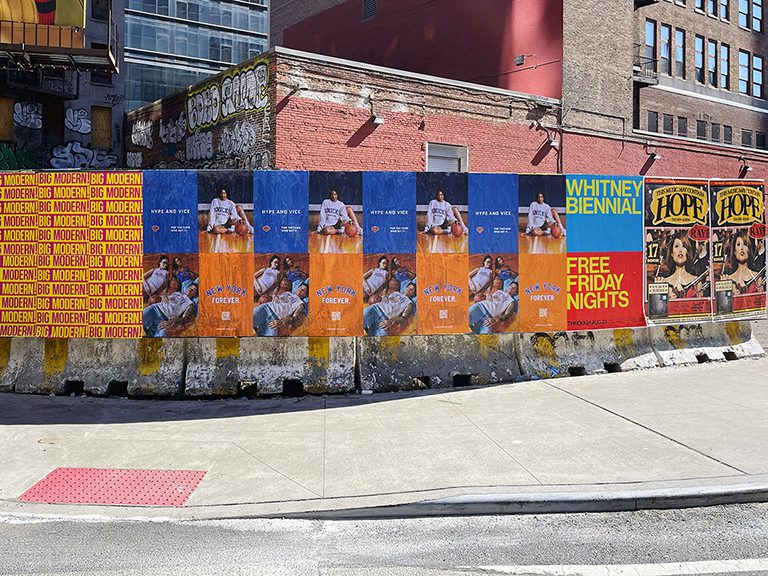
A poster campaign that has genuinely good creative, meaning the design is actually interesting, the copy is actually funny or smart, and the format is used in a way that feels intentional rather than obligatory, generates organic social documentation from Gen Z in a way that mediocre poster campaigns never will. We have run poster campaigns on college campuses where students photographed and shared the poster creative on social media not because the brand asked them to but because the work was interesting enough to share.
The key is creative quality. A Gen Z student who photographs a piece of street marketing and shares it on Instagram or TikTok is essentially endorsing that creative work to their entire social network. They will only do that if the creative is genuinely worth sharing. Mediocre poster creative generates no organic amplification. Strong poster creative generates social shares that reach far more people than the poster itself ever could in the physical environment.
Surprise and Delight Sampling
Product sampling on campus works with Gen Z when it is done in a way that feels generous rather than transactional. A standard sampling table where a brand ambassador hands you a product and asks you to complete a survey in exchange is a transaction. Gen Z performs the transaction but feels nothing about the brand. A sampling activation that gives a genuinely useful or enjoyable product without any transaction requirement, where the interaction feels like a gift rather than an exchange, generates warm brand association that the transactional version does not.
We have run sampling campaigns for Gen Z audiences that were designed around genuine generosity: premium products given freely, no email capture required at the point of sampling, no immediate call to action beyond experiencing the product. The absence of the ask is itself a brand statement. It says: we are confident enough in this product that we will give it to you with no strings and trust you to make your own judgment. Gen Z responds to that confidence. They are suspicious of brands that need them to do something as a condition of receiving a sample.
Experiential Activations with Real Value
On campus experiential activations that provide a service, an experience, or something genuinely entertaining as the primary offering, with brand presence as a secondary element rather than the primary message, work with Gen Z in a way that brand-first activations rarely do. A study break event that provides free food, a stress relief activity, or a social gathering point during a high-stress academic period, with the brand’s presence integrated naturally rather than plastered everywhere, generates genuine positive association.
The brand needs to ask: what can we give this student community that has real value to them today? The answer to that question should drive the activation design. The brand identity wraps around that answer, not the other way around. Gen Z is excellent at detecting when an activation is really an advertisement wearing a costume of generosity. The activations that work are the ones where the generosity is real.
Gen Z creative rule: Before finalizing any creative for a Gen Z college campaign, test it on an actual Gen Z student with the simple question: “Would you share this on Instagram or TikTok?” If the honest answer is no, the creative is not ready. Gen Z social amplification of physical marketing is not a bonus, it is a primary campaign mechanism for this audience. Creative that does not earn that organic sharing falls short of its potential, no matter how many physical placements it occupies.
Gen Z College Marketing Formats by Effectiveness
Format
Gen Z Receptivity
Organic Social Potential
Peer Trust Use
Best Use Case
Student ambassador program (real students)
Very High
High
Very High
Brand trial seeding, peer-to-peer growth
Creative poster campaign (strong design)
High
Medium-High
Medium
Awareness, event promotion, product launch
Genuine sampling (no strings)
Very High
Medium
High
Trial, first purchase initiation, brand introduction
Value-first experiential activation
High
High
Very High
Brand association, community building
Generic poster (weak design)
Low
Very Low
Low
Not recommended
Transaction-based sampling (email required)
Medium
Very Low
Low
Email capture, not brand building
The Role of Physical vs. Digital in Gen Z College Marketing
Gen Z college marketing works best when physical and digital elements complement each other rather than operating in isolation. The physical brand presence creates the moment. The digital layer amplifies it and extends its reach.
A poster campaign on campus creates a physical touchpoint in the campus environment. When the poster creative is strong enough to photograph and share, it becomes a digital asset distributed by students to their peer networks. The physical poster generates the initial impression. The social sharing generates the secondary wave of exposures through digital channels. The total campaign reach is the sum of both, more than one or the other.
For Gen Z, the physical-to-digital amplification dynamic is particularly powerful because it operates through the peer trust channel. When a Gen Z student shares a campus marketing activation on their social media, their followers receive it as a peer recommendation, not as an advertisement. That framing difference changes how the content is processed and how much persuasive weight it carries. A brand that can engineer genuine physical-to-digital amplification in its college marketing effectively turns students into unpaid brand advocates, which is far more credible than anything the brand could produce itself.
Campus Channels Where Gen Z Marketing Works Best
Gen Z students’ campus behavior concentrates in specific physical and digital environments. Marketing campaigns that appear in these channels consistently outperform campaigns that treat the campus as a single undifferentiated audience.
Common Areas and Social Gathering Points
Gen Z college students gather in campus common areas for social purposes more than any previous generation of college students, in part as a reaction to the hyper-individual digital experience of their earlier years. Campus outdoor spaces, quad areas, student union lounges, and the outdoor seating areas around dining facilities are genuine social gathering points where students choose to be present and interactive. Marketing that appears in these spaces, whether as an activation, a sampling table, or a visual presence, intersects with students in a social mindset rather than a transit mindset.
Residence Hall Communities
The residence hall community is Gen Z’s closest analog to a traditional village social structure. Students in the same residence hall or residence complex form dense social networks that share information, recommendations, and brand experiences at high velocity. A sampling campaign seeded into residence hall communities, or a brand ambassador program with representation in the major residence hall communities on a campus, reaches a social graph that functions as a rapid peer dissemination channel for brand word-of-mouth.
Campus Food and Coffee Spaces
Campus coffee shops, specialty dining options within the dining commons, and the campus-adjacent cafe and food environments where students spend time between classes are high-dwell, high-social-density spaces where brand marketing lands with particular impact. Gen Z uses these spaces for both solo work and social interaction, and the relaxed, often extended dwell time creates receptivity to brand presences that feel appropriate to the environment.
What Gen Z College Marketing Gets Wrong Most Often
The most common mistakes in Gen Z college marketing are consistent across brands that try to reach this audience without truly understanding them. We have seen these patterns repeatedly across campaigns we have been asked to improve.
The biggest mistake is trying to speak Gen Z’s cultural language without actually knowing it. Brands that use meme formats incorrectly, reference cultural touchpoints that are already out of date by the time the campaign launches, or produce creative that an older marketing team thought was “what Gen Z likes” without any actual input from Gen Z students consistently produce campaigns that generate eye-rolls rather than engagement on campus.
The second most common mistake is making the transaction too visible. Gen Z is willing to engage with brands on campus but they want to feel that the engagement is on their terms. A sampling activation that asks for an email before giving the sample is a transaction that makes the brand’s objective the most visible element of the interaction. The student feels used. A sampling activation that just gives the sample is a gift that creates the goodwill the brand wanted without the resentment the transaction-first approach generates.
The third mistake is treating Gen Z as a homogenous audience. Students at MIT and students at Arizona State have very different cultural contexts, academic pressures, and consumer attitudes. Students in New York City have a different relationship to advertising than students in a college town in the Midwest. Campaign creative and format choices that do not account for the specific campus and student culture where they will appear generate lower engagement than campaigns built around a specific campus context.
Practical insight: The single most effective quality check for Gen Z college marketing creative is to show it to an actual Gen Z college student who has no relationship with your brand and ask them, honestly, what they think. Not focus group, not survey. Just a real conversation. The feedback you get will be more useful than any amount of internal creative review by a marketing team that is not in this demographic.
Frequently Asked Questions About Gen Z-Focused College Marketing
What Gen Z College Consumers Actually Buy and Why It Matters for Campus Marketing
Effective Gen Z-focused college marketing starts with an accurate understanding of what this consumer group actually buys, not what brands wish they would buy or what marketing research from 2019 suggested they would buy. Gen Z college spending patterns have been shaped by specific economic realities — student debt awareness, the gig economy, inflation during formative years — that created distinct purchase priorities relative to Millennial college consumers at the same life stage.
The categories where Gen Z college students show the highest purchase frequency and brand-awareness are: technology and digital services, food and beverages (particularly functional and convenience categories), personal care and beauty products, fitness and wellness products, and experiential spending (concerts, events, travel). The brands gaining market share in these categories with Gen Z are those that combine authentic values alignment with genuine product quality — Gen Z consumers distinguish between brands that market sustainability as a positioning and brands where sustainability or social responsibility is actually embedded in the product and business model.
The categories where Gen Z college students are most likely to trial new brands through peer recommendation are beauty and personal care, food and snack categories, and technology applications. These are the categories where authentic peer endorsement through campus ambassador programs and social recommendation has the highest conversion rate — because the purchase risk is low and the trial benefit of trying something new is high. Understanding which categories in your portfolio align with Gen Z’s highest-trial-willingness segments guides format investment toward the programs most likely to produce genuine brand adoption.
Avoiding the Gen Z Marketing Credibility Gap
The most consistent failure mode in Gen Z-focused college marketing is the credibility gap — the visible mismatch between how a brand presents itself in campus marketing and what the brand actually is or does. Gen Z consumers have grown up in an environment saturated with marketing and have developed accurate pattern recognition for the difference between authentic brand communication and manufactured attempts to appear authentic.
Common credibility gap indicators that Gen Z identifies immediately: brands that use slang incorrectly or anachronistically, brands whose sustainable or social responsibility claims are easily contradicted by public information about their practices, brands that commission obviously-branded “authentic” social content from influencers who do not actually use or believe in the product, and brands whose campus ambassador program clearly selects for demographic appearance over genuine brand alignment. Each of these patterns signals to the Gen Z consumer that the brand is performing authenticity rather than possessing it.
The antidote is not more sophisticated performance of authenticity — it is actual brand authenticity that campus marketing programs can communicate honestly. This means selecting ambassadors who genuinely use and appreciate the brand’s products, building campus presence around activities and spaces where the brand has genuine relevance to student life, and communicating what the brand actually is and does rather than a curated version of what marketing research suggests the target consumer wants the brand to be. Gen Z is a demanding consumer for brands that have not done the underlying brand work, and a genuinely receptive consumer for brands that have.
Frequently Asked Questions
What makes Gen Z college marketing different from general college marketing?
Gen Z grew up inside digital advertising and has developed strong filters for brand communication that feels generic, inauthentic, or transactional. Marketing that works with Gen Z prioritizes genuine value delivery, peer trust mechanisms, creative quality that earns organic social sharing, and authenticity signals that tell students the brand actually understands their specific culture. Generic college marketing designed for a broad student audience without a Gen Z-specific approach typically underperforms with this demographic.
Which marketing formats perform best with Gen Z college students?
Real student ambassador programs with genuine peer credibility, visually strong physical marketing that earns organic social documentation, no-strings sampling that offers genuine value without transaction requirements, and experiential activations that provide real utility or entertainment rather than brand exposure as the primary offering all perform strongly with Gen Z. Generic brand awareness formats without a specific value proposition or creative distinction perform poorly.
How does Gen Z find out about new brands?
Peer recommendation is the highest-trust channel for Gen Z brand discovery. When someone in their immediate social circle talks positively about a brand or product, that carries far more weight than any advertising. Social media content from people they follow is second. Physical brand presence that generates genuine social sharing, a clever marketing activation they photograph and post, falls into the peer recommendation category because it enters their social feed through a person they know. Advertising from brands directly is the lowest-trust discovery channel.
Do Gen Z students respond to campus poster advertising?
Yes, when the creative is genuinely good. A poster campaign with strong, interesting creative that does not look like standard brand advertising generates attention and organic social documentation from Gen Z. A poster campaign with generic brand advertising creative gets ignored. The creative quality threshold for Gen Z engagement with physical marketing is higher than with older consumer segments, but it is not unreachable. We have seen campus poster campaigns generate significant organic social amplification from Gen Z when the design is strong enough to be worth photographing.
Is in-person product sampling effective with Gen Z?
Yes, but the design of the sampling interaction matters. Sampling that leads with the product and the experience, without an immediate transaction requirement like email capture, generates strong positive brand association with Gen Z. Sampling designed primarily as data collection, where the sample is the incentive to complete a form, generates data but not the brand warmth that creates future purchase behavior. We recommend separating the sampling interaction from the data collection moment.
How important is social media to Gen Z college marketing?
Very important, but not in the way brands typically think about it. Gen Z-focused college marketing should not lead with a social media campaign. It should design physical experiences that Gen Z students will want to share on social media of their own accord. The social media amplification that comes from genuine organic sharing of a physical campus experience is categorically more credible and persuasive than the same brand content published directly through the brand’s own social channels.
How do I know if my Gen Z campus marketing creative is actually good?
Test it on actual Gen Z students before you commit to production. Ask them honestly: would you share this on TikTok or Instagram? Would you stop to look at this on a bulletin board or in a college hallway? Would you tell a friend about this? If the honest answers are no, the creative needs more work. Internal review by marketing teams that are not in the Gen Z demographic frequently overestimates the effectiveness of creative that does not land with the actual target audience.
How do I start a Gen Z-focused college marketing campaign with AGM?
Contact us at (646) 776-2770 or [email protected]. Tell us your brand, your target campuses, your campaign timing, and your campaign objective. We will build a plan that accounts for Gen Z’s specific relationship with campus marketing and recommend formats and creative approaches based on what actually works with this audience in the field.