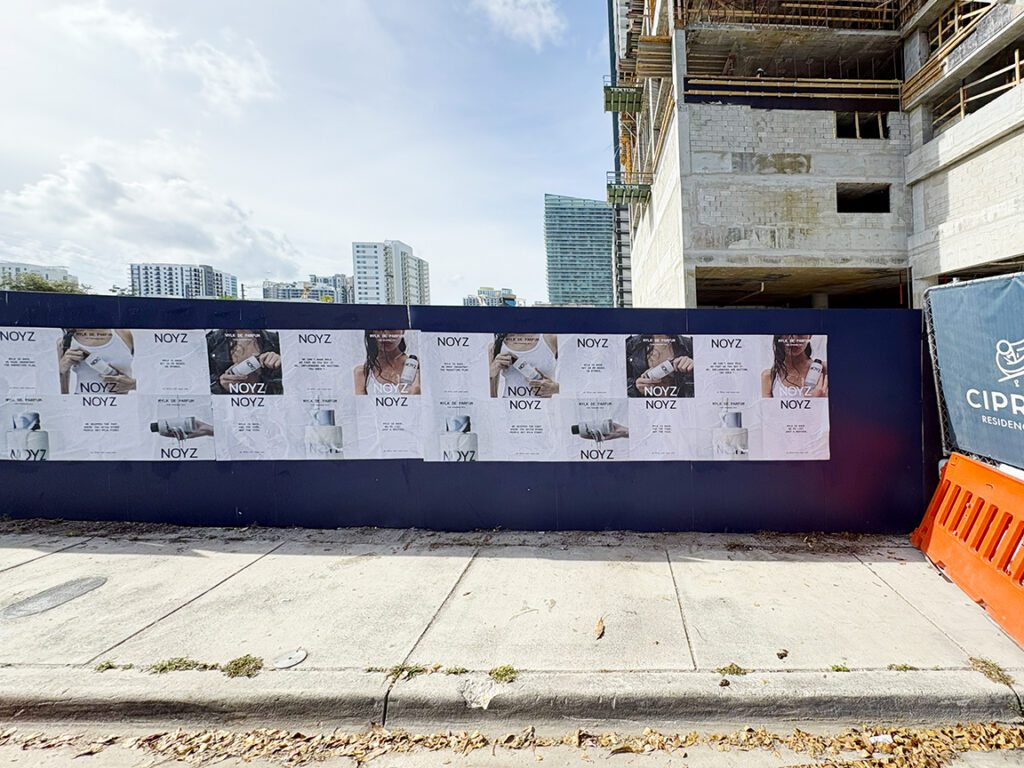
London has more productive fly posting territory than almost any other city in the world. Knowing which neighborhoods to target, and why, is the difference between a campaign that lands and one that disappears into the noise.
London is one of the world’s great cities for street poster campaigns. Its scale, its density, its plurality of neighborhoods with distinct cultural identities, and its long tradition of street-level advertising create conditions where fly posting can produce genuine impact for a wide range of campaign objectives. But London is also a city where the wrong neighborhood choice produces a campaign that reaches the wrong audience, and where the sheer volume of competing visual material means that weak artwork and poor location selection simply disappear.
This guide covers the key fly posting locations in London from the perspective of a campaign planner, not a tourist. Each neighborhood is described in terms of its audience profile, its surface inventory, its competitive environment, and the types of campaigns that perform best there. The goal is to give you the information you need to make specific, well-reasoned location decisions for a fly posting campaign in the city.
American Guerrilla Marketing’s primary field operations are in the United States, where we run managed posting routes in New York, Los Angeles, Chicago, Miami, and Austin. For clients who need London campaign reach, we coordinate with vetted UK posting partners who know the city’s surface inventory, neighborhood culture, and campaign logistics. What follows draws on that network’s knowledge as well as our own experience planning transatlantic campaigns for clients with audience presence in both the US and UK.
Why London Location Strategy Matters More Than Volume
In smaller markets, volume is often the primary lever for fly posting effectiveness: more placements, more coverage, more presence. London is different. The city is large enough, and its neighborhoods distinctive enough, that a campaign in the wrong part of London can run at high volume and still completely miss the target audience.
A fashion brand campaign that runs in Kensington when its audience is in Peckham is not reaching its market. A music campaign that posts in the City of London’s financial district when its audience is in Hackney is similarly misallocated. London demands audience-matched location strategy in a way that smaller, more homogeneous markets do not.
The right question for London location planning is not “where is the most foot traffic?” but “where does our specific audience move through the city, and which of those locations have productive fly posting surfaces?” Answering that question well produces a smaller, more targeted route that outperforms a geographically broader campaign that hits more surfaces but fewer of the right people.
East London: The Core of London Fly Posting Culture
East London is the dominant territory for fly posting in the capital. The neighborhoods of Shoreditch, Hackney, Dalston, Bethnal Green, and their surroundings have the highest concentration of active poster campaign activity of any part of London, driven by the density of music venues, creative industries, independent retail, and younger demographics in these areas.
Shoreditch and Brick Lane
Shoreditch is the center of London’s creative and tech industries and arguably the single most active fly posting neighborhood in the city. The streets around Brick Lane, Old Street, and Curtain Road carry high volumes of campaign material from music labels, fashion brands, art galleries, nightclubs, and events venues. The walls of Brick Lane specifically are among the most photographed street surfaces in London, both for the murals and street art that line the street and for the ongoing campaign activity that runs alongside them.
Foot traffic in Shoreditch is dense, young-skewing, and culturally engaged. The neighborhood’s concentration of independent businesses, music and arts venues, and hospitality creates an audience that moves through the area regularly, not just as one-time visitors. A poster campaign in Shoreditch that runs for two to three weeks reaches a regular local audience multiple times, not just once.
Surface quality in Shoreditch is variable. The neighborhood’s popularity means walls are contested by multiple campaigns simultaneously, and the building stock ranges from Victorian brick that bonds well to newer construction with surfaces that require different paste preparation. The most productive Shoreditch surfaces are the long hoarding runs around active construction sites — the neighborhood has had ongoing development activity for years — and the exterior walls of the older commercial buildings along Brick Lane, Redchurch Street, and the surrounding streets.
Hackney and Dalston
Hackney and Dalston sit immediately north and east of Shoreditch, with a similar demographic profile but a somewhat different neighborhood character. Where Shoreditch has been heavily commercialized, Hackney and Dalston retain more of the mixed residential and commercial character that gives them their distinctiveness as campaign targets. Kingsland Road, Dalston Lane, and Amhurst Road are high-traffic routes with productive surface inventory. Mare Street in Hackney has consistent foot traffic and a range of wall surfaces on its commercial buildings.
Hackney is particularly strong for music campaigns. The neighborhood’s concentration of independent music venues, record shops, and music-focused nightlife creates an audience that is primed to notice and respond to music street campaigns. We have seen music campaigns in Hackney generate social photo documentation at higher rates than comparable campaigns in more tourist-heavy London neighborhoods, which suggests the audience is not just seeing the posters but engaging with them.
Bethnal Green
Bethnal Green bridges East London’s creative neighborhoods to the north and the historically working-class neighborhoods to the south, creating a mixed audience of creative professionals, long-established local residents, and the student population of the nearby campus institutions. Roman Road and Bethnal Green Road are the primary commercial corridors with good surface inventory. The area around Museum of London Docklands, while technically Poplar, creates additional footfall that moves through Bethnal Green’s eastern edge.
AGM Field Note: East London is not one neighborhood — it is a collection of distinct communities that happen to be geographically adjacent. A campaign that blankets “East London” without distinguishing between Shoreditch and Hackney and Bethnal Green is not a strategy. It is coverage without thinking. Know which specific audience you are trying to reach and which specific streets they move through.
South London: Brixton, Peckham, and Beyond
South London has developed significantly as a fly posting territory over the past decade, as gentrification and changing demographics have shifted the center of cultural gravity southward from the historically dominant East London areas. Brixton and Peckham are the primary targets, each with distinct audience profiles and campaign characteristics.
Brixton
Brixton is one of London’s most culturally rich and densely populated neighborhoods, with a deep history in Black British culture, music, and community. Brixton Market, the streets around Brixton Village, and the Brixton Academy venue area are the most campaign-active parts of the neighborhood. Coldharbour Lane and Atlantic Road carry high foot traffic and a diverse, culturally engaged audience.
Music campaigns perform particularly well in Brixton. The neighborhood’s long association with music — from David Bowie’s birthplace to the Brixton Academy’s decades as one of London’s major live music venues — means a music street campaign lands in a community that is predisposed to notice and engage with it. Fashion and lifestyle campaigns that connect to the neighborhood’s cultural identity also work well.
Surface availability in Brixton includes the external walls of the market buildings, the hoardings around ongoing development activity, and the commercial building walls along the main thoroughfares. The physical environment of Brixton is dense and visually busy, which means campaign artwork needs strong contrast and clear hierarchy to read in the competitive visual environment.
Peckham
Peckham has become one of the most talked-about neighborhoods in London over the past decade, as a wave of independent businesses, art spaces, and nightlife venues has transformed the area’s commercial character while its residential population has maintained the mixed, community-rooted quality that distinguishes it from more thoroughly gentrified East London neighborhoods.
Peckham Rye and Rye Lane are the primary commercial corridors. The area around Bussey Building and the nearby industrial units-turned-arts-spaces has particularly active fly posting culture, with multiple campaigns running simultaneously on the hoarding surfaces and exterior walls of the converted industrial buildings.
Peckham’s audience skews young and creative, with a strong music and arts orientation. Campaigns targeting this demographic — music releases, fashion, film, streaming services, lifestyle brands — work well here. The neighborhood’s active photo documentation culture means campaign placements in the right locations generate social sharing at meaningful rates.
North London: Camden and Beyond
North London’s fly posting territory is anchored by Camden, with secondary activity in Islington, Holloway, and the neighborhoods along the northern section of the overground network.
Camden
Camden has been a center of music and counterculture in London since the 1970s. The area around Camden Market, Camden Town tube station, and the venues along Kentish Town Road carries high foot traffic and a well-established tradition of music and cultural campaign posting. Camden High Street and the market area have managed poster sites alongside informal campaign activity on hoardings and building walls.
Camden’s audience has broadened beyond its historical alternative music core — the neighborhood now attracts a wide range of visitors, particularly tourists, alongside the local music and arts community. Campaigns targeting the alternative and rock-leaning end of the music market still perform well here. Fashion and streetwear brands with a similar aesthetic positioning also have good traction in Camden’s visual environment.
Islington and Angel
Islington and Angel sit immediately north of Central London with a more mixed residential and professional demographic than the East and South London neighborhoods. Upper Street and Essex Road are the primary commercial corridors. The area has good surface inventory along its construction hoardings and on the exterior walls of its older commercial buildings, but the campaign volume is lower than East and South London, which means individual placements face less competitive covering pressure and hold longer.
West London: Notting Hill and Portobello Road
West London’s fly posting territory centers on Notting Hill and the Portobello Road area, with a distinctly different audience profile from the East and South London neighborhoods that dominate most discussion of London street campaigns.
Notting Hill and Ladbroke Grove
Notting Hill’s association with the annual Notting Hill Carnival has given the neighborhood a strong Afro-Caribbean cultural identity that coexists with its upmarket residential character. The streets around Portobello Road and the market have good surface inventory and high foot traffic, particularly on market days. Ladbroke Grove and the surrounding streets carry a more local residential audience.
Notting Hill works particularly well for music campaigns with Caribbean or Afro-diasporic cultural orientation, and for fashion campaigns targeting a slightly more affluent young demographic than the East or South London neighborhoods. The visual environment around Portobello Road is competitive but not as saturated as Shoreditch.
London Fly Posting Surfaces: What to Know
London’s built environment offers a wide range of surface types for fly posting, each with its own characteristics and campaign implications.
Surface Type
Availability
Bond Quality
Campaign Duration
Construction hoardings (wood)
High across all areas with active development
Excellent
Good; replaced when hoardings come down
Scaffolding panels
Consistent throughout the city
Good to excellent
Good; dependent on scaffold duration
Victorian brick
Widespread in inner East and South London
Good with correct paste
Good
Commercial building exterior
High in commercial corridors
Variable by surface condition
Variable
Managed poster sites
Available in most central neighborhoods
Excellent (purpose-built)
Controlled by site manager
Comparing London Fly Posting Neighborhoods
Neighborhood
Primary Audience
Best Campaign Types
Competition Level
Shoreditch / Brick Lane
Creative professionals, young urban
Music, fashion, tech, events
Very high
Hackney / Dalston
Music fans, creative community
Music, independent brands, events
High
Brixton
Diverse, music-oriented, community
Music, lifestyle, culture
High
Peckham
Young creative, arts-oriented
Music, fashion, arts
Medium-high
Camden
Music fans, alternative, tourist mix
Music, alternative fashion, events
High
Notting Hill
Affluent young, cultural community
Fashion, lifestyle, music (specific)
Medium
Planning a London Fly Posting Campaign
The planning process for a London fly posting campaign follows the same fundamentals as any major city campaign, with London-specific considerations layered on top.
Define the Target Audience First
London’s neighborhood diversity means audience definition drives location selection more directly than in many other markets. Before selecting neighborhoods, articulate specifically who the campaign needs to reach: their age range, cultural orientation, music or fashion preferences, and where they are likely to live and spend time in London. That profile should map directly to specific neighborhoods rather than to a generic “central London” coverage area.
Plan for Competitive Posting Pressure
In high-activity London neighborhoods like Shoreditch and Brixton, posting campaigns face significant competitive pressure. Multiple campaigns run simultaneously on the same surfaces, creating a visual environment that turns over quickly. Maintenance cycles are essential for sustaining coverage in these areas. A campaign that goes up with no maintenance plan will be significantly covered over within the first week in the most active posting areas.
Brief Early for London Campaigns
London campaigns coordinated from the US through our partner network require additional lead time for international logistics. For a standard two to three week campaign, we typically need a minimum of three to four weeks from final brief to posting start to allow time for partner briefing, surface confirmation, print coordination, and crew scheduling. For multi-market campaigns spanning London and US cities, four to six weeks of lead time is needed for full coordination.
AGM’s Approach to London Campaigns
American Guerrilla Marketing coordinates London fly posting campaigns through a vetted network of UK posting partners whose operations we have assessed for route quality, crew discipline, and documentation standards. When we take on a London campaign, the client gets one point of contact for the full campaign, regardless of where in the world it runs.
We review artwork before it goes to print, confirm posting routes with the London partner before execution begins, and consolidate documentation from all posting visits into a single campaign report for the client. For brands running simultaneous US and UK campaigns — a common requirement for music labels, film distributors, and fashion brands — we manage the full international campaign from a single brief.
Fly Posting Campaign Pricing
London campaign pricing is quoted project-specifically through our UK partner network. As a reference framework, our US installation pricing structure for managed route campaigns is:
Campaign Scale
Placement Volume
Scope
Installation Price Range
Small
25-50 placements
Single city
Contact for quote
Mid-scale
75-200 placements
Single city
Contact for quote
Large
200-500 placements
Single or multi-city
Project-specific (contact us)
Multi-city campaigns spanning London and US markets require four to six weeks of lead time. Contact us at (646) 776-2770 or [email protected] with your brief for a London-specific estimate.
Frequently Asked Questions
Where are the best fly posting locations in London?
The most productive fly posting locations in London include Shoreditch and the surrounding area in East London, Brixton in South London, Peckham, Camden, and Notting Hill. Each neighborhood has a distinct audience profile and surface inventory. The best choice for a specific campaign depends on the target audience, not just foot traffic volume.
What neighborhoods in London are best for music fly posting?
For music campaigns, Shoreditch, Brixton, and Peckham are the most productive London neighborhoods. Each has a dense concentration of music fans, active live venues, and high foot traffic from the demographic most likely to respond to a street poster campaign. Camden is also strong, particularly for rock and alternative music genres.
What surfaces are used for fly posting in London?
London fly posting uses construction hoardings, scaffolding panels, the walls of commercial buildings, shuttered retail units, and designated managed poster sites. The availability of specific surface types varies by neighborhood and changes with ongoing construction and development activity across the city.
How does AGM execute fly posting campaigns in London?
American Guerrilla Marketing coordinates London campaigns through vetted UK posting partners. We manage the brief, artwork review, schedule coordination, and documentation from the US side. Clients get a single point of contact for US and international campaign management.
How much does fly posting cost in London?
Poster campaigns are priced by package and market. Standard poster campaigns (24×36) start at $4,500 for 100 posters (two-week run) and $5,500 for 200 posters. Large format (48×72) campaigns start at $10,500 for 100 posters and $13,500 for 200. An optional two-week maintenance extension is $3,500. Contact AGM at (646) 776-2770 for a custom quote based on your market and objectives.
What poster formats work best in London?
A2 and A1 paper formats are standard in London for single-sheet fly posting campaigns. Large multi-panel configurations work well on the long hoarding runs that appear around active construction sites in Central and East London. High-contrast artwork reads best in the dense visual environment of active London neighborhoods.
What is the best time of year for fly posting in London?
London fly posting runs year-round but spring and early autumn see the highest concentration of commercial campaign activity. Summer festival season drives significant entertainment-related posting. Winter campaigns require weather-resistant paste formulations given London’s wet weather.
Can fly posting campaigns run simultaneously in London and New York?
Yes. AGM manages multi-market campaigns that span US and UK cities. We coordinate with local partners in each market and consolidate documentation across all locations for clients who need a single campaign view across multiple markets.
What is Shoreditch known for in terms of fly posting?
Shoreditch in East London is one of the most active fly posting neighborhoods in the UK. Its dense concentration of creative businesses, music venues, bars, and cultural organizations drives high demand for poster campaigns. Brick Lane and the surrounding streets carry particularly high volumes of campaign material.
How do I brief AGM on a London fly posting campaign?
Contact AGM at (646) 776-2770 or [email protected] with your London campaign brief: target neighborhoods, launch date, poster volume, and artwork. We will coordinate with our UK partners and provide a campaign plan and estimate.