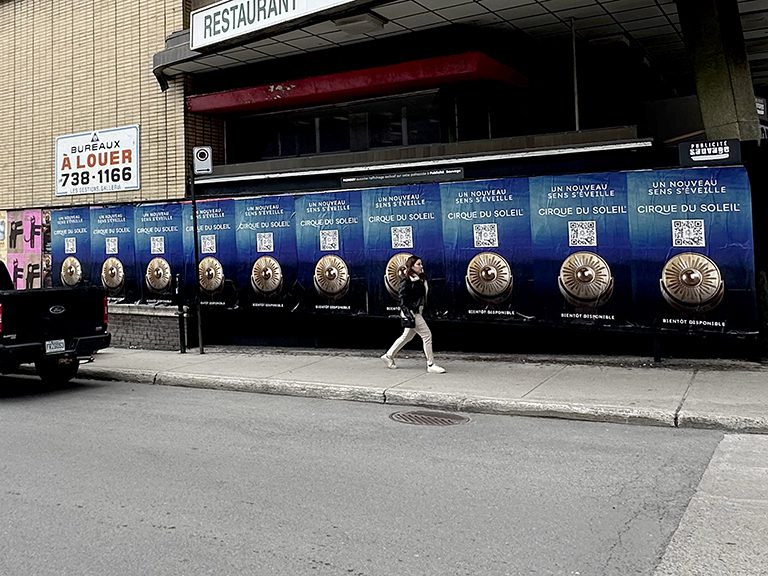
The best fly posting campaigns are built on specific decisions about location, volume, timing, and artwork — not on general enthusiasm about street-level media.
Fly posting produces results that vary dramatically based on how the campaign is planned and executed. We have run campaigns for music labels, fashion brands, film studios, streaming services, consumer product companies, and tech brands, and the pattern is consistent: campaigns built on specific decisions about location, volume, format, and timing outperform campaigns built on volume alone by a significant margin.
This article walks through concrete examples of fly posting campaign approaches across different industries, explains the strategic thinking behind each approach, and gives you a practical framework for understanding how the format works across different campaign objectives. Everything here is drawn from the kind of real-world campaign execution that American Guerrilla Marketing has built its practice on over more than ten years of field operations in New York, Los Angeles, Chicago, Miami, and other major US markets.
Music Release Campaigns: The Classic Fly Posting Use Case
Music promotion is where fly posting’s campaign logic was developed and where it still performs most reliably. The format’s speed, saturation capacity, and cultural positioning align naturally with what a music campaign needs: immediate visibility in the neighborhoods where the target audience lives and spends time, concentrated in the window before and after a release drops.
The Pre-Release Saturation Model
The most common music fly posting approach is pre-release saturation: a high-volume single-sheet campaign in two to four target neighborhoods in the release’s key markets, going up 72 to 96 hours before the release date. The timing is deliberate. Too early and the campaign loses cultural currency before the release arrives. Too late and it has no time to generate the ambient awareness that drives first-weekend streaming and purchase behavior.
For a New York-focused release campaign, this typically means coverage across Williamsburg and Bushwick in Brooklyn, the Lower East Side in Manhattan, and a secondary neighborhood determined by the artist’s specific fan base location. In Los Angeles, the primary targets are usually the Arts District, Fairfax, and either Silver Lake or Melrose, depending on the artist’s genre and audience profile.
Volume for a meaningful pre-release saturation in a single New York neighborhood typically starts around 50 pieces. To create the saturation effect that makes the campaign feel dominant — posters appearing at multiple points along the routes the target audience walks regularly — you need 75 to 100 pieces per neighborhood for a three to four day campaign with one maintenance cycle.
The Staggered Release Approach
Some of the most effective music fly posting campaigns we have run use a staggered approach: a first wave of posting goes up two weeks before release, establishing the artist’s visual presence in the market. A second wave goes up the week of release, refreshing and amplifying that presence at the moment when the audience is most primed to act. A third maintenance push in the first week after release sustains the street presence through the critical first-week streaming window.
The staggered approach requires more planning and coordination than a single-wave campaign, but it produces a more sustained street presence that tracks the actual arc of a release campaign’s marketing momentum rather than peaking once and fading.
AGM Field Note: The 72-hour pre-release window is a rule of thumb, not a law. The right timing depends on what else is happening in the campaign: Is there a listening event? A TV appearance? A tour announcement? Fly posting should reinforce those moments, not operate independently of them. The best campaigns we run are coordinated with the full campaign calendar, not scheduled in isolation.
Multi-Market Music Campaigns
For artists with significant followings in multiple cities, simultaneous multi-market posting on release day creates a visual moment that feels national. We have coordinated same-day posting in three to six cities simultaneously, with crews briefed on the same route specifications and timing across all markets. The documentation from a campaign like this — geo-tagged placement photos from New York, Los Angeles, Chicago, and Miami on the same day — gives the label a comprehensive record of the campaign’s geographic reach and timing.
Multi-market campaigns require additional lead time. Crew scheduling, route confirmation, and print logistics across multiple cities need four to six weeks of lead time for proper coordination. For campaigns with a hard release date, that timeline is not flexible.
Fashion Brand Campaigns: Quality of Presence Over Volume
Fashion fly posting operates on different logic than music promotion. Music campaigns prioritize saturation and timing around a specific release moment. Fashion campaigns care more about the quality and cultural positioning of the placement: where does the brand appear, on what surfaces, in which neighborhoods, alongside what other visual context?
Neighborhood Selection as Brand Statement
For a fashion brand, the neighborhoods where posters appear are as much a part of the brand message as the artwork on the poster. A luxury streetwear brand appearing on walls in Fairfax in Los Angeles or along Broadway in Williamsburg is making a statement about its positioning in the cultural environment. A heritage brand appearing on a construction hoarding in SoHo reads differently than the same brand appearing on a building wall in the Meatpacking District.
Fashion campaigns typically involve fewer placements than music campaigns but more attention to the specific surface, location, and surrounding visual context of each placement. A 30-piece campaign with 30 precisely chosen, high-quality placements can produce stronger brand-building results than a 100-piece campaign spread across every available surface in a generic route.
Large-Format Takeovers
Fashion brands frequently use large multi-panel fly posting configurations that function almost like temporary murals — tiling multiple printed panels across a complete wall section to create a visually commanding, full-scale brand presence. We have executed these takeovers for fashion brands in Bushwick, in the Arts District in LA, and at selected construction hoarding sites in Chicago’s River North district.
The large-format approach generates strong photo documentation that extends the campaign into social media. A wall-scale poster installation in a neighborhood known for street art and cultural activity is a natural subject for photography by anyone passing through. The street-level photos that result represent organic reach far beyond the physical location of the placement.
AGM Field Note: Large-format multi-panel fly posting requires more precise surface selection than single-sheet campaigns. You need a wall that is flat, structurally sound, free of significant surface interruptions, and large enough to accommodate the full panel arrangement. We scout large-format sites specifically before confirming them for a campaign, not just include them in a general route list.
Seasonal and Collection Launch Timing
Fashion campaigns most often tie to seasonal collection launches, brand events, or pop-up openings. For collection launches, the fly posting timeline typically aligns with the lookbook release and e-commerce launch, creating offline visual presence that supports the online campaign activity. For pop-up openings, the posting campaign creates neighborhood awareness in the days before the pop-up opens, driving foot traffic from the local audience who might otherwise miss the opening window.
Film and Streaming Campaigns
Film and streaming services were among the earliest adopters of modern fly posting campaigns for targeted urban audiences. The logic is straightforward: a film or series releasing to a specific demographic, and specifically to a younger urban audience, benefits from a street-level campaign that speaks in the visual language of that audience’s daily environment.
Genre and Audience Matching
Film fly posting works best when the campaign and the placement environment are aligned. A horror film released to a younger demographic, for example, works well in neighborhoods like the Lower East Side in New York or Echo Park in Los Angeles, where the target audience density is high and the street aesthetic matches the campaign’s visual register. A prestige drama with a broader adult audience might be better served by different neighborhoods and surface types.
The key discipline is matching the placement geography to the actual audience, not just to the highest-traffic locations. A campaign in SoHo reaches a different demographic than the same campaign in Bushwick, even though both neighborhoods have high foot traffic.
Release Window Timing
Film fly posting timing follows the theatrical release calendar. Campaigns typically go up two to three weeks before wide release, concentrating presence in the markets where the studio is doing major campaign pushes. For limited releases, the campaign can be more geographically concentrated — a limited release opening in New York and Los Angeles might run a two-week fly posting campaign in three to four neighborhoods per market rather than a broad coverage campaign across the entire city.
Streaming release campaigns follow similar logic but without the theatrical concentration. The goal shifts from driving theater attendance in specific locations to building awareness among the target demographic across their habitual urban environment.
Campaign Documentation for Studios
Film studios and their media buying agencies require thorough documentation of fly posting campaigns. We provide geo-tagged photos from every placement, maps showing the geographic distribution of the campaign, and a placement summary covering volumes per location and per posting cycle. This documentation becomes part of the campaign’s overall media verification record alongside other outdoor placements.
Consumer Product and Tech Launch Campaigns
Consumer product and tech campaigns use fly posting differently from entertainment and fashion. The format functions less as a cultural credibility signal and more as a density play: hitting a specific urban audience with repeated exposures to a simple brand message in the environment where they move and spend time.
Product Launch Campaigns
A consumer product launch campaign in a target city might use fly posting to create broad visual awareness of a new product in the weeks around launch. The campaign concentrates on the neighborhoods where the target demographic is most densely present, with a simple, high-contrast poster communicating the product name, a key visual, and where to buy. Saturation across two to three neighborhoods in a city creates the ambient awareness that repeated exposures in the physical environment produce — a different quality of recognition than the same number of digital exposures to the same audience.
App and Tech Campaigns
Tech and app campaigns targeting urban consumers have used fly posting successfully to create street-level presence in the early days of a product launch, when building awareness in a specific city or neighborhood is a priority before broader digital campaigns scale up. The campaign serves as a physical anchor for what is otherwise an entirely digital product, creating real-world presence that makes the brand feel local and tangible rather than purely virtual.
For these campaigns, the artwork discipline is particularly important. The best tech fly posting we have produced is minimal: brand name, a single compelling visual, and one clear call to action. The more complex the message, the less effectively it communicates from a street poster in a moving environment.
Multi-Format Campaign Examples
Many of the most effective campaigns we run combine fly posting with at least one other outdoor or guerrilla format. The combination produces a layered street presence that creates different kinds of impact at different scales.
Fly Posting Plus Murals
The fly posting and mural combination is one we return to frequently for music and fashion clients. The mural serves as a high-value earned media anchor: a single large-format hand-painted piece at a key location that generates social photography, editorial pick-up, and sustained visual presence for months. The fly posting campaign creates the saturation around it, filling the neighborhood with the same brand presence at street level across a wide area.
Together, the two formats tell a complete story: the mural says the brand is embedded in the culture of this neighborhood; the poster campaign says the brand is everywhere you look right now. Both messages are valuable. Neither produces the other.
Fly Posting Plus Ambient Placement
Fly posting combined with ambient placements — branded stickers, floor graphics, window clings, or other surface-level elements — creates a campaign presence that feels like it has permeated the neighborhood’s visual environment rather than just appearing on its walls. The ambient elements reach surfaces and contexts that poster campaigns cannot access, multiplying the visual presence without requiring additional wall space.
Fly Posting Plus Experiential
When a campaign is building to an experiential activation — a pop-up, a brand event, a sampling moment — fly posting in the surrounding neighborhood in the weeks before the event creates awareness that drives attendance. The posters function as advance notice in the physical environment: telling the neighborhood something is happening and where to go when it does.
What Makes These Examples Work: Common Elements
Looking across the examples above, several common elements separate effective fly posting campaigns from campaigns that disappear without impact.
Element
What It Looks Like in Practice
What Goes Wrong Without It
Audience-matched location
Neighborhoods selected for demographic alignment, not just foot traffic
High volume, wrong audience; campaign is seen but not by the right people
Artwork designed for the street
High contrast, readable at walking speed, single clear message
Posters go up but don’t register; pedestrians walk past without stopping
Sufficient volume
Enough pieces to create repetition on the routes the audience walks daily
Scattered presence; audience never sees the poster more than once
Maintenance cycles
Crews return on schedule to replace covered or damaged pieces
Campaign starts strong, fades by week two; no sustained presence
Documented placement
Geo-tagged photos from every location, every posting visit
No verifiable record of what ran, where, or for how long
Fly Posting Campaign Pricing
Our fly posting pricing is based on installation volume and market scope. These ranges cover installation on managed US routes. Print production is quoted separately based on format size, paper stock, and quantity.
Campaign Scale
Placement Volume
Scope
Installation Price Range
Small
25-50 placements
Single city
Contact for quote
Mid-scale
75-200 placements
Single city
Contact for quote
Large
200-500 placements
Single or multi-city
Project-specific (contact us)
Large-scale multi-city campaigns require four to six weeks of lead time for crew coordination, route scheduling, and print logistics across markets. For campaigns with a hard launch date, that planning window is not compressible. Get in touch early.
AGM Field Note: The price ranges above are for installation labor on managed routes. Full campaign estimates include print production, any artwork adaptation for outdoor application, and maintenance cycles. A complete brief — market, volume, timeline, format size — lets us turn around an accurate estimate quickly. Call (646) 776-2770 or email [email protected].
How to Brief a Fly Posting Campaign
The quality of a campaign brief directly affects the quality of the campaign plan that comes back. The more specific the brief, the more specific and useful the response. Here is what a useful fly posting brief includes:
Market or markets: Which city or cities, and if specific neighborhoods are already identified, which ones
Volume target: How many placements, or a sense of the budget that allows us to recommend a volume
Timeline: When the campaign needs to go up, and how long it needs to run
Format: Single-sheet, double-sheet, multi-panel, or a mix — and artwork dimensions if already determined
Artwork: Final or draft artwork, so we can review it for outdoor legibility before confirming the print run
Campaign objective: What the campaign is trying to accomplish, which shapes recommendations about location, timing, and volume
A brief that covers these elements allows us to come back with a specific posting plan, not a generic proposal. If you do not have all of these elements nailed down yet, bring what you have. We can help fill in the gaps.
What Fly Posting Cannot Do
Fly posting is a powerful format for specific objectives. It is not the right tool for every situation. Being clear about where the format has limits is as important as understanding where it excels.
Fly posting does not produce the kind of precise demographic targeting that digital campaigns achieve. You can select neighborhoods that over-index for your target demographic, but you cannot select only the people within those neighborhoods who match a specific profile. If demographic precision is the primary campaign objective, digital media is a more efficient tool for that specific goal.
Fly posting does not provide real-time campaign performance data in the way that digital advertising does. The feedback loop is slower and based on physical observation, documentation photos, and downstream indicators like social photography and direct audience feedback rather than click-through rates or conversion data.
Fly posting also does not work well in isolation for campaigns that require a direct response mechanism. Posters without a simple, memorable URL, QR code, or other clear response path cannot efficiently convert awareness into action. The format builds brand presence and drives ambient awareness, which is valuable, but campaigns that need direct, measurable response need to plan for that in the artwork and in the campaign design.
Documentation: How AGM Reports on Campaign Execution
Every fly posting campaign we run generates a documentation record. Our standard deliverable includes geo-tagged placement photos from every location on the route, a map showing the geographic distribution of placements, and a summary of volumes placed per posting cycle. For campaigns with maintenance visits, each visit is documented separately.
The documentation serves multiple functions. It gives clients a verified record of the campaign’s execution. It provides material for internal reporting and decision-maker communication. And it creates a reference point for planning future campaigns: what worked, where coverage was strong, and where adjustments would improve the next run.
We provide documentation after each posting cycle, with a final consolidated report at campaign close. For multi-market campaigns, documentation is consolidated across all markets into a single report so clients get a complete view of the campaign’s geographic execution.
Frequently Asked Questions
What are some examples of fly posting campaigns?
Fly posting examples include music album release campaigns that saturate key neighborhoods with single-sheet posters in the 72 hours before launch, fashion brand campaigns that combine large-format multi-panel placements with saturation posting across target neighborhoods, and film release campaigns that concentrate posting near theaters and in audience-specific districts.
What industries use fly posting most often?
Music labels and touring acts have historically been the heaviest fly posting users. Fashion brands, film studios, streaming services, and consumer product companies also use the format regularly for campaigns targeting urban audiences.
How much does a fly posting campaign cost?
Poster campaigns are priced by package and market. Standard poster campaigns (24×36) start at $4,500 for 100 posters (two-week run) and $5,500 for 200 posters. Large format (48×72) campaigns start at $10,500 for 100 posters and $13,500 for 200. An optional two-week maintenance extension is $3,500. Contact AGM at (646) 776-2770 for a custom quote based on your market and objectives.
What does a fly posting campaign look like in New York?
In New York, fly posting campaigns typically concentrate on neighborhoods like Williamsburg, Bushwick, the Lower East Side, and SoHo. Posters appear on construction hoardings, building walls, and managed posting surfaces on high-traffic pedestrian routes.
What makes a fly posting campaign effective?
Effective fly posting combines strong artwork with strategic location selection, sufficient volume for saturation, and maintenance to sustain coverage through the campaign run. Campaigns that hit all three consistently produce better street presence than those that prioritize only one element.
How many posters do you need for a fly posting campaign?
Effective saturation in a single urban neighborhood typically requires 25-50 placements as a minimum. Full-neighborhood dominance for a major release or launch campaign often requires 75-200 placements across multiple routes. Volume should be planned in relation to the size of the target area and the campaign objectives.
What format sizes are used in fly posting examples?
Single-sheet (17×22 to 24×36 inches) is the most common format for high-volume saturation campaigns. Multi-panel configurations assembled from multiple sheets are used for large-format wall takeovers. Most campaigns use a mix of sizes across different placement types.
Can fly posting be used alongside other outdoor formats?
Yes. Many of our most effective campaigns combine fly posting saturation with one or two large-format painted murals, with the murals serving as high-value earned media anchors and the poster campaign creating ambient neighborhood saturation.
How does AGM document fly posting campaigns?
AGM provides geo-tagged placement photos from every posting visit, covering every location on the campaign route. Clients receive a campaign report with placement photos and a map of the geographic distribution of placements after each posting cycle.
Contact American Guerrilla Marketing at (646) 776-2770 or [email protected] with your campaign brief: market, launch date, volume target, and artwork. We will come back with a posting plan and estimate.