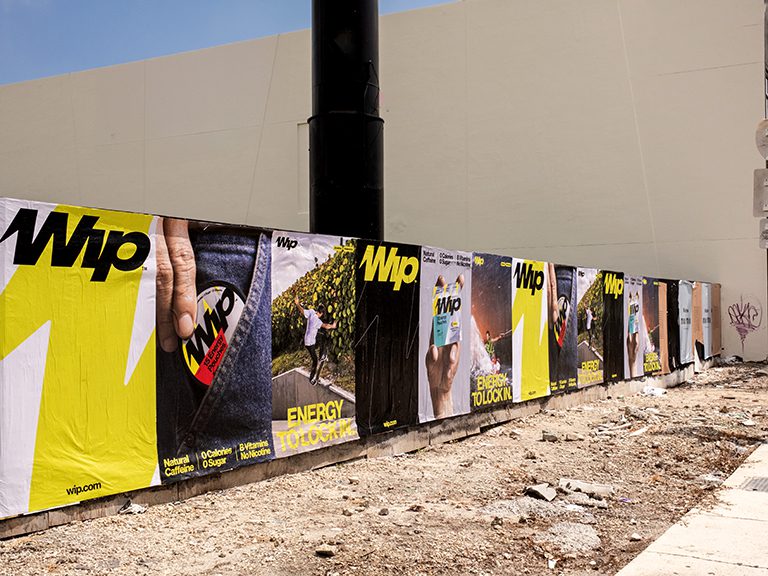
Fly Poster: Outdoor Street Poster Campaigns for Brands and Events | AGM
A fly poster is the printed graphic that makes a street campaign visible. The design, the size, the placement, and the adhesion quality all determine whether it works. Here is what you need to know.
A fly poster is a printed graphic placed on outdoor surfaces in urban environments as part of a street-level advertising campaign. It is adhered using wheat paste or compatible adhesive and is designed to create repeated visual exposure for a brand, event, or message as people move through a specific neighborhood. The format has been used by promoters, record labels, artists, and brands for over a century. The execution requirements have not changed much: bold design, quality print, strong adhesion, and the right location.
At American Guerrilla Marketing, we plan and execute fly poster campaigns on authorized surfaces across New York City and in major markets nationwide. This guide covers everything relevant to a fly poster campaign: format specifications, design principles, production logistics, placement strategy, and what to expect from the campaign output.
What Makes a Fly Poster Different from Other Outdoor Formats
A fly poster sits in a specific zone of the outdoor advertising network. It is not a billboard. It is not a transit ad. It is not a bus shelter placement or a paid outdoor panel. It is street-level, neighborhood-scale, and physically present in the environment where your target consumer lives, works, shops, and moves.
That physical proximity is what makes the fly poster format distinctive. A billboard on the highway delivers scale at the cost of intimacy. A fly poster on the block where your audience gets their coffee delivers intimacy at the cost of scale. For campaigns that are trying to reach a specific urban community, the trade is often the right one.
The other defining characteristic of the fly poster is the density of placement possible within a target area. A single campaign can place 200 to 400 posters across a 10-block radius. That creates a frequency of exposure that larger format placements simply cannot match at the same price point. When a consumer sees the same image on the walk to the subway, on the walk to lunch, and on the walk home, the brand registers in a qualitatively different way than a single high-reach placement can produce.
Fly Poster Sizes and Format Selection
The physical size of the poster affects placement options, production cost, street visibility, and design requirements. We work with a range of standard formats. The right choice depends on the available surface inventory in your target neighborhood, the creative assets the client is working with, and the campaign budget.
Format Name
Dimensions
Typical Use
Surface Compatibility
One-Sheet
24 x 36 in
General campaign, event, album release
Wide: boards, barricades, building walls
Half-Sheet
22 x 14 in
High-density saturation runs
Smaller surfaces, utility panels
18 x 24
18 x 24 in
Urban boards, window placements
Common for retail window campaigns
11 x 17
11 x 17 in
High-frequency saturation, tight routes
Small surfaces, poles, narrow barricades
27 x 41
27 x 41 in
Anchor placements, movie-style presence
Large boards and construction panels
Double-Sheet
48 x 36 in
Maximum visual impact on large surfaces
Long construction barricades, large walls
The 24×36 one-sheet is the workhorse of fly poster campaigns. It is large enough to be visible from across the street, small enough to be placed on a wide variety of surface types, and proportioned correctly for vertical graphic compositions. Most campaign creative is developed for this format first and adapted to other sizes as needed.
Larger formats like the 27×41 and double-sheet are used for anchor placements: high-traffic, high-visibility locations where a larger format creates a strong visual statement. These formats work best on construction barricades running the length of a block or on large outdoor boards in primary retail corridors. They are typically fewer in number but higher in visual weight per placement.
Paper Stock and Print Production for Fly Posters
The print production side of a fly poster campaign is not trivial. The wrong paper stock will fail in the field, regardless of how good the design is. A poster that bubbles, tears, or delaminations after the first overnight rain is money lost and a placement missed.
Paper Weight and Coating
Fly posters for wheat paste applications use uncoated or lightly coated paper stock. The paper needs to absorb the adhesive compound without delaminating. Standard weights range from 60 to 80 lb text stock. Heavier stocks are used for longer-duration placements in high-weather environments. Gloss-coated papers do not bond well with wheat paste and should not be used for street paste applications.
Ink Specifications
Outdoor-durable inks resist UV fading better than standard process inks. For campaigns running more than two weeks, or in markets with strong direct sunlight, we specify UV-resistant ink formulations to extend visual quality. The difference between a poster that looks sharp at the end of week two and one that has faded and yellowed is largely a function of ink specification at the print stage.
Quantity and Overrun
We always print a small overrun of every fly poster campaign. Street campaigns involve real-world contingencies: a surface that was available during scouting may not be available on installation night, a placement may need to be refreshed mid-campaign, or weather may damage posters in specific locations earlier than expected. An overrun of 10 to 15 percent gives the field crew flexibility to adapt without leaving the campaign short.
AGM Field Note: We review every creative file before it goes to print. Format, resolution, bleeds, typography scale, contrast, and color mode all get checked. A design that looks great on a monitor can have significant issues at street scale if the file was not prepared for print. Catching those issues before the press run saves time and money for everyone.
Fly Poster Design Principles
The design of a fly poster is the single most important factor in campaign performance. A poor design placed in a perfect location still fails. A strong design placed in reasonable locations succeeds. Here is what effective fly poster design looks like and why each principle matters.
Contrast Above Everything
A fly poster lives in a visually noisy urban environment. Storefronts, vehicles, other signage, and the general texture of city life compete for the same visual field. The poster needs to separate itself from that noise immediately. High contrast is the primary tool for achieving that separation. Black on white, white on black, or a dominant color used with high contrast against a neutral background all perform better than multi-color or low-contrast designs in street contexts.
Legibility at Distance
The primary text element of the poster needs to be legible at 20 feet for a pedestrian in motion. This means large type, not medium type. It means a font weight that holds at scale, not a light or thin weight that disappears when printed. It means limiting the amount of text on the poster so that what is there can actually be read in the two to three seconds a passing consumer will spend on it.
Single Visual Message
Every effective fly poster communicates one thing. An event name and a date. An artist name and a face. A product and a call to action. When a poster tries to communicate four things simultaneously, it communicates nothing effectively. The design challenge is to identify the single most important element and make that element the undisputed dominant of the layout. Everything else is secondary or eliminated.
Typography as Visual Identity
In fly poster campaigns, typography often functions as the primary visual element rather than as a caption or label. The font, the size, the weight, and the arrangement of type can create a visual identity that is as distinctive as any graphic or photographic image. Many of the most memorable fly poster campaigns in music history have been text-dominant designs where the name of the artist or event became the image.
Bleed and Format Awareness
Fly posters need to be designed with bleed for production and with awareness of how the edges of the poster will look after adhesion. Wheat paste expands the poster slightly and can cause edges to curl or wrinkle if not properly weighted. Designs with critical elements very close to the edge risk losing those elements to edge curl. We build these format considerations into our creative briefing process for every campaign.
AGM Field Note: The best fly poster campaigns we have run have been the simplest. Not the most elaborate design, not the most information-dense layout, but the cleanest, most confident execution of a single strong visual idea. When a poster has that quality, the street works for it. Consumers photograph it, share it, and talk about it. Complexity rarely achieves that result.
Where Fly Posters Are Placed
Placement strategy is where the fly poster campaign moves from a production exercise to a marketing strategy. The locations selected for a campaign determine which consumers will see it, how frequently they will see it, and what context they will see it in. Getting placement right is as important as getting the design right.
Authorized Outdoor Boards
We maintain a network of authorized outdoor posting boards across New York City’s primary fly poster neighborhoods. These boards are purpose-built for poster placement and are maintained by AGM. They represent the core of our authorized surface inventory. A campaign that places across multiple authorized boards in a target neighborhood creates a consistent physical presence in that area that builds recognition over the campaign duration.
Construction Barricades
Construction sites with long barricade runs in high-foot-traffic locations are among the most valuable fly poster surfaces in any urban market. We secure property owner permission for construction barricade placements on a project-by-project basis. A barricade running the full length of a city block in a pedestrian-heavy neighborhood is one of the most effective single-surface placements in any street campaign.
Building Exteriors and Partner Surfaces
Business owners, property managers, and community organizations who have partnered with us allow poster placements on their exterior surfaces. These partner surfaces are scattered through our primary posting neighborhoods and provide placement diversity within the target area. A campaign that uses a mix of boards, barricades, and partner surfaces creates a richer and more distributed presence within the neighborhood than any single surface type alone.
Fly Poster Campaigns by Industry
The fly poster format works across a range of industries and campaign types. Here are the most common use cases we execute.
Music, Concerts, and Events
Concert promotion and event marketing are the most natural fit for fly poster campaigns. The format’s history in music promotion means that urban audiences associate street-level poster presence with music and entertainment in a way that reinforces the campaign’s cultural positioning. A fly poster campaign for a concert or event creates neighborhood-scale awareness in the weeks before the date and builds a sense of anticipation among the people most likely to attend.
Film and Streaming Releases
Film studios and streaming platforms use fly poster campaigns to build street presence for new releases in target markets. A campaign timed to run in the two to three weeks before a release date creates neighborhood familiarity with the title and creative before the film is available. The 27×41 format is particularly effective for film campaigns because it mirrors the movie poster format that audiences already associate with cinematic releases.
Consumer Brand Launches
A consumer brand entering a new market or neighborhood can use fly poster campaigns to announce its arrival with physical presence. The campaign signals investment in the community and creates brand familiarity before direct consumer contact through retail, events, or digital channels.
Political and Advocacy Campaigns
Issue campaigns, voter registration efforts, and community advocacy organizations use fly posting to reach dense urban populations in specific districts with a high-frequency physical presence that digital channels cannot replicate in the same geographic specificity.
Production Timeline for a Fly Poster Campaign
A fly poster campaign requires lead time for location scouting, design review, print production, and field scheduling. Here is a standard timeline for a campaign from brief to execution.
Day 1-2: Client brief, target neighborhood selection, creative review
Day 3-5: Location scouting, placement map development, surface authorization confirmation
Day 5-7: Final creative approval, print file preparation, press order placed
Day 8-12: Print production and delivery
Day 12-14: Field crew scheduling, paste mix preparation, route briefing
Day 14: Campaign installation night
Day 15: Documentation delivery, campaign monitoring initiated
Rush timelines are possible when the production schedule is compressed with advance confirmation of creative assets and location maps. The print turnaround is typically the longest lead-time item. Clients who can provide approved print-ready files on Day 1 can accelerate the overall schedule by several days.
Campaign Documentation and Reporting
Every placement in a fly poster campaign is documented with GPS-tagged photography. The campaign report includes an image of each posting location, the address or intersection, the date of placement, and the poster format. Clients receive the complete visual documentation as a package at the end of each campaign.
Beyond physical documentation, clients use several secondary performance signals to gauge campaign impact during the active window:
Direct audience response and social sharing of poster sightings
Website traffic from the target geographic areas during the campaign window
Event ticket sales velocity changes in the campaign period
Retail foot traffic shifts at nearby partner locations
Qualitative feedback from venue staff, retailers, and community partners in the target area
The Creative Brief for a Fly Poster Campaign
Every fly poster campaign starts with a creative brief before it touches a printing press. The brief is where the campaign strategy gets converted into specific decisions about format, design, quantity, and placement. Getting the brief right determines everything downstream. Here is what a complete fly poster creative brief contains.
Campaign Objective
What is this campaign trying to accomplish? Drive event ticket sales? Launch a product in a new neighborhood? Create artist name recognition in a specific market? The objective determines every downstream decision. A campaign trying to drive event attendance in the two weeks before the event date has different design, quantity, and timing requirements than a campaign trying to build brand awareness over a six-week neighborhood presence run. Define the objective first and let it drive everything else.
Target Audience and Location
Who are we trying to reach, and where are they physically? Not where they spend time online, but where their bodies are in the neighborhoods the campaign will cover. A campaign targeting hip-hop fans in Brooklyn should be concentrated in the residential blocks where that audience lives and on the corridors they use to get to events. A campaign targeting young professionals in the East Village should be in the pedestrian zones those professionals move through daily, not in the bars where a different demographic spends its weekends. Location specificity is the advantage the fly poster format offers over broader-reach advertising. Exploit it.
Creative Concept and Approval Timeline
When will the final creative be approved, and in what format? A brand that can provide print-ready files in the correct dimensions, resolution, and color mode on Day 1 can accelerate the production timeline by three to five days compared to a brand that still has design approvals pending when we start the planning conversation. We review every creative file before it goes to print. Build that review cycle into your timeline and you will get better street results than brands that skip it.
Format and Quantity
The format and quantity decisions need to be made together because they are economically linked. A campaign with a fixed budget can either run more smaller-format posters or fewer larger-format posters. The right choice depends on the campaign objective. High-frequency neighborhood saturation favors higher quantities of smaller formats. High-visibility anchor presence favors fewer larger formats. Many campaigns split the budget between the two: a primary run of one-sheet posters for saturation with a smaller number of larger formats for anchor placements at key corridor locations.
Working with a Print Shop for Fly Poster Production
Print production is a critical link in every fly poster campaign. The poster that comes off the press determines the quality of every placement. Working with a print shop that understands the specific requirements of wheat paste street applications is the difference between a campaign that looks strong for three weeks and one that is peeling off the wall in three days.
Paper Specification
The paper specification for a street paste campaign is not the same as for a trade show display or a retail poster. Uncoated or lightly matte-coated stock in the 60 to 80 lb text weight range is the right specification for wheat paste applications. Gloss coating prevents proper adhesive bonding and should not be used for street campaigns. If you are working with a print shop that does not understand this distinction, you need to specify the stock explicitly and confirm the specification before the press run starts.
Print File Requirements
Print files for street posters should be prepared at 300 DPI at final print size, in CMYK color mode, with a minimum 0.125-inch bleed on all sides. Files set up in RGB mode will shift colors unpredictably at print. Files set up at 72 DPI (screen resolution) will print soft and pixelated at large format sizes. We catch both issues in our file review process, but catching them early prevents delays. A file that requires extensive rework is a file that pushes the production timeline and may force a rush print order with higher costs.
Quantity and Turnaround
Print turnaround for fly poster campaigns typically runs three to five business days from file approval to delivery. Rush turnaround of one to two days is available through select vendors at a premium. We coordinate print vendor relationships as part of the campaign production process, which means clients working with us do not need to separately source printing. We have established relationships with vendors who understand the specific material requirements for street paste campaigns and who reliably hit the turnaround timelines we need for installation scheduling.
Fly Posters in the Context of the Full Campaign Mix
Fly poster campaigns are most effective when they are connected to a broader campaign structure. The street presence created by posted graphics can be amplified by parallel digital activity, coordinated event presence, and supplemental distribution tactics that extend the campaign’s reach beyond the physical placement locations.
The most consistent amplification pattern we observe in well-executed campaigns is the combination of fly posting with geo-targeted social advertising in the same neighborhoods. When a consumer sees the campaign creative on the poster on their block and then encounters the same creative in their social feed targeted to their geographic location, the dual exposure creates a stronger impression than either placement alone. The physical poster signals that the brand has a real-world presence in the specific community. The social ad reinforces the visual in the digital environment where the consumer also spends significant time. Together they create a multi-channel frequency that the consumer experiences as the brand being everywhere simultaneously.
The second most consistent amplification pattern is the coordination of fly posting with experiential activations. A brand that runs a pop-up event, a street activation, or a product sampling in the same neighborhood where its fly poster campaign is running creates overlapping physical touchpoints. Consumers who have already seen the poster multiple times on their block arrive at the activation with prior familiarity. The activation converts that familiarity into direct brand engagement. The poster campaign does the awareness work before the activation takes place, making the activation more likely to connect with consumers who already have some existing relationship with the brand visual.
Choosing the Right Fly Poster Size for Your Campaign
Format selection is a strategic decision, not a default. Many brands simply use the 24×36 one-sheet because it is the standard format, and for most campaigns that is the right choice. But understanding why it is the right choice, and when a different format would serve the campaign better, gives you more control over the final street presence your budget produces.
The 24×36 one-sheet is the best default for most fly poster campaigns because it offers the widest compatibility with available posting surfaces. The vast majority of outdoor boards, barricade panels, and building wall sections in urban posting neighborhoods can accommodate a 24×36 poster. At street scale, the format is large enough to be visible from across the street and legible at normal pedestrian approach distances. It is the format that has been used for concert and event promotion for decades, which means urban audiences have an existing cultural association between seeing a 24×36 poster in their neighborhood and encountering a culturally relevant announcement.
The 18×24 format is appropriate when the placement inventory in the target area includes a high proportion of retail window placements and smaller board surfaces where the 24×36 would be oversized for the available display space. It is also the right choice for campaigns where print budget is a significant constraint and a smaller format allows more placements for the same material cost.
The 27×41 format, also called the one-sheet movie poster format, is appropriate for campaigns that want to anchor specific key locations with a premium-format placement. Film campaigns use it because the format carries an existing cultural association with cinematic releases. Brands that want to create a landmark placement at a high-visibility location within a larger campaign sometimes use the 27×41 for one or two anchor placements while running the rest of the campaign at 24×36.
The decision between formats should be driven by the specific placement inventory available in the target neighborhood, the design requirements of the campaign creative, and the budget available for print production. When those factors point clearly toward one format, that is the right choice. When they are ambiguous, we recommend the 24×36 as the highest-compatibility default.
Written by the American Guerrilla Marketing field team. AGM has designed and executed street-level poster campaigns for brands, record labels, venues, and agencies across New York City and the United States since 2008.
Frequently Asked Questions
What is a fly poster?
A fly poster is a printed graphic placed on outdoor surfaces in urban environments as part of a street-level advertising campaign. It is adhered using wheat paste or compatible adhesive and creates repeated visual exposure for a brand, event, or message as people move through a specific neighborhood.
Fly posters are produced in a range of standard sizes. The most common are 24×36 inches (one-sheet), 18×24, and 11×17. Larger formats including 27×41 and double-sheet are used for high-traffic anchor placements. Size selection depends on the target surface and campaign objectives.
What paper is used for fly posters?
Fly posters for wheat paste applications use uncoated or lightly coated paper stock that absorbs adhesive without delaminating. Standard weights range from 60 to 80 lb text. Heavier stocks are used for longer-duration placements in high-weather environments.
How long does a fly poster last on the street?
A properly pasted fly poster on an authorized surface typically lasts 2 to 4 weeks depending on weather, surface condition, and foot traffic. Multi-week campaigns include monitoring and refresh schedules to maintain coverage through the full campaign window.
What makes a fly poster design effective?
Effective fly poster design uses high contrast, bold typography, and a single dominant visual or message. The poster registers in about two seconds for a pedestrian passing at normal walking speed. Simplicity and legibility at distance are the primary design requirements for this format.
Can I design my own fly poster or does AGM handle creative?
Both options work. Many clients provide print-ready files from their own creative team. We also offer creative development as part of a full campaign package. If you provide your own artwork, we review it against street-format requirements before going to print.
How many fly posters do I need for a campaign?
A targeted single-neighborhood campaign typically runs 100 to 200 posters. A multi-neighborhood saturation campaign runs 300 to 600 or more. The right quantity depends on the geographic scope, the number of target neighborhoods, and the campaign duration.
Where are fly posters placed?
We place fly posters on authorized outdoor surfaces including dedicated posting boards, construction barricades with owner permission, building exteriors, and partner business surfaces. Every placement in our network is secured with property owner authorization before any campaign runs.
Do you photograph every fly poster placement?
Yes. Every placement is documented with GPS-tagged photography showing the surface, location, and date. Clients receive a full visual report of every posted location as part of the campaign documentation package delivered after installation.
How do I get a fly poster campaign started with AGM?
Call us at (646) 776-2770 or email [email protected]. We gather information about your target neighborhood, campaign timeline, and creative assets, then build a custom placement plan from there.