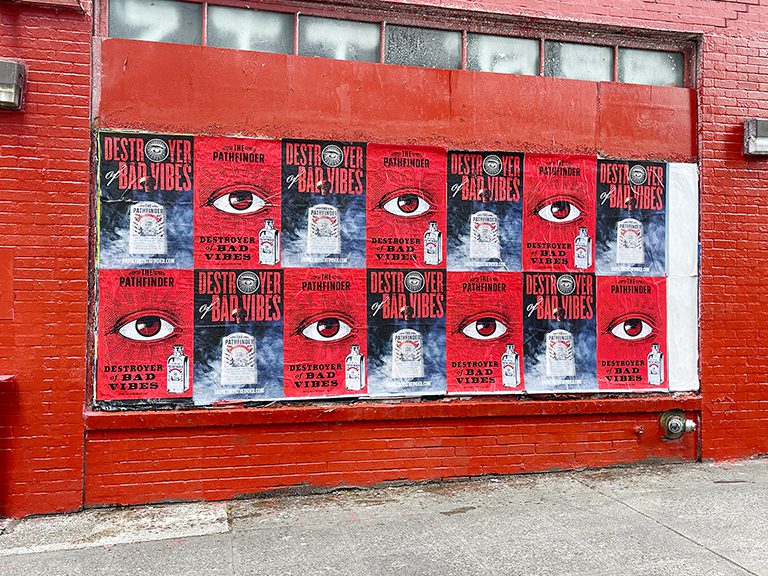
Flash Marketing: Short-Burst Campaigns That Generate Outsized Impact
Flash marketing is not about duration. It is about intensity. The right campaign in the right place at the right moment can do more in 48 hours than a sustained campaign does in a month.
Not every campaign needs to run for months. Some of the most effective marketing we have run at American Guerrilla Marketing has been concentrated into 24 to 72 hours of intense, focused activation around a specific cultural moment, a product launch date, or an event. We call this flash marketing: campaigns designed for maximum impact in a short window rather than sustained visibility over a long period.
Flash marketing exploits a specific dynamic in audience attention. Audiences pay more attention to things that feel urgent, temporary, and specific to a moment they are already engaged with. A brand message that appears during a cultural window the target audience is already actively thinking about gets processed with a higher level of attention than the same message appearing in a neutral period. The flash campaign uses that heightened attention state as its deployment environment.
This guide explains what flash marketing is, what formats we use for it, where and when it works best, and how brands can plan a flash campaign that maximizes impact within the short deployment window that defines the format.
Flash marketing is a short-burst brand campaign designed to generate concentrated impact in a specific location and time window. Where a sustained campaign builds awareness gradually through repeated exposure over weeks or months, a flash campaign creates a single intense moment of brand presence that generates immediate awareness, social content, and press pickup within a narrow time window.
The format borrows the urgency dynamic from time-limited retail promotions (flash sales, limited-edition drops) and applies it to brand presence rather than purchasing incentives. The audience encounters the campaign at a moment of heightened attention and processes it with the urgency that the short window implies. The campaign does not ask the audience to return later. It asks for full attention right now.
In street marketing terms, flash campaigns typically run for one to five days rather than the several weeks of a standard stencil or poster campaign. They deploy more formats at the same time, in a more concentrated geographic zone, around a more specific audience moment. The intensity compensates for the short duration.
When Flash Marketing Works Best
Flash marketing is the right approach when a brand has a specific, time-bound moment to capitalize on. The most common triggers for flash campaigns are:
Product Launch Dates
The day of and the 48 to 72 hours before a product launch are the highest-value window for flash marketing investment. The audience is already paying attention to the product category, press is covering the launch, and social media is generating pre-launch conversation. A flash campaign in the right location during that window puts the brand’s physical presence in the same cultural moment the audience’s digital attention is already engaged with.
We have run product launch flash campaigns that combined projection advertising on the night before the launch date, a stencil run on the approach routes to the primary press event venue, and a street team at the launch event location on the day of the launch. Each element hit the audience at a different point in their pre- and day-of-launch experience. The combined effect was a brand presence that felt like it was everywhere during the launch window.
Album and Film Releases
Entertainment releases have a built-in flash marketing window: the week of the release, with the release date itself as the central moment. In the music industry, the campaign convention is to concentrate physical street marketing in the five to seven days before the release date, aligning street-level presence with the online announcement campaign and the press coverage that typically runs in the final days before a release.
We have run flash campaigns for album releases that placed stenciling on the approach routes to the flagship record stores in New York where the fan base would be physically going on release day. The audience walking to the store to buy the album on the first day of availability encountered the brand at multiple points on their route before they arrived. That layering of encounters within the flash window creates a sense of campaign saturation that a single placement cannot achieve.
Event and Festival Windows
Major events create concentrated audience presence in specific geographic zones for a defined time window. Music festivals, sporting events, fashion weeks, trade shows, and film festivals all create flash marketing opportunities because they deliver the right audience to the right location for a predictable window.
The South by Southwest festival in Austin, Texas creates one of the best flash marketing environments in the United States. The festival concentrates thousands of music, technology, and creative industry attendees in the downtown Austin geography for a full week. The foot traffic on 6th Street, on Congress Avenue, and in the surrounding entertainment district is dense and highly targeted to the creative and entertainment brand categories that benefit most from flash guerilla marketing.
Flash window timing: We always install flash marketing elements at the start of the target window, not in the middle of it. A stencil campaign targeting the SXSW audience needs to be on the ground before the festival opens, not installed on day three when the audience has already running their movement patterns and the novelty of the first days has passed. The first 24 hours of a concentrated audience window is the highest-value flash marketing moment.
Flash Marketing Formats: What We Deploy in a Short Window
Overnight Stencil Runs
The overnight stencil run is the most deployable flash marketing format. A four-person crew can install 20 to 30 stencil locations in a concentrated geographic zone in a single overnight session. The campaign is visible from sunrise on the morning after installation, which means it hits the audience on the first morning of the target window with no lead time visible to the public.
For a New York flash campaign targeting the concert audience at a major show, we typically run the stencil crew the night before the show. By the time concert-goers are walking to the venue, the approach routes have a brand presence that appeared overnight and that they are encountering for the first time. The freshness of the installation adds to the impact: chalk stencils look sharpest in the first 24 hours.
Projection Advertising
Projection advertising is inherently a flash marketing format. We run it at night, for specific evenings, in specific locations. A two-night projection campaign during a product launch week runs from roughly 8 PM to midnight each night and hits the evening foot traffic that is concentrated around the target event or venue during that window. The format’s visual drama makes it particularly effective for the heightened attention state of an event-aligned audience.
Pop-Up Activations
Pop-up brand activations are physical brand installations that appear for a day or two in a high-traffic location and then disappear. The temporary quality of a pop-up creates urgency: the audience knows it will not be there tomorrow. That urgency drives engagement at a level that a permanent installation cannot generate. We have produced pop-up activations inside market halls, in outdoor plazas, and in specially configured spaces adjacent to event venues.
Flash Street Team Deployments
A flash street team is a high-density, short-duration direct engagement program. Instead of the sustained multi-day deployment of a grassroots program, a flash street team concentrates all its activity into a single day or two-day window at the highest-value location for the target moment. The team is larger than a standard deployment, the geographic zone is tighter, and the intensity of the engagement is higher because the window is shorter.
Flash Marketing Format
Deployment Window
Lead Time
Starting Cost
Best Trigger Event
Overnight Stencil Run
1 night, 1 to 5 day visibility
5 to 10 days
$2,855 (5 stencils)
Concert, launch, festival
Projection Advertising
1 to 3 nights
5 to 7 days
$6,500/projector/night (NYC)
Launch event, premiere, conference
Pop-Up Activation
1 to 2 days
2 to 4 weeks
Quoted by project
Launch, experiential event
Flash Street Team
1 to 2 days
1 to 2 weeks
Contact for quote
Festival, trade show, launch
Flash Poster Run
1 night, 1 to 3 week visibility
5 to 7 days
$4,500 (100 posters, 24×36)
Event, release, announcement
Planning a Flash Marketing Campaign: The Process
Flash campaigns require faster planning than sustained campaigns but no less precision. The condensed timeline makes every planning error more expensive because there is no opportunity to course-correct mid-campaign. Location selection, creative approval, and production all have to be correct before the deployment window opens. We have a hard rule on this: no production begins without final creative sign-off, and no location is confirmed without physical scouting. These two steps are non-negotiable in flash campaign planning because they are the two most common points of failure when things go wrong.
Step 1: Lock the Moment
The first decision is the specific moment the campaign is targeting. The date of the launch. The first night of the festival. The morning of the conference. That specific moment is the planning anchor. Every other decision works backward from it: when does the installation need to be visible, which means when does the overnight run need to happen, which means when does production need to be complete, which means when does artwork need to be approved.
Step 2: Select the Location Strategy
Flash campaigns work in concentrated geographic zones where the target audience will be concentrated during the target moment. We identify the specific blocks, corridors, and surfaces that carry the highest density of the target audience during the specific hours of the flash window. For an event-adjacent campaign, that means the approach routes to the venue. For a festival, it means the main pedestrian corridors of the festival geography.
Step 3: Select Formats
Flash campaigns typically use one or two formats rather than the full multi-format mix of a sustained campaign. The choice is based on what can be deployed within the available production lead time and what will generate the most impact in the specific environment during the specific window. Projection is the highest-impact single-night format. Stenciling is the most scalable multi-location format. Street teams are the most direct engagement format. The brief and the timeline determine which combination is right.
Timing rule: The flash campaign needs to be visible at the start of the target window, not in the middle. If the target moment is a Tuesday show at Madison Square Garden, the stencils need to be installed Tuesday morning, not Tuesday evening when the audience is already at the venue. Early installation during the target window beats late installation in the middle of it every time.
Flash Marketing and Social Amplification
Flash campaigns generate their best return when they are designed for organic social amplification from the start. The short duration means the social sharing window is also short: if the content from a 48-hour flash campaign does not spread in those 48 hours, the opportunity to spread it is gone. Building social amplification mechanics into the campaign design is not optional for flash marketing.
For stencil campaigns, we shoot high-quality photographs immediately after installation and distribute them to the brand’s social team for same-day posting. For projection campaigns, we capture video from the best camera angle during the first hour of activation and have a cut ready for social distribution within 24 hours. For street team flash deployments, we brief the team to capture content during interactions and tag the brand’s social accounts in real-time posts. The documentation brief is as detailed as the installation brief because the social content the campaign generates is a primary deliverable, not a secondary one. Every hour that passes without strong social content from a flash campaign is an hour of the campaign window that cannot be recovered.
Flash Marketing Across Markets: NYC, LA, Chicago, Miami, and Austin
Flash marketing campaigns operate differently in each city based on the geography, the density of the target audience at specific moments, and the physical characteristics of the market’s key event corridors. Understanding these differences is what allows us to execute an effective flash campaign in any city with the same focused precision we apply in markets we have worked in for years.
In New York City, the flash marketing opportunity is concentrated around the city’s extraordinary density of events, releases, and cultural moments that bring large, specific audiences to specific locations. Madison Square Garden approaches, Brooklyn Steel in East Williamsburg, Terminal 5 in Hell’s Kitchen, and Barclays Center in Downtown Brooklyn each represent high-concentration audience moments on specific nights. A flash marketing campaign that installs in the approach corridors the morning of a major show reaches the exact target audience in the most receptive context, arriving at an event they care about, at a density that no other medium can match in that time window. The L train subway platform at Lorimer Street is a flash marketing location we have used repeatedly because it concentrates the creative professional Brooklyn audience at a single choke point during the hours before evening shows, delivering a captive impression that no surface-level format can match for the specific moment when that audience is moving toward their evening destination.
In Los Angeles, flash marketing works through the city’s outdoor event culture and the distributed geography of its cultural venues. The Wiltern in Koreatown, The Greek Theatre in Griffith Park, and the Ace Hotel Theater in Downtown LA each anchor their own neighborhood approach corridors. Flash campaigns in LA require understanding which streets the audience approaches from and what those approach corridors look like at street level, which requires local knowledge rather than map assumptions. The Forum in Inglewood and the Kia Forum draw audiences from across the metro area; the approach corridors vary depending on where in the metro the target audience predominantly originates, which requires surveying both the venue geography and the audience’s travel patterns before placing a single installation.
In Chicago, the summer festival season creates exceptional flash marketing windows. Lollapalooza, Pitchfork Music Festival, and the Chicago Jazz Festival each concentrate tens of thousands of specific audience members in Grant Park over multi-day windows. Flash campaigns around these events can reach more of the right audience in a single weekend than sustained campaigns can in a full month, because the festival geography compresses the audience into a defined area where every installation is encountered by the right people. Beyond festival windows, Chicago’s strong neighborhood event culture in areas like Wicker Park, Pilsen, and Bridgeport creates smaller but highly specific flash windows around neighborhood festivals, street fairs, and cultural events that concentrate niche audiences in walkable, visually active corridors where street-level campaign presence performs exceptionally well.
AGM Field Note: We ran a flash stencil campaign for a music brand around a major Chicago festival, installing 60 sidewalk graphics across the eight-block approach grid on the morning of day one. By day three, the brand’s social team had tracked over 400 organic photographs tagged from the festival geography, not from our own documentation, but from festival attendees who had noticed and photographed the work as part of their experience. The concentration of the right audience in a defined geography is what made that organic spread possible.
Frequently Asked Questions
What is flash marketing?
Flash marketing is a concentrated, short-duration brand campaign designed to generate maximum impact in a specific location and time window rather than sustained presence over a long period. It uses street-level formats, pop-up activations, and event-adjacent placements to create a concentrated brand moment that generates immediate awareness and social content.
How is flash marketing different from sustained brand campaigns?
Sustained campaigns build brand recognition gradually over time through consistent exposure. Flash marketing creates a single concentrated moment of high impact that generates immediate awareness, social sharing, and press coverage. The two approaches serve different goals: sustained campaigns for brand building, flash campaigns for launch moments, event activations, and PR spikes.
What formats work best for flash marketing?
The most effective flash marketing formats are ones that can be deployed quickly and generate strong immediate visual impact. Projection advertising, large-scale stencil campaigns, pop-up installations, street team activations, flash mob events, and overnight poster runs all work well for flash marketing because they can be activated in a short window and generate concentrated exposures.
When should a brand use flash marketing?
Flash marketing works best around product launches, event announcements, album or film release dates, trade show weeks, holiday periods, and any other moment when a concentrated impression spike has clear campaign value. The key trigger is a specific cultural or commercial moment that the audience already has attention on.
How much does flash marketing cost?
Flash marketing campaigns can be executed quickly and at a range of budget levels. A focused overnight stencil run around a specific event starts at $2,855 for 5 stencils. Projection-led flash campaigns start at $6,500 per projector per night in NYC ($7,500 outside NYC). Contact AGM for a custom quote on multi-format flash campaigns.
How quickly can a flash marketing campaign be deployed?
Stencil and poster flash campaigns can be deployed in 7 to 10 days from brief. Projection flash campaigns can be activated in 5 to 7 days. Street team flash deployments can be mobilized in 7 to 14 days. Flash mob events require 4 to 8 weeks of planning regardless of how short the final activation is.
What makes a flash marketing campaign successful?
A successful flash marketing campaign is timed precisely to its target moment, placed in locations that concentrate the target audience at that moment, uses creative that communicates in the brief encounter window available, and is documented for social and press distribution. The timing is usually the most critical variable: a flash campaign installed three days after the relevant cultural moment has already passed generates a fraction of the impact.
Yes. We plan and execute flash marketing campaigns across all formats in New York and across the United States. We specialize in fast-turnaround campaign execution and have the field infrastructure to mobilize quickly when client timelines are tight.