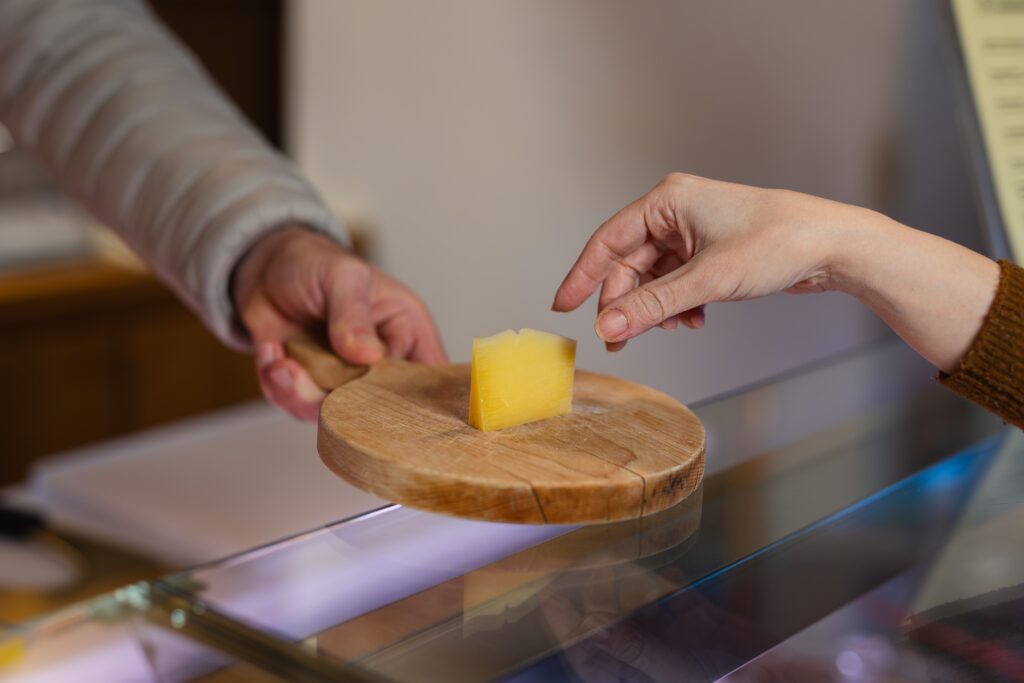
Product sampling at expos is one of the most direct forms of pre-floor exhibitor promotion available. When your product is in an attendee’s hands before they reach the show floor, the subsequent booth visit is not a first encounter. It is a follow-up conversation with someone who already has a reference point for what you make, a question or reaction to share, and a reason to engage beyond the generic curiosity that drives most cold booth walk-bys.
Why Expo Sampling Works Outside the Show Floor
Inside the show floor, sampling is a reactive tactic. Attendees who visit the booth can receive a sample. Outside the show floor, sampling is a proactive tactic that reaches attendees who may never visit the booth without a prior touchpoint to create the motivation.
The pedestrian environment around a major expo is dense with the exact audience the exhibitor is trying to reach. These same buyers are walking from their hotels to the convention center, waiting for coffee, sitting at shuttle stops, or gathering in outdoor areas before sessions begin. They are in a lower-pressure state than they will be on the show floor, where they are being approached by dozens of brands simultaneously. A sampling interaction in the hotel zone or on the pedestrian approach route reaches an attendee who is relaxed, unhurried, and receptive to a brief, genuine interaction.
The product sample itself creates a concrete reason for the subsequent booth visit. “Come find us at booth 1116 and tell us what you thought” is a specific, useful invitation that a prospect with a sample in hand has a reason to take up. Without the sample, the invitation is generic. With it, the conversation has a starting point.
Where We Deploy Expo Sampling Crews
Hotel Zone Morning Sampling
The primary conference hotel lobbies during the 7:30 to 10:00 AM morning departure window are the highest-quality sampling environment at any major expo. Attendees in the hotel zone are gathering, organizing for the day, getting coffee, and making their plans before the show floor opens. This is the window when booth visit decisions are forming, and a well-timed sampling interaction puts your product into that decision-making moment.
We coordinate hotel zone sampling access through the site-approval planning and property relationship process in advance of the show. For hotel lobbies that require property permission, we handle that coordination. For public hotel zone areas including sidewalks and common outdoor areas adjacent to hotels, we manage the appropriate city site-approval planning.
Coffee and Breakfast Queue Sampling
The coffee queues outside convention centers and in adjacent food areas during morning arrival are a concentrated sampling opportunity. Attendees waiting for coffee are stationary, unhurried, and receptive to brief interactions. A sampling crew working the coffee queue area during the morning rush can generate several hundred direct product interactions in a one-hour window.
Coffee queue sampling works particularly well for food and beverage products, where the sampling moment is contextually aligned with the attendee’s current activity. It also works well for any product that can be experienced in a brief demonstration, since the wait context gives attendees a few minutes of genuine attention that they cannot offer during the rush of the show floor.
Pedestrian Approach Corridor Sampling
The primary pedestrian corridor from the hotel cluster to the convention center entrance is the highest-density sampling opportunity at any expo. Every attendee on foot passes through this corridor multiple times per day. A sampling deployment at a well-chosen position on this corridor reaches a large percentage of the total attendee population across the show days.
We route sampling crews through the pedestrian approach based on a pre-show walk of the convention geography, identifying the two to three positions on the route where foot traffic concentration is highest and where there is enough sidewalk width to conduct sampling interactions without obstructing pedestrian flow.
Convention Center Entrance Sampling
The immediate area around convention center entrances during the morning arrival window is a natural sampling zone. Attendees are transitioning from outdoor to indoor and are briefly stationary as they navigate entrance areas, security queues, and badge-check lines. A sampling crew positioned at or near the entrance captures this transition moment.
Entrance area sampling requires close attention to venue access rules and security requirements. We coordinate with venue management in advance to confirm where sampling is approved in the entrance zone and ensure our crews operate within those parameters.
Expo Sampling Product Formats and What Works
The most effective expo sampling products share a few characteristics. They create an immediate sensory impression. They are easy to carry and use without stopping to assemble or prepare anything. They give the recipient a specific follow-up action or conversation starter. And they are genuinely useful or enjoyable in the context of a convention day.
Food and beverage samples work well in morning arrival and lunch windows when attendees are physically hungry or thirsty and the product context is immediately relevant. Trial-size personal care products work well at multi-day conventions where practical utility is high. Software or digital products can be sampled through trial access cards, QR codes for immediate app downloads, or brief live demonstrations using a tablet or device carried by the sampling crew.
Branded merchandise with practical convention-day utility, such as a good quality pen, a phone charging cable, a portable phone stand, or a quality branded tote bag, works as a form of sampling because the attendee uses the item during the show and the brand is present on the item throughout. The difference between practical branded merchandise and generic promotional items is in the quality and utility of the item itself.
Sampling Crew Briefing and Performance Standards
Expo sampling results depend heavily on crew performance, and crew performance depends on the quality of the briefing. Every sampling crew we deploy receives a briefing that covers the product being sampled, the target audience profile and what they care about, the qualifying question they should ask at first contact to identify high-value prospects, the specific call to action tied to the booth, and the documentation process for logging interactions.
Our standard for sampling crew interaction is: create a genuine first impression that the attendee remembers positively and can associate with the booth visit invitation, not just a transaction where a sample changes hands without any conversation. Crew members who are trained to qualify and engage, not just distribute, generate substantially more qualified booth traffic from the same number of sampling encounters.
Each crew member maintains a shift log tracking total samples distributed, qualified conversations, and direct booth visit commitments. Shift reports are compiled at the end of each deployment and provided to the client.
Documentation and Field Reporting
Every expo sampling campaign we run is documented with the same rigor we apply to any field campaign. Deployment photos from each position show the crew in position, the product being distributed, the pedestrian environment, and the volume of foot traffic. Sample counts per shift confirm distribution volume. Interaction logs from crew members document qualified conversations and lead notes.
Post-campaign, we compile a full sampling report covering total samples distributed, deployment locations and timing, crew interaction counts, qualified lead notes, and any observations about attendee response, product reception, or venue-specific dynamics that affected performance. This report is the foundation for planning the next show’s sampling program and for calculating cost per qualified interaction.
Building the Post-Sampling Follow-Through System
Expo sampling is most effective when the moment of product distribution is connected to a clear next step that moves the attendee toward the booth and ultimately toward a qualified conversation. A sample delivered without a specific follow-through call to action is a product experience without a business outcome. The follow-through system is what converts sampling encounters into booth visits and booth visits into qualified leads.
The follow-through system starts with the sampling interaction itself. The crew member who hands over a sample delivers a specific invitation: the booth number, the reason to visit, and a handout with a QR code that either links to a booth visit scheduler or a product page relevant to what was just sampled. The QR code creates a digital thread from the sampling encounter to the digital environment where follow-up can happen even if the attendee does not visit the booth during show hours.
For digital products, the QR code on the sampling handout can trigger an immediate trial access: a free account creation, a software download, or access to a demo environment that the attendee can start using during the show. This immediate digital engagement converts the sampling moment into an active product relationship without requiring a booth visit as the intermediate step.
For physical product samples that take time to experience, the sampling handout invites the attendee to the booth to discuss their experience with the product after they have had time to use it. This creates a naturally motivated booth visit reason that is stronger than a cold invitation: the attendee has a reaction to share, a question to ask, or a comparison to discuss. The sampling experience creates the agenda for the booth conversation before the booth visit happens.
Integrating Expo Sampling with Other Outside-the-Hall Tactics
Expo sampling works best as part of a multi-format outside-the-hall campaign. A sampling crew in the hotel zone during morning arrival, combined with wheatpasted directional posters in the pedestrian corridor and sidewalk stencils at the convention entrance, creates three distinct touchpoints with the same attendee before they reach the show floor.
The first touchpoint is the outdoor visual impression from the poster or stencil. The second touchpoint is the sampling interaction with the crew member. The third touchpoint is the arrival at the convention entrance, where the stencil near the door reinforces the brand impression from the sampling encounter. Three aligned touchpoints in the hour before the floor opens create a level of brand recognition that a single format cannot match.
We design these multi-format programs as integrated campaigns rather than isolated tactics. The creative, the message, and the call to action are consistent across all formats. The sampling crew’s verbal call to action references the booth number that appears on the stencils and posters. The QR code on the sampling handout leads to the same destination as the one on the street campaign creative. Consistency across formats is what creates the compounding recognition effect.
For guerrilla marketing at expos, the combination of physical product in attendee hands and a branded outdoor presence in the convention zone is the most direct path from the convention neighborhood to a qualified booth conversation on the show floor.
What is expo sampling?
Expo sampling is the distribution of product samples or branded items to convention and expo attendees in the convention zone outside the show floor. It puts the product in attendee hands before they reach the booth, creating a direct product experience that primes the subsequent in-booth conversation.
Where does expo sampling happen?
Expo sampling is most effective in the hotel zone, at coffee and breakfast queues on the primary pedestrian approach routes, at shuttle stops, and at the convention center entrances during morning arrival windows. These locations offer high foot traffic concentration and a more relaxed attendee state before the show floor opens.
What types of products work best for expo sampling?
Physical consumer products, food and beverage items, software trial codes, branded merchandise with practical convention-day utility, and any product that can be experienced in a brief interaction all work well. The key criterion is that the sample creates an immediate positive impression and gives the recipient a specific reason to visit the booth.
Does expo sampling require site approvals?
Sampling in public pedestrian zones typically requires city site approvals. Sampling within the convention center or on event-owned property requires organizer coordination. Our team handles all site-approval planning for outdoor sampling and advises on any additional coordination requirements.
How is expo sampling different from in-booth sampling?
In-booth sampling reaches only the attendees who visit the booth. Expo sampling in the convention zone reaches the full attendee population in the pedestrian environment before they reach the show floor, including attendees who might never visit the booth without a prior touchpoint to create the motivation.
How do you measure the impact of expo sampling on booth traffic?
We track sampling contacts with structured logs, use unique QR codes on sampling handouts linked to booth visit schedulers, and coordinate with booth teams to note when visitors mention the sampling encounter. These data points give a measurable view of sampling impact on show floor outcomes.
How early should we plan expo sampling?
Campaign Architect – American Guerrilla Marketing
Frequently Asked Questions
What is expo sampling?
Expo sampling is the distribution of product samples or branded items to convention and expo attendees in the convention zone outside the show floor. It puts the product in attendee hands before they reach the booth, creating a direct product experience that primes the subsequent in-booth conversation.
Where does expo sampling happen?
Expo sampling is most effective in the hotel zone, at coffee and breakfast queues on the primary pedestrian approach routes, at shuttle stops, and at the convention center entrances during morning arrival windows. These locations offer high foot traffic concentration and a more relaxed attendee state before the show floor opens.
What types of products work best for expo sampling?
Physical consumer products, food and beverage items, software trial codes, branded merchandise with practical convention-day utility, and any product that can be experienced in a brief interaction all work well. The key criterion is that the sample creates an immediate positive impression and gives the recipient a specific reason to visit the booth.
Does expo sampling require site approvals?
Sampling in public pedestrian zones typically requires city site approvals. Sampling within the convention center or on event-owned property requires organizer coordination. Our team handles all site-approval planning for outdoor sampling and advises on any additional coordination requirements.
How is expo sampling different from in-booth sampling?
In-booth sampling reaches only the attendees who visit the booth. Expo sampling in the convention zone reaches the full attendee population in the pedestrian environment before they reach the show floor, including attendees who might never visit the booth without a prior touchpoint to create the motivation.
How do you measure the impact of expo sampling on booth traffic?
We track sampling contacts with structured logs, use unique QR codes on sampling handouts linked to booth visit schedulers, and coordinate with booth teams to note when visitors mention the sampling encounter. These data points give a measurable view of sampling impact on show floor outcomes.
How early should we plan expo sampling?
Four to six weeks before the show for most outdoor sampling programs. Product procurement, site-approval planning, staffing, and briefing all need lead time. Contact us at [email protected] or call (646) 776-2770 to discuss timeline for a specific show.
How early should a brand start planning?
For most campaigns, the smart move is to start planning at least two to four weeks before the launch window so production, routing, staffing, and reporting are all lined up.
What makes one market perform better than another?
Market fit depends on audience density, neighborhood behavior, route efficiency, and whether the creative belongs in that setting. The busiest city is not always the best city.
Can AGM bundle this with other services?
Yes. AGM often combines this work with supporting formats so the campaign has stronger repetition and cleaner reporting across the whole run.
How does AGM quote pages like this?
We quote from official rate cards where they apply, then scope the remaining production, staffing, and routing details to the actual job.