Experiential Mobile Marketing | American Guerrilla Marketing
Experiential mobile marketing brings the brand directly to the consumer’s environment rather than waiting for the consumer to seek out the brand. It is direct, physical, and measurable at every stop on the route.
Experiential mobile marketing is the practice of using branded mobile units — vehicles, pop-up structures, and deployable brand environments — to bring direct consumer experiences to street level across multiple locations and markets. The “mobile” in mobile marketing here means physically mobile: going where the consumer is, rather than building a fixed location and waiting for them to arrive.
We are American Guerrilla Marketing. We design, build, and operate mobile experiential marketing programs for brands ranging from single-city sampling campaigns to national multi-city tour programs. This guide covers what experiential mobile marketing is, what makes it different from other experiential formats, and how to design a mobile program that produces measurable consumer engagement at scale.
The Core Advantage of Mobility in Experiential Marketing
Fixed experiential installations require the consumer to come to the brand. Mobile programs go to the consumer. This reversal of the normal brand-consumer relationship is the fundamental advantage of the mobile format.
Consider what it means in practice: a fixed activation at a single location in a city reaches only the consumers who happen to pass that location during the activation period. A mobile program operating at five locations in the same city over the same day reaches five distinct consumer populations. The total consumer contact from the mobile program is substantially higher, and the consumer diversity is broader.
Mobility also allows real-time optimization. If the morning location is underperforming, the mobile program moves. If an unplanned event is creating unexpected consumer concentration in a specific neighborhood, the mobile program positions there. Fixed installations have none of this adaptability. The mobile format’s flexibility is not just an operational convenience — it is a competitive advantage in consumer reach.
Formats in Experiential Mobile Marketing
Branded Vehicle Programs
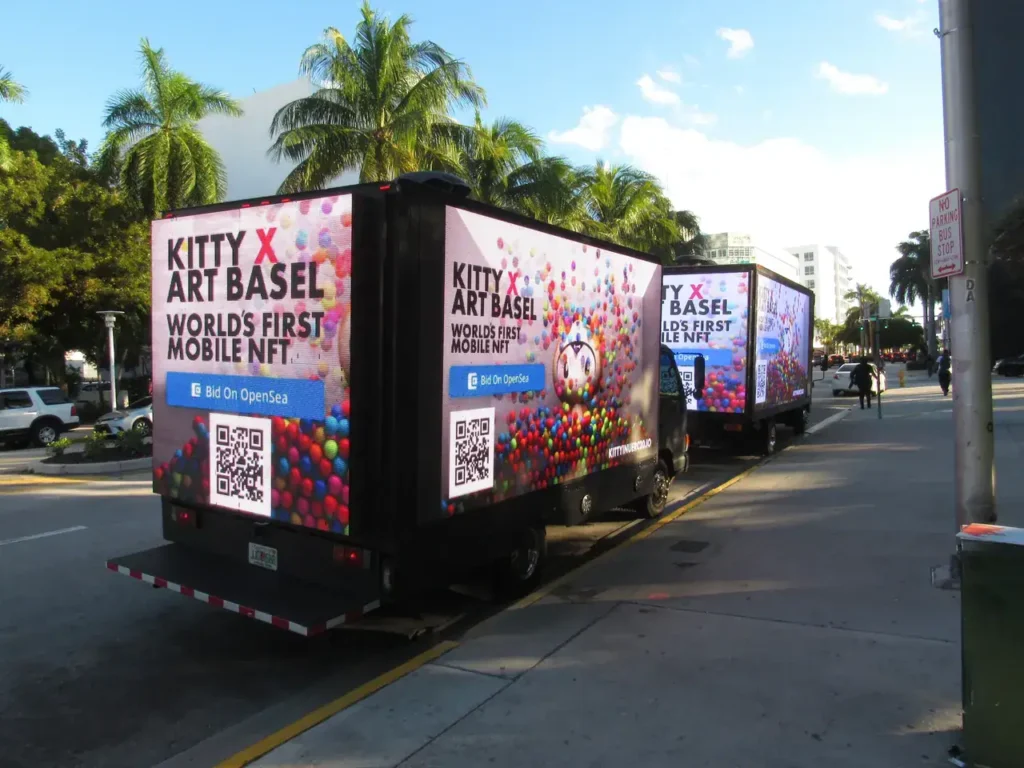
The most common mobile experiential format: a branded truck, van, or trailer that serves as both a mobile billboard and an operational activation platform. The vehicle creates brand presence as it travels, positions at high-value consumer locations, and serves as the platform for sampling, demonstration, or consumer engagement activities.
Mobile Pop-Up Programs
Mobile pop-up programs use deployable structures that can be set up and broken down quickly, allowing the program to operate in multiple locations within a single day or move between locations on a daily schedule. The pop-up structure — a branded tent, a custom display, or a branded ambient environment — creates a temporary activation footprint that does not require a vehicle but can be transported in a van or SUV.
The most mobile format of all: a team of brand ambassadors operating entirely on foot, with no vehicle or fixed structure. This format works for product distribution, sampling in pedestrian-heavy environments, and programs that need to penetrate locations where vehicles and structures cannot go. It is the lightest-weight and most deployable format in mobile experiential marketing.
Mobile Format
Setup Time
Consumer Throughput
Best For
Branded vehicle
15-30 minutes
150-500 per day per location
Sampling, product showcase, multi-city programs
Mobile pop-up
30-60 minutes
100-400 per day per location
Events, markets, outdoor activations
Street team (foot)
0 minutes
200-800 per day per team
Dense pedestrian environments, sampling at scale
Planning a Mobile Experiential Marketing Program
Define the Daily Route
A mobile program’s performance is determined as much by the route plan as by the activation design. The daily route identifies where the program will be, at what times, and for how long at each stop. This route needs to be built on research, not improvisation. What are the highest-value consumer locations for this specific brand’s target consumer in this city? At what times of day are those locations most active? What are the realistic access and parking options?
Plan for Multi-Stop Days
The advantage of mobile programs is the ability to operate at multiple locations in a single day. A well-designed mobile activation day typically includes two to four stops: a morning stop aligned with commuter or market traffic, a midday stop at a destination or lunch location, and an afternoon or evening stop aligned with consumer leisure activity. This multi-stop structure maximizes consumer contact per day and introduces the brand to diverse consumer populations within the same market.
Build in Measurement from Day One
Mobile programs require the same measurement rigor as any other experiential format. At each stop: track consumer interactions, samples distributed, leads captured, and the specific location and time. This granular data allows post-campaign analysis of which locations and times produced the best results and informs the optimization of future programs in the same market.
Mobile programs have a measurement advantage over fixed installations: every stop generates its own data. Over a multi-week program, the data from dozens of individual stop-level data points tells a story about which locations, times, and conditions produce the strongest consumer response. That intelligence is one of the most valuable outputs of a well-run mobile experiential program — it informs every future program in the same market.
Connecting Mobile Experiential to Digital Follow-Up
Mobile experiential programs generate consumer contacts that can be connected to digital channels for follow-up. A consumer who provides contact information at a mobile activation stop enters the brand’s digital marketing system. The lead capture at the activation becomes the trigger for a personalized digital follow-up sequence.
This connection between physical activation and digital follow-up is one of the most powerful configurations in modern experiential marketing. The physical interaction creates a warm lead with genuine product experience. The digital follow-up converts that warmth into purchase intent. The combination of the two is more effective than either alone.
Multi-Stop Day Strategy: The Engine of Mobile Program Performance
A single-stop mobile activation day is a missed opportunity. The economics of any mobile activation program favor maximum consumer contact per operational day. The team, the vehicle, the product, and the logistics infrastructure are all in place once the program begins for the day. Moving to a second, third, or fourth location during the same day adds consumer contact at a fraction of the marginal cost of the first stop.
A well-planned multi-stop activation day in a major market might look like this: 8:00 AM to 10:30 AM at a commuter transit hub or morning coffee destination with strong professional demographic traffic. 11:30 AM to 2:00 PM at a lunch destination or food market with midday crowd concentration. 4:00 PM to 7:00 PM at a neighborhood shopping corridor or farmers market with strong afternoon and early evening traffic. Three stops, three distinct consumer populations reached, one operational day.
The transitions between stops require planning. How long does it take to break down at location one, travel to location two, and set up for the next activation? A 90-minute transition window allows comfortable movement with buffer for unexpected delays. Programs that plan transitions too tight — 30 minutes for a 45-minute drive — consistently fail to execute the second stop at full quality because the team is rushed.
Multi-stop planning should also consider consumer overlap. If two stops on the same route draw the same consumer population — for example, two stops both positioned near the same corporate campus — the program is duplicating reach rather than expanding it. Effective multi-stop routing deliberately targets different consumer environments to maximize the diversity of consumers reached across the day.
Mobile Programs at Farmers Markets: An Underestimated Channel
Farmers markets are one of the most consistently high-performing activation environments for mobile experiential programs. Their advantages are significant: a self-selected, food-quality-conscious consumer audience that is actively engaged in product discovery, an outdoor environment that naturally accommodates mobile activation vehicles, and a recurring weekly schedule that allows programs to build recognition among regular market-goers over time.
The farmers market consumer is not a passive consumer. They traveled to the market specifically to find quality products. They are in a spending mindset and a discovery mindset simultaneously. They have high dwell times at the market and often make multiple product decisions during a single visit. A brand that offers them a quality sample at a farmers market is not interrupting them — they are participating in the market experience.
The best farmers market activations feel native to the market context. A brand that sets up with the same visual energy and care as the other market vendors — quality product presentation, engaged representatives, genuine product story — earns the same reception as a well-regarded market vendor. A brand that shows up with generic corporate branding that looks out of place in the market context earns a cooler reception. Context matching is crucial.
Recurring market presence compounds in value over time. The brand that appears at the same farmers market every Saturday for three months builds name recognition among the market’s regular attendees that a one-time appearance cannot achieve. Market regulars start to look for the brand. They bring friends. They become advocates. The recurring presence transforms a sampling program into a community relationship.
University and Campus Mobile Activation Programs
College and university campuses represent one of the most concentrated consumer populations in any market. Students live, eat, study, and socialize in a dense geographic area with strong peer influence networks and high receptivity to new products and brands. For brands targeting the 18-25 demographic, campus mobile programs can be the highest-efficiency consumer contact format available.
Campus activation requires coordination with the university or college administration. Most campuses have policies about commercial activities on campus property, and programs that proceed without proper authorization can result in immediate removal and reputational complications. We manage the campus access process in each market, identifying the right administrative contact, completing any required applications, and ensuring the program operates within the campus’s guidelines.
The best campus mobile activations align with natural student congregating moments: move-in weekend for incoming freshmen, the first week of classes, finals week for stress-relief oriented brands, and major campus events. These moments concentrate large numbers of students in a single area and create natural contexts for brand interaction that feel relevant to what students are experiencing at that moment.
Office Building and Corporate Campus Programs
Office buildings and corporate campuses represent a different but highly productive mobile activation environment. The commuter professional demographic — typically 25-45, above-average income, brand-aware, and with consistent daily routines — is concentrated in office districts during business hours in ways that are highly predictable and therefore highly targetable.
Morning activation programs positioned outside major office buildings during the 7:30-9:30 AM commuter ingress window reach thousands of professionals before their workday begins. Lunch-hour programs positioned in proximity to office cafeteria exits and lunch destinations reach the same audience in a more relaxed, social moment. Both windows work for different brands and different activation formats.
Product categories that perform especially well in corporate district mobile programs include beverages (coffee alternatives, energy drinks, functional beverages), health and nutrition products, tech accessories, financial services, and professional services. These categories align directly with the professional demographic’s daily interests and spending patterns.
Weather-Proofing Mobile Programs
Weather is the most uncontrollable variable in mobile experiential marketing, and every program needs a clear weather contingency plan before the first activation day. Brands that do not plan for adverse weather lose activation days and consumer contact to preventable shutdowns.
The weather contingency plan should answer three specific questions: At what weather threshold does the program modify its approach? What is the modification? Who authorizes the modification?
Light rain: most consumer sampling programs continue with minor modifications — covered setup where possible, waterproofed materials, adjusted staffing positions. Consumer traffic in light rain is reduced but not eliminated, and programs that continue in light rain often find that the reduced competition for consumer attention partially offsets the traffic reduction.
Heavy rain or wind: programs may need to relocate to protected positions, operate from inside or under cover, or pause until conditions improve. A team with a pre-identified backup indoor or covered location can reposition in 20-30 minutes when conditions change. A team without that backup plan loses the activation day.
Extreme heat: high-heat conditions in summer markets require product management protocols (keeping chilled products cold, managing heat-sensitive samples), staff health protocols (regular water breaks, appropriate shade), and consumer engagement adjustments (positioning near shade, shortening interaction times). Programs that operate in Texas or Arizona summers without heat management plans expose both staff and product quality to preventable problems.
Sampling Protocols for Mobile Programs
Product sampling is the most common activation format in mobile experiential programs, and the quality of the sampling protocol determines how much consumer value each sample creates. A sample handed to a consumer with no interaction is fundamentally different from a sample offered in context, with a brief but genuine product story attached.
The most effective sampling protocols follow a consistent sequence. The brand ambassador initiates a genuine, brief human interaction before offering the sample — not a scripted greeting, but an actual connection that reads as authentic. The sample is offered with a specific, honest reason for why the product is worth trying. The ambassador observes or asks about the consumer’s reaction. If the reaction is positive, a follow-up offer or contact capture is made naturally as the next step.
Speed matters in mobile sampling programs, particularly at high-velocity locations like transit hubs where consumers are in motion. The interaction needs to be calibrated to the environment. A thirty-second interaction at a transit hub can be excellent. The same thirty-second interaction at a farmers market may be rushed when the consumer has time for more depth. Reading the environment and calibrating interaction depth accordingly is a skill that separates strong ambassadors from average ones.
Sample presentation quality affects consumer perception of the product. A food sample that is presented attractively, at the right temperature, in appropriate packaging, with a brief story about what makes it worth trying, creates a fundamentally different impression than the same food handed over in a generic cup with no context. The presentation is the first signal the consumer has about whether the product is worth their attention.
Mobile Program Technology Integration
Technology integration in mobile experiential programs has advanced significantly. The tools that are in consistent use in well-run programs in 2026:
Mobile CRM and lead capture: Field staff use tablet or phone-based apps to capture consumer contact information in real time, with instant sync to the brand’s CRM system. Paper-based contact capture has been largely replaced because it introduces data quality issues, delay between capture and system entry, and risk of physical loss. Mobile capture is immediate, clean, and integrated.
GPS-based activity tracking: Route tracking that records the vehicle’s movement and stop locations throughout the activation day provides a verifiable record of where and when the program operated. This data is used in route maps and summary reports delivered to clients, and it supports any post-campaign location-based digital advertising targeting.
Field reporting apps: Applications that allow brand ambassadors to submit structured activity reports — consumer interaction counts, samples distributed, photos, operational notes — from their phones at the end of each activation day or stop. Reports upload automatically to the central program management system, giving the program manager and client same-day visibility.
Digital promotional mechanics: QR codes on sampling materials that connect consumers to digital offers, app downloads, or brand registration pages. These create trackable pathways from the physical activation to digital conversion that were not available in earlier generations of experiential marketing.
Building a Mobile Activation Program That Grows Over Time
The best mobile experiential programs are not designed as one-time events. They are designed as programs with a compounding value logic: each activation cycle builds on the consumer recognition, community relationships, and operational learnings of the previous one.
A brand that activates at the same farmers market every Saturday builds a presence that regular market-goers recognize and eventually seek out. A brand that returns to the same neighborhood festival year after year becomes part of that festival’s environment in the consumer’s memory. Consistency over time creates a different quality of brand relationship than episodic activation.
The operational improvements that compound over time are equally valuable. The brand that activates in Chicago every spring and summer learns which specific locations produce the highest-quality consumer interactions for their product. They learn which times of day work best at which types of locations. They learn which ambassador profiles perform best in which environments. These learnings, documented and applied in each subsequent program cycle, continuously improve the program’s efficiency and impact.
The measurement framework compounds as well. Year-over-year comparison data tells the brand whether its market presence is growing, stable, or declining in each activation market. It provides longitudinal consumer preference data that is impossible to reconstruct from a single campaign cycle. The brand that has been measuring its mobile program consistently for three years has better consumer intelligence than one that has run three separate campaigns with different measurement approaches.
Connecting Mobile Experiential to Retail and Digital Outcomes
Mobile experiential programs generate their maximum business value when they are connected to the brand’s retail and digital ecosystems rather than operating as isolated consumer contact events.
The most direct connection is retail proximity activation. When the mobile program operates near key retail accounts that carry the brand’s product, consumers who have a positive sampling experience and then walk into a nearby store see the product with recognition that significantly increases the likelihood of purchase. Coordinating mobile route planning with the retail account map for each market creates these proximity activations deliberately rather than by chance.
Digital integration begins with lead capture. A consumer who provides contact information at a mobile activation stop enters the brand’s digital marketing system. The activation becomes the attribution source for a digital follow-up sequence that can include email, retargeted social advertising, and personalized offers. The physical activation creates the warm first impression; the digital follow-up sustains and converts it.
The most successful mobile experiential programs treat the physical activation and the digital infrastructure as a single system rather than two separate programs that happen to involve the same brand. The consumer who encounters the brand at a mobile activation is in the first stage of a relationship that the digital system sustains and deepens. Building that connection between the physical and digital from the start, rather than as an afterthought, is what transforms mobile sampling programs into genuine customer acquisition engines.
Location-based digital advertising can extend the mobile program’s reach beyond the consumers who were physically present at each activation stop. Geofencing the activation locations and serving digital ads to consumers who visited those locations within a defined time window creates a digital layer that amplifies the physical program’s awareness generation. This combination of physical presence and digital follow-through is more effective than either approach independently.
Frequently Asked Questions
What is experiential mobile marketing?
Experiential mobile marketing is the discipline of using branded vehicles and mobile activation units to bring direct consumer experiences to street level across multiple locations and markets. Unlike fixed installations, mobile programs can reposition throughout a day and travel between cities.
How is experiential mobile marketing different from digital mobile marketing?
Digital mobile marketing uses mobile devices and apps to reach consumers digitally. Experiential mobile marketing uses physical vehicles and mobile teams to reach consumers in person at street level. The two can complement each other when digital follow-up is integrated with physical activation data.
What are the most effective formats for experiential mobile marketing?
Multi-stop single-city programs that hit the highest-value locations in one market on a single day, multi-city tour programs using a branded vehicle or activation kit, and event-integrated mobile programs that position around major consumer events are all highly effective formats.
How do you track the performance of an experiential mobile marketing program?
Route maps showing activation locations with timestamps, consumer interaction counts per stop, samples distributed, leads captured, and photo documentation of each stop are the core tracking elements. For programs with digital integration, post-activation CRM conversion tracking connects mobile activation to downstream purchase behavior.