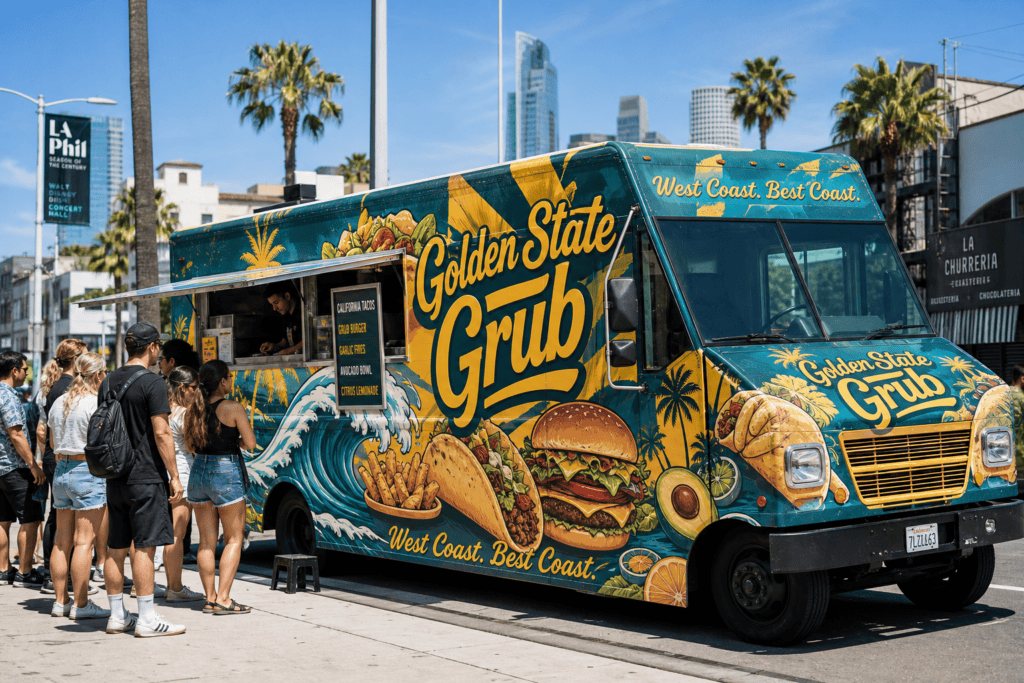
When a brand needs to create a significant physical presence across multiple markets, trailers deliver more branded space per dollar than any other mobile format. Here is how to design, source, and operate trailer-based activation programs that actually deliver results.
Experiential marketing trailers are the most space-efficient mobile format available for brand activation programs. A 28-foot trailer with slide-out sections can deploy 600 to 800 square feet of branded consumer environment — that is a meaningful retail or event floor space that travels to any market, sets up in 60 to 90 minutes, and delivers the same branded experience whether it is positioned in a park in Denver or a parking lot at a major music festival in Chicago.
We are American Guerrilla Marketing. We have experience managing trailer-based activation programs for brands across multiple categories. This guide covers the full scope of trailer-based experiential marketing: the format options available, how trailers compare to other mobile formats, the operational requirements for trailer programs, and how to plan a multi-market trailer activation campaign.
Brands planning mobile activation programs have several vehicle format options. Here is how trailers compare to the alternatives:
Format
Deployed Space
Urban Access
Build Cost Range
Best For
Step van / box truck
150-300 sq ft
Excellent
$40,000 – $120,000
Urban street programs, farmers markets, sampling
Standard trailer (no slide-out)
200-350 sq ft
Good
$60,000 – $150,000
Event activations, mid-scale programs
Single slide-out trailer
400-600 sq ft
Moderate
$120,000 – $250,000
Major event activations, product showcases
Double slide-out trailer
600-900 sq ft
Requires space
$200,000 – $400,000+
Flagship events, national launch programs
The trade-off between trucks and trailers is primarily between urban access and deployable space. Trucks are more maneuverable and can park in street-level locations that trailers cannot reach. Trailers deliver significantly more deployable space and allow for larger, more immersive brand environments. For programs that primarily activate at planned events with adequate access, trailers are typically the better format. For programs that need to operate in dense urban environments with variable locations, trucks may be more appropriate.
Trailer Configuration Options
Interior Layout
The interior layout of a brand activation trailer should be designed around the specific consumer experience being delivered. Before any build drawings are made, the brand needs to define: how many consumers will be inside the trailer at one time? What is the flow path from entry to exit? Where does the staff position? Where are the product display or demonstration points? What technology or interactive elements need to be housed?
The answers to these questions determine the interior layout. A consumer flow that works for a sampling program looks completely different from one that works for a product demonstration or an immersive brand experience. The build should follow the experience design, not the other way around.
Exterior Branding
The exterior of the trailer is visible from a significant distance and is often the first brand communication a consumer receives. A high-quality, large-format exterior wrap on a 28-foot trailer is a substantial billboard-scale display that drives awareness before a consumer ever approaches the activation. The exterior design should communicate the brand identity clearly, be readable at speed (for consumers seeing the trailer from a car or at a distance), and be compelling enough to attract attention and draw consumers toward the activation.
Power and HVAC Systems
Self-sufficient trailer programs include onboard power generation (or shore power connection capability) and HVAC for climate control. This matters for two reasons: the consumer experience needs to be comfortable (a hot, dark trailer interior discourages engagement) and for food and beverage programs, product storage and handling requirements may mandate climate control. Generator placement needs to be planned to minimize noise impact on the activation environment.
The brands that get maximum value from trailer programs plan for the second and third year when they purchase or build the trailer. A trailer built to be reused across multiple campaigns — with graphics designed for easy updating, interior systems accessible for reconfiguration, and structural durability for years of road travel — is a dramatically better investment than a single-campaign build optimized only for the first program.
Sourcing Options for Trailer Programs
Brands pursuing trailer-based activation programs have three sourcing options:
Custom build: Commission a purpose-built trailer designed specifically for the brand’s activation format. Highest upfront investment, highest degree of brand specificity, best long-term value for programs that will run multiple times per year. Build timeline is 8-14 weeks after design finalization.
Rental with wrap: Rent a trailer from a rental company, apply custom brand graphics, and return the trailer after the campaign. Lower upfront cost, suitable for one-time programs, limited in how customized the interior can be. Graphics cost is a write-off at campaign end.
Lease or refurbish: Purchase an existing trailer, refurbish the interior, and apply custom graphics. Middle ground between custom build and rental. Good option for brands that want trailer ownership economics without the full custom build timeline.
Managing Multi-Market Trailer Programs
Running a trailer-based program across multiple markets requires a specific operational discipline. The key elements:
Routing and logistics planning: The trailer needs to arrive at each location before the activation day, be positioned and set up, operate through the activation period, break down, and depart to the next market. All of this requires advance coordination of drive times, positioning logistics, and setup/breakdown schedules in each market.
Maintenance planning: A trailer traveling 10,000+ miles across a national program will encounter maintenance requirements. Tires, brakes, mechanical systems, and the build components inside the trailer all need proactive maintenance planning. Having a maintenance protocol and an emergency roadside plan prevents road issues from becoming campaign interruptions.
Staff logistics: Who travels with the trailer versus who is staffed locally in each market? The traveling staff ensure brand consistency. Local market staff ensure community relevance and neighborhood knowledge. Most successful trailer programs use a combination of both.
Trailer Acquisition Strategy: Build, Buy, or Rent
Brands planning their first trailer-based activation program face an acquisition decision that shapes the program’s economics and timeline. There are three primary acquisition paths, each with specific advantages and trade-offs.
Custom build from new: A new trailer built to the brand’s exact specifications. This path delivers the highest degree of customization, the best quality control, and the longest useful asset life. It is also the highest upfront cost and the longest timeline. A standard custom trailer build takes eight to fourteen weeks after design finalization. Complex builds with slide-out systems or extensive technology integration may take sixteen weeks or more. The custom build path is best for brands that will use the trailer for multiple programs per year over several years.
Purchase an existing trailer and refurbish: An existing trailer unit, often a used marketing trailer or a specialty vehicle, is purchased and refurbished with new graphics and interior modifications. This path delivers a lower initial cost and a shorter timeline than a full custom build — typically four to eight weeks from acquisition to deployment. The trade-off is less design flexibility and potentially more maintenance uncertainty than a new build. Best for brands with a clear program start date that is too close for a full custom build timeline and a budget that does not support a new build.
Rent with branded graphics: A trailer is rented from a rental company, wrapped with custom brand graphics, operated for the campaign, and returned. No asset ownership, no storage costs, and minimal lead time compared to custom builds — typically four to six weeks for design, graphics production, and wrap application. The trade-off is limited interior customization capability and no asset value at campaign end. Best for one-time programs, pilot programs, or programs where the brand wants to evaluate trailer format results before committing to ownership.
For brands uncertain which path makes the most sense, we provide a structured decision framework that accounts for the specific program objectives, timeline, budget, and expected program frequency. The right acquisition path is different for every brand and every program context.
Trailer Program Design: Building for the Consumer Experience, Not Just the Brand
The most common error in trailer program design is prioritizing how the trailer looks in the brand’s marketing materials over how it works for the consumer who is actually standing inside it. Trailers designed primarily for hero shots and case study photography often create uncomfortable, confusing, or underwhelming experiences for the actual consumers the program is supposed to serve.
Consumer-first trailer design starts with a clear answer to this question: what does the consumer do from the moment they walk in until the moment they walk out? Every design decision — the layout, the furniture, the lighting, the product presentation, the interaction stations — should serve that process. Elements that look great in a design rendering but create friction in the actual consumer process need to be redesigned.
Consumer-first design also means designing for the volume of consumers the activation will process at peak hours. A trailer that looks beautiful with two consumers inside may become visually and experientially overwhelming with eight. Build and test with real consumer flow in mind during the design phase, not afterward when changes are expensive.
Trailer Program Staffing: The Human Layer
The brand specialists who operate within and around the trailer create the consumer experience that the physical environment frames. The trailer environment can be extraordinary but it cannot substitute for genuine human engagement. The best trailer programs pair excellent physical environments with excellent people.
Staffing for trailer programs differs from staffing for street-level truck programs in one important way: the trailer environment creates a higher consumer dwell time. Consumers who enter a trailer spend more time with the brand than consumers who stop briefly at a sampling table. This extended dwell time is an opportunity, but only if the ambassadors inside the trailer are prepared to use it. Extended dwell time with an undertrained or disengaged ambassador is worse than a brief, high-quality street-level interaction.
Trailer ambassador training covers the physical environment as well as the product and brand: how to welcome consumers into the space, how to orient them to what is available, how to manage multiple consumers simultaneously without making any one consumer feel neglected, and how to bring the trailer’s physical storytelling to life through conversation. The trailer and the team should feel like a cohesive whole, not a physical installation staffed by people who happen to be there.
Trailer Programs for Product Launches
Product launch campaigns use trailers to create flagship consumer moments in key markets during the launch window. A well-executed product launch trailer program places the brand’s new product in the most compelling physical brand environment the brand can create, in the markets where the launch most needs early adopter momentum, during the window when consumer enthusiasm and media attention are at their peak.
The specific mechanics of a launch trailer program: the trailer is built with the new product as the featured centerpiece of the interior experience. Exclusive launch content — videos, product demonstrations, expert conversations — is available inside the trailer and only inside the trailer during the launch period. Consumers who experience the product in this exclusive, early-access context become advocates who spread the word before the broader marketing campaign reaches full scale.
Launch trailer programs work best when they create genuine exclusivity rather than simulating it. If the trailer activation is genuinely the first place consumers can experience the new product — before it hits retail shelves, before the digital campaign scales up — the first-mover consumers who experience it have a real story to tell: I was one of the first people to try this. That story has organic sharing value that a standard sampling program cannot replicate.
Trailer Program ROI: How to Calculate and Communicate It
Demonstrating the return on a trailer program investment requires connecting the program’s consumer engagement metrics to business outcomes that leadership cares about. The measurement framework needs to capture both the direct outputs of the program and the downstream business effects.
At the direct output level: consumer interactions by market and total, product trials completed, leads captured, promotional offers distributed and redeemed, content produced. These metrics demonstrate the program’s activity scale.
At the business outcome level: retail velocity lift in activated markets, new customer acquisition attributable to the program, post-event brand recall and consideration surveys, and where applicable, direct sales generated through activation-period promotional mechanics. These metrics demonstrate the program’s commercial impact.
The ROI calculation combines these: what did the program cost, what consumer contact did it produce, and what business outcomes resulted from that contact? For programs with strong downstream tracking, the ROI calculation can be surprisingly compelling. A trailer program that acquires 3,000 new customers at an average customer lifetime value of $120 has produced $360,000 in lifetime value from a $200,000 investment. That is a 1.8x return on the program cost, before accounting for any brand awareness value or earned media contribution.
Not every program produces ROI that is easy to quantify this cleanly. Programs with longer consumer decision cycles, categories without direct purchase attribution, or awareness-oriented objectives need different measurement approaches. The principle is the same: define what outcomes the program is trying to produce, build measurement systems that can detect those outcomes, and report honestly on what the program achieved against the defined objectives.
Trailer Program Staffing Ratios
The number of brand ambassadors required to operate a trailer effectively depends on the trailer’s consumer throughput capacity and the depth of the consumer interaction format. Under-staffing creates bottlenecks and consumer frustration. Over-staffing is an unnecessary cost. The right staffing ratio is determined by the activation format and the expected consumer volume at each location.
Trailer Size / Format
Recommended Staff Count
Consumer Capacity
20-24 ft standard (no slide-out)
2-3 ambassadors
100-250 interactions/day
24-32 ft single slide-out
3-4 ambassadors
200-400 interactions/day
32-40 ft double slide-out
4-6 ambassadors
300-600 interactions/day
Any trailer at major event (10,000+ attendance)
5-8 ambassadors
400-800+ interactions/day
These ratios are starting points, not fixed formulas. High-touch interaction formats where each consumer interaction takes 5+ minutes require more ambassadors per square foot of trailer space than high-throughput sampling formats where interactions are 30-90 seconds. The actual staffing plan should be calibrated to the specific interaction format and the consumer volume expected at each activation day’s locations.
Trailer Programs Across Regions and Climates
Trailer programs that operate across multiple US regions need to account for the dramatic variation in climate, consumer culture, and activation season across the country. A program designed for summer activation in New York needs to be adapted for summer activation in Phoenix, where heat affects everything from consumer dwell time to product quality to staff health protocols.
Climate-specific design considerations include: trailer HVAC capacity for high-heat markets, weather-resistant exterior surfaces and graphic materials for rainy Pacific Northwest deployments, heating capability for early spring or late fall activations in four-season markets, and entry design that handles rain without making the consumer’s entry experience unpleasant.
Regional consumer culture variations affect trailer program design as well. The consumer interaction pace that feels natural in New York — fast, direct, efficient — may feel rushed and impersonal in southern markets where a slower, more conversational interaction style is the cultural norm. Trailer programs that deploy nationally need to build regional flexibility into their operational guidelines, allowing local teams to calibrate interaction pacing to the consumer culture of each specific market.
Five Things That Make Trailer Programs Succeed
After managing trailer-based brand activation programs for multiple clients across multiple categories and markets, we have identified the factors that most consistently determine whether a trailer program achieves its objectives.
1. A consumer experience designed with specificity. The programs that work have a clear, designed consumer experience from entry to exit — not just a nice environment with product in it. Every element of the experience is intentional. The programs that underperform have a beautiful environment but no designed process for the consumer to move through.
2. A brand specialist team, not a generic event staff team. Every program that has consistently delivered strong consumer engagement results has been staffed by people who know the product deeply and approach each consumer interaction as an authentic exchange rather than a scripted transaction. Staffing quality is not optional. It is the human variable that determines whether the physical environment becomes a meaningful brand experience or a pretty backdrop for forgettable interactions.
3. Strategic location selection, not convenient location selection. The best trailer programs are where their target consumer is, not where the parking is easiest or the venue relationship is most familiar. Every activation day at a suboptimal location is a day of potential consumer contact that the program forfeited. Location intelligence is a core operational discipline, not an administrative function.
4. Measurement built in from day one. Programs that define success metrics before launch and build data collection into every activation day can demonstrate their value and continuously improve their performance. Programs that try to reconstruct evidence of their impact after the campaign ends are always working with incomplete information and always at a disadvantage when justifying continued investment.
5. Consistent execution across every stop. The consumer at stop 12 of a 20-stop tour deserves the same quality experience as the consumer at stop 1. Programs that maintain quality discipline across the full campaign period build genuine brand reputation. Programs that let quality drift as the tour progresses undo the goodwill built in the early markets with mediocre performance in the later ones. Consistency is what separates good campaigns from excellent ones at scale.
The trailer programs that we are most proud of are the ones that created genuine community moments — the brand that returned to the same market year after year and built a loyal audience that looked forward to seeing the trailer, the launch program that created genuine buzz before a product was available for purchase, the tour that produced thousands of genuine consumer advocates in markets the brand had never reached before. Those outcomes are what well-designed, well-executed trailer programs can produce. They are what we work to deliver for every client.
When you engage AGM for a trailer-based activation program, you are working with a team that has designed, built, and operated these programs for real brands in real markets. We have seen what works and what does not across vehicle types, interior configurations, location strategies, and staffing models. That operational knowledge is what we bring to every program, and it is what allows us to help brands avoid the mistakes that consistently undermine trailer program performance while replicating the approaches that consistently produce strong consumer engagement and measurable business results.
Frequently Asked Questions
Why use trailers for experiential marketing rather than other vehicle types?
Trailers deliver more deployable space per dollar than any other mobile format. A 28-foot trailer with slide-outs can create 600-800 square feet of branded consumer environment when deployed. That space-to-cost ratio creates brand presence that trucks or vans cannot match at comparable investment.
How many consumers can an experiential marketing trailer engage per day?
Consumer throughput depends on the activation format, location traffic, and the depth of the interaction. A high-traffic location with a sampling-focused format can process 300-600 consumer interactions per 8-hour activation day. An experience-depth format with longer consumer interactions will see lower volume but higher quality engagement.
What is the typical timeline for planning and launching a trailer-based activation program?
If you are building a custom trailer, allow 8-14 weeks for fabrication plus 4-6 weeks for program planning, staffing, and logistics setup. Total lead time from program brief to launch activation day is typically 4-6 months. For programs using a rented or existing trailer, the timeline compresses to 6-10 weeks.
Can AGM source or rent trailers for campaigns that don’t have their own?
Yes. We have relationships with trailer rental companies and custom build partners that allow us to source appropriate trailer formats for programs that do not have their own vehicle. Rental trailers can be wrapped with brand graphics for a campaign and returned after the program concludes.