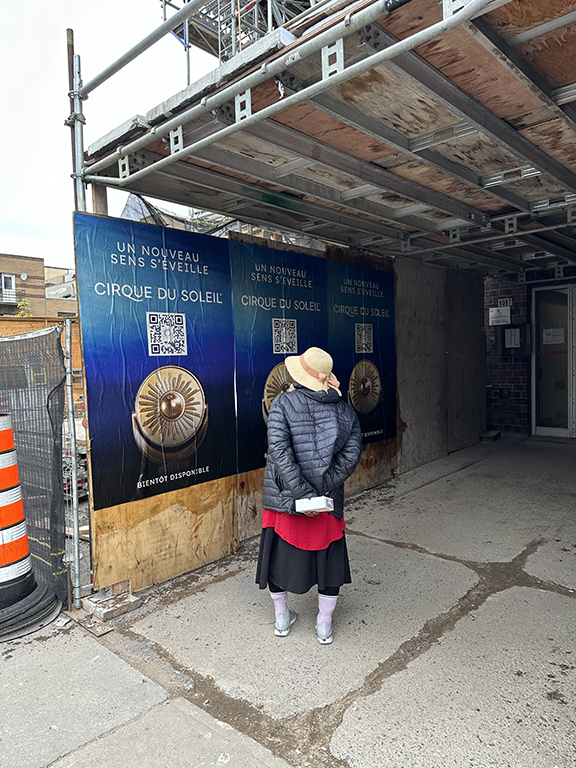
The argument for experiential marketing in Canada starts with one structural advantage that makes Canadian cities unusually productive for street-level work: density, walkability, and transit culture create environments where people are physically accessible in public spaces in large numbers, at predictable times, in identifiable locations. This is the condition that makes experiential marketing efficient. When the audience is concentrated and accessible, the cost of reaching them drops and the quality of interaction rises.
Canadian cities offer this condition in a way that most North American cities do not. Toronto, Montreal, and Vancouver are genuinely walkable, genuinely transit-dependent, and genuinely oriented around outdoor life and public space in ways that make brand activations in these environments reach real people in their actual daily routines rather than interrupting their journey from parking garage to building lobby. This guide covers what experiential marketing actually looks like on the ground in Canada’s three primary markets, what works where, and how our team builds and executes campaigns that deliver results rather than just impressions.
The three Canadian cities require distinct approaches because they have distinct demographic structures, distinct physical environments, and distinct cultural identities. A campaign approach that works in Toronto’s financial district does not automatically work in Montreal’s Plateau. A sampling activation format that performs in Vancouver’s outdoor market scene needs to be adapted for a Toronto winter deployment. Understanding these market-level distinctions is the difference between a campaign that produces results and one that produces mediocre performance because the format was not matched to the environment.
Toronto: Canada’s Largest Market and Most Diverse Activation Environment
Toronto is Canada’s largest city and the strongest single market for experiential campaigns that need broad reach, demographic diversity, or access to the financial services sector. The city’s geography creates several distinct activation environments that require different approaches, different timing windows, and different creative strategies.
The financial district around King and Bay produces the best weekday lunch-hour brand ambassador activation in Canada. The concentration of banking, insurance, legal, and professional services employees in the office towers between Front Street and Adelaide creates a highly defined demographic in a small geographic area during the 11:30 AM to 1:30 PM window that few other Canadian locations match. A properly staffed and briefed brand ambassador team at King and Bay during the lunch rush achieves hundreds of direct interactions with financial professionals in a two-hour window at a cost-per-contact that traditional financial sector advertising cannot replicate.
The Distillery District operates as a high-foot-traffic weekend destination for a young professional and arts-adjacent demographic that converges on the historic complex’s market, restaurants, and cultural programming on Saturday and Sunday afternoons. Brand activations in the Distillery District work best when they connect to the existing cultural environment rather than imposing commercial messaging on it. Sampling programs for food and beverage brands, brand ambassador approaches for lifestyle and consumer electronics, and experiential installations that create shareable moments all perform well in this environment.
Kensington Market produces strong weekend foot traffic from an arts-oriented, independent-retail-supporting demographic that is distinctive and valuable for brands positioned against the mainstream commercial market. The market’s commitment to independent vendors and alternative culture creates an environment where authentic brand presentation outperforms polished commercial execution. Our brand ambassador teams deployed in Kensington are selected and briefed specifically for cultural fit with this specific audience.
Harbourfront and the waterfront corridor from Queens Quay to Ontario Place produce summer-specific activation environments with leisure and tourist audience mixes that work well for consumer brands, entertainment campaigns, and tourism-adjacent products. The summer waterfront programming at Harbourfront Centre concentrates arts and culture audiences for ticketed events that create specific activation windows around performance and market programming.
The TTC Streetcar Corridor: Toronto’s Most Efficient Activation Spine
Toronto’s TTC streetcar network along Queen Street and King Street is one of the most efficient distribution routes for street-level experiential work in Canada. The streetcar deposits riders at stops along a commercial corridor every few minutes throughout the day, creating predictable concentrations of pedestrians at stop locations who are walking to nearby destinations. These stop-adjacent pedestrian concentrations are ideal for brand ambassador positioning because the audience is pausing, looking around, and accessible for interaction in a way that transit riders hurrying through a subway station are not.
The Queen Street corridor between Spadina and Roncesvalles carries the young professional and arts-adjacent demographic that defines Toronto’s creative class. The King Street corridor between Bathurst and Parliament carries a mix of financial district spillover, tech professionals from the King West tech corridor, and arts audiences from the King Street theatre district. Both corridors produce strong results for consumer brand activations that need to reach young Toronto professionals outside the downtown business environment.
Montreal: Cultural Identity and Neighborhood-Level Precision
Montreal is Canada’s most culturally distinct major market, and its distinctiveness creates both opportunities and requirements for experiential campaigns. The city’s French-language culture, its strong arts scene, and its identity as Canada’s cultural capital create an audience that is sophisticated, culturally engaged, and selective about the brand experiences it responds to. A campaign that does not understand Montreal’s cultural context produces weak results. A campaign that engages authentically with that context produces some of the strongest experiential marketing performance in the country.
The Plateau-Mont-Royal is the neighborhood that most defines Montreal’s cultural identity for experiential purposes. The streets around Parc Lafontaine, the commercial corridor of Saint-Laurent Boulevard from Sherbrooke to Rachel, and the cross-streets of Rachel and Roy concentrate the arts, food, and culture-engaged Montreal demographic in a walkable, cafe-culture environment that is ideal for sampling activations, brand ambassador approaches, and experiential pop-ins. Weekend afternoons on the Plateau produce some of the strongest foot traffic environments in Montreal for consumer-facing campaigns.
The RESO underground city, Montreal’s network of underground pedestrian corridors connecting downtown buildings, Metro stations, and commercial spaces, functions as a captive indoor experiential environment during winter months. Brand ambassador programs positioned at RESO exit points, particularly at McGill, Peel, and Berri-UQAM Metro stations, reach the commuter and professional populations that use the underground network to avoid winter street conditions. The captive nature of the underground corridor environment creates interaction conditions that are difficult to replicate in any above-ground environment.
The Old Port of Montreal on summer weekends produces tourist and leisure foot traffic at volumes that dwarf most Montreal neighborhood environments. Activations in the Old Port reach a demographically diverse audience that includes both tourists and Montreal residents who use the port’s restaurants, markets, and waterfront events as leisure destinations. Consumer brand sampling, entertainment promotions, and tourism-adjacent campaigns all perform well in the Old Port summer environment.
Vancouver: Outdoor Culture and West Coast Consumer Lifestyle
Vancouver’s experiential marketing environment is defined by its outdoor culture, its relatively mild year-round climate, and the walkable character of its east-side neighborhoods. Unlike Toronto and Montreal, where winter weather creates seasonal constraints on outdoor activation work, Vancouver’s climate allows for consistent outdoor programming throughout the year. This makes Vancouver the most reliable year-round outdoor experiential market among Canada’s three major cities.
Granville Island Public Market is Vancouver’s strongest single activation location for consumer-facing experiential work. The combination of the public market, the arts and crafts shops, the restaurant cluster, and the Aquabus connection creates a foot traffic environment on weekend mornings and afternoons that concentrates a food-engaged, discovery-oriented consumer in a slow-moving, browsing mode. Product sampling, brand ambassador approaches, and experiential installations at Granville Island reach this specific consumer type in a context where they are already in a product-discovery mindset.
The Commercial Drive corridor is Vancouver’s most culturally distinct neighborhood, with an identity built around Italian-Canadian heritage, independent businesses, the LGBTQ+ community, and a strong arts scene. Commercial Drive foot traffic on weekends concentrates a left-leaning, arts-engaged, locally-oriented demographic that is selective about the brand experiences it engages with. Campaigns that resonate authentically with Commercial Drive’s identity produce strong results. Campaigns that feel generic or commercially indifferent produce weak ones.
The Main Street corridor from Mount Pleasant south to Main Street Station has become Vancouver’s most rapidly evolving activation environment, as the concentration of independent retail, specialty food businesses, and design studios along Main has attracted a young professional and creative demographic that was not historically associated with this corridor. Brand ambassador programs along Main Street work best during the afternoon and early evening hours when the demographic is most concentrated in the outdoor cafe and retail environment.
Multi-City Coordination: Running Canada as a National Campaign
For brands that need to reach Canada as a national market rather than a collection of individual cities, coordinating simultaneous activations across Toronto, Vancouver, and Montreal creates a national campaign moment that demonstrates scale and generates social media momentum across the country at the same time. Our team manages the coordination across these three markets with unified creative direction, synchronized timing (accounting for the three-hour time zone spread from East to West), and consolidated reporting.
A national Canadian campaign launch that deploys brand ambassador teams in Toronto’s Distillery District, Vancouver’s Granville Island, and Montreal’s Old Port on the same Saturday afternoon creates a multi-city activation that reaches three distinct consumer communities simultaneously. The social media amplification of each city’s activation reinforces the others, building awareness across the country from a single coordinated campaign day.
Seasonal considerations matter for multi-city coordination. Summer campaigns can be planned consistently across all three markets. Winter campaigns need to account for the much more significant weather constraints in Toronto and Montreal while taking advantage of Vancouver’s outdoor-capable climate. Our team plans seasonal Canadian campaigns with market-specific format adjustments that maintain campaign coherence while adapting to the environmental realities of each market.
Seasonal Campaign Planning for Canadian Cities
Seasonal planning is more important for Canadian experiential campaigns than for most North American markets because the climate differential between seasons is extreme and directly affects outdoor activation economics. A campaign format that performs well in Toronto in July requires a completely different approach in Toronto in January, and ignoring this distinction produces campaigns planned for one condition and executed in another.
Summer campaigns in all three major Canadian cities allow for the outdoor formats that produce the highest consumer engagement: park activations, outdoor sampling programs, street team deployment in pedestrian corridors without weather limitations, and experiential installations in public spaces that benefit from the high foot traffic that Canadian outdoor culture generates during warm months. The Toronto waterfront, Vancouver’s Granville Island, and Montreal’s outdoor festival season all produce summer activation environments that do not exist in comparable form during winter months.
Fall campaigns, from September through November, transition outdoor programs to covered and transit-adjacent environments while maintaining the core street-level formats. The return of students and professionals from summer schedules in September creates strong foot traffic in university neighborhoods, financial districts, and the urban commercial corridors that anchor Canadian cities. Fall is consistently one of the strongest seasons for reaching working professionals in their daily routines.
Winter campaigns require the most significant format adaptation. Montreal’s RESO underground city becomes the primary activation environment for Montreal winter programs, replacing the outdoor Plateau activations that anchor summer campaigns. Toronto’s PATH underground network provides indoor brand ambassador positions with access to the financial district commuter population. Vancouver’s mild winters make it the only Canadian major market where outdoor programs remain broadly viable year-round.
Documentation and Client Reporting for Canadian Campaigns
Every experiential marketing campaign we execute in Canada is GPS-tracked and documented with timestamped photographs and field reports. Clients receive location-verified documentation showing team deployment, activation coverage, and interaction metrics from each market. For brands that need to demonstrate campaign execution to internal stakeholders across North America, the documentation package provides verifiable proof of performance that supports internal reporting and justification for continued investment.
Our reporting infrastructure for Canadian campaigns uses the same standards we apply in US market campaigns, allowing brands that run both US and Canadian programs to receive consolidated reporting that presents North American campaign performance in a consistent format. Marketing teams can compare Toronto to Chicago, Vancouver to Seattle, and Montreal to New York in the same reporting document, with consistent metrics and documentation standards across all markets.
The full range of guerrilla marketing services we provide includes brand ambassador agency operations, poster and wheatpaste campaigns, sidewalk stencil programs, and mobile billboard trucks, all available for Canadian market campaigns through our established field network in each city. Our experiential marketing team coordinates the full campaign scope from planning through execution and reporting.
Frequently Asked Questions
What is experiential marketing in Canada?
Experiential marketing in Canada refers to brand activations that create direct physical consumer experiences in Canadian cities’ public spaces and high-traffic neighborhoods. Toronto, Vancouver, and Montreal are the three primary markets, with strong pedestrian density and transit-oriented infrastructure that makes street-level experiential formats particularly effective. Activations include sampling programs, brand ambassador teams, pop-up experiences, and interactive street campaigns.
Which Canadian city is best for experiential marketing?
Toronto is Canada’s largest market and the strongest for broad reach and financial sector targeting. Montreal offers the most distinct cultural identity and the strongest arts and youth market. Vancouver’s walkable neighborhoods and outdoor culture make it ideal for lifestyle and consumer brand activations. The best market depends on the target demographic, campaign objectives, and seasonal timing of the program.
Does American Guerrilla Marketing run experiential campaigns in Canada?
Yes. Our team plans and executes experiential marketing in Toronto, Vancouver, Montreal, Calgary, and Ottawa. We deploy brand ambassador programs, sampling activations, street teams, and experiential pop-up campaigns with GPS tracking and full photo documentation. All campaigns are managed with the same standards we apply in US markets.
How does winter affect experiential marketing in Canadian cities?
Winter significantly affects outdoor activations in Toronto and Montreal. Montreal’s RESO underground city provides an indoor high-foot-traffic alternative during winter months. Toronto’s PATH underground network offers similar opportunities in the financial district. Vancouver’s milder climate makes it the most consistent year-round outdoor activation market among Canada’s three major cities. Our team plans seasonal campaigns with market-specific format adjustments.
What formats work best for experiential marketing in Toronto?
Brand ambassador programs work exceptionally well in Toronto’s financial district during weekday lunch hours. Sampling activations produce strong results in the Distillery District and Kensington Market on weekends. Street teams at TTC streetcar stops along Queen Street and King Street reach the young professional demographic effectively. Summer activations on the Harbourfront reach leisure and tourist audiences during peak season.
Can AGM coordinate simultaneous experiential campaigns across multiple Canadian cities?
Yes. We coordinate simultaneous campaigns across Toronto, Vancouver, and Montreal with unified creative, synchronized timing, and consolidated reporting. Multi-city Canadian campaigns work well for national brand launches, product releases, and awareness campaigns that need to build momentum in multiple markets on the same day.
How do we track and report results for Canadian experiential campaigns?
All Canadian campaigns are GPS-tracked with timestamped photo documentation. Clients receive field reports showing deployment locations, team coverage, and interaction metrics. For multi-city campaigns, we provide consolidated reporting that presents all market performance data in a single document with consistent metrics across all Canadian markets activated.