We operate in 30+ US markets with genuine local infrastructure in each one. Here is what a national experiential marketing program actually requires and how we run them.
American Guerrilla Marketing is a full-service experiential marketing agency with national operational infrastructure across the United States. We are headquartered in New York City and execute programs in more than 30 US markets. We run everything from single-market product launches to simultaneous multi-city campaigns covering 15 states at once.
The experiential marketing agency category in the United States is filled with companies that claim national capability. What differentiates genuine national agencies from those that are managing national campaigns without genuine local infrastructure is the quality of execution in specific markets — not the quality of the pitch in the conference room. This guide covers what national experiential marketing actually requires, how we build and run national programs, and what brands should expect from an agency that claims national US reach.
What National Experiential Marketing Actually Involves
Running a national experiential marketing campaign across the United States is not the same as running 10 separate city campaigns. The coordination requirements, the brand consistency challenges, the staffing and training infrastructure, and the measurement complexity all scale in ways that require genuine national operational capability.
Consistent Brand Standards Across Markets
In a national program, every market must deliver the same brand experience. The consumer in Phoenix should have the same quality of interaction as the consumer in Boston. Achieving that requires standardized training, standardized materials, standardized quality control processes, and field management infrastructure that can catch and correct deviations from brand standards before they compound across multiple markets.
Centralized Strategy with Local Execution
The best national programs have one strategic center and multiple local execution networks. The strategy — objectives, creative concept, measurement framework, brand standards — comes from a single team that owns the campaign from start to finish. The execution adapts to local conditions within those strategic parameters. A street team in Chicago needs to know local foot traffic patterns that a New York team does not. A sampling program in Atlanta operates in different weather windows than the same program in Seattle. Local adaptation within consistent brand standards is the operational model for effective national programs.
Multi-Market Logistics and Supply Chain
National campaigns require product or material distribution to multiple cities on a coordinated timeline. Sampling product, branded materials, equipment, and technology all need to arrive in each market on the right day. Managing that supply chain without breakdowns requires advance planning, reliable vendor relationships in each market, and contingency protocols for the inevitable logistics exception.
Staffing at Scale
A national campaign might require 50 to 200 brand ambassadors working simultaneously across multiple markets. Recruiting, screening, briefing, and training that many people to a consistent standard while managing local availability and quality variation requires a staffing infrastructure that most agencies do not actually have. We maintain running ambassador networks in every market we operate, which means we are not building from scratch for each campaign.
Established network, may require additional lead time
National Capacity
Additional markets on request
Can execute with 8+ weeks lead time and local vetting
National Program Types We Run
National Sampling Tours
Multi-city sampling tours are among the highest-impact programs we run for consumer packaged goods brands. A well-executed national sampling tour reaches hundreds of thousands of consumers directly, distributes product at scale, and builds brand awareness in new markets simultaneously. We have managed sampling tours across 8 to 20 cities in a single campaign arc, coordinating product supply chains, local staffing, permit processes, and reporting frameworks across all markets.
The key to a successful national sampling tour is the logistics backbone. Product needs to be in the right city on the right day. Staffing needs to be confirmed, trained, and equipped in each market before the tour arrives. Permits need to be pulled in advance in cities that require them. The campaign calendar needs to account for local event conflicts, weather seasonality, and market-specific consumer patterns. We manage all of this as part of the program scope.
Multi-City Pop-Up Programs
Pop-up experiences deployed across multiple markets simultaneously or in sequence create brand moments in each city while building a national campaign narrative. We have built pop-up programs that launched in New York and Los Angeles simultaneously, then rolled to Chicago, Miami, and Atlanta in sequence over a six-week program arc. Each market received a localized version of the experience that maintained the brand concept while adapting the specific neighborhood, venue choice, and local cultural references.
National In-Store Demo Programs
For CPG brands with national retail distribution, in-store demo programs at scale represent one of the most powerful experiential marketing investments available. We manage in-store demo programs across 50 to 2,000+ store locations simultaneously, using a network of trained field staff across the country. This format generates direct trial at the point of purchase, which is the most efficient form of product trial conversion available.
Mobile Brand Tour
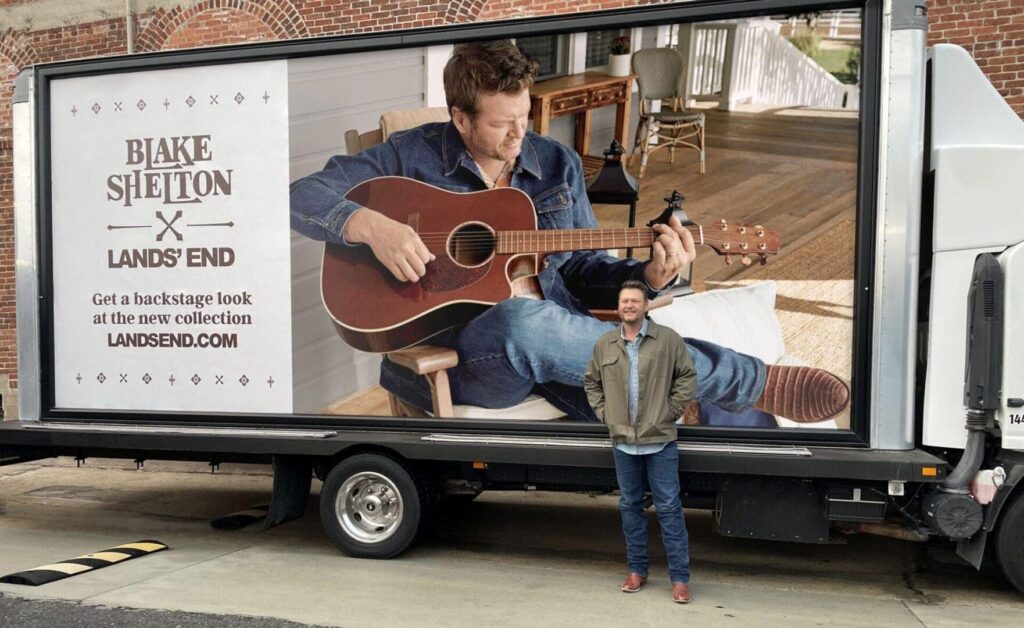
A branded vehicle or trailer tour travels across multiple markets in a continuous campaign arc. Mobile tours work particularly well for product launches, entertainment promotions, and brands that want to create market-by-market news while building a national story. We have managed mobile tours with 10 to 25 city stops, coordinating vehicle routing, local permits, staffing in each city, and market-by-market press outreach that generates local coverage alongside the national campaign narrative.
Festival Circuit Activations
The US festival circuit creates natural multi-market activation opportunities for brands that want to reach specific demographic segments at cultural moments. Coachella in Indio, Governors Ball in New York, Lollapalooza in Chicago, Outside Lands in San Francisco, Austin City Limits, and Bonnaroo in Tennessee collectively reach millions of consumers in the core 22-to-38 demographic that most consumer brands want to build relationships with. We manage festival circuit programs that activate at multiple events in a single season, maintaining brand consistency while adapting the activation design to each event’s specific environment.
How We Build and Manage National Programs
National Strategy Development
Every national program starts with a single strategic center. Who are we reaching? What do we want them to feel? What are the specific objectives in each market? What does success look like nationally and in each individual market? That strategic foundation drives every subsequent decision about format, location, staffing, and measurement across all markets.
Market-by-Market Planning
After establishing the national strategy, we develop market-specific plans for each city. Which neighborhoods? Which specific locations within those neighborhoods? Which permit processes apply in this city? Which local vendors do we use for fabrication, logistics, and staffing? What are the local event conflicts or opportunities that affect timing? This market-level planning is where national program quality is won or lost.
Centralized Training, Decentralized Execution
We train every brand ambassador to the same standard regardless of what city they are in. The training materials, the brand brief, the engagement protocols, and the data collection methods are all standardized at the national level. Local field management then supervises execution in each market against those national standards, adapting logistics and timing to local conditions while maintaining the brand consistency that the national strategy requires.
Unified Measurement and Reporting
National campaigns require a measurement framework that aggregates data from all markets into a coherent total-campaign picture while also enabling market-by-market comparison. We build standardized data collection into every market’s activation from day one. All markets report in the same format on the same metrics. The aggregate report we deliver gives brands both total campaign performance data and individual market breakdowns that identify where the program performed best and where it needs refinement.
The Pilot Market Model for National Rollout
For brands launching experiential marketing at national scale for the first time, we strongly recommend a pilot market approach. Rather than launching simultaneously in 10 cities, run the campaign in one or two well-selected markets first. Refine the concept, the staffing approach, the materials, and the measurement system based on what actually happens in the field. Then scale to additional markets with a tested and optimized program.
The pilot market reduces risk and produces better national results. A campaign that is launched simultaneously in 10 markets before the mechanics have been proven in the field will have operational problems in multiple markets at the same time. A campaign that is proven in one market and then scaled retains the improvements from field learning across every subsequent market.
Philadelphia, Atlanta, and Austin are our most commonly recommended pilot markets for national programs. All three have strong consumer populations, manageable production logistics, lower cost structures than primary markets like New York or LA, and consumer demographics that are representative of a broad US consumer base. A concept that works in Philadelphia, Atlanta, and Austin will work in most of the other markets where we scale it.
The brands that build the strongest national experiential marketing programs pilot first and scale second. They measure what they planned to measure, not what they can find data for after the fact. And they invest in field execution quality as seriously as they invest in the creative concept. These disciplines produce programs that improve with every campaign cycle.
How We Report on National Campaigns
National campaign reporting has to be designed for two different audiences: the brand marketing team that needs aggregate campaign performance data, and the internal teams in each city that need market-specific performance data to inform future local activation plans.
We deliver real-time field reports from every activation day. These daily reports give the brand marketing team visibility into how the program is running in real time without waiting for the post-campaign report. They include consumer contact counts, samples distributed, leads captured, and any operational flags from the field.
We deliver a full post-campaign report within two weeks of the final activation day. This report includes total-campaign aggregate data, market-by-market comparison, content documentation from each market, an honest assessment of program strengths and areas for improvement, and a recommendation for how a subsequent program should be structured based on what we learned.
We also deliver photo documentation, route maps, and summary reports from every market as part of the standard reporting package. These deliverables document what actually happened in each city and serve as both campaign evidence and case study material for future budget conversations.
Choosing the Right Experiential Marketing Agency for a National US Campaign
When evaluating an experiential marketing agency for a national US program, the questions that matter are different from those you would ask for a single-market program.
For a national program, ask: How many markets have you run programs in simultaneously? What is your staffing network infrastructure in cities like Atlanta, Denver, and Phoenix — not just New York and LA? Who manages the field in each market? How do you maintain brand consistency across markets with different field supervisors? What does your multi-market reporting look like?
An agency that answers these questions with specifics — market names, infrastructure descriptions, examples from actual national programs — has genuine national capability. An agency that answers with general statements about “our national network” without specifics is likely managing multi-city programs by cobbling together local vendors on a program-by-program basis. That model produces quality inconsistency across markets, which is exactly what national brands are trying to avoid.
National Experiential Marketing: The Secondary Market Opportunity
Every national experiential marketing program makes decisions about market prioritization. The primary markets — New York, Los Angeles, Chicago, Miami, San Francisco — are where most brands concentrate their experiential investment. These choices are logical but incomplete. Secondary and tertiary US markets represent significant consumer populations that are dramatically underserved by experiential marketing relative to their purchasing power and population size.
Nashville’s consumer population has grown by 35% over the past decade and now includes a significant proportion of young, high-income transplants from coastal markets who bring their brand loyalties and spending habits with them. The Lower Broadway entertainment district, the Gulch neighborhood, and the 12 South shopping and restaurant corridor all provide activation contexts comparable in quality to mid-tier Manhattan neighborhoods at significantly lower production costs. Brands that show up in Nashville with genuine quality are noticed precisely because the competitive set of brand activations there is so much smaller than in the primary markets.
Denver’s outdoor recreation culture has made it one of the highest-quality markets in the country for fitness, wellness, outdoor apparel, and sports nutrition brands. The city’s population skews young, health-conscious, and highly educated. The RiNo (River North Art District) neighborhood has the same creative-class energy and independent business culture that characterized Brooklyn’s Williamsburg in 2012. Brands that establish authentic presence in Denver’s creative neighborhoods earn loyalty from a community that still remembers which brands were there early.
Phoenix and Scottsdale collectively represent one of the fastest-growing major metro areas in the country, with a significant concentration of high-income retirees, young families, and the tech sector workforce that has been relocating from California. The Old Town Scottsdale commercial district, the Downtown Phoenix arts district, and the Scottsdale Farmers Market circuit all provide quality activation environments for brands targeting the affluent, active lifestyle consumer segment that dominates this market.
Managing Quality Across a National Campaign
The most common challenge in national experiential campaigns is maintaining brand standards and execution quality consistently across markets that are physically separated by thousands of miles and managed by field teams who may never be in the same room together. Here is how we solve this problem.
The brand standards document is the single source of truth for every market team in a national program. This document specifies the visual standards, the engagement scripts, the data capture protocols, the photography requirements, and the escalation procedures for every scenario the field team might encounter. Every ambassador and every field supervisor in every market receives the same brand standards document and is trained against the same standard. The brand should look and feel identical in Nashville and in New York, not because the environments are the same but because the standards are.
Virtual training bridges the geographic distance for national programs. We run video briefings for market teams across the country before every campaign launches. These briefings cover brand history, product knowledge, engagement protocols, and the specific objectives and measurement approach for the campaign. Market teams that complete the briefing produce better results than teams that receive written materials only. The opportunity to ask questions and get immediate answers in a live briefing changes how well the team understands their role.
Real-time reporting creates the visibility that allows national program managers to identify and address quality issues before they compound across multiple markets. We use a daily reporting protocol that requires every market team to submit consumer contact counts, photos of the activation in operation, and any operational flags within two hours of each activation day’s close. This reporting is reviewed by the national account manager the same evening. Issues that are identified on Tuesday can be addressed in the Wednesday briefing before they recur.
Physical quality control visits for programs that run multiple consecutive weeks involve at least one in-person quality review visit by a national account team member to each market during the first week of the campaign. This visit confirms that the brand standards are being maintained as documented, that the staff is performing to the training standard, and that the locations are producing the consumer contact quality that the location scout promised. First-week visits have caught and corrected issues in eight of the last ten multi-market national programs we have run.
The Data Infrastructure for National Experiential Programs
National experiential programs generate data from dozens or hundreds of activation locations simultaneously. Managing that data effectively — collecting it consistently, aggregating it meaningfully, and using it to improve the program in real time — requires infrastructure that most brands and agencies do not have fully built. Here is how we approach data management for national campaigns.
Field reporting is standardized across every market using the same format and the same submission timeline. Every field supervisor in every city submits the same daily report, logging the same data points, within the same 2-hour post-activation window. This standardization is what makes market-by-market comparison possible and what prevents the national report from being a patchwork of different measurement approaches that cannot be compared.
Data aggregation happens on a daily basis during multi-week national programs. The program manager reviews the previous day’s reports from all markets every morning and flags any market that is significantly over- or under-performing relative to its target metrics. Over-performance suggests a location or timing adjustment opportunity that could be replicated in other markets. Under-performance suggests a problem that needs to be diagnosed and corrected before it compounds.
The post-campaign data analysis for a national program produces both aggregate totals and market-by-market breakdowns. The aggregate totals tell the brand whether the national program hit its targets. The market-by-market breakdown tells the brand which markets produced the strongest returns and which were below expectation. This breakdown is the foundation for the next national program’s market prioritization: markets that overperformed get more investment in the next cycle, markets that underperformed get redesigned activation approaches.
Consumer data captured across all markets is delivered to the brand’s CRM team as a single, clean dataset with market and location attribution so the brand can segment and target follow-up communications by consumer geography. This geographic segmentation is a significant downstream marketing asset — the brand can retarget New York trial consumers with New York-specific messaging and Chicago trial consumers with Chicago-specific retail offers, producing more relevant follow-up communications than a generic national follow-up sequence would allow.
Frequently Asked Questions
What US markets does American Guerrilla Marketing operate in?
Our primary markets are New York, Los Angeles, Chicago, Miami, Philadelphia, Boston, Atlanta, Dallas, Houston, San Francisco, Seattle, Denver, Nashville, Phoenix, and Austin. We have operational infrastructure in over 30 US markets and can execute in additional markets with appropriate lead time.
How does AGM manage national multi-city campaigns?
We use a centralized strategic and creative hub with decentralized field execution. One team manages the brand strategy, creative direction, and reporting standards while local field networks in each market handle execution. This maintains brand consistency while allowing for market-specific adaptation.
What types of national experiential marketing programs does AGM run?
National sampling tours, multi-city pop-up programs, nationwide in-store demo programs, mobile brand tours, festival circuit activations, and national street team campaigns. We manage programs ranging from 3 markets to 200+ retail locations simultaneously.
How far in advance does a national US experiential campaign require planning?
Multi-city national campaigns typically require 10 to 16 weeks of planning. Programs with custom vehicle builds, large-scale productions, or coordinated national retail partnerships need 14 to 20 weeks. The complexity of the campaign, not just the geography, drives the timeline.