
September 12, 2026
Experiential Campaigns: How to Build Them, Run Them, and Make Them Work
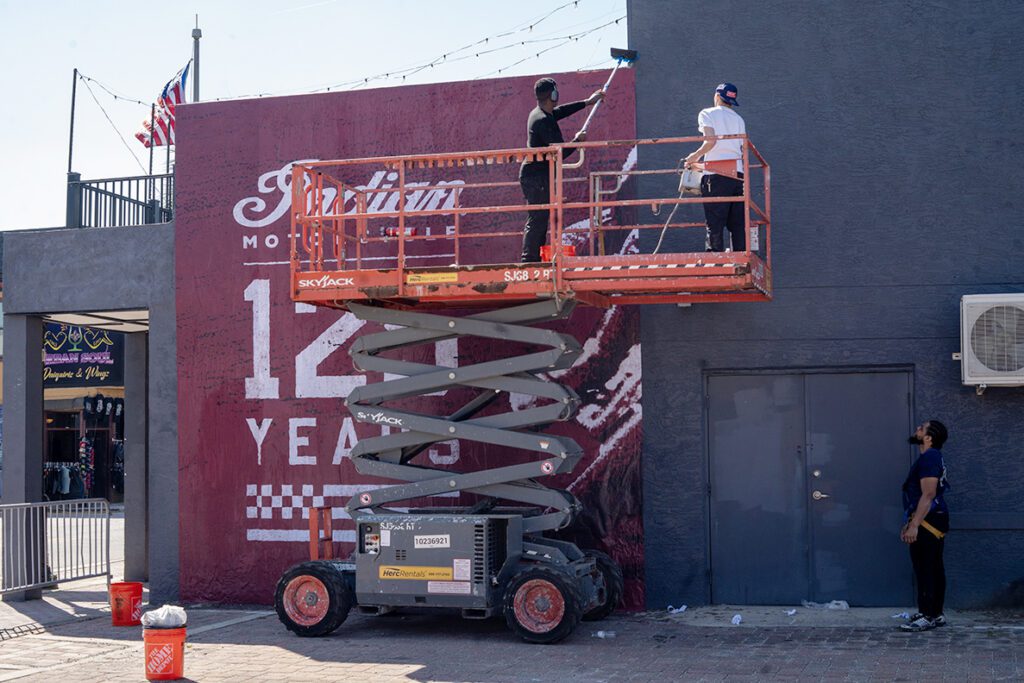
What separates an experiential campaign that builds lasting brand relationships from one that just burns budget? The answer starts long before the first activation day.
Experiential campaigns are different from other forms of marketing. A paid ad is something a consumer sees. An experiential campaign is something a consumer does, feels, and remembers. The difference in impact is not incremental. It is fundamental.
We have built experiential campaigns for emerging brands and established ones. For product launches and loyalty programs. For national rollouts and single-market pushes. The format changes but the core principles do not. This post lays out what those principles are and how we apply them to campaigns that actually drive results.
What Is an Experiential Campaign?
An experiential campaign is a marketing effort built around live, physical interactions between a brand and its target audience. Instead of broadcasting a message at consumers, an experiential campaign invites them into a direct brand experience.
That experience can take many forms. A pop-up store. A sampling tour. A branded installation at a music festival. A street team campaign in a specific neighborhood. An interactive event at a retail location. What defines it as experiential is the participatory nature of the interaction and the intentional design of the consumer experience within it.
The best experiential campaigns do more than create a single moment. They create a wave. The live interaction generates content. The content generates social reach. The social reach creates earned media. The earned media extends the campaign’s impact far beyond the people who were physically present at the activation.
The Anatomy of a Strong Experiential Campaign
A strong experiential campaign has six components that all have to work together. Missing any one of them weakens the whole structure.
Clear Objective
Every experiential campaign starts with one core objective. Not five objectives. One. Build brand awareness among a specific demographic. Drive trial of a new product in three markets. Generate leads for a B2B sales team. Increase in-store traffic at partner retailers during a specific selling window. The objective has to be specific enough to measure. “Increase brand awareness” is not specific enough. “Increase unaided brand recall by 15 percent among women aged 25 to 35 in Chicago and Los Angeles as measured by pre and post-campaign surveys” is specific.
Audience Definition
Who is the campaign built for? Not a broad demographic category. A real, specific description of the person the campaign is trying to reach. Their age, income, values, media habits, and the specific life context that makes the brand relevant to them. The tighter the audience definition, the more precise the campaign can be in every element from location to messaging to the experience design itself.
Experiential Concept
This is the creative core. What is the experience? What does it invite the consumer to do? What emotion does it create? What is the brand’s role in the experience? The best concepts have a single, clear brand idea at their center and build the experience outward from that idea. A concept that tries to tell too many stories at the same time tells none of them well.
Geographic Strategy
Where does the campaign run? Which markets? Which neighborhoods within those markets? Which specific locations? Location strategy is a strategic decision, not a logistics decision. The right location puts the brand in front of the right audience at the right moment. The wrong location is wasted effort regardless of how good the concept is.
Execution Infrastructure
The people, materials, logistics, and systems that make the campaign run. Brand ambassadors and training. Physical build and production. Data capture systems. A field supervisor. A real-time communication protocol. The execution infrastructure is invisible when it works and catastrophic when it does not.
Measurement Framework
How will success be measured? What are the KPIs? How will they be tracked? Who delivers the post-campaign report and when? Define all of this before the first activation day. Measurement built before a campaign runs produces data you can trust and act on. Measurement attempted after the fact produces rationalizations.
A campaign without a measurement framework is a hope. A campaign with clear KPIs and a tracking plan is a business case.
Experiential Campaign Types: Which Format Fits Your Goal?
| Campaign Type | Best For | Typical Duration | Primary KPI |
|---|---|---|---|
| Sampling tour | CPG, food and beverage, beauty product trial | 2 to 8 weeks across multiple markets | Samples distributed, conversion to purchase |
| Pop-up experience | Brand awareness, new product launch, community building | 3 to 14 days | Visits, engagement rate, organic content volume |
| Festival activation | Consumer brands targeting specific demographics | Single event, 2 to 5 days | Interactions, leads captured, content generated |
| Street team campaign | Local market penetration, neighborhood-level awareness | Ongoing, 4 to 12 weeks | Contacts made, samples distributed, local sales lift |
| Branded installation | Premium brand awareness, social amplification, PR | 1 to 4 weeks at a fixed location | Visits, organic social content, earned media coverage |
| Retail activation program | Driving sales at specific retail partners | 4 to 16 weeks across multiple store locations | Sales lift, samples distributed, in-store traffic |
| Event integration | Reaching a defined audience at a cultural moment | Single event, 1 to 3 days | Branded interactions, content generated, leads |
How to Build a Multi-City Experiential Campaign
Multi-city campaigns amplify reach but multiply complexity. Here is how we manage the additional variables without losing the quality of execution in any single market.
Start with a pilot market. Before launching in six cities, run the campaign in one market first. Refine the concept, the staffing approach, the materials, and the measurement system based on what actually happens in the field. Then scale.
Build a modular system. The campaign elements that travel across markets should be standardized enough to set up efficiently but flexible enough to adapt to each market’s specific characteristics. A modular system gives you consistency without rigidity.
Hire locally in each market. National campaigns staffed with ambassadors from a single talent pool miss the cultural nuance of each market. We hire local brand ambassadors in every market where we run a campaign. Local talent knows the city, understands the community, and represents the brand more authentically in each specific context.
Have a field lead in every market. Do not try to supervise a Chicago activation from a New York office on the first day. Have a field lead physically present in each market during activation days. They handle problems in real time and keep the team performing at the standard you set.
Standardize reporting. All markets submit the same data using the same framework. This allows for market-by-market comparison and total campaign aggregation. It also ensures the post-campaign report reflects a complete picture rather than a patchwork of different measurement approaches.
The Content Layer: Amplifying Your Experiential Campaign Beyond the Live Moment
The live activation reaches the people who are physically present. The content layer reaches everyone else.
Every experiential campaign should be designed with content capture in mind from day one. What photos will come out of this? What video? What are the moments worth capturing? Who is capturing them? When does the content go live?
We build a content capture plan into every campaign brief. That plan defines the moments, the visual approach, the capture team, and the deployment schedule. Content from the activation feeds social media the same day the activation runs. It feeds email the week after. It becomes the creative assets for retargeting ads in the weeks following the campaign. The live activation is the production. The content is the distribution.
The experiential campaign generates the emotion. The content strategy extends it. Build both before the first activation day, or you will be scrambling to capture value that already evaporated.
Experiential Campaign Budgeting: What Actually Costs What
One of the most common frustrations we hear from brands is that their experiential campaign cost more than expected. Usually it is because the budget did not account for the full scope of what running a campaign requires. Here is a realistic breakdown.
Strategy and creative: 10 to 20% of total campaign budget. This is the thinking before the doing. Skipping or undersizing this phase produces campaigns that execute well without accomplishing anything meaningful.
Production: 30 to 45% of total budget for campaigns with significant physical build. This includes fabrication, materials, branded elements, printing, technology if applicable, and transportation.
Staffing: 20 to 35% of total budget. Brand ambassadors, field supervisors, event managers, and trainers. This is the element most brands underestimate. Good people are not cheap. Cheap people cost you more in quality failures than they save in rate.
Logistics: 10 to 15% of total budget. Shipping, storage, setup and teardown labor, fuel, and incidentals.
Measurement and reporting: 5 to 10% of total budget. Data capture tools, survey panels, social listening tools, and the time to analyze and report.
Experiential Campaign Case Studies: What Works in the Field
Abstract principles only take you so far. Here is how experiential campaigns work in specific real-world scenarios.
Food and beverage product launch: street sampling with social amplification
A new bottled cold brew brand entered the New York market with a two-week street campaign. Street teams of four ambassadors deployed at seven locations per day across Brooklyn and Manhattan. Locations included the Bedford Avenue L stop entrance in Williamsburg, the Columbus Circle entrance to Central Park, and the corner of Houston and Lafayette in SoHo. The team distributed 400 samples per day per team, totaling 56,000 samples over two weeks. Each sample included a card with a QR code linking to an Instagram page. Organic social posts from recipients generated 2,300 tagged posts during the campaign period. Retail velocity at nearby grocery and specialty locations increased 34% in the four weeks following campaign completion.
Fashion brand pop-up: immersive experience in the target neighborhood
A DTC streetwear brand ran a four-day pop-up in a rented vacant storefront on Fairfax Avenue in Los Angeles. The interior was built as a brand world: custom art installations, product on display, and a photo activation area with a giant branded backdrop. The brand sent 500 direct invites to existing customers and local influencers. Walk-in traffic added another 800 visitors over the four days. Total social content generated exceeded 1,200 unique posts across Instagram and TikTok. Email list grew by 320 new subscribers from on-site sign-ups. Pop-up itself generated $48,000 in direct sales over four days.
Tech product launch: B2B conference activation
A cybersecurity software company activated at a major industry conference in Chicago’s McCormick Place. The activation ran as a lounge space adjacent to the main conference floor: comfortable seating, charging stations branded with the company logo, and on-demand demo sessions with product specialists. The lounge generated 340 qualified sales conversations over three days. Of those, 22 converted to discovery calls within 60 days. At an average contract value of $85,000, the attribution math was compelling.
What Separates Good Experiential Campaigns from Great Ones
After running hundreds of campaigns in markets across the country, we have a clear sense of what separates strong campaigns from mediocre ones. Here is the short list.
- Clear, singular objective: Campaigns that try to accomplish too many things at once accomplish none of them completely. The best campaigns pick one primary objective, design everything around it, and measure against it rigorously.
- Right location, more than any location: A great activation concept in the wrong location produces weak results. Choosing locations where target consumers are actually present on the day and time of the activation is the most important production decision in campaign planning.
- Ambassador quality: Brand ambassadors are the face of the campaign. Their energy, knowledge, and communication skill determine whether consumer interactions are memorable or forgettable. Underpaying for ambassador talent is the most common and costly mistake in experiential campaign budgeting.
- Content integration from the start: Social and earned media amplification is not an afterthought. It is a designed element. Campaigns that include a photo-worthy element, a shareable mechanic, and a clear social handle or hashtag from day one generate significantly more organic content than those that add these elements as an afterthought.
- Measurement discipline: Set your KPIs before the campaign launches. Collect data in real time. Report within two weeks of the final activation day. Campaigns that measure consistently build institutional knowledge that makes every subsequent campaign more effective than the last.
The Role of Neighborhood Intelligence in Experiential Campaigns
Where you activate is as important as what you activate. The most carefully designed experiential campaign placed in the wrong neighborhood will underperform a simpler campaign placed exactly where the target consumer spends their time. This is one of the most underappreciated variables in campaign planning and one of the areas where local market knowledge generates real competitive advantage.
In New York, the difference between activating at the corner of Bedford Avenue and North 7th Street in Williamsburg versus the corner of Bedford Avenue and Park Slope is not geographic. It is demographic. One location is a stream of young creative professionals between ages 22 and 35 during evening and weekend hours. The other is a mix of parents, strollers, and older residents during those same windows. The same activation in both locations reaches entirely different audiences.
In Los Angeles, destination matters in a way it does not in pedestrian-first cities. A street-level activation on a block without destination foot traffic will be walked past by no one regardless of how good the creative is. Successful LA activations position at farmers markets, fitness destinations, retail corridors with existing draw, and cultural gathering spots. The Abbot Kinney corridor, the Third Street Promenade, the Brentwood Country Mart, the Sunday market at Larchmont Village all have existing audience flows that activations can intercept. Random street positions in LA simply do not generate the consumer contact that they do in denser pedestrian markets.
Chicago’s Loop is a high-foot-traffic environment but the audience skews heavily toward office commuters and business district visitors. River North attracts a different mix, more hospitality, retail, and younger professionals. Wicker Park and Bucktown bring creative class audiences with specific taste profiles and cultural orientations. Lincoln Park attracts a more family-oriented, higher-income residential audience. The same activation brief requires a fundamentally different location strategy in each Chicago neighborhood, and the right choice depends entirely on who the brand is trying to reach.
We build neighborhood-level location intelligence into every campaign brief. We know which Chicago neighborhoods are right for which brand categories, which LA corridors attract which consumer profiles, which New York blocks have the foot traffic patterns that support a full-day activation. That knowledge is not something you find on a map. It comes from running hundreds of campaigns across all of these markets and paying attention to what works.
Activation Documentation and Field Reporting
The documentation generated during an experiential campaign serves three purposes that brands frequently undervalue until they’ve run campaigns without it.
First, documentation is the proof of delivery. Photo and video records of the activation in operation, time-stamped and location-tagged, confirm that the campaign ran as specified. For brands managing multiple market activations simultaneously, this documentation is the only way to verify field execution quality at a distance.
Second, documentation is the content asset for every downstream use of the activation. The social media posts, the email campaign, the case study for the next budget conversation, the PR pitch to trade media — all of it is built from documentation captured during the activation. A campaign without good documentation cannot be amplified beyond the people who were physically present.
Third, documentation supports campaign improvement. Field photos that show how consumers actually interacted with the activation tell you things about the mechanic that the brief never predicted. We regularly see documentation from field activations that reveals design improvements: a sampling table positioned six feet to the left of where it should be, an ambassador whose natural engagement style outperforms the scripted approach, a location that generates five times the expected traffic at an unexpected time of day. This observational data is the input for better campaign planning on the next round.
We capture photo documentation, route maps, and summary reports from every activation we run. That deliverable is built into the scope of every program, not treated as an optional add-on. The data belongs to the brand and is delivered within 48 hours of each activation day.
The Ambassador Who Makes or Breaks Every Experiential Campaign
The brand ambassador who hands the consumer their first sample or guides them through the activation is the single most important person in any experiential campaign. Their energy, their product knowledge, their ability to create a genuine moment of connection in a brief street interaction — these determine whether the encounter creates a brand advocate or an indifferent passerby.
We have seen campaigns with brilliant concepts fail because the staffing was generic, undertrained, and disengaged. We have also seen simple concepts exceed every projection because the ambassador team was exceptional. After running hundreds of campaigns, we are certain about this: execution quality is the highest-impact variable in experiential campaign outcomes, and ambassador quality is the most impactful component of execution quality.
What great ambassador quality looks like: genuine enthusiasm for the product that comes across as natural, not performed. The ability to read a consumer’s pace and adjust the engagement accordingly — 45 seconds for a fast-moving commuter, 3 minutes for a farmer’s market browser. Warmth that creates a positive impression even with consumers who decline to engage. Knowledge of the product deep enough to answer questions that go beyond the script. Energy that does not visibly diminish across an 8-hour activation day.
What poor ambassador quality looks like: scripted delivery that sounds exactly like a rehearsed brand message. Passive posture waiting for consumers to approach rather than creating natural engagement opportunities. Disengagement that is visible from 20 feet away. Product knowledge that ends at the approved talking points. Energy that crashes after the first two hours.
We invest more time in ambassador recruiting and training than most agencies. We screen for the qualities that produce great consumer interactions, not just for availability. We train specifically for each campaign’s consumer, context, and engagement dynamic. And we build ambassador bench strength into every campaign so that a single no-show does not degrade the program.
Frequently Asked Questions
What is an experiential campaign?
An experiential campaign is a marketing effort built around live, direct interactions between a brand and its target consumers. It prioritizes participation over observation, creating moments that generate emotional connection and content that extends the campaign’s reach beyond the live audience.
How do you measure the success of an experiential campaign?
Through KPIs defined before the campaign launches. Common metrics include total interactions, samples distributed, leads captured, social content volume, sales lift in activation geographies, and brand awareness shifts measured through pre and post-campaign surveys.
How long does it take to plan an experiential campaign?
A single-market campaign needs 6 to 10 weeks of planning. Multi-market campaigns with significant production requirements need 10 to 16 weeks. Campaigns tied to specific events should add lead time to the event deadline, not count backward from it.
What makes an experiential campaign different from a regular marketing campaign?
The primary difference is participation. A regular marketing campaign broadcasts a message. An experiential campaign invites a consumer into an interaction. Participation creates a fundamentally different level of engagement, emotional connection, and memory formation than passive message receipt.

Ready to Run Your Campaign?
Call us or email us. We’ll tell you exactly what we can do in your market and what it costs.
Related Services
Explore similar advertising solutions offered by American Guerrilla Marketing.
American Guerrilla Marketing — Los Angeles
Street-level campaigns in Los Angeles and nationwide. Wheatpasting, LED trucks, street teams, and more.
(646) 776-2770
Related Articles
-
Street Poster Advertising Ottawa: A Complete Campaign Guide
September 17, 2026
-
Activation Marketing: How Brands Win at Street Level
September 13, 2026
-
Experiential Marketing Firms Chicago | American Guerrilla Marketing
September 12, 2026
-
Pop Up Experiential
September 12, 2026
-
Mobile Pop Up
September 12, 2026