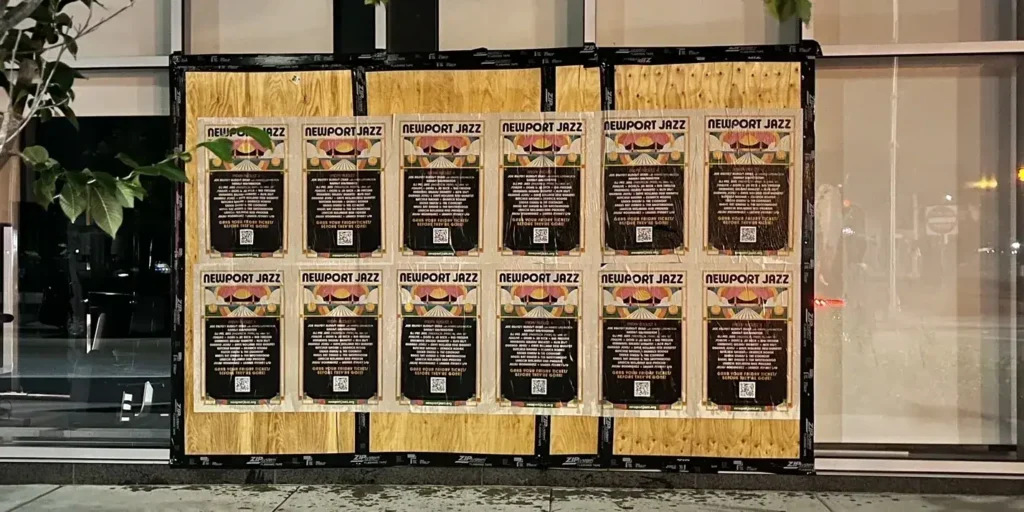
Stealth guerrilla marketing works because it interrupts without announcing itself. The campaign looks like it belongs, on the wall, on the sidewalk, inside the subway car, so the audience encounters it without the defensive filter they’d apply to anything they immediately recognize as advertising. AGM has been executing stealth-style campaigns since 2016 across hundreds of markets and clients, and the pattern is consistent: the campaigns that drive the most genuine attention are the ones that respect their environment rather than fighting it. This guide covers the tactics that consistently deliver results, with specific examples from formats we’ve executed, actual campaign metrics where we have them, and the operational details that separate campaigns that work from ones that generate complaints.
What Makes Guerrilla Marketing “Stealth”
Traditional advertising announces itself. A 30-second TV spot, a banner ad, a sponsored post, audiences immediately categorize these as advertising and apply the skepticism filter accordingly. Stealth guerrilla marketing operates differently: it’s placed in the physical environment in ways that feel natural to that environment, creating discovery moments rather than interruption moments. The person who walks past a street poster campaign on a building wall in the East Village doesn’t experience it as “being advertised to” the way they’d experience a banner ad, they experience it as something they noticed in their environment.
That distinction matters neurologically. Information encountered through discovery is processed and retained differently than information identified as advertising. Brand messages encountered as environmental discoveries, rather than advertising interruptions, generate higher recall and more positive brand associations in the psychological research on advertising processing. The stealth quality isn’t deception, the materials clearly identify the brand. The stealth quality is in the placement approach, which feels like it belongs in the environment rather than like it was imposed on it.
Example 1: Large-Format Street poster advertising in Urban Neighborhoods
Street poster advertising, large-format paper posters applied to approved surfaces in target neighborhoods, is the foundational stealth guerrilla format. Done correctly, a street poster campaign looks like it’s always been part of the neighborhood’s visual fabric. Done incorrectly, it looks like someone slapped a brand advertisement on every available surface in a three-block radius, which generates exactly the kind of hostile response brands spend significant budget to avoid.
The difference is in the creative approach and placement strategy. Creative that fits the visual language of the neighborhood, photography or illustration with a point of view, typography that references the culture of the community, a message that has genuine relevance to the people who live and move through that specific zone, integrates naturally. Creative that was clearly designed for mass media (national retail advertising aesthetic, generic lifestyle imagery, corporate layout conventions) reads as out of place in a street environment and generates the “advertisement” categorization that undermines the stealth effect.
We’ve executed street poster campaigns for entertainment clients launching films, TV series, and music releases in the neighborhoods where their target audiences concentrate, the Lower East Side and Williamsburg for Brooklyn-rooted hip-hop and indie music campaigns; Silver Lake, Echo Park, and Highland Park in LA for the creative class audience those artists target; Wicker Park and Pilsen in Chicago for campaigns targeting the arts community. In each case, the placement strategy was built around which specific streets carry the foot traffic of the target audience, not just which walls were available.
A 200-location street poster advertising run in Williamsburg and Bushwick in Brooklyn generates roughly 35,000–50,000 weekly impressions from foot traffic on the key pedestrian corridors, Bedford Avenue, Metropolitan Avenue, Broadway, where the audience moves daily. Those impressions repeat week over week for the 3–4 week lifespan of the campaign, creating a frequency of exposure that drives brand recognition through repetition rather than through a single high-impact impression event.
Example 2: Sidewalk Stencil Campaigns That Own the Ground
Sidewalk stencils occupy the one sight line that no other advertising format contests: the ground directly in front of the audience’s feet. Pedestrians in dense urban environments look down constantly, working through cracks, other walkers, changes in surface level. A chalk stencil at a major intersection or subway exit puts your brand message directly in that sight line at the exact moment of maximum pedestrian concentration.
We’ve executed stencil campaigns at the corner of Canal Street and Broadway in SoHo (one of the highest-foot-traffic intersections in Manhattan), at the exits of the L train at Bedford Avenue and at 1st Avenue, along the Magnificent Mile sidewalks in Chicago approaching the Tribune Tower and Michigan Avenue Bridge, and on the Lincoln Road pedestrian mall in Miami Beach. Each generated repeated, daily impressions from the same commuters and shoppers moving through those corridors.
The scale required for an effective stencil campaign surprises most brands. A single stencil on a single sidewalk is essentially invisible in the campaign context, it generates perhaps 200 daily impressions on an average urban sidewalk. A 50-location campaign covering the key pedestrian intersections across a 10-block target radius generates 8,000–15,000 daily impressions from the combined foot traffic across all placements, with each individual pedestrian encountering your stencil 3–5 times per week if they’re regular route-walkers in the area. That frequency is what creates the brand recognition effect.
Water-soluble chalk formulations remain the compliance standard for public sidewalk stenciling in most US markets. They’re fully removable, rain washes them naturally, and most municipalities treat temporary chalk as street art rather than commercial signage, placing it outside many cities’ standard sign ordinance frameworks. Removable paint formulations offer 3–4 week lifespan versus 10–14 days for chalk, but require more rigorous compliance review in specific markets and are not universally permitted on public sidewalks.
Example 3: Snipe Advertising, The Eye-Level Street Poster
Snipe advertising places smaller-format materials (typically 4×6 to 11×17 inches) on utility poles, junction boxes, construction scaffolding, and other high-pedestrian-traffic infrastructure at eye level, creating brand messages that intercept pedestrians in the exact posture and sight line of everyday urban navigation. Snipe advertising has been a staple of concert promotion, product launches, and movement building in urban markets since long before “guerrilla marketing” was a recognized category.
After installing more than 400 snipes on the Bedford Avenue corridor in Williamsburg, Brooklyn for multiple clients across multiple campaigns, our consistent field measurement is 18,000 weekly impressions from pedestrian foot traffic alone on that specific corridor, not counting vehicle traffic seeing the placements from the road. On Michigan Avenue in Chicago’s Magnificent Mile zone, a comparable snipe density on the signage-dense pedestrian corridor generates similar foot-traffic impression counts from a much higher-volume pedestrian flow.
The operational key with snipe advertising is legitimate surface authorization. Unauthorized snipes on utility infrastructure can result in fines to clients if city enforcement traces the placement back through the campaign. We place snipe advertising exclusively on surfaces where we have property owner authorization or where public right-of-way placement is explicitly permitted by local ordinance. The operational cost of proper surface authorization is modest and insignificant compared to the legal and reputational cost of enforcement actions.
Example 4: Ambient Placement, Reaching People in Their Unguarded Moments
Ambient advertising places brand messages in unexpected environmental contexts, places where people don’t expect to encounter advertising and therefore haven’t erected their standard advertising filter. Classic ambient placements include:
- Bathroom advertising: The 60–90 seconds of captive, undistracted attention in a bar or restaurant restroom represents an advertising environment with no competing visual noise. We’ve placed bar and restaurant bathroom campaigns for entertainment, food and beverage, and lifestyle brands across New York, Chicago, Miami, and Los Angeles markets. Response rates from well-targeted bathroom advertising in relevant venue categories consistently exceed comparable outdoor format averages.
- Gas pump topper advertising: The 3–4 minutes of captive attention while fueling a vehicle creates a viewing window comparable to a bus shelter dwell time. Gas pump toppers in relevant retail corridors reach a captive motorist audience in a context where they’re stationary, attentive, and waiting for something to read.
- Coffee cup sleeves and pizza box inserts: Branded media on consumable packaging that people handle directly and look at during consumption creates an intimate, personal brand moment that outdoor formats can’t generate. Response rates for relevant, locally targeted food packaging inserts rival direct mail in some category tests.
- Table-top advertising: Table-top display advertising in restaurants and bars reaches a dining audience during 45–90 minutes of stationary, relaxed attention, the longest dwell time available in any ambient format.
Example 5: Guerrilla Projection, Night Advertising at Scale
Large-format projection of brand imagery on building facades creates dramatic, high-visibility brand moments during evening hours. A 40-foot projection on a blank building facade in a high-traffic evening corridor reaches thousands of people in a single night at a fraction of the cost of comparable static advertising in the same zone.
We’ve executed projection campaigns on building faces adjacent to Madison Square Garden in New York, on warehouse walls in Chicago’s River North during evening events, in the Warehouse District in New Orleans during Essence Festival weekend, and on the facades of buildings surrounding the convention center in San Francisco during major tech conferences. The format works because projection is genuinely unexpected, people look up at something that wasn’t there yesterday and is gone tomorrow, creating the kind of memorable, “did you see that?” moment that passive advertising rarely generates.
The stealth quality of projection advertising is its contextual integration, a projection on a building wall doesn’t disrupt the cityscape in the way a lit billboard or banner does; it temporarily transforms an existing surface in a way that feels cinematic rather than commercial. That distinction creates a fundamentally different emotional response in the audience.
Example 6: Street Teams That Generate Genuine Conversation
A street team deployed without proper training and brand preparation is not a stealth marketing tactic, it’s an annoyance. Strangers approaching other strangers with sales pitches in public spaces generate hostility and negative brand associations. Street teams deployed as genuine participants in a community moment, knowledgeable, useful, offering something of real value, generate the kind of positive, word-of-mouth-generating brand interactions that no passive advertising format can replicate.
The campaigns where street teams have driven the highest qualitative response in our experience are the ones where the team leads with utility, something genuinely useful given the context (samples of a relevant product, an experience worth having, real information about something the audience cares about), and treats the brand introduction as secondary to the human interaction. The person who walks away from a brand ambassador interaction having actually gotten something useful from it will mention the brand to their network. The person who walks away from a sales pitch will not.
What Separates High-Performing Guerrilla Campaigns from Ones That Fail
Across 500+ campaigns executed in markets from New York and Los Angeles to secondary cities and college towns, the failures follow predictable patterns:
Wrong surface, wrong neighborhood, wrong audience. A street poster campaign for a luxury automotive brand placed in a working-class neighborhood isn’t reaching the wrong people, it’s reaching zero people, because the audience who encounters it immediately understands it isn’t for them and ignores it completely. Audience-first placement selection is the first and most important variable in any guerrilla campaign.
Generic national advertising creative applied to a street format. Creative designed for national media applications doesn’t translate to street-level guerrilla formats without significant adaptation. The visual language, copy approach, and aesthetic register of effective street poster advertising is different from TV advertising, digital display, or print editorial. Brands that send national creative assets and expect street-level execution to make them work in a guerrilla context consistently underperform compared to brands that develop creative specifically for the format and environment.
Unauthorized placements that create legal and reputational risk. Every unauthorized guerrilla tactic creates risk, fines, removal, and the kind of media coverage that turns a marketing activation into a brand reputation problem. We’ve watched competitors execute unauthorized placements for their clients and then watched those clients spend significant budget and attention managing the enforcement and media fallout. Legitimate surface authorization adds modest cost and planning time; unauthorized placement risk is unbounded and unpredictable.
AGM’s Stealth Guerrilla Campaign Pricing
| Tactic |
Typical Range |
What’s Included |
| Street poster advertising, 100-location run |
Contact AGM |
Design review, printing, crew installation, photo documentation |
| Street poster advertising, 200+ location run |
Contact AGM |
Multi-zone coverage, full documentation, creative consultation |
| Sidewalk stencil, 50 placements |
$6,982 |
Stencil production, materials, overnight crew, cleanup, documentation |
| Snipe campaign, 200-location run |
Contact AGM |
Design, printing, installation, surface authorization coordination |
| Ambient advertising, bathroom/pump/table |
$1,000–$4,000/month |
Venue network, production, placement, monthly renewal options |
| Projection advertising, 1 night |
Contact AGM |
Equipment, operator, permitting coordination, documentation |
| Street team activation (2–3 days) |
Contact AGM |
Talent, briefing, field management, materials, documentation |
Contact us at americanguerrillamarketing.com/contact for a campaign proposal specific to your market, audience, and objectives.
Frequently Asked Questions
Examples of Guerrilla Marketing: Stealth Strategies That Work in 2026 generates better results when placement, timing, creative, and local execution all work together. These questions cover the details brands usually need before launch, during rollout, and while evaluating performance.
For ar, the strongest campaigns usually come from tight geographic targeting, message discipline, and enough repetition to be remembered. Market conditions, neighborhood flow, event calendars, commuter behavior, and production logistics all change how the tactic performs, so the planning details matter as much as the idea.
What is stealth guerrilla marketing?
Stealth guerrilla marketing places brand messages in physical environments in ways that feel native to those environments, street poster advertising that looks like neighborhood street art, stencils that feel like they’ve always been on the sidewalk, ambient placements that integrate naturally into venue spaces. The “stealth” quality is in the contextual integration, not in hiding the brand, all placements clearly identify the brand.
Is guerrilla marketing legal?
It depends entirely on the specific tactic and the specific market. Water-soluble chalk stencils are legal on public sidewalks in most US cities. Street poster advertising on private property with owner consent is legal everywhere. Unauthorized posting on public structures is illegal in most jurisdictions. Projection from public property requires permits in most major markets. We review legal requirements in every market before campaign execution and obtain all necessary authorizations.
What markets does AGM execute guerrilla campaigns in?
We operate in all major US markets, New York, Los Angeles, Chicago, Miami, Atlanta, Dallas, Houston, Phoenix, Seattle, Denver, Nashville, Austin, and dozens of secondary markets, and in select international markets through local partner networks. We have established crew infrastructure, operator relationships, and market knowledge in each of these geographies from years of campaign execution.
How many placements do I need for an effective guerrilla campaign?
Concentration matters more than absolute count. 50 well-placed stencils on the highest-foot-traffic intersections in a target 10-block zone outperforms 200 randomly distributed stencils across a 2-mile radius. For street poster advertising, 50–100 locations on key pedestrian corridors in a target neighborhood creates the frequency effect that drives brand recognition. Scale up from proven neighborhood concentration rather than spreading thin across a broad geography.
How long does a guerrilla campaign last?
Street poster advertising typically lasts 3–6 weeks before being covered by subsequent campaigns. Chalk stencils last 10–16 days in dry weather. Removable paint stencils last 3–6 weeks. LED truck campaigns run for the specific days contracted. Projection advertising runs for the contracted nights. Ambient placements (bathroom, pump, table) renew monthly. We plan campaign timing specifically to align lifespan with the relevant marketing window.
Can guerrilla marketing campaigns be tracked?
Yes. AGM provides full photo documentation of all placements with GPS coordinates and timestamps. We also coordinate geofencing around placement zones for digital retargeting and conversion tracking. Campaign-specific QR codes on materials create direct response measurement. Social listening tracks organic mentions and user-generated content from the campaign geography.
What’s the most cost-effective guerrilla marketing format?
Sidewalk stencil campaigns deliver the lowest CPM of any format we offer, typically $1–$5 CPM in dense urban markets when measured against total weekly foot traffic impressions. For direct audience engagement, street team activations in well-chosen high-traffic locations often deliver the lowest cost per genuine brand interaction despite higher absolute crew costs.
Does AGM work with brands directly or through their agencies?
Both. We work directly with brand marketing teams who manage campaigns in-house and as a production partner to advertising and PR agencies managing campaigns on their clients’ behalf. Our documentation and reporting formats are designed to integrate with agency workflows. Contact us at americanguerrillamarketing.com/contact.
What should a brand figure out before using guerrilla marketing examples?
Start with the audience, the location, the timing, and the one outcome that matters most for stealth guerrilla marketing.
How much budget is usually needed to make it visible?
The answer depends on market size and format, but the campaign has to fund enough reach and repetition to be noticed.
Related Pages and Articles