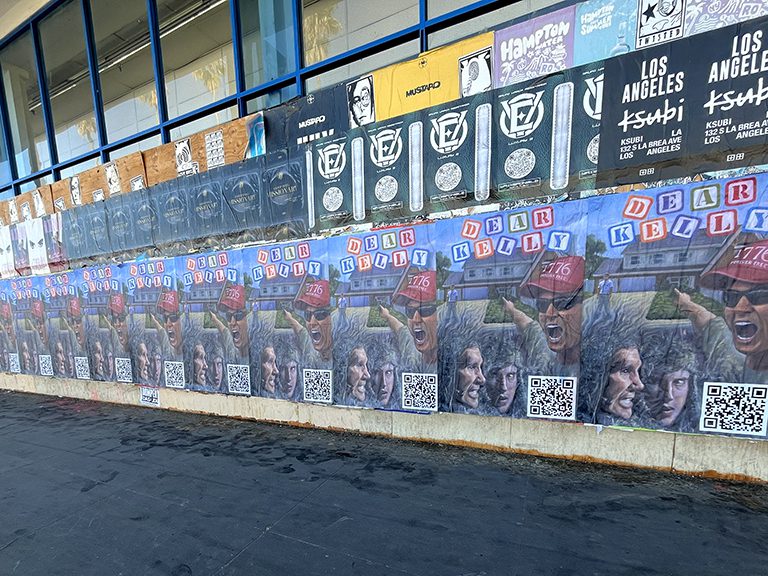
Entertainment marketing is a category where digital spend has grown dramatically, but the venues being promoted have stayed the same size: they have seats, and those seats need bodies in them. The challenge of entertainment tour marketing is not just generating exposures. It is converting exposures into ticket purchases across a series of markets, each with its own competitive noise, its own audience behaviors, and its own local culture to navigate. Guerrilla marketing has always understood that the street is where culture lives, and entertainment tours need to be part of that street conversation in every city they visit.
American Guerrilla Marketing works with touring entertainment properties of all kinds: music tours, Broadway road shows, comedy tours, dance performances, immersive theater productions, and brand-sponsored live events. We run the street-level campaign that builds local buzz before the show arrives and keeps the energy high through show night. Based in Industry City, Brooklyn, with national execution capabilities, we are the kind of partner that knows how to make a tour feel like an event in every city it visits.
This guide covers the strategic logic behind entertainment tour marketing, the specific tactics that drive ticket sales, and what it takes to execute a campaign that actually moves numbers across a multi-city tour route.
Why Entertainment Tours Need More Than Digital Advertising
Digital advertising for entertainment tours is table stakes. Every touring property is running social media ads, email campaigns, and targeted digital buys in each market. The result is that every potential ticket buyer’s feed is full of entertainment advertising, and standing out in that environment requires either massive spend or a different approach.
Street-level entertainment tour marketing offers a different approach. When a striking poster campaign appears on the walls of the neighborhood where your target audience walks to work, or an LED truck drives through the entertainment district the night before your show, it creates an impression that digital advertising cannot replicate. It is physical, it is local, and it shows up in a place where the audience is not already being bombarded by competing ads.
The cultural signal that street-level advertising sends is also distinct. When a touring production has a strong poster presence in a city’s arts neighborhoods, it communicates a kind of credibility that digital ads do not. It says this show is a real event, something that is happening in this city’s physical space, not just a notification on your phone. For premium entertainment where tickets carry a significant price, that credibility signal matters in the purchasing decision.
Matching Tactics to the Entertainment Category
Entertainment tours span a wide range of categories, and the marketing tactics that work best vary by category. A music tour requires different placement strategies than a Broadway touring production, and a comedy tour requires different strategies than an immersive art experience. Our team customizes the approach for each entertainment category.
For music tours, wheatpasted poster campaigns are often the anchor tactic. Music posters on approved posting walls in music neighborhoods are part of the cultural environment that music fans navigate. A strong poster presence in the right locations signals that the show is significant. We supplement poster campaigns with LED billboard trucks near venues and in areas where the target audience clusters, and with brand ambassador teams who work the street and create personal connections with fans.
For theatrical and performing arts tours, the placement strategy shifts toward arts districts, theater neighborhoods, cultural institutions, and transit corridors used by the professional and arts-adjacent demographic. Large-format environmental graphics near performing arts centers, targeted street team work outside relevant cultural spaces, and presence in hotel areas near convention and tourism zones all fit this category’s audience patterns.
For comedy tours and entertainment personalities, the social shareability of the campaign often matters as much as the raw impression count. Our team designs placements and activations that people want to photograph and share, turning the street-level campaign into organic social content that reaches the entertainer’s existing fan base in each market.
Building Audience Awareness Before the Show Arrives
The most common mistake in entertainment tour marketing is waiting too long. By the time the show is one week out, ticket buying patterns have already solidified. The audience that was going to buy early bought. The on-the-fence buyers need urgency to convert, but urgency is less effective when awareness has not been built first. The ideal campaign begins building awareness in each market three to six weeks before show date, depending on the venue size and the established following of the artist or production.
In the awareness phase, the goal is presence rather than conversion. We want the target audience in each city to start seeing the tour’s visual identity in their daily environment. Posters go up. Digital geo-targeted ads start running in coordination with the street-level push. Brand ambassadors begin seeding conversations in relevant communities. This phase is about making the show feel like something that is coming, not something that might happen somewhere.
In the conversion phase, which intensifies in the final ten days before the show, the messaging shifts toward urgency. The street-level campaign adds elements that emphasize proximity: the show is in your city, at this specific venue, on this date. LED trucks concentrate around the venue and in entertainment districts. Ambassadors shift from awareness building to active ticket promotion. Social amplification of the campaign content peaks in this window.
The Role of Local Knowledge in Entertainment Tour Marketing
Entertainment tour marketing requires genuine local knowledge in each market. The walls that matter for poster campaigns in New York are not the same walls that matter in Chicago. The neighborhoods where the audience for a jazz festival tour lives in New Orleans are different from the neighborhoods that matter for the same tour in Denver. What works in one city does not automatically translate to the next.
Our team’s local knowledge comes from years of executing campaigns in major entertainment markets across the country. We know where the audiences are in each city, where site approvals are required and how to get them, which placement locations get photographed and shared, and which tactics tend to underperform in specific markets. That accumulated knowledge is one of the most valuable things we bring to a multi-city entertainment tour marketing campaign.
We also work with local talent in each market: brand ambassadors who are genuinely part of the local culture, installation crews who know the neighborhoods, and local partners who can provide market intelligence when needed. This local infrastructure is what allows us to execute with speed and precision in markets where we do not have a permanent physical presence.
Coordinating With Promoters and Venue Teams
Entertainment tour marketing campaigns need to coordinate with the promoter’s existing marketing efforts, the venue’s in-house promotions, and any other advertising partners working the show. When multiple parties are promoting the same show, coordination prevents conflicts and creates a more coherent campaign.
Our team integrates with the full promotional network around a touring show. We align our street-level campaign timeline with the promoter’s digital campaign rollout, coordinate placement strategies to complement rather than duplicate the venue’s in-house marketing, and work with any co-sponsors or brand partners who are running their own activations around the show. The goal is a campaign network where every element reinforces the others rather than competing with them.
When a touring show has brand sponsors running their own activations, we often handle both the core tour marketing and the sponsor activation, creating a unified physical presence in each market that serves both the show’s promotional needs and the sponsor’s brand objectives. That integrated approach is more efficient and more effective than having two separate agencies executing independently in the same market.
Measuring Entertainment Tour Marketing Results
Tour marketing results are ultimately measured against ticket sales. But between the campaign and the box office, there are several intermediate metrics that tell you whether the campaign is working and where adjustments might be needed.
Reach and impression estimates by format give a baseline for campaign scale. These are directional numbers rather than precise measurements, but they provide a useful frame for evaluating the campaign’s physical footprint in each market. Our team provides documented reach estimates based on placement locations, pedestrian traffic data for key installation sites, and LED truck route analysis.
Photo documentation of every placement is standard in our reporting. This documentation serves multiple purposes: it verifies that contracted placements were executed, it provides the client with visual evidence of the campaign for internal reporting and post-mortem analysis, and it creates a library of campaign images that can be used for future promotional materials.
Social media monitoring for organic mentions of the campaign, the tour, and associated hashtags provides a view into earned media generated by the street-level campaign. Large-format installations that get photographed and shared represent a multiplier on the original placement’s reach, and tracking this activity helps quantify the social value of physical advertising.
Entertainment Tour Marketing as a Long-Term Partnership
The best entertainment tour marketing relationships are ongoing rather than one-off. When a touring production returns to the same markets year after year, the marketing campaign benefits from accumulated local knowledge, existing relationships with venue operations and site approval offices, and a refined understanding of what works for that specific audience in each market.
Our team actively builds long-term partnerships with touring entertainment clients. We maintain campaign documentation across tours, so when a production returns for its second or third run, we can build on what worked in previous years and avoid repeating what did not. That continuity is one of the most tangible advantages of working with the same agency across multiple tours rather than sourcing street marketing through a new vendor each time.
Annual entertainment tours also give us the opportunity to evolve the campaign creative year over year. A tour that uses the same visual style for three consecutive years risks losing freshness with the audience that has already attended. We work with clients to refresh the creative approach each cycle while maintaining the core brand identity elements that the audience has come to associate with the property.
Frequently Asked Questions
What is entertainment tour marketing?
Entertainment tour marketing is the promotional strategy used to drive awareness and ticket sales for a touring entertainment production across multiple cities. It includes out-of-home advertising, street-level campaigns, digital promotion, and in-person activations deployed city by city as the tour progresses.
What types of entertainment tours benefit from this kind of marketing?
Music concerts, Broadway touring productions, comedy tours, theater companies, dance performances, festival road shows, and brand-sponsored live entertainment all benefit from entertainment tour marketing. Any touring property that needs to build local awareness in multiple markets can use this approach.
How does street-level marketing help sell more tickets?
Street-level marketing reaches potential ticket buyers in their physical environment before they encounter the show through digital channels. It creates repeated exposures across neighborhoods where the target audience lives and works, building familiarity and urgency that converts into ticket purchases.
Can you run entertainment tour marketing for smaller regional tours?
Yes. We scale campaigns to match the tour’s scope and budget. A regional theater tour with five stops gets the same strategic thinking as a national concert tour, just adapted for fewer markets and smaller venue capacities.
How do you maintain brand consistency across different cities?
We build modular creative systems where the core visual identity is fixed but city-specific information, venue names, and dates can be updated for each market. All production flows from a master design template that keeps every market looking like part of the same campaign.
What is the typical budget range for entertainment tour marketing?
Budgets vary widely based on the number of markets, the scale of the venues, and the mix of tactics. Our team builds campaigns for entertainment tours at a range of investment levels. Contact us to discuss what we can build within your specific budget.
Does AGM handle entertainment tour marketing outside of New York?
Yes. While we are based in Brooklyn, our team executes entertainment tour marketing campaigns in markets across the country. We have established relationships with local crews and production partners in major entertainment markets nationwide.
How early should a brand start planning?
For most campaigns, the smart move is to start planning at least two to four weeks before the launch window so production, routing, staffing, and reporting are all lined up.
What makes one market perform better than another?
Market fit depends on audience density, neighborhood behavior, route efficiency, and whether the creative belongs in that setting. The busiest city is not always the best city.
Can AGM bundle this with other services?
Yes. AGM often combines this work with supporting formats so the campaign has stronger repetition and cleaner reporting across the whole run.
How does AGM quote pages like this?
For more on this, explore our experiential marketing. We quote from official rate cards where they apply, then scope the remaining production, staffing, and routing details to the actual job.