Pop-up stores are one of the most sophisticated brand marketing tools available — combining the direct consumer engagement of retail, the community presence of physical space, the urgency mechanics of limited-time availability, and the social amplification potential of experience-worthy brand moments. When a brand appears in an unexpected location for a limited time with a distinctive, thoughtful, and genuinely worth-experiencing brand environment, it creates the kind of consumer response that advertising spending alone cannot manufacture: genuine surprise, willing engagement, social documentation, and word-of-mouth advocacy. The pop-up store is not a retail format — it is a brand activation format that happens to sell things.
American Guerrilla Marketing plans and executes pop-up store activations as part of broader street-level and experiential marketing campaigns. We operate out of Industry City, Brooklyn, NY, and deploy activations across 50+ U.S. markets. Our pop-up programs integrate with broader campaign stacks — using flyposting, LED billboard trucks, and brand ambassador programs to build awareness, drive traffic, and amplify the pop-up’s impact beyond its direct foot traffic. This guide covers what makes pop-up stores work as marketing, how to design for maximum impact, where to locate them, and how to integrate them with broader campaign strategy.
Pop-Up Stores as Experience Vehicles
The most important mental shift in pop-up store planning is from retail thinking to experience thinking. Traditional retail is optimized for transaction efficiency: clear product display, easy product selection, smooth checkout, quick customer turn. Pop-up stores that succeed as marketing activations are optimized for experience: discovery, delight, wonder, social documentation, and emotional connection. The transaction, if it happens, is a byproduct of the experience rather than its purpose.
Brand Identity Expressed in Space
The pop-up store is the brand’s identity translated into three-dimensional space. Every design choice — the materials, the colors, the scale, the lighting, the smell, the sound, the staff interactions, the product presentation — communicates something about the brand’s values, aesthetic, and world. A pop-up that feels like a generic retail box with a logo applied is a missed opportunity. A pop-up that feels unmistakably like the brand’s world, where every design detail reflects the brand’s specific identity, creates the kind of sensory brand encounter that advertising cannot produce and that consumers choose to document and share because they cannot fully describe it in words.
The Limited-Time Effect
Scarcity is one of the most powerful psychological levers in marketing, and pop-up stores are inherently scarce — they exist for a defined period and then disappear. The limited-time nature of the pop-up creates urgency that traditional retail lacks: the consumer who wants to experience the pop-up must act within the available window, creating the kind of motivated visit behavior that “come in anytime” retail cannot produce. When the pop-up also offers limited or exclusive products unavailable elsewhere, the scarcity dynamic amplifies — consumers are motivated by the possibility of missing something they cannot get after the pop-up closes.
Location Strategy for Pop-Up Stores
Pop-up location strategy requires different thinking than permanent retail location strategy. Permanent retail optimizes for sustained traffic and long-term neighborhood economics. Pop-up retail optimizes for cultural resonance, surprise factor, neighborhood audience quality, and the social documentation behavior of the specific community the brand wants to reach.
Culturally Resonant Neighborhoods
A pop-up that appears in a neighborhood with strong cultural identity and active community life benefits from the neighborhood’s own cultural gravity — the community’s pride in and attention to what is happening in their neighborhood. Neighborhoods like Williamsburg in Brooklyn, Wicker Park in Chicago, Silver Lake in Los Angeles, Deep Ellum in Dallas, and comparable culturally active urban neighborhoods in every major market create communities that notice, discuss, and share what shows up in their space. A pop-up in these neighborhoods is a community event, not just a retail opening.
Unexpected Locations for Maximum Surprise
The most viral pop-up stories often come from unexpected locations — brands appearing in the last place you would expect them. A luxury brand pop-up in a neighborhood typically associated with counter-culture, a heritage brand appearing in a thoroughly contemporary design district, or a digital-native brand creating its first physical moment in a carefully considered non-obvious location. The surprise of the location is itself part of the brand story — communicating something about the brand’s cultural awareness, self-confidence, or sense of humor that the obvious premium retail location would not express.
Designing the Pop-Up Experience
Visual Distinctiveness for Pedestrian Attention
The pop-up’s exterior — its facade, window treatment, signage, and street presence — must create visual surprise powerful enough to interrupt pedestrian flow on a busy commercial street. In a retail environment where every storefront is competing for attention, generic design is invisible design. The pop-up exterior should communicate the brand’s identity and the experience inside in a single glance, creating enough curiosity that passersby choose to stop and enter.
Interior Experience Design
The interior experience should have a clear narrative arc — an experience that begins at the entrance, develops through the space, and creates a culminating moment that is the most photographable and most emotionally resonant point of the visit. This narrative design ensures that visitors move through the full experience rather than pausing at the entrance and leaving, and that the most brand-meaningful moment (the one you most want photographed and shared) is reached by the maximum percentage of visitors.
Social Documentation Design
Every pop-up should have designed social documentation moments — specific spaces, installations, or experiences within the activation that are designed to be photographed and produce compelling visual content for social media. These designed moments should feel like they are naturally worth photographing rather than obviously designed as Instagram backdrops. The distinction matters: visitors who feel they are participating in a genuine brand discovery document their experience with authentic enthusiasm; visitors who feel they are being herded toward a photo station produce reluctant and unconvincing social content.
Campaign Integration: Making the Pop-Up the Campaign Center
Pop-up stores generate the most total campaign value when they are the centerpiece of a surrounding campaign stack that builds awareness before the pop-up, drives traffic during the pop-up window, and extends impact after the physical activation ends.
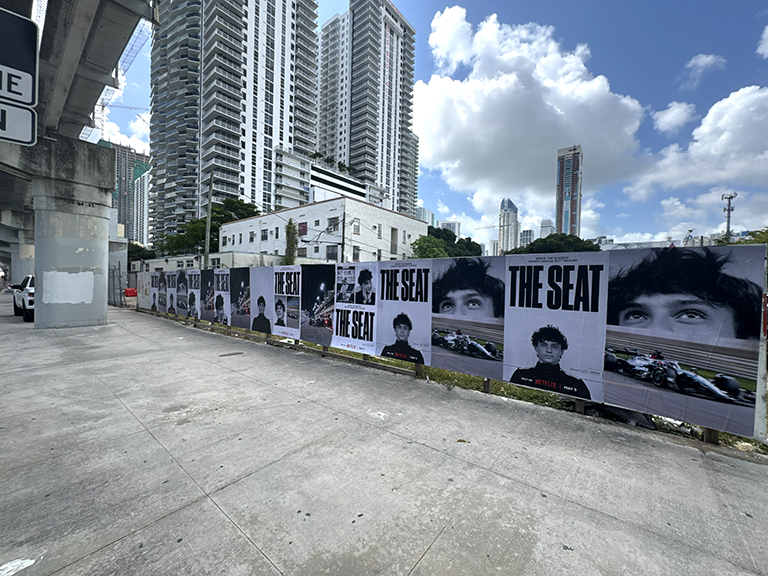
Flyposting in target neighborhoods 1-2 weeks before the pop-up opens creates neighborhood-level anticipation and directs the community’s curious attention toward the upcoming opening. Sidewalk stencils on approach routes in the opening week create a branded pedestrian path that guides foot traffic toward the pop-up entrance. LED billboard trucks on surrounding approach corridors during peak hours drive additional foot traffic from the surrounding neighborhood. Brand ambassador teams in blocks surrounding the pop-up invite passersby to visit, creating the sense of active community buzz around the activation that social media content alone cannot generate.
Frequently Asked Questions: Pop-Up Store Marketing
What is a pop-up store and how does it work as a marketing tool?
A temporary retail or brand experience environment appearing for days, weeks, or months in a location that creates surprise and foot traffic through novelty. Pop-ups create brand experiences with urgency, exclusivity, and discovery that generate social content, press coverage, and word-of-mouth unavailable from traditional advertising. The temporary nature itself is a marketing asset.
What makes a pop-up store successful?
Clear brand purpose beyond selling product, culturally resonant or strategically surprising location, visually distinctive design that attracts pedestrian attention, an exclusivity element creating urgency, and a social amplification hook giving visitors a clear reason to share their experience with their networks.
How much does a pop-up store cost?
Minimal one-week pop-up in existing space: $5,000-$15,000. Custom-designed two to four week pop-up in a high-traffic location: $20,000-$75,000. Flagship brand pop-up with custom architecture and multi-week duration: $100,000-$500,000+. Location rent and design build-out are the largest cost variables.
Where are the best pop-up store locations?
Neighborhoods combining high pedestrian foot traffic with cultural relevance to the brand’s target audience — SoHo and Meatpacking in New York, Melrose in Los Angeles, Bucktown in Chicago, the Design District in Miami. Unexpected locations in the last place you would expect the brand can create more media interest than obvious premium retail zones, depending on the brand’s narrative.
How do pop-up stores generate social media sharing?
By creating designed photograph-worthy visual moments, offering limited products or experiences not available anywhere else, creating discovery moments visitors want to document, incorporating participatory elements that produce personalized content, and building in social prompts (hashtags, share-to-unlock offers, UGC competitions) that convert visits to posts.
How do pop-up stores integrate with guerrilla marketing?
As the experiential centerpiece around which physical campaign elements are organized: flyposting in surrounding neighborhoods drives pre-awareness, LED trucks on approach corridors create directional awareness during the pop-up window, ambassador teams in surrounding blocks extend geographic reach, and sidewalk stencils create branded paths from pedestrian traffic flows to the pop-up entrance.
Frequently Asked Questions
What is dynamic delights unleashing creativity through pop up stores?
American Guerrilla Marketing provides dynamic delights unleashing creativity through pop up stores services across 50+ U.S. markets. Every campaign is planned, scouted, executed, and GPS-documented by our field teams. We work with regional brands and Fortune 500 companies on campaigns that require real street-level execution and documented proof of performance.
How does AGM approach up stores?
Our process starts with a market consultation to understand your goals, target audience, and budget. We then scout locations, handle any required permissions or permits, coordinate production and installation with our local crews, and provide a full GPS-tagged photo report after the campaign runs.
What markets does American Guerrilla Marketing cover for up stores?
We operate in 50+ U.S. markets including New York, Los Angeles, Chicago, Miami, Houston, Atlanta, Seattle, Denver, Boston, and dozens of secondary markets. Contact us to confirm availability and pricing for your specific market.
How much does a up stores campaign cost?
Campaign pricing depends on market, format, quantity, and duration. We work with budgets ranging from targeted single-market runs to national rollouts across multiple cities. Use our RFP Builder or contact us directly for a custom quote based on your specific campaign requirements.
How do I get started with up stores through AGM?
The fastest way to get started is to submit your campaign details through our RFP Builder at americanguerrillamarketing.com, or contact us directly at [email protected] or (646) 776-2770. Our team typically responds within one business day with availability and initial pricing.