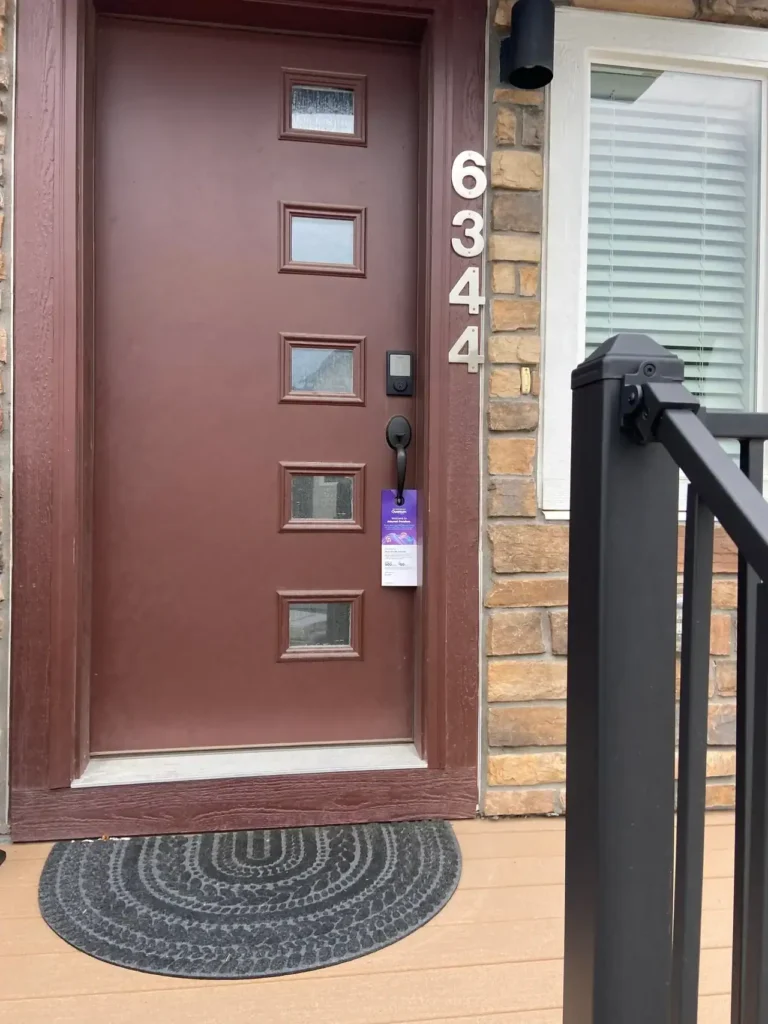
Door hanger promotions in Florida reach households across Miami, Orlando, Tampa, Jacksonville, Fort Lauderdale, St. Petersburg, and every community in between with a directness and precision that no digital advertising channel can match at the neighborhood level. Florida is one of the largest, fastest-growing, and most demographically diverse states in the country. It is also one of the best environments for door hanger marketing because of a combination of high new-resident influx, strong neighborhood community identity in urban markets, and the perpetual motion of a state where people are always moving in, moving around, and looking for new local connections.
American Guerrilla Marketing deploys door hanger campaigns across Florida for restaurants, healthcare systems, home services companies, HVAC businesses, pest control operators, telecom providers, real estate agents, and national brands targeting specific Florida neighborhoods or regional markets. Our team at Industry City in Brooklyn, NY coordinates Florida field operations with GPS-tracked accountability on every placement. Every campaign ends with a documented proof-of-distribution report showing exactly where your materials landed and when they were placed.
Florida’s market conditions are unlike any other state. Year-round warm weather supports year-round distribution. The state’s enormous geographic reach from Pensacola to Key West spans multiple distinct metro markets, each with its own consumer culture and response patterns. This guide covers which Florida markets perform best for door hanger campaigns, which industries see the strongest response, how to design materials that convert in Florida’s heat and humidity, and how to build a multi-tactic local marketing strategy that uses door hangers as a cornerstone.
Why Door Hanger Marketing Thrives in Florida
Florida has several structural characteristics that make it an exceptional environment for door hanger marketing. Understanding these advantages helps explain why brands that run door hanger campaigns in Florida consistently see strong results.
Massive New Resident Population
Florida has been a top-three destination state for domestic migration for over a decade. Hundreds of thousands of new residents arrive every year from the Northeast, Midwest, and other states. These new residents settle in communities across Miami-Dade, Broward, Palm Beach, Hillsborough, Orange, Duval, and Lee counties among others. They do not yet have established relationships with local HVAC technicians, dentists, pest control companies, restaurants, or retailers. A door hanger that arrives on their doorknob in the first weeks or months after moving is reaching someone who is actively in the market for exactly the services being advertised. The timing-to-need match in Florida’s new-resident markets is exceptional.
Year-Round Distribution Capability
Unlike northern states where winter conditions restrict distribution windows, Florida supports door hanger campaigns twelve months a year. The only significant scheduling consideration is Florida’s summer rainy season, which is predictable enough to plan around. This year-round availability means Florida campaigns can be timed precisely to service purchasing cycles, seasonal promotions, or competitive response windows without weather forcing last-minute changes.
High Physical Marketing Receptivity
Florida’s mix of homeowners, rental communities, and condominium residents creates a market where door hangers on doorknobs receive genuine attention. Unlike high-rise elevator buildings in dense urban markets where distribution is restricted, many of Florida’s residential neighborhoods consist of single-family homes, townhomes, and low-rise apartments that provide straightforward doorknob access. The format works precisely in the residential typology that dominates most Florida markets outside of downtown Miami and a few other dense urban cores.
Key Florida Markets for Door Hanger Distribution
Florida’s population is distributed across multiple distinct metro markets. Our guerrilla marketing services team designs distribution plans at the market and neighborhood level for each Florida client.
Miami-Dade and South Florida
Miami-Dade County and the surrounding South Florida tri-county area (Broward, Palm Beach) constitute the largest and most diverse door hanger market in Florida. Miami’s neighborhoods offer extraordinary demographic range: Wynwood and Brickell attract young professionals and international residents; Coconut Grove and Coral Gables house established high-income families; Little Havana, Hialeah, and Doral have large Latino working-class populations; North Miami and North Miami Beach mix families and young adults across multiple income levels. Miami Beach’s residential streets behind the commercial corridor reach a mix of year-round residents and longer-term seasonal tenants. Fort Lauderdale’s Wilton Manors, Victoria Park, and Tarpon River neighborhoods offer distinct consumer communities. Boca Raton, Delray Beach, and West Palm Beach round out the South Florida corridor with high-income suburban markets that respond well to home services, healthcare, and financial services campaigns.
Orlando and Central Florida
Orlando is one of the fastest-growing markets in the entire country and an outstanding door hanger market. The city’s residential neighborhoods include Lake Eola Heights, Thornton Park, Colonialtown, College Park, and the rapidly growing Lake Nona and Horizon West communities in the southwest. Orlando’s extraordinary population diversity, driven by tourism industry workers, tech sector growth, and migration from Puerto Rico and Latin America, creates a rich variety of consumer profiles for targeted campaigns. The surrounding Central Florida communities including Kissimmee, Altamonte Springs, Oviedo, and Winter Garden offer suburban homeowner markets with strong demand for home services, healthcare, and restaurants.
Tampa Bay
Tampa, St. Petersburg, and Clearwater constitute the Tampa Bay market, one of Florida’s most dynamic metros. Tampa’s Seminole Heights, South Tampa, and Ybor City neighborhoods each have distinct community identities and consumer profiles. St. Petersburg’s Central Arts District, Grand Central, and Crescent Lake neighborhoods have attracted a strong creative and young professional population. Clearwater’s residential communities offer suburban homeowner density. The Tampa Bay area has seen significant population growth and is excellent territory for restaurant launches, home services campaigns, and healthcare patient acquisition campaigns.
Jacksonville
Jacksonville is Florida’s largest city by land area and the commercial hub of northeast Florida. San Marco, Riverside, Avondale, and Ortega are established intown neighborhoods with homeowner-majority demographics and strong spending power. The growing suburbs of Fleming Island, Ponte Vedra, and St. Johns County to the south are high-income homeowner communities with active demand for home services, healthcare, and retail. Jacksonville’s size means that neighborhood-level targeting is essential for efficient distribution. Our team builds Jacksonville campaigns at the neighborhood or zip code level to avoid paying for coverage in geographic areas that do not match a client’s customer profile.
Southwest Florida: Fort Myers, Cape Coral, Naples
Southwest Florida has grown at a remarkable rate and is one of the best regional door hanger markets in the state. Cape Coral is one of the largest cities in the United States by land area with a predominantly single-family homeowner residential structure that is ideal for door hanger distribution. Fort Myers and Naples offer distinct market profiles, with Naples skewing significantly higher income. The region’s large retiree population and active real estate market make home services, healthcare, financial services, and real estate campaigns particularly effective throughout Southwest Florida.
Industries with the Strongest Florida Door Hanger Results
These categories consistently produce the best return from door hanger distribution across Florida markets.
HVAC and Home Services
Florida homeowners spend heavily on HVAC maintenance and repair. The subtropical climate creates near-constant demand for air conditioning service, and the state’s humidity creates ongoing demand for pest control, roofing, and waterproofing. Door hangers from HVAC companies, pest control operators, and home improvement businesses reach Florida homeowners at the precise place and context where these purchasing decisions are made. Our team times Florida home services campaigns around HVAC maintenance cycles, post-storm inspection windows, and seasonal pest pressure peaks to maximize response. Flyer distribution in commercial zones alongside residential door hanger runs extends reach to property managers who handle maintenance purchasing for rental portfolios.
Restaurants and Food Service
Florida’s restaurant market is enormous, diverse, and competitive. New restaurant openings in Miami, Orlando, Tampa, and Jacksonville use door hanger distribution in residential neighborhoods within a delivery or short drive radius to generate first-visit trial. Cuban restaurants in Hialeah, fusion concepts in Wynwood, family dining in Orlando suburbs, and seafood restaurants in Tampa and Clearwater all use this channel to build the initial customer base before review platform performance takes over as the primary traffic driver. Florida’s food-forward consumer culture makes residents genuinely receptive to restaurant door hanger promotions that include a clear first-visit offer.
Healthcare and Dental Practices
Florida’s large and growing population, combined with significant healthcare access disparities in some markets, creates ongoing patient acquisition opportunity for healthcare practices of all types. Primary care, dental, vision, urgent care, and specialty practices use door hangers to introduce themselves to new residents and reach underserved neighborhoods. Florida’s large Medicare-eligible population in Southwest Florida and the Treasure Coast creates specific opportunity for practices that specialize in senior care, and door hangers remain one of the most effective ways to reach senior homeowners at home.
Insurance and Financial Services
Florida’s insurance market is one of the most active in the country, driven by hurricane and flood coverage requirements, rapidly changing carrier availability, and high consumer sensitivity to coverage gaps. Independent insurance agents and financial advisors use door hangers in Florida to introduce themselves to homeowners who may be facing coverage renewals, lapses, or the need to switch carriers. The physical format lends credibility that digital insurance advertising often lacks with older homeowner demographics.
Real Estate Agents
Florida’s perpetually active real estate market drives strong demand for real estate agent door hanger campaigns. Agents farm specific neighborhoods in Miami, Tampa, Orlando, and Southwest Florida by distributing door hangers announcing recent listings, sales, and their area expertise. The physical format keeps an agent’s name and face in front of potential sellers in a way that digital ads cannot sustain over time.
Design Principles for Florida Door Hanger Campaigns
Florida’s consumer culture, climate, and demographic diversity inform specific design choices that consistently improve door hanger performance.
Bold Color and High-Contrast Design
Florida’s year-round bright sunshine means door hangers are often viewed in strong outdoor light. Bold color palettes, high-contrast text, and clean layouts are essential for readability at a glance. Overly detailed designs that look good on screen often wash out in strong outdoor light. Design for the reading environment, not the design file preview.
Multilingual Options in Diverse Markets
Miami-Dade, Hialeah, Doral, and many other Florida markets have large Spanish-speaking populations. Door hangers printed in both English and Spanish consistently outperform English-only creative in these markets. Central Florida’s growing Puerto Rican and Latin American communities create similar bilingual opportunities in Orlando-area campaigns. Our team advises on language strategy for Florida campaigns based on the specific neighborhood demographics being targeted.
Weather-Resistant Materials
Florida’s humidity and summer rains make material quality important for door hanger campaigns. We use weatherproof or water-resistant stock for all Florida distributions so that even if a door hanger is placed before an afternoon rain, the message remains fully legible when the resident retrieves it. This material investment protects the brand impression and ensures the design quality that was specified in print is the design quality that the recipient experiences.
Clear, Specific Offer in the Headline
Florida consumers respond to direct, specific offers. Timely seasonal offers, new resident promotions, and geographic referencing all perform well. “Welcome to Orlando, new residents” or “For Cape Coral Homeowners: Free HVAC inspection” creates immediate relevance. Generic brand awareness messaging underperforms specific offer creative consistently across Florida markets.
The Distribution Process in Florida
Our Florida campaigns follow a documented process that ensures full accountability at every stage.
Route Planning with Climate Scheduling
We map Florida distribution routes by neighborhood, zip code, or radius and schedule crew deployment for morning hours to avoid peak afternoon heat. Coastal markets in South Florida and Southwest Florida are planned with hurricane season awareness built in. Every route is mapped and approved before field deployment begins.
GPS-Tracked Field Deployment
Florida field crews place materials on residential doorknobs, photograph placements throughout each shift, and maintain GPS logging from start to finish. Gated communities, no-soliciting properties, and high-rise buildings where access is restricted are identified and adjusted in final counts. Every shift is documented before crew dismissal.
Post-Campaign Reporting
Clients receive a full report with route maps, photo documentation, placement counts, and timestamps. Response tracking data is integrated for campaigns with unique tracking mechanisms.
Our brand ambassador agency team augments Florida door hanger campaigns with street team activations at Miami’s Wynwood Walls, Orlando’s Lake Eola Farmers Market, Tampa’s Armature Works, and other high-pedestrian locations for clients who want simultaneous residential and public coverage.
Integrating Door Hangers with Other Florida Guerrilla Tactics
Door hangers amplify when layered with other street-level formats.
Street Teams at Tourist and Community Events
Street team marketing at Florida’s farmers markets, beach boardwalks, and community events creates a public touchpoint for the same audience reached at home by door hangers. South Florida’s Art Walk events, Tampa’s events at Curtis Hixon Park, and Orlando’s downtown festivals all provide excellent street team activation environments that complement residential distribution.
Sidewalk Stenciling for Business Visibility
Sidewalk stencils near a business or event location reinforce the door hanger message residents received at home. In Miami’s Wynwood and Brickell neighborhoods, and in St. Pete’s Grand Central district, stencils in high-pedestrian zones keep a brand visible to residents who walk these corridors regularly.
LED Billboard Trucks on Major Corridors
Combining residential door hanger distribution with LED billboard trucks on Miami’s Biscayne Boulevard, Orlando’s International Drive, or Tampa’s Dale Mabry Highway creates metro-wide visibility alongside neighborhood-level saturation.
Poster Campaigns for Extended Visibility
Wheatpasting and poster campaigns in approved Florida locations extend campaign life over weeks. Coordinating posters and door hangers around a launch creates a sustained awareness window that single-format campaigns cannot generate independently.
Starting Your Florida Door Hanger Campaign
Our team reviews your target Florida market, campaign goals, and creative assets, then proposes a distribution plan with clear scope and deliverables. Download our capabilities deck for a full overview of how we operate across Florida and all 50-plus markets we serve. Call (646) 776-2770 or reach out through our contact page to begin.
Frequently Asked Questions About Door Hanger Promotions in Florida
How does door hanger distribution work in Florida?
Our team maps target neighborhoods across Miami, Orlando, Tampa, Jacksonville, and other Florida markets, then deploys trained field crews to place promotional materials on residential doorknobs. GPS tracking documents every placement throughout each shift, and clients receive a full post-campaign report with photo documentation and placement counts.
Which Florida cities do you cover for door hanger campaigns?
We cover all major Florida markets including Miami, Miami Beach, Orlando, Tampa, Jacksonville, Fort Lauderdale, St. Petersburg, Hialeah, Tallahassee, Cape Coral, Fort Myers, Gainesville, and surrounding communities. We cover all Florida zip codes.
What industries perform best with door hanger promotions in Florida?
Florida door hanger campaigns perform exceptionally well for restaurants, home services, HVAC, pest control, healthcare, real estate, insurance, telecom providers, and tourism-related businesses.
How do you handle Florida’s weather and heat for door hanger distribution?
Florida’s heat and summer rainy season are factored into every distribution plan. We schedule crews for early morning deployment to avoid peak afternoon heat, use weatherproof print materials, and plan around severe weather forecasts.
How much do door hanger promotions cost in Florida?
Florida campaign costs depend on distribution volume, geographic scope, and target market. Contact American Guerrilla Marketing at (646) 776-2770 for a custom Florida quote.
Can door hanger campaigns reach Florida’s large population of new residents and recent transplants?
Absolutely. Florida has been one of the top destination states for domestic migration for over a decade. New residents in communities across the state are actively establishing relationships with local service providers, healthcare practices, restaurants, and retailers. Door hangers that reach these new households early consistently generate strong response.
Frequently Asked Questions
What is door hanger promotions flordia?
American Guerrilla Marketing provides door hanger promotions flordia services across 50+ U.S. markets. Every campaign is planned, scouted, executed, and GPS-documented by our field teams. We work with regional brands and Fortune 500 companies on campaigns that require real street-level execution and documented proof of performance.
How does AGM approach promotions flordia?
Our process starts with a market consultation to understand your goals, target audience, and budget. We then scout locations, handle any required permissions or permits, coordinate production and installation with our local crews, and provide a full GPS-tagged photo report after the campaign runs.
What markets does American Guerrilla Marketing cover for promotions flordia?
We operate in 50+ U.S. markets including New York, Los Angeles, Chicago, Miami, Houston, Atlanta, Seattle, Denver, Boston, and dozens of secondary markets. Contact us to confirm availability and pricing for your specific market.
How much does a promotions flordia campaign cost?
Campaign pricing depends on market, format, quantity, and duration. We work with budgets ranging from targeted single-market runs to national rollouts across multiple cities. Use our RFP Builder or contact us directly for a custom quote based on your specific campaign requirements.
How do I get started with promotions flordia through AGM?
The fastest way to get started is to submit your campaign details through our RFP Builder at americanguerrillamarketing.com, or contact us directly at [email protected] or (646) 776-2770. Our team typically responds within one business day with availability and initial pricing.