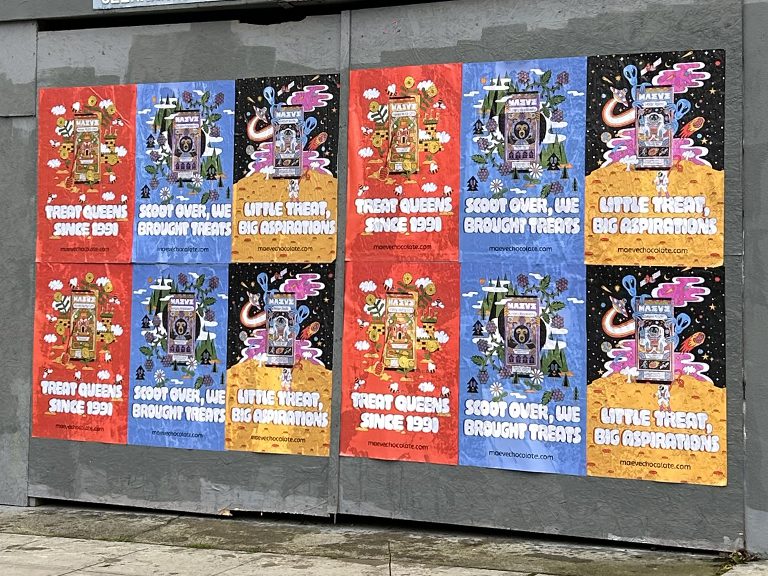
Seattle’s most valuable advertising audiences are not on the freeway. They are walking through Capitol Hill, working in South Lake Union, and spending weekends in Fremont. Street-level display advertising reaches them where they actually are.
Seattle is one of the most compact major cities in the United States. With about 750,000 residents in the city proper and the Pacific Northwest’s largest economy anchored here, Seattle delivers a dense urban advertising market that rewards street-level placement strategies. The combination of a strong pedestrian culture in neighborhoods like Capitol Hill, Fremont, and Belltown, and a tech-industry workforce concentrated in South Lake Union and the Denny Triangle, creates an advertising environment where physical outdoor campaigns reach genuinely high-value audiences.
Display advertising in Seattle, particularly at street level in these key neighborhoods, is the physical layer of a broader advertising strategy. For brands that want to reach Seattle’s technology professionals, its arts community, its food-and-beverage consumers, and its outdoor-active demographic, display advertising in the right Seattle corridors delivers concentrated, repeated exposure to exactly those audiences.
Seattle’s advertising market is shaped by several factors that distinguish it from other West Coast metros.
The technology industry dominates the Seattle economy and creates a high-earning, educated consumer base with strong brand preferences and active research habits. Amazon, Microsoft, and the network of technology companies around them employ hundreds of thousands of people in the greater Seattle area, many of whom live in the city’s walkable neighborhoods. This is not the average advertising audience — it is a highly desirable segment with significant purchasing power and a strong preference for brands that demonstrate quality and authenticity.
Seattle’s outdoor culture — hiking, running, cycling — shapes the city’s aesthetic and the kinds of brands that resonate. Outdoor apparel, fitness, food and beverage, and technology brands have natural audiences in Seattle. The city’s density of independent restaurants, coffee shops, and retail creates a commercial environment where brands can reach consumers in high-attention contexts: waiting for coffee, eating lunch, walking between meetings.
Seattle’s rain is real and it affects advertising. Materials used in Seattle display campaigns need to be weather-resistant for much of the year. Installation scheduling needs to account for precipitation. AGM’s Seattle campaigns are planned with these conditions factored into material selection and installation timing.
Seattle’s Key Advertising Corridors
Capitol Hill
Capitol Hill is Seattle’s most walkable neighborhood and its creative cultural hub. Broadway and Pike-Pine corridors are lined with independent businesses, restaurants, bars, and galleries that draw foot traffic throughout the day and evening. The neighborhood’s resident demographic — LGBTQ+ community members, artists, musicians, tech workers, students from Seattle University and Seattle Central — is one of the most diverse and engaged in the city.
Display advertising in Capitol Hill reaches this engaged community in the specific pedestrian corridors where they spend their time. The neighborhood’s social media culture is strong, and well-executed campaigns here generate organic documentation from residents who are attentive to what appears on their streets.
Fremont
Fremont calls itself the “Center of the Universe,” which is an accurate reflection of the neighborhood’s personality. The commercial corridor along Fremont Avenue and 35th Street supports a mix of independent retailers, restaurants, and the kind of quirky installations that make Fremont’s street-level environment distinctive. Display advertising in Fremont works best when it respects the neighborhood’s irreverent aesthetic. Generic brand messaging lands poorly here. Creative work that has a point of view and a sense of humor performs.
South Lake Union
South Lake Union is Seattle’s technology headquarters district, home to Amazon’s main campus and dozens of tech companies. The area’s weekday daytime population of technology workers is one of the highest-value advertising demographics in the country — educated, high-earning, and actively evaluating consumer and B2B products. Display advertising in South Lake Union reaches this audience during their working hours when they are walking between buildings, getting lunch, and moving through the neighborhood.
Ballard
Ballard has evolved from a Scandinavian fishing community into one of Seattle’s most popular residential and restaurant neighborhoods. The Market Street and Ballard Avenue corridors draw the neighborhood’s resident population and visitors from across the city. Display advertising in Ballard reaches a slightly older, more settled audience than Capitol Hill — families, established professionals, long-term Seattle residents.
Belltown
Belltown’s position between downtown Seattle and Uptown gives it a mixed audience of downtown workers, nightlife visitors, and residents in the neighborhood’s significant residential tower stock. Display advertising in Belltown reaches consumers who are moving through the city rather than rooted in a specific neighborhood community — broader reach, lower neighborhood specificity.
Seattle’s technology community is one of the most digitally sophisticated advertising audiences in the country. Brands that show up in their physical environment — on the walls and boards of South Lake Union and Capitol Hill — earn a different kind of credibility than brands that only appear in their digital feeds. Physical presence signals investment. The Seattle tech audience notices and responds to it.
Seattle Display Advertising Formats
Poster Panels
Poster panels in Seattle’s pedestrian corridors reach residents and workers during their daily routines. The format works well in Capitol Hill, Fremont, and Ballard, where foot traffic is dense and the audience engagement with the street environment is high. Seattle poster panels need weather-resistant materials — UV-resistant inks, laminated surfaces, and strong structural specifications that hold up under Pacific Northwest precipitation.
Wheat Paste Campaigns
Wheat paste campaigns in Capitol Hill, the Central District, and Fremont reach Seattle’s arts community and creative professionals. The format has a long history in Seattle’s music and arts culture and is accepted by the neighborhoods that value its aesthetic. Property owner authorization is required for every AGM wheat paste placement — the format’s authenticity depends on it being placed where it belongs, not where it is not welcome.
Construction Fence Displays
Seattle’s rapid development has created an abundance of construction fence advertising opportunities, particularly in South Lake Union, the Denny Triangle, and expanding residential corridors. Construction fences along high-foot-traffic streets in development zones offer extended campaign durations at competitive rates, particularly for brands targeting the tech industry workforce concentrated in these areas.
Format
Best Seattle Neighborhoods
Audience
Typical Duration
Poster Panels
Capitol Hill, Fremont, Ballard
Neighborhood residents, daily commuters
2-4 weeks
Wheat Paste
Capitol Hill, Central District, Fremont
Arts community, creative professionals
2-6 weeks
Construction Fence
South Lake Union, Denny Triangle
Tech workers, downtown commuters
Project duration
Guerrilla Placements
Pike-Pine corridor, Fremont, Ballard
Foot-traffic pedestrians
Days to 2 weeks
Working with AGM on Seattle Display Advertising
AGM plans and executes display advertising campaigns in Seattle with the same process used in all our major market campaigns: audience mapping, location scouting, property-owner authorization, production, installation, and photo documentation.
The Seattle market is one where AGM’s field knowledge matters. We know which neighborhoods support which formats, which surfaces are available, and how to navigate the specific logistics of advertising installation in a Pacific Northwest urban environment. Brands that want Seattle display advertising that is properly executed and completely documented should contact AGM to discuss their campaign objectives and timeline.
Display Board Creative: What Makes Outdoor Advertising Actually Work
The creative quality of outdoor advertising is the single biggest determinant of campaign performance. A well-placed board with mediocre creative is invisible. A moderately-placed board with exceptional creative generates recall, sharing, and response. Understanding what makes outdoor creative effective at the display board level is essential for any brand planning a street-level campaign.
The Hierarchy of Visual Communication
Outdoor advertising creative succeeds by establishing a clear hierarchy of visual information: what the viewer sees first, what they see second, and what they take away from the full impression. The best outdoor creative is designed around this hierarchy with deliberate intention.
The first thing a viewer sees from 20 feet away is the dominant visual element — a bold color, a strong image, a graphic that commands attention. This is the hook. It determines whether the viewer’s eye stays with the board or moves on. If the dominant visual is weak, the campaign fails at the first opportunity regardless of how good the headline or brand identity is.
The second thing a viewer sees is the primary message — the headline or tagline that delivers the brand’s communication. This should be five to seven words maximum, written in the largest typographic element on the board, positioned to be read within one to two seconds of the viewer’s attention being captured by the dominant visual.
The third thing a viewer sees is the brand identity — the logo, brand name, or URL that tells the viewer who is responsible for this message. The brand identity must be large enough to read at distance and placed where the eye naturally moves after reading the headline. For most outdoor layouts, this means the brand identity is in the lower portion of the board, after the headline has delivered its message.
Typography for Outdoor Display Boards
Type choices for outdoor advertising are more constrained than for any other medium. Sans-serif fonts with generous letter spacing are more legible at outdoor viewing distances than serif fonts with tight tracking. All-caps headlines are not always more legible than sentence case — the choice depends on the specific typeface and the viewing distance.
The minimum typesize for outdoor advertising readability varies with viewing distance. A board viewed from five feet can support smaller type than a board viewed from 30 feet. AGM provides typesize guidance based on the specific viewing distance of each confirmed board location. Following this guidance prevents the common mistake of designing outdoor creative at screen resolution and discovering that the type is illegible at installation scale.
Photography and Image Selection for Display Boards
Photographic imagery on display boards needs to communicate the brand message in a single frame at reduced color fidelity. Outdoor lighting conditions — bright sun, overcast sky, rain — change the appearance of photographic images in ways that are not predictable from a monitor preview. The images that perform best on outdoor display boards are those with simple, clear subjects, strong foreground-background contrast, and bold color choices that maintain their impact across the range of outdoor lighting conditions.
Complex photographic compositions with many visual elements lose their detail at outdoor viewing distances and in variable lighting. A single subject, cleanly lit, against a simple background is almost always stronger for outdoor advertising than a complex multi-element composition.
Display Board Networks: How Inventory Works
Display board inventory in major U.S. markets is distributed across several types of operators and networks. Understanding the inventory environment helps brands identify the right supply for their campaign objectives.
Licensed media networks — companies like Lamar, Clear Channel (for street furniture formats), and Outfront Media — operate standardized display boards in transit corridors and commercial areas under licensing agreements with municipalities and property owners. Purchasing inventory from these networks is straightforward but offers limited geographic flexibility — you buy what is available in the network, in the locations they have licensed.
Independent display board operators control smaller networks of boards, often concentrated in specific neighborhoods or submarkets. These operators may have inventory in locations that the major networks do not cover — in arts districts, in specific cultural corridors, in neighborhoods that have not yet attracted large-network advertising investment. Working with independent operators requires more due diligence but can access locations that are genuinely differentiated from what every other advertiser is buying.
Property owner arrangements — working directly with building owners and business operators to use their surfaces for campaign installations — are the approach AGM uses for poster campaigns, wheat paste installations, and large-format custom placements. This approach requires more relationship-building and authorization work but delivers location-specific placements that cannot be purchased through any existing network.
Campaign Execution: What Actually Happens on the Ground
The gap between a campaign plan and a delivered campaign is where most outdoor advertising problems occur. Understanding what professional execution looks like — and what warning signs indicate a vendor is cutting corners — helps brands make better decisions when selecting partners for outdoor advertising campaigns.
Pre-Campaign Site Survey
Every properly executed outdoor advertising campaign begins with a site survey. Before any location is confirmed on a media plan, it should be visited, assessed for surface condition, photographed, and evaluated for audience access and visibility. A location that looks strong on a map or on an aerial view may have a surface that is degraded, a sightline that is blocked by vegetation or construction, or an access issue that complicates installation.
Site surveys are not optional. They are the difference between a campaign that delivers what was planned and a campaign that has to scramble to find replacement locations at the last minute because the original list had surface problems that were only discovered at installation time. AGM conducts site surveys for every campaign, in every market, before confirming any location.
Property Authorization
Every outdoor advertising surface that is not part of a licensed commercial board network requires documented property owner authorization before installation. This authorization protects the brand, it protects the installation crew, and it protects the campaign from removal by the property owner after installation.
Brands that work with vendors who install on unauthorized surfaces are accepting risks that include campaign removal, lost investment, and inability to document the campaign for any professional or legal purpose. AGM requires property owner authorization for every private-surface placement. This is not a best practice — it is a baseline requirement.
Material Selection and Print Quality
Outdoor advertising materials need to be specified for the specific environmental conditions of the campaign location. A campaign running in Chicago in October needs materials that can withstand cold, wind, and potential precipitation. A campaign running in Los Angeles in summer needs materials that can withstand UV exposure and heat. A campaign running in Seattle needs materials that can withstand persistent moisture.
Print quality for outdoor advertising requires higher resolution and more careful color management than digital creative. An image that looks sharp on screen may appear pixelated at outdoor scale. Colors that look accurate on a monitor may appear washed out or shifted under outdoor lighting conditions. AGM’s production specifications account for these differences and require print review before any material ships to the installation team.
Installation Logistics
Professional installation logistics in dense urban markets require route planning, timing coordination, and contingency planning for unexpected access issues. In New York, Chicago, and Los Angeles, parking and access restrictions affect installation routes in ways that inexperienced vendors underestimate. An installation that should take six hours can take twelve if the route is not planned and the access issues are not anticipated.
AGM’s installation crews in each market have direct experience with the specific logistical challenges of that market. They know which neighborhoods require early morning installations before business-hour traffic builds. They know which surfaces require specific installation methods. They know how to adapt when a location is unexpectedly unavailable on installation day — and they have pre-vetted backup locations ready to replace it.
Photo Documentation Protocol
Photo documentation is the evidentiary record of an outdoor advertising campaign. It should be captured at the time of installation, at each confirmed location, with consistent framing that shows the creative in context and confirms the location. Documentation photographs taken days after installation, in low light, or at angles that obscure the location context do not meet the standard of professional campaign documentation.
AGM’s documentation protocol requires a minimum of one confirmation photograph per location at the time of installation. For larger installations, multiple angles are captured. All photographs are tagged with the date and location. The complete documentation package is compiled and delivered to the client within five business days of the campaign concluding.
Working With Multiple Advertising Channels in Parallel
Most effective brand campaigns in major cities today do not rely on a single advertising channel. They coordinate physical outdoor advertising with digital advertising, public relations, social media, and sometimes direct event activations. Understanding how to coordinate these channels effectively — timing them to maximize overlap and reinforcement — is one of the more practical skills in modern brand marketing.
Sequencing Physical and Digital Campaigns
The standard recommendation for combining physical and digital advertising is to launch the physical campaign first. The outdoor campaign builds the initial awareness and recognition that makes subsequent digital touchpoints more effective. When the digital campaign activates — paid social, PPC, retargeting — it is reaching an audience that has already been exposed to the brand through physical channels. This prior exposure changes the quality of the digital interaction.
The ideal sequencing is: physical campaign launches two to three weeks before the digital campaign reaches full intensity. During the physical campaign’s first two weeks, the brand is building awareness among the target audience in the target geography. When the digital campaign activates, it is amplifying an existing physical presence, not introducing a completely unknown brand. The combination creates a multiplier effect that neither channel alone could produce.
Using Documentation Photography as Digital Creative
One of the most underutilized aspects of physical advertising campaigns is the documentation photography they generate. Professional installation photographs, taken in real city environments with the brand creative in context, are among the most effective digital advertising creative assets available. They are authentic. They signal real-world investment. They demonstrate genuine local presence in a way that no studio photograph can replicate.
Brands that use their outdoor campaign documentation photographs as paid social and display creative consistently report higher engagement rates and lower cost-per-click than brands using studio-produced creative. The reason is simple: the audience recognizes a real place when they see it, and recognition creates credibility. An ad that shows your brand on a real wall in a real Chicago neighborhood tells the audience something more convincing than any studio shot.
Event and PR Integration
Physical outdoor campaigns are natural vehicles for press coverage when the creative is distinctive enough to be worth covering. Local media in every major city regularly covers interesting brand campaigns that appear on the streets — not all campaigns, but the ones that do something genuinely creative or culturally relevant.
Brands that want to maximize the earned media potential of their outdoor campaigns should have a PR plan in place before the campaign installs. This means identifying the local media outlets that cover brand activations and design, preparing a press release or photo essay, and having someone available to answer media inquiries when coverage inquiries come in. The campaigns that earn press coverage are the ones that are ready for it.
Campaign Reporting and What It Should Include
Campaign reporting for outdoor advertising is less standardized than digital advertising reporting, but it should include a defined set of elements that confirm campaign delivery and provide meaningful performance data.
Report Element
What It Shows
Format
Installation photo set
Visual confirmation of each placement
One image per location, full-frame
Location map
Geographic distribution of placements
Annotated map with each confirmed location marked
Location list
Confirmed addresses or descriptions of each placement
Spreadsheet or list format
Campaign summary
Overview of what was planned vs. what was delivered
Written narrative
Dates of installation
Campaign timeline confirmation
Installation date per location or overall
Digital metrics — website traffic, branded search volume, social media engagement — should be tracked separately by the brand’s analytics team and correlated with the outdoor campaign dates to assess the campaign’s contribution to these signals. The outdoor vendor provides the physical delivery documentation. The brand’s analytics team provides the performance context.
Frequently Asked Questions
What display advertising services does AGM offer in Seattle?
AGM plans and executes street-level display advertising campaigns in Seattle including poster panel campaigns, wheat paste installations, guerrilla placements, and construction fence advertising. We handle location planning, production, installation, and documentation.
Which Seattle neighborhoods does AGM cover for display advertising?
AGM’s Seattle display advertising campaigns cover Capitol Hill, Fremont, South Lake Union, Ballard, Belltown, the Central District, and other active pedestrian corridors. The neighborhood selection depends on the client’s target audience.
How does weather affect display advertising campaigns in Seattle?
Seattle’s frequent precipitation requires weather-resistant materials for all outdoor advertising. AGM specifies UV-resistant inks, laminated surfaces, and structurally sound installation methods that hold up under Pacific Northwest conditions. Material selection is always weather-appropriate.
What documentation does AGM provide for Seattle display campaigns?
Every Seattle campaign concludes with a photo documentation package: installation photos at each location, a location map, and a summary report. This documentation confirms campaign delivery and provides assets for social media and reporting.
How long does a Seattle display advertising campaign take to plan and execute?
Standard Seattle display campaigns take three to five weeks from initial contact to installation. This covers location scouting, property agreements, print production, and installation scheduling. Rush timelines may be possible depending on scope.