
November 3, 2026
Decal Lifespan Outdoors: How Long They Really Last
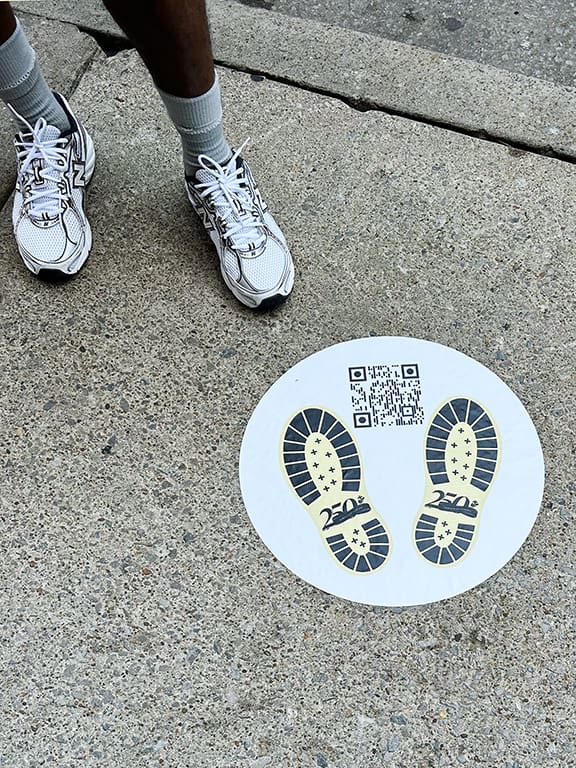
Nobody asks me how long a decal lasts until a decal has already failed.
The question usually arrives on day eleven of a campaign, as a photograph. A corner has curled. The black has gone chalky. There is a shoe shaped scuff through the middle of the logo. The brand team wants to know whether they bought bad material.
Usually they did not. Usually they bought correct material and put it somewhere that was never going to let it reach its rated life.
Outdoor decal lifespan is not a property of the sticker. It is the result of four things fighting each other: the face material, the laminate, the surface it is pressed into, and the specific abuse pattern of that specific location. Change any one and the answer changes by months.
This page is the honest version of that math, from a crew that has gone back and scraped up the results.
I want to be clear about something up front. Material manufacturers publish durability figures, and those figures are real, but they describe vertical exposure under controlled conditions. A rating that describes a sign bolted to a wall tells you almost nothing about the same material pressed into a sidewalk where thousands of shoes grind it every day.
The four things that actually kill a decal
Abrasion is the first and the biggest, for anything on the ground. Every footstep is a small grinding event. The face material wears, the ink wears with it, and the printed image goes pale in the exact places people walk. On a busy downtown corridor I have seen legible artwork go soft in under two weeks purely from traffic. On a quiet residential block the same material can hold its image for months.
UV is the second. Ultraviolet exposure breaks down pigment and embrittles the face film. It hits reds and process magenta hardest, which is why a brand campaign built on a warm red palette looks tired before one built on blue. South facing surfaces with no shade cook. North facing and shaded surfaces last noticeably longer, and we actually track this when we survey a corridor.
Water intrusion is the third, and it is the one that produces catastrophic failure rather than gradual decline. A decal does not usually fail in the middle. It fails at an edge where water got underneath, then capillary action carried it inward, then traffic or wind peeled the loosened section. Everything about edge sealing and roller pressure exists to delay this.
Thermal cycling is the fourth. Vinyl expands and contracts with temperature. Concrete and glass do too, at different rates. Over enough day and night cycles that differential works the adhesive at the perimeter. In climates with large daily temperature swings this ages a decal faster than the raw temperature would suggest.
Add a fifth for northern cities: freeze thaw. Water gets under an edge, freezes, expands, and physically levers the material off the surface. Then road salt and grit finish the job. This is why I am cautious about exterior ground decals in winter in Chicago, Boston, Denver or Minneapolis, and why I will say so before taking the booking.
Realistic lifespan by placement
I am going to give ranges rather than numbers, because anyone giving you a single number for outdoor decal life is selling you something.
Interior floor graphics in a lobby, retail space or venue concourse are the longest lived of the family. Stable temperature, no UV, controlled cleaning. With a proper anti slip laminate these hold their appearance through a long campaign and typically fail from scuffing at high pivot points rather than from material breakdown. Entrances and lift lobbies wear first because that is where people turn.
Exterior window decals are next. Glass is kind to adhesive, the material sits vertical so water sheets off it, and the main enemy is UV on sun facing elevations. Interior applied window graphics facing out last longer still because the glass itself blocks some of the ultraviolet load and nothing physically touches the face.
Exterior wall decals on smooth sealed surfaces do reasonably well. Vertical orientation means no abrasion and good drainage. The limiting factor is usually surface quality and whether the wall has a coating the adhesive is slowly working against.
Exterior ground decals are the hardest case in the category, and the range is enormous. A short burst on a quiet surface can look sharp for the whole run. A placement in a heavy pedestrian crush can be visibly degraded within days. I plan these as consumable, not durable, and I say so in the first conversation.
Crosswalk adjacent and vehicle crossed surfaces are a category I generally refuse. Tire scrub is a different order of abrasion from footfall, and the risk conversation with the municipality is different too.
The laminate does more work than the print
If I could change one thing about how brands buy decals, it would be the attention paid to laminate.
The printed face is not what the world touches. The laminate is. It takes the abrasion, it carries the UV inhibitors, it provides slip resistance on floor applications, and it is the layer that determines whether the artwork is still legible in week four.
Thicker and more aggressive laminates survive foot traffic better. They also cost scope in other ways: they are stiffer, which means they conform worse to textured surfaces, and they are heavier, which means they need a stronger adhesive to stay flat. That is the tradeoff nobody mentions. The thing that makes a floor decal survive traffic is the same thing that makes it harder to keep stuck down and harder to remove later.
For outdoor ground work we favour a textured anti slip laminate, both because it survives and because slip resistance on a wet sidewalk is a genuine safety question rather than a specification detail. A glossy laminate on an exterior walking surface in the rain is something I will argue against firmly.
For window and wall work the laminate choice is mostly about UV and about finish. Matte reads better under direct sun and under projection or streetlight. Gloss reads better in shade and photographs better, which matters if the campaign is partly built to be photographed.
Unlaminated digital print outdoors is a short term proposition in every climate I have worked in. If someone has quoted you an outdoor decal campaign without a laminate, ask why.
Surface condition sets the ceiling
A decal cannot outlive its bond, and the bond is set by the surface.
Smooth sealed concrete, polished stone, sealed terrazzo and glass give full contact. The material gets to perform to its potential.
Broom finished concrete, the standard American sidewalk, gives partial contact across a ridged texture. The decal is gripping the high points only. Expect meaningfully reduced life and expect edges to be the failure point. Heavier roller pressure and a high tack adhesive recover some of this, not all of it.
Old, weathered, patched or spalling concrete is where life expectancy collapses. The surface is shedding its own top layer. The decal is bonded to material that is itself coming loose. I have pulled decals that took a thin skin of concrete with them, not because the adhesive was too strong but because the concrete was already failing.
Exposed aggregate is a refusal. There is no continuous plane.
Brick and pavers with recessed joints are a conditional. A decal can be sized to sit within a paver face, but anything spanning joints will tent over the gaps and tear.
We photograph the surface before we quote for exactly this reason. Corridor names on a map do not tell me what the ground is made of. A photo set does.
Water, ponding and drainage
Rain does not damage a well installed decal. Standing water does.
The distinction matters because clients tend to ask about rainfall totals when the number that predicts failure is how long water sits on the placement. A sheeting surface that drains in minutes is close to harmless. A shallow low spot that holds a puddle for hours after every shower is a slow attack on the adhesive perimeter, and it will take a placement apart in a fraction of its expected life.
Sidewalks are not flat. They are built with a cross slope to shed water toward the gutter, and decades of settlement, tree root heave and utility patching have given most American blocks a set of small basins nobody notices when it is dry. Those basins are invisible on a sunny site visit, which is why I ask crews to survey after rain wherever the schedule allows, or at minimum to look for the staining and silt lines that mark where water collects.
Drain adjacency is its own problem. The apron around a storm drain carries concentrated flow during every rainfall, and that moving water carries grit with it. A decal placed in that path is being sandblasted on a schedule set by the weather.
The same logic applies to building entries with poor roof drainage, awning drip lines and the base of downspouts. Those are high visibility spots, which is exactly why clients want them, and they are among the worst performing surfaces we work on.
Where a client insists on a placement in a wet zone, we move the artwork a short distance to the nearest surface that drains, seal the perimeter carefully and set the expectation that this specific placement is on a shorter clock than its neighbours. Naming the weak placement in advance is better than discovering it in a complaint photograph.
What a long run actually requires
If a client wants a decal campaign to stay presentable across a long flight, the answer is not a tougher material. It is a maintenance plan.
Scheduled refresh is how this is done properly. The campaign is planned in waves, with the highest traffic placements replaced partway through and the quieter placements left to run. This keeps the visible quality high without reprinting everything.
Spot replacement needs documentation to work. Our crews photograph every placement at install with its location logged, so that a replacement visit knows exactly which surfaces to hit and what artwork goes where. Without that record a refresh visit turns into a scavenger hunt.
Cleaning extends life more than people expect, particularly indoors. Grit sitting on top of a laminate acts like sandpaper under every footstep. A decal that gets swept is a decal that keeps its image longer. We give venue and retail clients a short note on what cleaning agents are safe on the laminate, because aggressive solvents will haze it.
Edge inspection catches most failures before they become visible. A lifted corner on day five is a thirty second fix with a roller. The same corner on day fifteen is a torn decal.
Crew reality on install and refresh
An exterior ground decal run is an early morning job. Crews of two or three work a corridor roughly between 4am and 8am, before pedestrian volume makes the work unsafe and before the surface warms past the point where dust and the sun start working against placement.
The sequence is consistent. Sweep, clean, dry, check surface temperature, position, place from the centre out, roll the full face, then roll the perimeter twice more. Photograph. Move on.
Dry time is the step most often rushed and the step most responsible for early failure. A surface that looks dry can still hold moisture in the texture. On damp mornings crews carry blowers and the schedule has to allow for it.
Interior floor work runs between venue close and open, typically a smaller window but far easier conditions. Clean surfaces, stable temperature, no weather. A two person crew covers a lot of ground in a night.
Refresh visits are faster than installs because the surface prep is partly known, but removal of the old material has to happen first and that is the slow half.
Permission, ordinance and the end of the run
Where you can put a decal is a grey area and it genuinely varies by municipality. Some cities have a written pathway for temporary ground graphics. Some address them only under broader signage or public property language. Enforcement is inconsistent, sometimes between neighbourhoods in the same city, and the practical decision maker on a given block is often a property owner or a business improvement district rather than anyone at city hall.
I will not tell you that a given placement is permitted or prohibited. I will tell you how we manage the exposure.
We work from property owner permission in writing wherever possible. We favour private surfaces, building forecourts, plaza space under single ownership and interior floors, because the permission chain is clean. We document surface condition before and after. We commit to a removal date and we meet it.
That last point connects directly to lifespan. A material left past its removability window becomes a removal problem, and a removal problem becomes a property damage conversation. Lifespan planning and permission management are the same discipline. If you plan a run longer than the material can honestly serve, you have created a liability at the end of it.
What we talk clients out of
Long outdoor ground campaigns on a single install. If the flight is long, plan waves. Pretending one install will carry it is how campaigns end up looking neglected in their most visible weeks.
Fine detail and small type on ground decals. Abrasion eats detail first. A logo with hairline elements will go illegible while the overall decal still looks fine. I push for bold forms and large type on anything people walk on.
Warm red and orange dominant palettes on long sun exposed runs. Those pigments fade fastest. If the brand palette is fixed, we place those pieces on shaded elevations and put the stable colours in the sun.
Exterior ground work in a northern winter. Freeze thaw will beat the material. I would rather put that budget into Projection Advertising, which does not care about the state of the pavement and runs beautifully in long winter nights, or onto mobile formats.
Giant single piece floor graphics. Tile them. Large spans fight thermal movement and amplify every surface irregularity. Panelled artwork with deliberate seams survives far longer and reads identically from standing height.
Decals as a substitute for scale. If a brand wants presence across a neighbourhood rather than impact at specific points, ground decals are the wrong tool. That is a poster campaign conversation.
Judging lifespan before you commit
The practical test I give clients is simple. Walk the block at the hour your audience will be there. Look at the ground. Is it smooth and in good repair, or is it patched and textured? Is there shade or is it open sky? How many people are crossing that exact spot per minute? Is water going to pond there after rain?
Those four observations predict decal life better than any spec sheet. Smooth, shaded, moderate traffic, good drainage is a long life. Rough, south facing, heavy crush, low spot is a short one.
Then ask what has to be true at the end. If the surface must be returned clean, that constrains material and run length together. If the campaign is indoors on a surface you control, you have far more freedom.
We will walk this with you rather than guess from a map. The survey is the part of the process that saves campaigns.
Frequently asked questions
How long do outdoor floor decals last?
There is no single answer, because foot traffic volume drives it more than material does. A placement in a heavy pedestrian crush can degrade visibly within days, while the same material on a quiet surface can hold its image for months. Abrasion, UV exposure, water at the edges and thermal cycling all compound. We plan ground decals as consumable rather than durable.
Does laminate really make a difference to decal lifespan?
Yes, more than the print does. The laminate is the layer that takes abrasion, carries the UV inhibitors and provides slip resistance underfoot. Unlaminated digital print outdoors has a short working life in every climate. The tradeoff is that tougher laminates are stiffer, conform worse to textured surfaces and need stronger adhesive to stay flat.
Which colours fade fastest on outdoor decals?
Warm pigments go first. Reds, oranges and process magenta lose saturation under ultraviolet exposure well before blues and blacks do. On sun exposed south facing placements this shows within a single long flight. Where a brand palette is fixed, we put the warm dominant artwork on shaded elevations and keep the stable colours in open sky positions.
Can outdoor decals survive winter?
In northern cities, exterior ground decals struggle. The problem is freeze thaw rather than cold alone. Water works under an edge, freezes, expands and levers the material off, then salt and grit accelerate the damage. Surface temperature also sits below the material’s application minimum for much of the day. We usually redirect winter budget to projection or mobile formats.
How do I keep a long decal campaign looking fresh?
Plan it in waves rather than as one install. Replace the highest traffic placements partway through the flight and leave quieter placements to run. That requires photographic records of every placement and its location at install, which our crews produce as standard. Sweeping also helps indoors, because grit on the laminate grinds the image under every step.
What surfaces should I rule out before quoting?
Exposed aggregate, spalling or heavily patched concrete, loose brick and anything spanning recessed paver joints. The adhesive cannot make continuous contact, so the decal tents and tears. Vehicle crossed surfaces are a separate refusal, because tire scrub is a far harsher abrasion than footfall. Photographs of the actual ground decide this, not a corridor name on a map.
Request a campaign quote
If you are planning outdoor decal work, the useful conversation starts with photographs of the surfaces and the real dates you need to be live. From those two things we can tell you what the material will do, where it will fail first and whether the run should be installed in waves.
We will also tell you when the ground is the wrong place for your message, and what we would put there instead.
Request a campaign quote and we will survey the corridors with you before anything goes to print.

Ready to Run Your Campaign?
Call us or email us. We’ll tell you exactly what we can do in your market and what it costs.
Related Services
Explore similar advertising solutions offered by American Guerrilla Marketing.
American Guerrilla Marketing — Los Angeles
Street-level campaigns in Los Angeles and nationwide. Wheatpasting, LED trucks, street teams, and more.
(646) 776-2770
Related Articles
-
How Sidewalk Decals & Stencils Runs in San Jose
November 3, 2026
-
Sidewalk Decals & Stencils in Los Angeles
November 3, 2026
-
Reverse Graffiti: How It Actually Works
November 3, 2026
-
Decal Performance in Heat and Rain: How Installs Work
November 3, 2026
-
Removable vs Permanent Decal Adhesive Explained
November 3, 2026