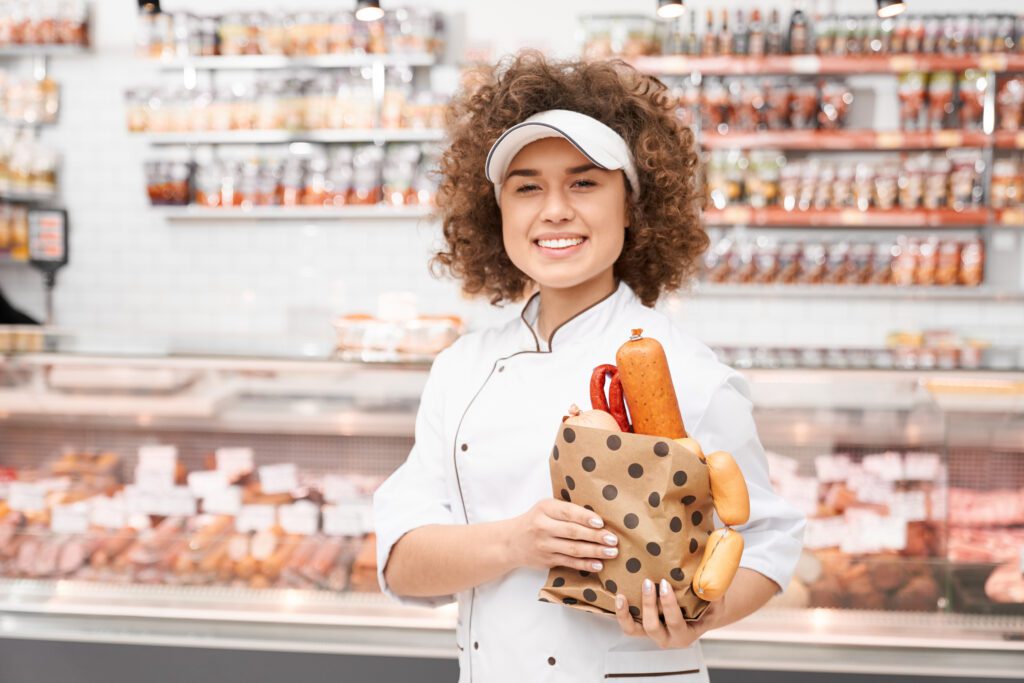
CPG sampling is the marketing practice of placing a consumer goods product directly in the hands of potential buyers so they can experience it before purchasing. It is one of the oldest and most consistently effective marketing tactics in the consumer goods industry, and its effectiveness has not diminished as digital channels have expanded. If anything, the saturation of digital advertising has made physical, in-person, product-in-hand experiences more valuable because they are increasingly differentiated from the channel-heavy environment consumers navigate every day.
We are American Guerrilla Marketing. We have executed CPG sampling programs for food brands, beverage brands, personal care products, household goods, and health and wellness products in markets across the United States. We do not mail samples in boxes. We put them in people’s hands, in the right environment, with the right team creating the right brand impression. This guide explains the strategy, the execution, and the results framework for CPG sampling programs done right.
CPG sampling addresses a specific and significant barrier in the consumer purchase process: willingness to pay for an unproven product. A consumer who has not tried a product must weigh the risk of spending money on something that might not deliver what the brand promises. The higher the price point and the more competitive the category, the higher that perceived risk is. Sampling eliminates the financial risk from the trial decision and allows the product to create its own case through direct experience.
The strategic use of a sampling program that works is substantial. A consumer who likes a product they have sampled:
Is far more likely to purchase it on their next shopping trip
Is more likely to seek it out specifically rather than defaulting to a competitor they already know
Is more likely to recommend it to people in their social network who they know have relevant interests
Is more receptive to all subsequent advertising and marketing for the brand because they have a personal frame of reference for the product
The compounding effect of a well-executed CPG sampling program extends across every other marketing channel the brand is running. Every dollar spent on digital advertising, out-of-home, or trade support delivers more value to consumers who have already tried and liked the product than to consumers who have never experienced it.
Where CPG Sampling Works Best
Location selection is the most consequential variable in CPG sampling program performance. The right location puts the product in front of the right consumer in the right mental state to receive it positively. Here is how we think about location for different CPG categories.
Food and Beverage: In Natural Consumption Contexts
Food and beverage sampling performs best when it occurs in contexts where the consumer is already thinking about food and beverage consumption. Grocery stores are ideal because purchase intent is explicitly activated. Farmers markets are excellent because consumers are in active food discovery mode. Outdoor events with food and beverage components create natural sampling environments where the product is culturally appropriate. Morning commute points work for grab-and-go products. Post-workout locations work for performance nutrition and functional beverages.
The worst food and beverage sampling contexts are ones where the consumer is not in a food mindset and where the product feels inappropriate or out of place. We avoid these environments regardless of traffic volume because low contextual relevance undermines the sampling experience even when the product is excellent.
Personal Care and Beauty: In Service and Social Contexts
Personal care and beauty sampling performs best in contexts where the consumer is thinking about their personal appearance or wellbeing. Gyms and fitness facilities are strong. Salons and day spas are excellent for adjacent product categories. Outdoor events that draw the target demographic in a social context where they are thinking about how they present themselves are also strong.
Health and Wellness: In Fitness and Lifestyle Contexts
Health and wellness product sampling is most effective in fitness environments, wellness events, yoga studios, running events, outdoor recreation venues, and any context where health and wellness is an explicit theme of the environment. The consumer in these environments is already in the mindset where a health and wellness product is immediately relevant.
AGM Field Note: We have run the same product in the same city in two different location types and tracked conversion quality by location. In every case where we had this data, conversion from sampling encounters in contextually aligned locations (a functional beverage at a fitness environment) outperformed conversion from the same product in a high-traffic but contextually neutral location (a transit hub). Traffic volume is not a proxy for sampling effectiveness. Contextual alignment is.
Building an Effective CPG Sampling Team
The sampling team is the human interface between the brand and the consumer’s first product experience. Everything they do in the moments around the sample handoff shapes whether the consumer’s relationship with the brand is positive, neutral, or negative after the encounter.
Recruiting for Genuine Fit
We recruit CPG sampling specialists based on genuine affinity with the product category and the target consumer. For a health food product targeting active adults, we recruit from fitness communities. For a premium beverage, we look for people with genuine passion for food and drink culture. For a parent-targeted product, we recruit from parent communities. Generic recruitment produces generic teams. Category-specific recruitment produces teams that can speak authentically about the product from genuine personal relevance.
Training for Product Knowledge and Interaction Quality
Every sampling specialist we deploy is trained on the product, the key consumer benefit, the target audience, the sampling protocol, and how to create genuine interactions rather than transactional handoffs. We train specifically on how to open a natural conversation about the product rather than reciting a script, because conversational sampling generates dramatically higher positive exposures than scripted sampling.
Field Management for Consistency and Quality
We do not deploy sampling teams without field management oversight. A field manager is responsible for team performance, protocol adherence, sample quality, location execution, and real-time problem-solving throughout every deployment day. Without field management, sampling programs drift from protocol in ways that undermine both sample quality and team interaction quality. With field management, the program executes consistently at the standard we design into it.
Standard product demo specialist rates run from $389.99 per six-hour shift for a standard specialist to $589.99 per shift for a premium demo host. Additional specialists, overtime, travel, and custom setup elements are priced separately based on program requirements.
CPG sampling programs can be structured in several ways depending on the brand’s objectives, the market, and the product category. Here are the primary program structures we execute.
Retail-Integrated Sampling
Sampling conducted inside retail locations, typically coordinated with the retailer and positioned near the product’s shelf location. This is the most direct conversion format because the consumer is at the point of purchase. A positive sample experience can result in an immediate purchase decision on the same shopping trip. We execute retail-integrated sampling in grocery, specialty, natural, and club store environments.
Field Sampling in Target Consumer Environments
Sampling conducted at locations where the target consumer concentrates outside of retail: parks, gyms, markets, events, campuses, transit hubs. This format builds broader trial volume and stronger brand exposures across a wider geographic area than retail-only sampling. It is the core format for launch programs and new market development.
Event-Based Sampling
Sampling conducted at specific events that draw high concentrations of the target consumer: fitness events, food festivals, music festivals, sporting events, community events. Event-based sampling reaches large volumes of the right audience in a compressed time window. It often delivers the highest single-event trial volume of any sampling format, though the follow-through to purchase depends on the brand’s retail distribution in the event market.
Mobile Sampling via Branded Vehicles
Sampling deployed through mobile platforms, cargo bikes, branded vehicles, or sampling carts, that bring the product to the consumer in their natural environments rather than waiting for the consumer to come to a fixed sampling point. Mobile sampling is the most adaptable format and delivers the most consistent traffic because the program moves to where the audience is rather than waiting for the audience to come to a fixed point.
AGM Field Note: The most effective CPG sampling programs we have executed combine retail-integrated sampling with field sampling in the target consumer’s non-retail environments. Retail sampling converts consumers who are already in a shopping mindset. Field sampling builds the brand familiarity that makes consumers seek out the product when they are next shopping. Together, the two formats address different points in the consumer process and compound each other’s effectiveness. Standalone programs that use only one or the other leave a meaningful portion of the conversion opportunity on the table.
Measuring CPG Sampling Program ROI
CPG sampling program ROI is measurable when the right measurement framework is built into the program from the beginning. Here is how we approach measurement across different program types.
Retail scan data: For programs with retail integration, retail partner scan data comparing sales velocity in the sampling period versus the pre-sampling baseline is the most reliable measurement of direct impact. We work with brand teams to pull this data and interpret it in the context of other market factors.
Coupon and promo code redemption: Distributing unique coupon codes or promotional codes at the point of sampling allows tracking of direct conversions from specific sampling encounters. Redemption rate and redemption timing both provide insight into conversion quality.
Consumer feedback data: Structured consumer feedback captured at the point of sampling provides qualitative insight into product perception and purchase intent. We build feedback capture into every program using short digital surveys completed on-the-spot via QR codes.
Digital engagement: QR code scans, website visits from campaign-specific URLs, and social media follows generated from sampling encounters are all trackable digital outcomes that extend the measurement framework beyond physical trial alone.
Frequently Asked Questions About CPG Sampling
Is CPG sampling worth the investment for smaller brands?
Yes, and often more so than for large legacy brands. Smaller brands benefit disproportionately from sampling because they do not have the advertising budgets to generate awareness through paid channels alone. Sampling gives them a way to create genuine consumer relationships in specific high-value markets at a cost that is competitive with paid advertising on a per-quality-contact basis. A well-executed sampling program in one key market can generate the word-of-mouth foundation that fuels distribution expansion.
How many samples do we need for a meaningful CPG sampling program?
The right sample volume depends on the program scope, the deployment locations, and the campaign duration. A focused single-city program over two to four weeks might distribute 5,000 to 20,000 samples. A national multi-city launch program might distribute 100,000 or more. We calculate sample volume requirements based on the specific locations and windows in scope for each program and recommend quantities that cover the planned deployment with appropriate contingency.
What legal or food safety requirements apply to CPG sampling?
Food sampling programs must comply with applicable food safety guidelines for the specific product type and the locations where sampling occurs. Requirements vary by state and locality. We research and comply with applicable food safety standards for every program we execute. Retail sampling programs must also comply with individual retailer requirements. We handle the compliance research for every market we activate in.
Can CPG sampling work for premium or luxury product categories?
Yes. Premium and luxury CPG brands can use sampling effectively in appropriately premium environments. The key is matching the environment and the execution quality to the brand’s positioning. A luxury skincare brand sampling at a high-end wellness event creates a brand impression consistent with its positioning. The same brand sampling at a transit hub may create an impression inconsistent with its premium identity. Environment selection is critical for premium brands.
How do you handle sampling programs for products with age restrictions?
Products with age restrictions require age verification protocols that are appropriate for the distribution channel and the location. We build appropriate verification processes into every program that requires them and train sampling team members on the specific protocols. We do not create programs that put age-restricted products in the hands of consumers who do not meet the age requirements.
How far in advance do we need to plan a CPG sampling program?
Three to four weeks of lead time from program approval to first deployment is our standard minimum. Programs requiring retail partner coordination may need additional lead time depending on the retailer’s requirements. National multi-city programs benefit from six to eight weeks of lead time to allow for coordinated logistics, team recruitment, and training across all markets. We build the timeline based on the specific program scope during planning.
Can sampling programs be run simultaneously in multiple cities?
Yes. We coordinate simultaneous multi-city CPG sampling programs through our field management network. Consistent sampling protocols, team briefing standards, and reporting frameworks are maintained across all markets. We have executed programs in up to twenty markets simultaneously for national CPG launch campaigns.
What is the biggest mistake CPG brands make with sampling programs?
Optimizing for volume over quality. The most common error is planning for maximum sample distribution without adequate attention to where, when, and by whom the samples are being distributed. A sampling program that distributes 50,000 samples to people who are not the target consumer in contexts where they cannot genuinely evaluate the product is an expensive exercise in packaging distribution. A program that delivers 10,000 samples to the right people in the right environments with the right team converts at multiples of the volume-first approach.
Start Your CPG Sampling Program
We build CPG sampling programs from strategic brief through field execution and post-program reporting. We are field marketing specialists, not brokers or planners who hand work off to someone else. We execute what we design and we report honestly on what it delivered. Call us and let’s talk about your product, your target market, and the sampling program that gives your brand the trial foundation it needs.
How American Guerrilla Marketing Approaches This Work
We are a New York-based guerrilla marketing agency with national reach. We plan every program around a clear objective and a specific target audience. We execute with trained, briefed, supervised teams. We report honestly on what we delivered. And we build long-term relationships with clients who want a marketing partner that treats their budget as seriously as they do.
Our pricing structure is transparent. Street team members run from $389.99 to $589.99 per six-hour shift depending on tier. Brand ambassadors run the same range. Product demonstration specialists run the same range. We do not hide fees or build surprise add-ons into program invoices. We tell you what the program costs upfront based on the specific scope you need.
We operate in all major U.S. markets and have executed programs across more than forty cities. Our primary strength is in New York, Chicago, Los Angeles, Miami, Boston, Washington DC, Philadelphia, Atlanta, and San Francisco. In each of these markets, we have established rider relationships, retailer relationships, event access protocols, and local market knowledge that materially improves the quality and efficiency of program execution compared to a national agency deploying generic teams to unfamiliar markets.
We are honest about what field marketing can and cannot do. It is not a replacement for advertising. It is not a shortcut to brand building. It is a powerful complement to other marketing channels when it is strategically designed, professionally executed, and measured honestly. We do our best work when clients treat us as strategic partners, bring us into campaign planning early, give us honest briefs, and evaluate performance against realistic expectations for what field marketing programs deliver.
If you are looking for a field marketing partner who will tell you what you need to hear rather than what you want to hear, who will build a program that fits your budget and serves your objectives, and who will execute that program at a professional standard in the field, we are that partner. Call us and let’s have a direct conversation about your brand, your market, and what we can build together.
Building a Program That Delivers in the Real World
The gap between a field marketing program that delivers genuine results and one that generates an expensive activity report with nothing to show for it comes down to three variables: strategic clarity in the brief, professional quality in the execution, and honest accountability in the reporting. When all three are present, field marketing programs create meaningful, measurable brand outcomes. When any of the three is missing, the budget gets spent without proportional returns.
We start every program engagement with a strategic conversation, not a price negotiation. We need to understand the brand deeply enough to make genuinely useful strategic recommendations. That means understanding the product, the target consumer, the competitive environment the brand operates in, the specific market we are activating in, and the specific outcome the client needs the program to produce. Without that understanding, we can execute tactics competently but we cannot build a program that is strategically sound.
Professional execution is what we are known for and what we protect as the foundation of every client relationship we have. Our field teams are trained, briefed, supervised, and held to clear performance standards. We do not deploy teams without field management. We do not finalize programs without creative review. We do not accept sample quality that does not represent the brand accurately. We do not allow route drift without field supervisor intervention. These standards exist because field marketing quality is the only thing that determines whether a program generates genuine consumer impact or generates the appearance of activity.
Honest reporting is the accountability mechanism that makes the whole system function. We deliver reports that tell clients what actually happened: where the program was strong, where it was weak, what we did to address problems when they arose, and what we recommend for the next program cycle based on what we learned. We do not optimize our reports for optics. We optimize them for usefulness. A client who gets an honest, useful report from a program that underperformed in specific areas can make better decisions with that information than a client who gets a glowing report that conceals what went wrong.
Field Marketing Program Economics: Getting Value from Your Investment
Field marketing programs are an investment, and like any investment, they require a clear-eyed view of what they return relative to what they cost. Here is how we think about the economics of field marketing across the main program types we execute.
Street team programs generate a specific type of value: direct, human-scale brand encounters with the target consumer in the physical environments where they spend their time. The cost of a six-hour shift with a trained, briefed, supervised street team member running from $389.99 at the standard tier to $589.99 at the premium tier reflects the cost of a professional who represents your brand competently in every interaction they conduct during that shift. The return on that investment is the number and quality of direct brand encounters generated during the shift and the downstream brand recognition and purchase consideration that those encounters produce over time.
Sampling programs generate a different type of value: direct product trial among the target consumer in contextually appropriate environments. The cost of a sampling program includes specialist staffing, sample production and logistics, equipment, field management, and reporting. The return is measured in trial volume, purchase intent lift, retailer velocity data, and long-term brand adoption among the consumers who had a positive first product experience. For brands with genuinely strong products, the ROI on well-executed sampling programs is among the highest in the marketing mix.
Mobile advertising programs, including billboard bikes, LED display bikes, and vehicle-based advertising, generate the value of brand presence in premium access environments. The cost reflects the unique access value of the format: being in Central Park, on the Lakefront Trail, at a major outdoor market is not the same as being on a commercial street. The premium access environment is what the format delivers and what justifies the investment relative to static or vehicle-restricted formats.
Across all program types, the most reliable way to maximize return on investment is to be specific about the objective, design the program specifically to achieve that objective, execute at a professional standard, and measure against the specific outcome the program was designed to produce. Generic programs generate generic results. Specifically designed, professionally executed programs generate the specific outcomes they were built for.
Common Questions We Get from Brands Starting Field Marketing Programs
We have introductory conversations with brands evaluating field marketing programs every week. Here are the questions we hear most often and the honest answers we give.
“How much does a field marketing program cost?” It depends entirely on the scope. A two-person street team for one week in one market is a modest investment. A twenty-city sampling program with twenty specialists per market and full field management is a significant one. We size programs based on objectives and build budgets based on the specific scope required to achieve them. We do not have a standard package price because no two programs are the same.
“How do I know if field marketing will work for my brand?” We evaluate fit based on the brand, the product, the target consumer, and the specific objective. For consumer brands with genuinely strong products targeting specific urban demographics in environments where field marketing operates effectively, it almost always works when it is executed at quality. For brands where the fit is less clear, we say so and recommend whether a test program or a different approach makes more sense.
“How do you ensure the team represents our brand appropriately?” Through recruitment based on genuine product-audience fit, thorough pre-deployment training, active field management throughout every shift, and honest performance reporting that holds teams and supervisors accountable for quality. We have multiple layers of accountability built into every program precisely because brand representation quality is the non-negotiable foundation of field marketing value.
“What if we are not happy with the results?” We have a direct conversation about it. We review the program data together, assess what worked and what did not, and make a recommendation about how to adjust the next program cycle to address the shortcomings of the current one. We do not tell clients that disappointing results are an inherent limitation of the format. We assess whether the issue was strategic, creative, or executional and address it specifically in the next program design.
Next Steps: Building Your Program with AGM
Field marketing programs start with a conversation. Call us at (646) 776-2770 or email [email protected] and we will schedule a direct discussion about your brand, your target market, your campaign objectives, and your timeline. We will ask specific questions about the program you need and give you honest answers about what the right approach looks like for your situation.
From that initial conversation, we build a program recommendation that reflects genuine strategic thinking about how to achieve your specific objective in your specific market with your specific target consumer. We do not deliver a one-size-fits-all proposal and invite you to pick the package that is closest to what you need. We design programs from the ground up based on what each client’s situation actually requires.
Our production timelines are realistic. We tell you what we need from you at each stage of production and when we need it. We tell you what the program will cost before we begin. We execute to the plan we have agreed to and we communicate transparently when real-world conditions require any adjustment to that plan. We deliver the program report within five business days of the final deployment day.
We are a team of people who care about field marketing done right. Not because it is a job, but because we have seen what well-executed guerrilla and field marketing programs accomplish for the brands we represent and we take pride in being the team that delivers those results. We invite you to experience that difference directly. Call us today.