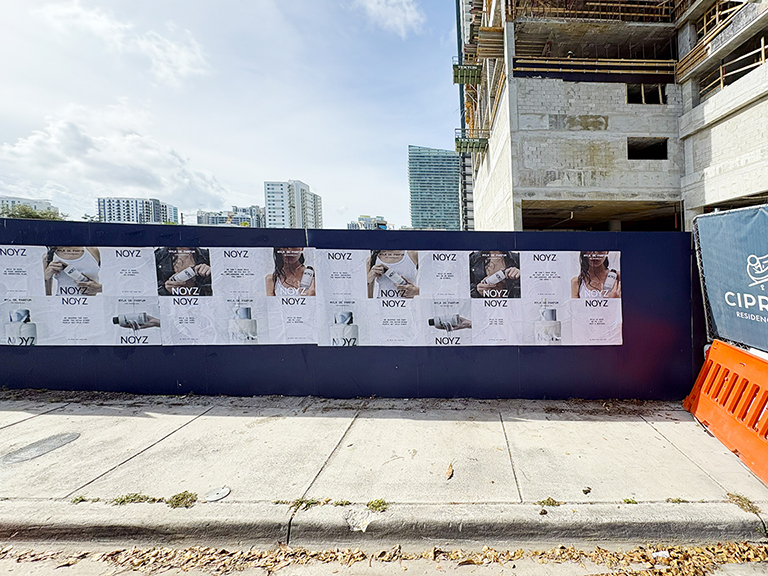
CPG stands for consumer packaged goods. It is one of the largest and most competitive categories in marketing. Every product you pull off a grocery shelf, grab from a convenience store cooler, or toss into a pharmacy basket falls into this category. Understanding what CPG means and how CPG brands market themselves is foundational knowledge for anyone working in or building a consumer brand.
We work with CPG brands across food, beverage, personal care, and household products. We have run street-level campaigns for emerging CPG brands that needed to build local traction before expanding distribution. And we have supported running CPG brands maintaining presence in competitive markets. Here is what we know about CPG examples, categories, and the marketing principles that apply across all of them.
Consumer packaged goods are products that consumers use regularly and replace frequently. They are sold in pre-packaged form, typically through retail channels. The defining characteristics are high purchase frequency, short consumption cycles, and purchase decisions that rely heavily on brand memory rather than deliberation.
When you buy the same brand of coffee every week without evaluating alternatives, you are exhibiting the purchase behavior that CPG brands work hardest to cultivate. That automatic, habitual preference is the most valuable thing a CPG brand can build.
Coca-Cola, LaCroix, Tropicana, Red Bull, Starbucks RTD
Personal Care
Hair care, skin care, oral care, deodorant
Dove, Pantene, Colgate, Degree, Neutrogena
Household Products
Cleaning supplies, laundry, paper goods, air care
Tide, Clorox, Bounty, Febreze, Method
Over-the-Counter Health
Pain relief, vitamins, digestive, cold and flu
Tylenol, Nature Made, Pepto-Bismol, NyQuil
Pet Care
Pet food, pet treats, pet hygiene
Purina, Blue Buffalo, Greenies, Fresh Step
Baby Care
Diapers, baby food, baby personal care
Pampers, Gerber, Huggies, Johnson’s
What Makes CPG Brands Different to Market
Marketing a CPG brand is fundamentally different from marketing a service, a technology product, or a luxury item. The differences shape every aspect of the marketing strategy.
Low Involvement Purchase Decisions
Most CPG purchases happen with very little deliberation. A consumer in a grocery aisle does not evaluate alternatives the way someone buying a car or a laptop does. They reach for what is familiar, what is on promotion, or what catches their eye in the moment. This means CPG marketing is primarily about building familiarity and positive associations before the purchase moment, not persuading people at the shelf.
Distribution Dependency
CPG brand marketing only works if the brand is available where buyers shop. A brilliant campaign that drives purchase intent for a product that is not on the shelf is wasted. Distribution and marketing must be planned together. Campaigns should concentrate on markets where distribution exists or is being built.
High Competitive Pressure
Most CPG categories have dozens of competing products. Shelf space is finite. Retailer support goes to brands that move product. This competitive pressure means CPG marketing must be both brand-building and conversion-focused at the same time. You cannot afford to choose one over the other.
Price Sensitivity
CPG buyers are often price-sensitive, especially in commodity categories. Strong brand equity is the primary defense against price competition. Brands with strong emotional associations can command price premiums. Brands without them compete on price alone, which is a race to the bottom.
The best CPG brands do not try to compete everywhere. They build deep, loyal relationships in specific communities and categories before expanding. That focus creates the word-of-mouth and retail velocity that supports sustainable growth.
CPG Examples by Marketing Approach
Looking at CPG brands through the lens of their marketing approach reveals patterns that any brand can learn from:
Community-Led CPG Growth
Brands like RXBar, Chomps, and Siete Foods built their initial followings through specific community channels before achieving mass retail distribution. RXBar found its first audience in CrossFit gyms. Siete Foods built its brand in the Paleo and grain-free community. Chomps running credibility in the athletic performance market.
These brands succeeded because they identified communities where their product genuinely belonged and built deep relationships within those communities before pursuing broader distribution. The community relationships created advocacy networks that supported retail conversations and drove initial trial at scale.
Visual Identity-Led CPG Growth
Some CPG brands build market position primarily through distinctive visual identity. Method’s design-forward packaging transformed the cleaning products aisle. Olipop’s retro-modern label design makes it photographable on the shelf. Brightland’s olive oil packaging belongs in a design museum.
These brands understand that in a retail environment, the package is the primary advertising medium. When your packaging is beautiful enough to photograph and share, your customers become a distribution network for your brand image at no additional marketing cost.
Sampling-Led_CPG_Growth”>Sampling-Led CPG Growth
Some CPG brands build their market through aggressive sampling programs. The logic is simple: the product sells itself once someone tries it. The marketing challenge is getting it into enough mouths quickly enough to build the trial base that supports retail velocity.
Sampling at farmers markets, gyms, festivals, and office buildings has launched more CPG brands than any other single tactic. We manage sampling programs as part of our street marketing practice, placing products in the hands of target consumers in the environments where their receptivity is highest.
Creator-Led CPG Growth
The newest and fastest-growing approach to CPG brand building uses creator networks to generate authentic product advocacy at scale. A food creator who naturally incorporates your granola into their breakfast content creates product awareness through a trusted voice. A fitness creator who genuinely loves your protein bar recommends it in a context where their audience is already thinking about nutrition.
Creator-led CPG growth works because it places the brand recommendation in a trusted social context. The creator’s credibility transfers to the brand. This is not advertising in the traditional sense. It is word-of-mouth at digital scale.
We have seen CPG brands generate more retail velocity from a coordinated creator campaign and a targeted street marketing push than from a national digital advertising budget many times larger. Precision and relevance beat scale for emerging brands.
CPG Marketing on the Street: Why It Works
Street marketing is one of the most underused tools in CPG brand building. The reasons it works are specific to the CPG purchase dynamic.
First, street marketing creates physical brand presence near retail distribution. A poster campaign in the blocks surrounding a Whole Foods or a Target puts your brand in the environment your buyer occupies before they enter the store. The recognition they feel when they see your product on the shelf is not accidental. You created it.
Second, street marketing creates earned media. A stencil campaign that produces an interesting visual in a neighborhood generates photographs. Those photographs end up on Instagram and community apps. The organic reach of a great physical marketing moment in a neighborhood extends far beyond the people who walk past it.
Third, street marketing signals that your brand belongs in the neighborhood. For CPG brands targeting urban consumers, this belonging signal carries real value. When your brand is visible in the streets of Williamsburg or Silver Lake or Pilsen, it tells the consumers in those neighborhoods that you are part of their world, more than an outsider trying to sell them something.
From CPG Examples to CPG Strategy
The most useful thing you can take from studying CPG examples is not tactics to copy. It is principles to apply to your own brand’s specific situation.
Every successful CPG example shares a common foundation. They found a consumer who genuinely needed or wanted something. They built a product that delivered on that need better than alternatives. They communicated that advantage through channels where their target consumer was already paying attention. And they made it easy to buy by getting distribution right.
The marketing sophistication came later. The packaging redesigns, the influencer partnerships, the national campaign launches. At the foundation of every CPG success story is a product that worked for a specific group of people, marketed honestly and directly to that group before being scaled.
We work with CPG brands at every stage of this process. Whether you are building the initial community, preparing for retail expansion, or defending share in a mature market, the principles apply. Know your buyer. Reach them where they are. Give them a reason to try the product. Make the buying experience easy. Measure what matters and do more of what works.
CPG Marketing Budgets: How Much to Spend and Where
One of the most common questions we hear from emerging CPG brands is how to allocate a limited marketing budget across the channels available to them. The answer depends heavily on your stage of growth, your distribution footprint, and your target consumer profile. But there are principles that hold broadly.
For a brand in the launch phase with distribution in one or two markets, concentrate budget on sampling and street-level presence in those specific geographies. Build the local traction that supports retail conversations before spending on broad digital campaigns. Your dollars generate more impact through direct trial than through digital exposures that may or may not translate to shelf turns.
For a growth-stage brand with regional distribution and demonstrated retail velocity, begin investing in digital brand building alongside continued street-level activation. Creator partnerships are particularly efficient at this stage. They generate authentic content that builds brand awareness at a cost per impression that traditional media cannot match.
For an expansion-stage brand moving into new markets, invest in local street presence in the new market before the distribution launch. Create brand familiarity in the neighborhoods before the product arrives on the shelf. Then use the retail launch moment to generate press and social content that amplifies the market entry.
A rough allocation framework for a growth-stage CPG brand: 30% to sampling and street-level activation, 30% to paid digital and social, 25% to creator partnerships and content production, 15% to testing and optimization. Adjust these ratios based on what your data tells you about where your buyers actually come from.
Retail Velocity: The Metric That Drives Everything for CPG
Every CPG marketing decision should be connected to a single overarching metric: retail velocity. This is the rate at which your product sells through at retail, typically expressed as units sold per store per week. Retail velocity determines whether retailers give you more shelf space, whether distributors prioritize your brand, and whether your business model is sustainable.
Marketing campaigns that do not drive retail velocity are failing at their primary job, regardless of how impressive their digital metrics look. exposures, clicks, and social engagement are meaningful only insofar as they contribute to the purchase behavior that shows up in retail velocity data.
This means every CPG marketing campaign we design at American Guerrilla Marketing is built with retail velocity in mind. Where are your key retail distribution points? Which neighborhoods and streets are closest to those stores? Which consumer communities have the highest concentration of your target buyer? What combination of street-level presence, sampling, and digital reach will drive the most purchase behavior in the shortest time?
We measure our campaigns against retail velocity data whenever clients can share it. We want to know whether the neighborhood we postered this month showed better shelf performance than the one we did not touch. That data drives better decisions in the next campaign and the one after that.
How We Help CPG Brands Market Themselves
American Guerrilla Marketing specializes in the street-level component of CPG brand building, integrated with digital strategy and creator partnerships. We help CPG brands build physical presence in the neighborhoods where their target buyers live, work, and shop. We design sampling programs that generate trial efficiently. We create street-level activations that generate social content and neighborhood buzz. And we connect all of this to the digital campaigns that scale the brand reach beyond what physical presence alone can achieve.
Our CPG clients range from emerging brands launching their first products to running brands entering new markets. We bring the same street-level precision to both. We know which neighborhoods to target, which events create the best sampling opportunities, and how to create a physical campaign that generates organic digital amplification.
Frequently Asked Questions
What does CPG stand for?
CPG stands for consumer packaged goods. It refers to products that consumers buy regularly, use quickly, and replace frequently. The category includes food, beverages, personal care products, household cleaning products, over-the-counter health products, and more. Most products sold through grocery stores, pharmacies, and mass retail chains are CPG products.
What are some examples of CPG brands?
Some of the best-known CPG brands include Coca-Cola, Procter and Gamble, Unilever, Nestle, and Kraft Heinz at the large end. Emerging CPG brands that have built strong followings more recently include Liquid Death, Olipop, Magic Spoon, and Chomps. The category spans from multi-billion-dollar global companies to single-product startups trying to get onto their first retail shelf.
How do emerging CPG brands compete with large running players?
Emerging CPG brands compete by being more focused, more authentic, and more relevant to specific communities than large brands can afford to be. Large brands optimize for mass appeal and lose the edges. Emerging brands can own specific niches with intensity. The marketing tactics that work for emerging CPG brands emphasize community building, sampling, creator partnerships, and street-level presence.
What is the most important marketing channel for CPG brands?
There is no single most important channel. The most effective CPG marketing reaches buyers across multiple channels and creates reinforcing exposures. However, if forced to choose one, sampling and direct product trial has the highest conversion rate of any CPG marketing tactic. Getting the product in the buyer’s hands is the single most effective conversion driver, and it is best executed through experiential marketing and direct sampling programs.
How does distribution affect CPG marketing strategy?
Distribution shapes everything in CPG marketing. Your advertising and activation should concentrate in the geographies where you have retail availability. Driving purchase intent in markets where your product is not available wastes budget. As your distribution grows, your marketing geography should grow with it. We help CPG brands align their marketing spend to their distribution footprint for maximum impact.
What role does packaging play in CPG marketing?
Packaging is the primary advertising medium for retail-distributed CPG brands. Your package design is what the buyer actually sees at the moment of purchase. Strong packaging design communicates brand values, creates shelf standout, and generates social sharing when the design is distinctive enough to photograph. Underinvesting in packaging design is one of the most common strategic errors in CPG marketing.
How do I get my CPG brand into Whole Foods or Target?
For more on this, explore our experiential marketing. Retail distribution requires demonstrated consumer demand and retail velocity in smaller channels before most large retailers will take a chance on a new brand. Start by building strong velocity in independent retailers, specialty stores, and direct-to-consumer channels. Use that velocity data to approach regional buyers. Use regional success to approach national buyers. Marketing campaigns that support consumer demand can help strengthen the case for retail expansion.