Concert Marketing Plan: A Field Guide From AGM | 2026
A concert marketing plan is a timeline, a budget, and a set of tactics working toward one outcome: seats filled on show night. Here is how to build one that actually executes.
Most concert marketing plans fail not because the tactics are wrong but because the planning is rushed. A show gets announced six weeks out, the artist or venue scrambles to get social posts together, discovers that poster printing takes two weeks with a backlog, and ends up doing half the campaign in the final 10 days. The show either undersells or the marketing dollars are concentrated in the period where they are least efficient.
A good concert marketing plan starts with a clear timeline working backward from the show date, assigns specific tactics to specific time windows, allocates budget before it gets spent, and identifies who is executing each element. The plan does not need to be complicated. It needs to be real — based on what actually gets done in the time available with the budget available.
The Core Questions a Concert Marketing Plan Must Answer
Every concert marketing plan, regardless of show size or budget, needs to answer the same questions: Who is the target audience? Where do they physically spend time and attention in this market? What is the timeline from announcement to show date? What is the marketing budget? What tactics will reach that audience in the available time and budget? Who will execute each tactic, and by when?
The answers determine the plan. A 300-capacity club show with a six-week timeline and a $3,000 marketing budget produces a completely different plan than a 3,000-capacity theater show with a twelve-week timeline and a $25,000 budget. The questions are the same. The answers determine the scope, the tactics, and the execution requirements.
The most common planning mistake is starting with tactics rather than starting with audience. Deciding to run a poster campaign before defining where the target audience is concentrated in this specific market produces a poster campaign that reaches lots of people, most of whom were never going to buy a ticket. Starting with audience targeting and then designing tactics around reaching that audience in its actual physical locations produces a more efficient campaign at every budget level.
Concert Marketing Timeline: Working Backward from Show Date
Concert marketing timelines should be built working backward from the show date, identifying the latest possible launch date for each tactic that still allows it to be effective, then scheduling production and preparation time upstream from those launch dates.
12 Weeks Before the Show
At 12 weeks out, confirm the show date, venue, and supporting act details. Begin visual identity development: the show poster design, typography, and color palette. If a branded vehicle stop is part of the campaign, begin vehicle wrap production — twelve weeks is the minimum lead time for anything beyond a basic cargo van wrap. Begin outreach to local media, music blogs, and playlist curators in the target market. Identify potential promotional partners in the venue’s neighborhood.
8 Weeks Before the Show
At eight weeks out, finalize the visual identity and begin print production. Order the first poster print run. Lock in promotional partnerships. Brief local street team coordinators on the campaign and begin building the ambassador roster for field distribution. Begin building the content calendar for the show’s social media presence through the ticket sales period.
4-6 Weeks Before the Show
At four to six weeks out, launch the primary street-level campaign. Begin poster placements in the target area. Deploy the street team for the first distribution days. Execute pre-show activations in this window if they are part of the plan. This is when the campaign reaches its first peak of physical market presence, and it should coincide with social content that documents and amplifies the street-level activity.
Timeline reality check: The four-to-six-week window is where most concert marketing campaigns actually operate. Shows are announced with eight weeks of lead time in theory but six weeks in practice after production delays and decision-making time. Build the plan assuming six weeks of usable marketing time. If you get more, use it efficiently. If you do not, you are working from a realistic baseline.
2 Weeks Before the Show
At two weeks out, execute the second poster placement round to refresh the visual presence the first round established. Intensify street team distribution in the venue’s immediate neighborhood and the transit corridors that serve it. Any final pre-show activation stops happen in this window. Social content should be increasing in frequency toward a daily cadence, building urgency as the show approaches.
Final Week
The final week is not the time to start new marketing tactics. It is the time to maximize what is already running: daily social posts, email reminders to the venue and artist’s lists, and targeted paid promotion to users who have already shown interest signals. Final street placements in the highest-traffic locations nearest the venue support the digital urgency push. The goal is converting people who are aware of the show but have not yet purchased.
Budget Allocation by Show Size
Concert marketing budgets vary widely, but a consistent pattern holds across sizes: street-level production and distribution, social content amplification, and field staffing are the three largest cost categories. Digital paid amplification represents a smaller but useful layer for campaigns with meaningful budgets, typically applied in the final two to three weeks when purchase intent is highest.
Show Size
Recommended Budget
Primary Tactics
Under 300 capacity
$1,500 – $5,000
Poster campaign, social content, in-venue placements
300-1,000 capacity
$5,000 – $15,000
Poster campaign, street team, targeted paid social
1,000-5,000 capacity
$15,000 – $50,000
Full street campaign, pre-show activation, digital
5,000+ / festival slot
$50,000+
Multi-channel, branded vehicle, regional presence
Audience Targeting in the Concert Marketing Plan
The most important decision in building the concert marketing plan is not the tactics — it is the audience targeting. Who exactly is the audience for this specific show, and where do they physically spend time in this market? That answer determines where every dollar of marketing budget goes.
For a jazz show at a midsize venue in Washington DC, the target audience concentrates in Adams Morgan, Columbia Heights, Shaw, and the H Street corridor. Poster placements in Georgetown and Arlington reach people who live in DC but are not concentrated in jazz-attendance demographics. Placements in the target neighborhoods reach the people most likely to buy a ticket and attend.
For a punk or hardcore show at a Philadelphia club, the target audience is in South Philly, Fishtown, and Kensington. A street team working those neighborhoods and the area around the venue will consistently outperform a team working Center City where foot traffic is higher but audience relevance is lower. Higher traffic is not the same as higher concentration of the right people.
Targeting principle: Concentration beats coverage. Twenty well-placed posters in a 10-block area where the target audience is dense will outperform 100 posters scattered across an entire borough. Identify the five or six neighborhoods where the target audience concentrates and put your materials there with density, not spread thin trying to reach everyone.
Street-Level Tactics as Specific Plan Line Items
Street-level tactics should appear in the concert marketing plan as specific, scheduled line items with assigned execution responsibility and clear budget allocations. Vague commitments to “do some street marketing” do not get executed consistently and cannot be evaluated after the campaign runs.
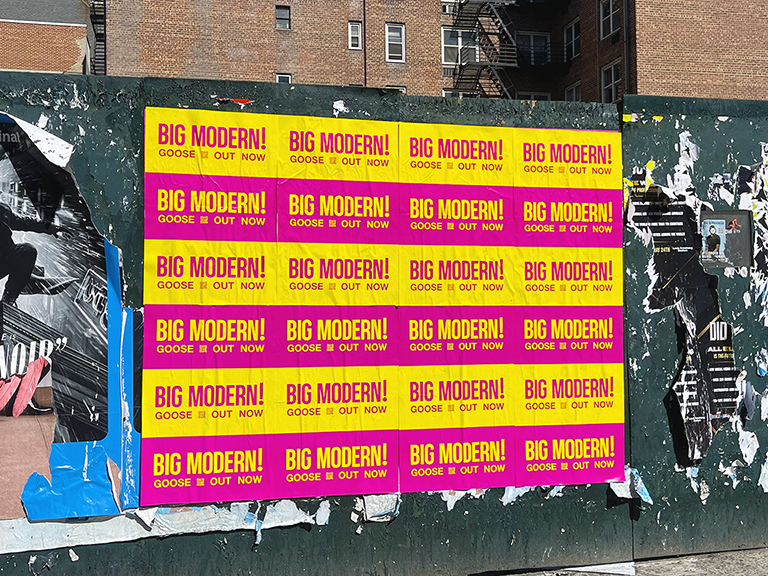
A poster campaign line item should specify: print volume by size, target placement neighborhoods, scheduled placement dates, and who is responsible for placement execution. A street team line item should specify: number of team members, target distribution locations, scheduled dates and hours, materials to distribute, and who is managing the team in the field. This specificity is the difference between a plan that gets executed fully and one that produces partial results because execution details were not locked in before the window arrived.
Digital Strategy Within the Concert Marketing Plan
Digital marketing for concerts splits into owned channels — the artist’s and venue’s email lists and social profiles — and paid amplification through targeted social ads and search. Owned channels cost nothing to use and should be fully activated at every stage of the campaign. Paid amplification budget should be concentrated in the final two to three weeks before the show when purchase intent is highest.
Social content for the concert marketing plan should be planned as a content calendar with specific posts assigned to specific dates. The content types that consistently drive engagement and ticket sales are: announcement posts with strong visual assets from the show’s identity, street campaign documentation showing physical market presence, artist-created content specific to the show or market, early ticket sale announcements with purchase links, and urgency-building countdown content in the final week. Generic reposting of press coverage and passive awareness posts underperform all of these content types.
Measuring Performance Against the Plan
Concert marketing plans should be evaluated against ticket sales velocity, not against soft metrics like social engagement or poster volume. The metric that matters is how many tickets sold per day during the campaign period and whether that velocity changed when specific tactics launched.
Track ticket sales daily from the moment they go on sale. Note the specific dates when tactics launch: when the first poster placements go up, when the first street team day runs, when the activation stop happens. If sales velocity accelerated after a specific tactic, that tactic contributed to sales. If velocity did not change when a tactic launched, either the distribution locations were wrong, the materials were inadequate, or the audience was already fully committed and the tactic was not reaching the right new people.
Post-show analysis of what actually worked should inform the next show’s plan. The most valuable concert marketing data is not industry benchmarks — it is your own historical data from your own shows in your own markets. Build the habit of tracking sales velocity against tactic launch dates and you will have genuinely useful data for planning every campaign that follows.
Street-Level Concert Marketing: How AGM Executes
American Guerrilla Marketing has executed street-level concert marketing campaigns for artists, labels, promoters, and streaming platforms across major US markets including New York, Los Angeles, Chicago, Miami, Philadelphia, Boston, Washington DC, Atlanta, Seattle, and Denver. Our experience spans venue sizes from 100-capacity club shows to 20,000-seat arena events, and genres from hip-hop and R&B to indie rock, electronic, country, and jazz.
Our concert marketing campaigns operate on three core principles. First, audience-first targeting: every tactic we use, from poster placement to street team routing, is designed around where the target audience actually concentrates in each market, not where general foot traffic is highest. Second, documentation as a deliverable: every poster campaign, street team day, and pre-show activation we run produces photo documentation that feeds the artist’s and venue’s social channels, creating secondary reach that extends the campaign well beyond its direct footprint. Third, timeline discipline: we build production timelines that are achievable, confirm vendor commitments before confirming campaign timelines with clients, and maintain the production schedules that keep campaigns from compressing into the final week before the show.
The most common mistake we see in concert marketing is starting too late. An artist announces a show six weeks out. The design process takes two weeks. Poster printing takes another two weeks. The campaign has two weeks to run before the show, which is enough to drive the final 20% of ticket sales but not enough to build the broad awareness that fills the early and middle of the venue’s capacity before relying on last-minute urgency to close out the remaining seats. Start the campaign eight to ten weeks before the show for any venue over 500 capacity, and you have the full timeline to work with.
Concert Marketing Tactics by Budget Level
Concert marketing budgets range from under $1,000 for a self-promoted club show to $100,000 or more for a major venue release event. Understanding what each budget level supports, and what trade-offs it requires, is essential for building a campaign that is achievable rather than aspirational.
Under $3,000: Grassroots Campaign
At under $3,000, a concert marketing campaign focuses on two tactics: a focused poster run in the target neighborhood and social content from the artist’s existing channels. Print 300 to 500 posters at 24 x 36 inches, concentrating placement in the three to five blocks around the venue and the two or three neighborhoods where the target audience lives. Supplement with in-venue promotion at comparable shows at the same or similar venues in the weeks before the event. The social content should document the poster placements — photos of the artist placing posters in their neighborhood consistently outperform generic announcement graphics on engagement.
$3,000 to $10,000: Full Street Campaign
At $3,000 to $10,000, the concert marketing campaign can expand to a larger poster run, two or three street team distribution days, and targeted paid social promotion in the final two weeks. The poster run covers a wider geographic footprint including additional neighborhoods outside the immediate venue area. The street team days concentrate on the highest-value locations: record stores, comparable venues, and the commercial blocks where the target audience shops and eats. Paid social amplification uses the poster documentation and artist-specific content to target users matching the show’s audience demographics in the venue’s geographic area.
$10,000 and Above: Full-Channel Campaign
At $10,000 and above, the concert marketing campaign can incorporate a pre-show experiential activation, multiple poster run phases, sustained street team distribution, coordinated local press outreach, and a broader paid media program. The pre-show activation — a listening station, branded vehicle stop, or immersive installation — creates the brand experience depth that pure awareness campaigns cannot produce. At this budget level, the campaign can build genuine anticipation rather than just awareness, converting the target audience from people who know about the show to people who are excited about the show before they buy a ticket.
Measuring Concert Marketing Campaign Performance
The primary metric for concert marketing is ticket sales velocity: how many tickets are selling per day or per week during the campaign period, and whether that velocity changes when specific tactics launch. Secondary metrics include social engagement on campaign content, street team distribution counts, and poster placement documentation quality.
Track ticket sales daily from the moment they go on sale. Record the specific dates when each marketing tactic launches. If ticket sales velocity accelerates in the days after a poster campaign goes up, that campaign contributed to sales. If velocity does not change when the street team runs, either the distribution locations were wrong, the materials were inadequate, or the audience was already fully bought in and the street team was not reaching new potential ticket buyers. This kind of tactic-by-tactic velocity analysis builds a dataset of what actually works for a specific artist in a specific market that improves every subsequent campaign.
Building the Long-Term Artist Marketing Relationship
Concert marketing is not a one-time event; it is a repeated practice that improves with each campaign cycle. Every show a promoter or artist runs is an opportunity to test tactics, measure what worked, and build the local market knowledge that makes subsequent campaigns more effective. The artists and promoters who are most consistent at filling their venues are typically not the ones with the largest marketing budgets — they are the ones who have been running campaigns in the same markets long enough to know exactly which poster boards, which street team locations, and which neighborhood concentrations produce ticket sales for their specific audience.
Building that knowledge requires treating concert marketing as a trackable discipline rather than an intuitive art form. Record where posters were placed and when. Note which days the street team ran and in which locations. Track ticket sales velocity daily and correlate it with the specific days when tactics launched. After three or four campaigns in the same market, this data reveals patterns: which location types consistently drive velocity spikes, which neighborhoods produce the strongest conversion rates, which timing windows are most efficient for each tactic type.
The artists and management teams who invest in this tracking capability build a compounding advantage over time. Their fourth campaign in a market is substantially more efficient than their first because they are not re-discovering what works from scratch. They are refining an approach that is already calibrated to their specific audience in their specific market. That calibration compounds: each campaign produces better results per dollar spent than the previous one, because the targeting and timing are progressively more precise.
American Guerrilla Marketing maintains market-level performance data from all the concert and entertainment campaigns we execute. When we bring a client into a new market for the first time, we are not guessing about which locations and which tactics will work for their audience profile. We are drawing on documented performance data from comparable campaigns in that market. That institutional knowledge shortens the learning curve and produces better first-campaign results than a team building their market knowledge from scratch would produce
Frequently Asked Questions
How far in advance should I build a concert marketing plan?
Begin planning at least eight weeks before the show date for shows over 500 capacity, and at least six weeks for smaller shows. This allows time for visual identity development, print production, and coordinating street-level execution before the campaign needs to launch.
What is the most important element of a concert marketing plan?
Audience targeting. Knowing exactly who the audience is and where they physically spend time in your specific market determines where every dollar of budget goes. A plan with precise targeting and modest budget outperforms a plan with a large budget and poor targeting every time.
How much should I spend on concert marketing?
For shows under 300 capacity, $1,500 to $5,000 covers a solid poster campaign and basic street distribution. For 300 to 1,000 capacity shows, $5,000 to $15,000 covers a full street campaign. For larger shows over 1,000 capacity, $15,000 to $50,000 opens up pre-show activations and broader geographic reach.
What should a concert marketing plan include?
A complete plan includes show details and timeline, target audience definition with geographic focus, tactic list with specific execution dates and responsible parties, budget allocation by tactic, content calendar for social media, and a ticket sales tracking method to evaluate performance during the campaign period.
How do poster campaigns fit into a concert marketing plan?
Poster campaigns should typically run in two rounds: initial placement four to six weeks before the show for awareness building, and a refresh placement one to two weeks before the show to maintain visual presence. Each round needs a specific target area, print volume, and assigned execution responsibility.
Can a small promoter execute a concert marketing plan without an agency?
Yes. The core elements — poster campaigns, social content, street team distribution — can be executed by a small team with the right vendors and adequate lead time. Working with an agency like AGM provides access to vetted local execution teams in each market and documented processes that have been tested across many campaigns at various budget levels.