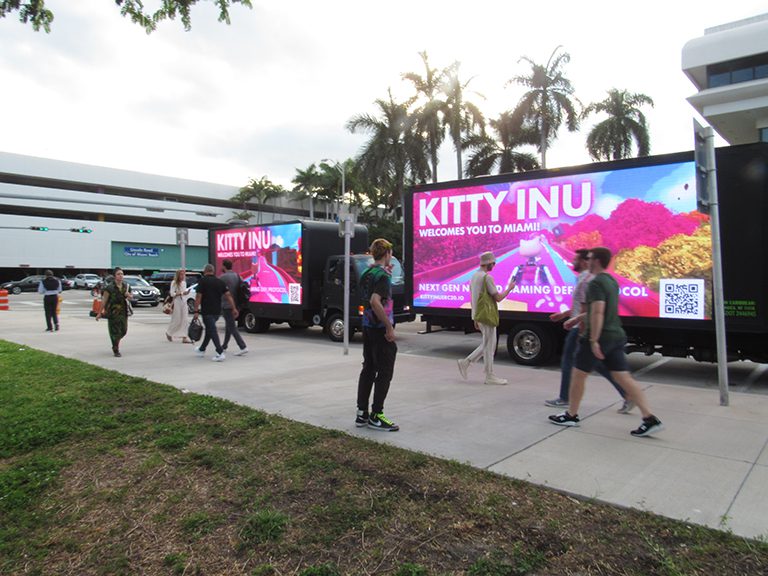
Chicago digital display advertising reaches millions of commuters, shoppers, and pedestrians every day. Learn how to use DOOH and combined guerrilla strategies to dominate the Windy City.
Digital displays light up Chicago’s streets, transit stations, and commercial corridors. Here is what brands need to know about using DOOH in this market, and how to combine it with guerrilla tactics for maximum impact.
Chicago has one of the most strong digital out-of-home (DOOH) advertising networks in the country. From the digital screens lining the L platforms to massive LED boards in the Loop, the city offers brands a serious canvas for high-visibility display advertising.
But digital display advertising in Chicago is more than about booking a screen. It is about understanding where those screens live, who sees them, and how to make the most of the exposures you buy. Done right, DOOH in Chicago is a powerful complement to street-level guerrilla campaigns. Done wrong, it is expensive background noise.
We work with brands running Chicago campaigns every month. This guide covers everything you need to know about digital display advertising in this city.
Digital display advertising in the out-of-home context means ads that appear on digital screens in public spaces. In Chicago, these include:
Digital billboards along expressways like I-90/94 and I-290
Digital screens in CTA rail stations and bus shelters
LED displays in commercial districts like the Magnificent Mile and River North
Digital kiosks in high-traffic retail and entertainment zones
Airport displays at O’Hare and Midway
Digital screens in sports arenas and convention centers
Unlike static posters, digital displays can rotate multiple ads, update in real time, and be programmatically targeted to specific times, dates, or weather conditions. That flexibility makes them powerful. It also makes them more complex to plan and buy.
Chicago’s Digital Out-of-Home environment
Chicago’s DOOH market is one of the largest in the United States. The city has thousands of digital screens across its transit network, commercial corridors, and outdoor environments.
The CTA alone is one of the country’s busiest transit systems. Over 1.7 million rides happen on it every single day. Digital screens inside CTA stations reach a massive, captive audience of commuters. These are people who are stopped, stationary, and looking for something to focus on while they wait for their train.
The city’s dense commercial districts create additional DOOH inventory. The Magnificent Mile on Michigan Avenue is one of the top retail corridors in the country. Screens along this corridor reach tourists, shoppers, and business travelers in high purchasing mode.
Digital screens in Chicago’s CTA stations reach audiences during those three to eight minutes of platform wait time. That dwell time is advertising gold, people are not scrolling their phone, they are looking around.
Key DOOH Formats Available in Chicago
Format
Location
Audience
Key Advantage
Digital Billboards
Expressways, highways
Drivers, commuters
High reach, speed targeting
Transit Station Screens
CTA L stations
Daily commuters
Frequency, captive dwell time
Bus Shelter Displays
Neighborhood streets
Local pedestrians
Hyper-local targeting
Digital Street Kiosks
Downtown corridors
Pedestrians, tourists
Interactive options available
Airport Screens
O’Hare and Midway
Business travelers
Premium demographic reach
Arena/Venue Displays
United Center, McCormick Place
Event attendees
High-intent, engaged audience
Programmatic vs. Direct DOOH Buying in Chicago
There are two main ways to buy digital display advertising in Chicago: direct and programmatic.
Direct Buying
You negotiate directly with the screen owner or their sales team. You lock in specific screens, specific times, and specific placements. Direct buying gives you predictability and often access to premium inventory that is not available programmatically. It requires more lead time and usually involves longer commitment periods.
Programmatic Buying
You bid on digital screen inventory through a DSP (demand-side platform). Your ads run on screens across a network based on targeting parameters you set. Programmatic is faster to launch and more flexible. It lets you target by location, time, weather, and audience behavior. The tradeoff is less control over exact placements.
For most brands in Chicago, a combination works best. Direct buys lock in your hero placements, the high-value screens you know you want. Programmatic fills in reach and targeting across the broader network.
How to Target Audiences with Chicago DOOH
One of the most powerful aspects of digital display advertising is targeting. Chicago’s DOOH network allows several targeting approaches that static media cannot match.
Time-of-Day Targeting
Run different creative during morning commute, lunch hour, and evening rush. A coffee brand runs its breakfast creative at 7 AM. A restaurant switches to its dinner message at 4 PM. The screen stays the same. Your message adapts to the moment.
Weather Triggering
Chicago weather is extreme. You can set up DOOH campaigns that trigger specific creative when it snows, when the temperature drops below freezing, or when it finally hits 70 degrees in May. Weather-triggered creative feels immediate and relevant. It gets noticed because it matches what people are experiencing right now.
Geographic Concentration
Target screens within specific neighborhoods. A restaurant in Logan Square does not need to buy screens in Hyde Park. A retailer on the Magnificent Mile targets screens in the adjacent tourism and shopping corridors. Geographic concentration makes budgets more efficient.
Event-Based Activation
Buy screens near the United Center before a Bulls or Blackhawks game. Activate screens around Grant Park during a major festival. Event-based DOOH puts your brand in front of thousands of engaged people who are already in a heightened state of attention and social activity.
The most effective Chicago DOOH campaigns layer targeting. Time-of-day plus geography plus event proximity. Each layer narrows the audience and sharpens the relevance of your message.
Combining Digital Display with Guerrilla Marketing
Here is where things get interesting for brands that want to maximize their Chicago presence.
Digital display advertising and guerrilla marketing work better together than either does alone. Here is the logic.
Guerrilla marketing creates a physical, real-world moment. A street installation, a poster campaign, a street team activation. It generates immediate attention and social content. People photograph it and post it.
Digital display advertising amplifies that presence. The same creative showing up on a DOOH screen near where you just saw the street activation creates a surround-sound effect. Your audience encounters your brand in multiple contexts. That repetition builds recognition and recall.
We run combined campaigns like this for Chicago clients regularly. The guerrilla component creates the cultural moment. The DOOH component stretches its reach across the city’s commuter and pedestrian networks. Together, they create campaign awareness that neither could achieve on its own.
What Makes Chicago DOOH Unique Compared to Other Markets
Chicago is not New York. It is not Los Angeles. It has its own rhythms and its own advertising dynamics.
First, Chicago is a commuter city. The L brings people into the Loop from all over the city and suburbs. That transit corridor is dense with DOOH inventory and it creates a daily ritual of exposure that few other markets can match.
Second, Chicago’s winters change behavior. When it is minus 10 and snowing, fewer people are walking the streets. Outdoor advertising reach drops. Smart advertisers plan around the seasonal cycle and front-load their outdoor and DOOH spend into the warmer months when pedestrian traffic peaks.
Third, Chicago has distinct neighborhood loyalties. People identify strongly with their neighborhoods. DOOH that appears hyper-locally in Pilsen or Andersonville or Bridgeport registers differently than city-wide reach. Neighborhood-specific campaigns feel relevant rather than generic.
Budget Planning for Chicago Digital Display Campaigns
DOOH in Chicago ranges from affordable neighborhood screens to premium Loop inventory. Here is a rough guide to budget ranges.
Small/Local campaigns: $3,000-$10,000 for two to four weeks of neighborhood-level screens
Mid-tier campaigns: $15,000-$40,000 for broader network coverage across multiple formats
Premium campaigns: $50,000+ for high-traffic locations, transit networks, and long durations
These numbers vary significantly based on format, location, and duration. Programmatic buying can stretch budgets further but requires careful monitoring to avoid wasted spend on low-value inventory.
Measuring the Impact of Chicago DOOH Campaigns
One of the most common questions we get is how to measure DOOH effectiveness. The good news is that measurement has improved dramatically in recent years.
Current measurement approaches include mobile device geofencing, tracking people who were exposed to a screen and then measuring their subsequent behavior. Did they visit your store? Did they convert online? Did they search for your brand?
We also track social listening during campaigns. When a DOOH execution gets attention, people post about it. Mentions, shares, and hashtag use spike during active campaigns. That organic social data is real evidence of advertising impact.
For campaigns with digital call-to-action elements, a QR code, a custom URL, a promotional code, direct response tracking is straightforward. Every scan or visit attributable to the display is measurable.
Chicago DOOH Creative Best Practices
Even the best screen placement fails if the creative does not work. DOOH creative in Chicago has specific constraints that brands often overlook.
Keep It Simple and Readable
Most digital screen exposures last two to four seconds. People are moving. They are driving, walking, or emerging from a station entrance. Your message has to land in an instant. A single headline, a bold visual, and one clear call-to-action is the formula. Anything more complex gets ignored.
Design for the Environment
Screens on highway billboards face daylight glare, high speeds, and extreme weather. Screens inside CTA stations face lower light and closer viewing distances. Design your creative for where the screen actually lives. A design that looks great on a monitor may perform poorly on a billboard in direct afternoon sun.
Think About the Surrounding Context
What is next to your screen? In a CTA station, your ad competes with wayfinding signs, other ad panels, and the physical architecture of the station. On a highway, the context is speed and competing visual stimuli. Great DOOH creative accounts for its environment and uses contrast and simplicity to stand out within it.
Motion and Animation
Digital screens allow motion. A subtle animation or transition draws the eye more effectively than a static image in a digital environment. But animation should serve the message, not distract from it. The best DOOH creative uses motion deliberately to highlight the most important element of the ad.
Chicago Seasonal Advertising Calendar
If you are planning digital display advertising in Chicago, you need to understand the seasonal rhythm of this market. Chicago is not a year-round outdoor market in the same way that Miami or Los Angeles is.
March-May (Spring Reactivation): People emerge. Street traffic rebounds. This is a prime window for launches and awareness campaigns before summer competition heats up.
June-August (Peak Summer): The city is alive. Festivals, outdoor events, and tourism drive massive foot traffic. The most competitive DOOH period. Prices are higher, but reach is unmatched.
September-October (Fall Window): Another strong period. Back-to-school energy, fall events, and pleasant weather keep people moving. Often underrated as an advertising window.
November-February (Winter): Transit advertising holds its value because people ride the L even in deep winter. Outdoor pedestrian reach drops. Shift budget toward transit DOOH and indoor screens during cold months.
Planning your Chicago DOOH calendar around these seasons helps you get more from every dollar. The brands that treat Chicago as a year-round market without adjusting for seasonality consistently overspend in low-traffic periods and underspend in high-opportunity windows.
Why Brands Choose American Guerrilla Marketing for Chicago Display Campaigns
We bring a different perspective to digital display advertising because we come from a guerrilla background. We think about physical space first. We think about how human beings actually move through the city and what captures their attention in real environments.
That perspective shapes how we plan DOOH. We do more than ask which screens have the most exposures. We ask which screens are in the environments where your audience is most receptive. Where are they going? What are they doing? What mindset are they in? The screen that reaches someone on their way to a concert at the United Center serves a different purpose than the screen that reaches them during their morning commute.
We also bring real creative expertise. We design advertising that works in the real world, more than in a mock-up. We have run enough Chicago campaigns to know what gets noticed and what gets overlooked. That experience makes a real difference in campaign performance.
And we connect everything. DOOH strategy, guerrilla execution, digital amplification, measurement, and reporting. We handle the full picture so you do not have to coordinate multiple vendors across different channels.
The Case for Combining DOOH and Guerrilla in Chicago
Chicago is a city that rewards brands that show up physically. It is a city of walkers, transit riders, and neighborhood loyalists. The advertising that works here is advertising that exists in the actual spaces people move through every day.
Digital display advertising in Chicago gives you reach across the city’s transit network and commercial corridors. Guerrilla marketing gives you street-level presence that feels authentic and generates social content. Together, they create a campaign that is both broad and deep.
We design campaigns that use both. We think about the physical moment first, where is your audience, what are they doing, what will stop them. Then we extend that moment across the city’s digital screen network. The result is advertising that follows your audience through their day in a way that feels natural, not intrusive.
Chicago rewards this approach. Its neighborhoods, its transit culture, and its passionate residents make it a city that responds to advertising that respects the urban experience. Digital display done right is part of that experience. Guerrilla done right amplifies it.
The AGM Approach to Chicago Street-Level Campaigns
American Guerrilla Marketing has run campaigns in Chicago across neighborhoods from the Gold Coast to Englewood, from Wicker Park to Hyde Park. That range of field experience shapes how we approach every Chicago campaign: with specific neighborhood knowledge rather than generic urban market assumptions, with established location and community relationships that accelerate execution and improve quality, and with measurement practices that capture what actually happened in the field rather than extrapolating from foot traffic models.
When we plan a Chicago campaign, the neighborhood conversation happens before the format conversation. Which specific Chicago communities contain the highest concentrations of your target consumer? Where do those consumers gather in public spaces? What types of physical marketing are most congruent with the visual culture of those spaces? What timing patterns maximize the audience value of each location? These questions have Chicago-specific answers that a general marketing planner without deep city knowledge will get wrong in ways that are invisible until you compare actual campaign performance against initial projections.
Chicago rewards brands that invest in genuine physical presence in the communities where their consumers live. The city’s neighborhoods have strong identities and strong community loyalty to brands that show respect for those identities. A brand that consistently shows up in Wicker Park, in Bronzeville, in Little Village with quality physical marketing that acknowledges where it is and who it is talking to builds a kind of brand recognition that digital advertising in the same markets cannot replicate. The physical presence communicates investment. The community recognizes investment and responds to it.
We document every Chicago campaign with photo documentation, route maps, and summary reports that provide a complete record of campaign execution. That documentation serves immediate client reporting needs and creates the historical baseline for improving subsequent campaigns. Over time, the brands that commit to consistent physical marketing in Chicago build a proprietary body of location-specific performance data that gives them a persistent advantage over competitors who restart their Chicago planning from scratch with every campaign cycle.
The measurement advantage of Chicago physical marketing campaigns is often underestimated in planning conversations. Digital campaigns offer click and conversion data that is granular but limited to the digital interaction. Physical campaigns offer direct interaction data from field teams, organic social documentation from bystanders, and the secondary measurement signals of geographic search lift, word-of-mouth referrals, and walk-in traffic from covered areas. Together these create a richer picture of campaign performance than digital analytics alone provide, particularly for brands whose consumer relationship extends beyond the digital interaction into physical retail, community involvement, or service-based consumption that happens in person.
For Chicago brands planning their next campaign, the question to start with is not which channel to use. It is where in the city your target consumer is most accessible to genuine brand contact, and what format creates the most authentic brand encounter in that specific location. Once those questions are answered from real Chicago market intelligence rather than from general urban planning assumptions, the channel and format selection follows naturally from the audience access opportunity. That sequence, audience first, location second, format third, produces Chicago campaigns that feel native to the city rather than generically urban, and native Chicago campaigns outperform generic ones consistently in a market that rewards genuine local knowledge.
Frequently Asked Questions
What is digital display advertising in Chicago?
It refers to advertising that appears on digital screens in public spaces throughout Chicago, including transit stations, highways, commercial corridors, and airports. It is a subset of out-of-home advertising that uses digital technology to display dynamic, updateable content.