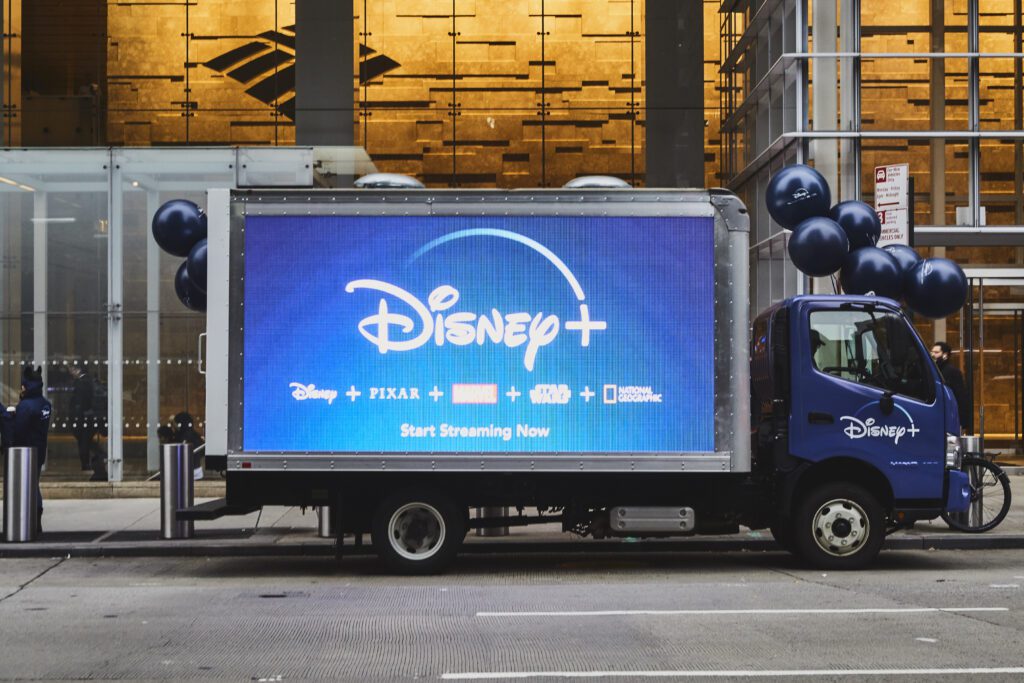
Branded Mobile Tours: How They Work and What They Cost in 2026
A brand-wrapped vehicle moving market to market is one of the most visible physical campaign formats available. Here is what goes into building and operating a branded mobile tour that produces real results.
A branded mobile tour is a campaign in which a wrapped vehicle or fleet of vehicles moves from city to city, creating direct consumer interactions at each stop. The vehicle is the anchor: visible from a distance, branded to communicate the campaign identity at a glance, and equipped to support sampling, demonstration, photo moments, giveaways, or full experiential environments. Every other element of the campaign — the field team, the activation mechanics, the stop selection, the documentation system — is built around the vehicle.
American Guerrilla Marketing plans and operates branded mobile tours for clients in consumer goods, entertainment, beverage, technology, and nonprofit categories. We have run single-vehicle tours covering three markets over two weeks and multi-vehicle campaigns covering twenty cities over eight weeks. The format scales because the core mechanics are identical at any scale: branded vehicle, trained field team, designed activation, photo documentation, and reporting cycle. Scale up the vehicle, the team, and the number of stops, and the fundamental structure stays the same.
This guide covers everything that goes into a branded mobile tour from planning to the final market: vehicle types and production, activation design, route construction, staffing, cost structure, and the specific execution details that separate tours producing strong results from tours that burn budget without producing them.
The vehicle is the most consequential decision in any mobile marketing tour. It determines what activation mechanics are possible, which locations are accessible, how much production lead time the schedule requires, and what the campaign looks like at street level. Each vehicle type has a different cost profile, a different production timeline, and a different performance profile across the stop types that make up a typical tour route.
Wrapped Cargo Van
A full vinyl-wrapped cargo van is the most practical starting point for mobile marketing tours. Wrap production runs $2,000 to $5,000 and takes two to three weeks from design approval to installation. The van carries materials, product samples, and equipment. It parks in spaces that larger vehicles cannot access, which is critical in dense urban neighborhoods where the most valuable stop locations often have limited vehicle access. Consumer interactions happen around the vehicle rather than inside or through it, which works well for distribution-focused campaigns where the primary activation is the material or product being handed out.
Step Van
A step van provides significantly more exterior branding surface than a cargo van and substantially more interior storage space. Wrap costs run $4,000 to $8,000. Many step vans can be outfitted with a service window or display opening, allowing brand ambassadors to interact with consumers from inside the vehicle — a configuration that works particularly well for beverage sampling, food product demonstrations, or any campaign where the product needs to be prepared or controlled rather than simply handed over. The larger exterior surface makes the vehicle more visible from a distance and creates a stronger presence at high-traffic stop locations.
Experiential Trailer
A purpose-built experiential trailer is the premium vehicle option for mobile marketing tours. These trailers are designed and built specifically for the campaign — they expand to create a full brand environment with built-in lighting, AV systems, product display infrastructure, and consumer interaction spaces. Production runs $30,000 to $150,000 depending on complexity and build quality. The production timeline is eight to sixteen weeks from design approval. This format is appropriate for campaigns where the vehicle itself needs to communicate brand positioning through its production quality, and where the activation mechanics require a contained, designed space rather than an open street environment.
Branded Bicycle or Cart Fleet
For urban campaigns targeting the highest-density pedestrian environments, a branded bicycle or cart fleet addresses the fundamental limitation of motor vehicle tours: the inability to be in multiple places simultaneously or to access spaces that vehicles cannot reach. A fleet of three to five branded cargo bikes or push carts operated by ambassadors can cover an entire neighborhood simultaneously, going where consumers are concentrated rather than waiting for consumers to come within range of a parked vehicle. This format is most effective in cities like New York, Chicago, and San Francisco where the highest-value consumer contact points are in pedestrian-only zones or streets where parking is impractical for full vehicles.
Vehicle Type
Production Cost
Lead Time
Best Application
Cargo van wrap
$2,000 – $5,000
2-3 weeks
Distribution, street team base, urban access
Step van wrap
$4,000 – $8,000
3-4 weeks
Sampling, demonstrations, service window
Experiential trailer
$30,000 – $150,000
8-16 weeks
Premium brand environments, major launches
Bicycle/cart fleet
$1,500 – $6,000
2-4 weeks
Dense urban pedestrian zones, multi-location
Activation Design: What Happens When the Vehicle Arrives
The activation is the consumer experience at each stop. It justifies the tour’s existence beyond a moving sign. A well-designed activation creates genuine interactions that build brand affinity and generate documentation worth using. A poorly designed one burns budget on presence without producing outcomes worth reporting.
The first design question is: what does the consumer actually receive from engaging? If the honest answer is a logo and a brochure, the activation needs rethinking. The consumer should receive something they want — a product sample worth tasting, a photo moment worth sharing, a prize worth earning, or an experience worth describing to someone else that evening. That value exchange is the foundation of every activation that consistently outperforms baseline expectations across a multi-city tour.
AGM field principle: Design the consumer value first. The brand element comes second. An activation where the consumer receives something genuinely good — a quality sample, a real prize, a remarkable photo moment — and the brand shows up as the provider of that value will outperform a brand-message-forward activation consistently. What you give determines how long people stay and what they say afterward.
The consumer interaction script is frequently underinvested. The first 15 seconds of an ambassador’s interaction with a passing consumer determines whether that person engages or continues walking. A script opening with brand messaging triggers advertising defensiveness. A script opening with a genuine offer, a question, or a product moment creates engagement. This difference in how the opening is framed changes stop conversion rates significantly, and that change compounds across all stops on a multi-city tour. We conduct script reviews before every tour launches.
Route Planning and Stop Selection
A mobile marketing tour route is built from specific stop locations in each city, selected for consumer density, audience relevance, logistical access, and event anchor potential. The best routes combine three types of stops in each market: anchor stops at confirmed high-traffic events, organic stops at locations with reliable daily foot traffic, and targeted stops where the brand’s specific audience concentrates.
Anchor stops — farmers markets, festivals, sporting events, concerts — provide guaranteed consumer volume on a specific date and time. These are the highest-value stops on any tour because the consumer concentration is predictable, the audience is already in an engaged and receptive mindset, and the event context provides a natural backdrop for brand interaction. The challenge with anchor stops is that they require advance coordination: event permits or vendor arrangements must be secured weeks before the tour date.
Organic stops — busy commercial corners, transit plazas, university areas, popular parks — provide reliable daily consumer flow without event-specific coordination. These stops are more flexible in scheduling and easier to adjust if the first-choice location has a logistical issue on the day of the stop. The trade-off is that organic stop locations have more competition for consumer attention and require stronger activation mechanics to create engagement among people who were not expecting a brand interaction.
Stop selection criteria: Every planned stop location should be evaluated on four dimensions before it goes on the route: pedestrian volume at the planned day and time, audience relevance to the campaign’s target consumer, vehicle access and parking feasibility, and proximity to the activation’s ideal operating space. A location that scores well on three of four criteria can still be worth including. A location that scores poorly on vehicle access or audience relevance should be replaced regardless of its pedestrian volume.
Location scouting before the tour is essential, not optional. Walking every planned stop location at the same day and time as the planned stop visit reveals details that online research and mapping tools cannot: where foot traffic actually concentrates on that specific corner, what the sightlines look like from the vehicle’s likely parking position, what competing brand or ambient elements are nearby, and what the actual ambient noise and distraction environment looks like. Stops that look strong on paper often require position adjustments that are only apparent from the ground.
Field Team Staffing
Every mobile marketing tour stop requires a minimum of three people in clearly separated roles: a field manager, a vehicle operator or lead ambassador, and at least one additional brand ambassador. At high-traffic events or stops with complex activation mechanics, staff four to eight ambassadors. The roles must be budgeted and briefed separately.
The field manager is responsible for everything that is not consumer interaction: vehicle positioning and parking coordination, activation setup, team briefing before each stop, consumer flow management during the stop, real-time problem-solving when planned elements do not work as expected, and stop documentation. The field manager should not be running consumer interactions at the same time. When the field manager is pulled into consumer interaction because the team is short-staffed, the operational quality of the stop drops immediately and predictably.
Brand ambassadors are responsible for direct consumer engagement: approaching passersby, creating initial engagement moments, explaining the product or campaign, executing the sampling or giveaway mechanics, and generating organic social content from consumer interactions. Ambassador performance is the single most variable element of mobile marketing tour execution. A team of genuinely enthusiastic, knowledgeable ambassadors who believe in what they are promoting will produce two to three times the consumer interactions per hour that a disengaged team produces, at the same stop location, on the same day.
We source locally in every market. Local ambassadors know their city: they know which conversation openers work with the local audience, they understand the neighborhood context, and they project authenticity that a nationally traveling team cannot replicate. Consumers in Chicago can tell when they are talking to someone who actually lives in Wicker Park versus someone who flew in from somewhere else and is unfamiliar with the neighborhood. That authenticity gap costs consumer interactions. Local sourcing eliminates it entirely.
Measuring Mobile Marketing Tour Performance
Mobile marketing tours are measurable when they are designed to be measured. The metrics we track at every stop on every tour we operate include direct consumer interactions, product samples or materials distributed, social content generated with campaign hashtags, photo documentation volume and quality, and any conversion or sign-up mechanics built into the activation. Every metric that matters should have a tracking method assigned before the tour launches, not figured out during or after.
Reporting cadence matters for multi-city tours. We deliver a 24-hour post-stop summary for every stop covering all tracked figures from that day. We deliver a weekly summary during the tour covering performance across all stops completed to date, with trend analysis identifying which stop types, locations, and cities are performing at the highest level. We deliver a consolidated final report within one week of the last stop covering all markets, all stops, and final aggregate figures with recommendations for the next campaign cycle.
Metric
How Tracked
Report Timing
Direct consumer interactions
Ambassador tally per stop
24 hours post-stop
Samples/materials distributed
Inventory count
24 hours post-stop
Social content generated
Hashtag monitoring
Daily during tour
Photo documentation
Content creator output
48 hours post-stop
Market summary
Field manager report
Weekly during tour
Final consolidated report
Full analysis
1 week post-tour
Cost Structure and Budget Planning
Mobile marketing tour budgets divide across four categories: vehicle production, field operations and staffing, product and materials, and travel and logistics. Understanding each category’s contribution to total cost helps with both initial budget construction and with identifying where the plan can be adjusted if budget constraints require trade-offs.
Vehicle production is the largest single upfront investment and is amortized across the full tour. A $3,500 van wrap spread across ten stops costs $350 per stop in vehicle production. A $75,000 experiential trailer spread across the same ten stops costs $7,500 per stop. The trailer produces a substantially different consumer experience that may justify the higher per-stop cost depending on campaign objectives, but comparing the cost-per-stop across vehicle options before committing to a specific format is a fundamental step in the budget process.
Field staffing is typically the largest recurring cost across the tour, accounting for 35 to 50 percent of total campaign cost on most tour engagements. A three-person team for an eight-hour stop day runs $600 to $1,500 depending on market and role experience levels. A five-person team for a premium event stop runs $1,500 to $3,500. For a ten-city tour with two stop days per city, staffing costs alone can run $12,000 to $70,000 depending on team size and market mix.
Budget guidance: A basic mobile marketing tour with a van wrap, local ambassadors, and a sampling program covering five to eight cities over three to four weeks typically runs $30,000 to $70,000 total. A premium tour with a custom experiential trailer, larger teams, and 12 or more markets runs $150,000 to $500,000. The main variables are vehicle production cost, market count, team size per stop, and product or giveaway cost per consumer interaction.
Product and materials costs vary enormously by category. A beverage sampling program where every consumer receives a full-size product sample has a high per-interaction cost but also produces the most direct product trial. A digital-only giveaway where consumers enter to win a prize has nearly zero per-interaction material cost but produces lower activation engagement than a physical sample. Most effective mobile marketing tours use a combination of guaranteed small item or sample plus a sweepstakes or larger prize element, balancing the cost-per-interaction with the engagement depth that different consumer segments respond to.
Why Entertainment and Music Campaigns Use Branded Mobile Tours
Entertainment and music campaigns use branded mobile tours because physical market presence produces something digital campaigns cannot replicate: the brand appearing in the consumer’s daily environment in a way that feels real and unexpected. A streaming platform building presence before a major catalog launch benefits from a vehicle appearing in the neighborhoods where its target subscribers live and shop. That physical presence makes subsequent digital campaigns more effective because the brand is no longer an unknown quantity when the digital ad appears.
Music labels use tours to support artist launches and album releases, wrapping vehicles in the artist’s visual identity and placing them in the neighborhoods where that artist’s audience concentrates. The vehicle is not a generic activation — it is an extension of the artist’s visual world. Film and television campaigns use tours in the weeks before a release date, with activation mechanics that include trailer viewing stations, cast content access, and exclusive merchandise previews that create consumer relationships with the release before the opening weekend.
Festival and event brands use branded mobile tours in the months before their event in the drive markets from which significant attendance comes. A music festival drawing from Boston, Philadelphia, and DC for a New York-based event benefits from stops in those markets eight weeks before the festival date. Activation mechanics at those stops can include exclusive presale access, artist preview content, and merchandise sampling that converts passive awareness into active ticket purchase intent before the general on-sale date.
AGM’s Approach to Mobile Marketing Tour Campaigns
American Guerrilla Marketing has operated mobile marketing tours across major US and Canadian markets for brands in entertainment, consumer goods, beverage, technology, and nonprofit categories. Our approach is built around four operational priorities that we treat as non-negotiable on every tour we run: precise stop selection based on direct location knowledge, locally sourced and rigorously briefed field teams, real-time documentation that produces usable social and reporting assets, and reporting cadences that give clients actionable data during the tour rather than only after it ends.
The precise stop selection matters because the difference between a mobile marketing tour stop that produces 150 consumer interactions and one that produces 400 is almost always location quality and team preparation rather than budget or vehicle production. We have run expensive tours in mediocre locations and lean tours in excellent locations. The location wins every time. Our pre-tour location scouting is conducted in person, at the same time of day as the planned stop, and produces a written stop brief for every planned location that the field team reviews before executing each day.
Local sourcing is operationally critical. A team from outside the market will always miss context that a local team takes for granted: which street corners have afternoon shade and which are exposed, which neighborhoods have permit enforcement issues on certain days, which venue contacts to call when a planned location is unavailable on the day of the stop. That local knowledge is not coachable from a brief. It comes from the team member’s lived experience in the market, and it makes a measurable difference in stop-to-stop execution quality on every tour we operate.
Frequently Asked Questions
What is a mobile marketing tour?
A mobile marketing tour is a campaign in which a brand-wrapped vehicle or vehicle fleet moves from market to market, creating direct consumer interactions at each stop. The vehicle serves as both the visual centerpiece and the operational base for the field team executing the activation.
How much does a mobile marketing tour cost?
A basic mobile marketing tour with a van wrap, local ambassadors, and a sampling program covering five to eight cities runs $30,000 to $70,000. A premium tour with a custom experiential trailer and 12 or more markets runs $150,000 to $500,000. Vehicle production, market count, and team size are the largest budget variables.
How long does it take to plan and launch a mobile marketing tour?
A basic van-based tour requires a minimum of four to six weeks from project kick-off to the first stop, accounting for vehicle wrap production, route planning, and local team sourcing. A tour with a custom experiential trailer requires a minimum of twelve to sixteen weeks from kick-off to launch given trailer production timelines.
How many cities should a mobile marketing tour cover?
A regional tour of three to five cities is a solid starting point for brands new to the format. A national tour of ten to twenty cities is appropriate for brands with wide consumer distribution. The minimum for national awareness impact is typically eight to ten markets across the major US consumer regions.
How is the field team recruited and managed?
We source brand ambassadors locally in every market, working with experienced local staffing partners who know the target neighborhoods and demographics. Local sourcing keeps quality high and eliminates travel costs. All ambassadors receive a campaign-specific brief before each stop covering the activation mechanics, the consumer engagement script, and the documentation requirements.
What documentation does a mobile marketing tour produce?
Every stop produces photo and video documentation, consumer interaction figures, and product distribution counts. We deliver a 24-hour post-stop summary and a consolidated final report within one week of the last stop. Photo and video assets are available for use on the client’s social and digital channels within 48 hours of each stop.