Campus Marketing News: What’s Working in College Brand Campaigns
Campus marketing is moving faster than most brands realize. The formats that worked five years ago are producing lower returns. New approaches are outperforming what was standard practice. Here is what we are seeing in the field and what it means for brands reaching college students in 2026.
Campus marketing has always been a distinct discipline within the broader marketing universe. The campus environment has its own rules, its own audience dynamics, and its own seasonal rhythms that do not map to standard consumer marketing frameworks. What is changing now is the pace of evolution in those dynamics, driven by Gen Z’s emergence as the dominant campus consumer generation and by the physical-digital hybrid nature of student life that was accelerated by the pandemic and has not reverted.
At American Guerrilla Marketing, we have ongoing campus operations across major university markets in the US. We run campaigns every semester. We see what is working on the ground, more than in the planning documents. This piece reflects what we are actually observing in campus marketing as of 2026, the trends that are gaining momentum, the approaches that are losing effectiveness, and the opportunities that most national brands have not yet fully recognized.
We are writing this not as a trend report designed to sound authoritative but as field notes from practitioners who are in these environments regularly. What we describe here is what we have actually seen, not what we expect to happen based on industry surveys.
The campus marketing campaigns producing the best results in 2026 are physical activations designed from the start to generate digital content. The activation creates a real-world experience. The experience is designed so that students want to photograph and share it. The social media content from the student audience does the campaign’s amplification work.
This is not a new concept but it is being executed with increasing sophistication. Early versions of this approach put a large branded photo moment at a campus event and hoped students would photograph it. Current versions design the entire activation around what a specific student audience will find shareable, build the visual elements to photograph well on a phone camera at arm’s length in varying light conditions, and integrate the brand identity in a way that is present but not obtrusive enough to make the photo feel like an advertisement rather than an interesting image to share.
The best example we can offer without naming a specific client: a beverage brand that ran a campus activation this past fall that offered a free, high-quality customized product with no email capture and no CTA beyond “enjoy it.” The activation drew a line. Students photographed the line, photographed the product, photographed their group with the product. The images spread through student social networks in the target campus city over a twenty-four hour period at a reach that cost zero additional media spend. The brand spent money on the experience. The distribution was free.
Student Ambassador Programs Done the Right Way
Brand ambassador programs have existed in campus marketing for decades, but the ones producing strong results today look very different from the brand ambassador programs of ten years ago. The old model was: hire attractive students to stand in a branded t-shirt and hand things out. The new model that works is: identify students who are already genuine users or fans of the category, equip them with products and information rather than scripts and uniforms, and ask them to talk about the product naturally in their existing social contexts rather than in staged promotional interactions.
The difference in output between these two models is significant. A student who is a genuine user of a product and who talks about it naturally with their friends is generating peer-level recommendation that is trusted by their social network. A paid promoter in a branded shirt at a table in the student union is generating brand exposures that the student audience processes as advertising and filters accordingly. The cost per genuine brand recommendation through a well-run ambassador program is significantly lower than the cost per recommendation through any paid format.
Micro-Campus Targeting
Brands are getting smarter about targeting within campuses rather than treating each campus as a single audience. We are seeing increased demand for major-specific or program-specific campus marketing, campaigns that target the engineering quad rather than the whole campus, the business school rather than all departments, or the freshman residential cluster rather than the entire undergraduate population. This micro-targeting approach produces higher relevance and higher response rates at the cost of smaller raw audience numbers, but for brands whose product is specifically relevant to a defined student segment, the trade is almost always worth making.
Field observation: The first week of fall semester 2025 saw the highest density of campus marketing activity we have observed in our years of running these campaigns. Competition for bulletin board space, sampling locations, and student attention in week one of fall semester is at a level that makes creative quality and placement precision more important than ever. A mediocre poster campaign executed in the first week of school will underperform significantly compared to the same campaign run two years ago simply because the competition for student attention in that window is so much higher.
What Is Losing Effectiveness in Campus Marketing
The campus marketing approaches that are producing declining returns are as instructive as the approaches that are gaining momentum. Understanding what is losing effectiveness helps brands redirect spending away from formats that are generating diminishing returns.
Generic Poster Campaigns Without Strong Creative
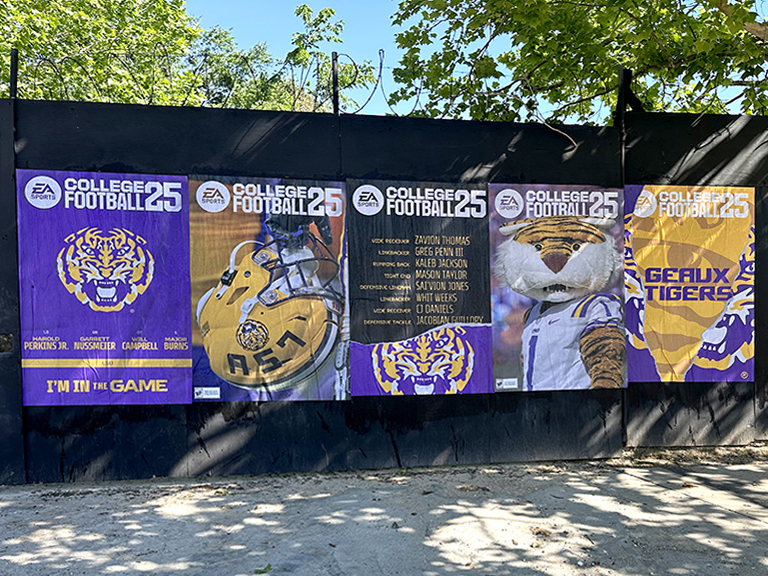
Standard brand awareness poster campaigns with generic creative, the kind that could apply to any brand in the category without any specific insight into the campus audience or the specific campus environment, are generating lower response rates than they did five years ago. The primary reason is saturation: campus bulletin boards are heavily posted during peak campaign periods, and a poster that does not immediately distinguish itself visually from everything around it simply does not get noticed. The floor for effective campus poster creative has risen significantly. What was adequate creative two years ago is now invisible creative.
Email-First Sampling
Sampling activations that lead with an email capture requirement before delivering the product are producing lower-quality interactions than the same activations without the capture requirement. Gen Z students on campus in 2026 are highly aware of data practices and protective of their contact information. An activation that asks for an email before giving a sample signals to the student that they are the product, not the recipient. The activation interaction becomes transactional in a way that limits the brand warmth effect. Many students are skipping the interaction entirely when they see the exchange requirement. Others provide temporary or false email addresses to get the sample. The data quality from these captures has declined significantly as students have become more sophisticated about avoiding them.
Pre-Packaged Swag Without Context
Generic branded swag, pens, t-shirts, tote bags, and other commodity promotional items, given without a specific campus context or brand interaction, is generating lower brand impact per item than it used to. Students in 2026 have more branded swag than they know what to do with. An additional generic item does not create brand association. The swag that works is the kind that is genuinely useful in the specific campus context where it is given, or genuinely interesting as an object in its own right. A well-designed, limited, genuinely desirable brand item creates more brand association per unit than ten units of a commodity item.
Campus Marketing Timing: What the 2025-2026 Academic Year Taught Us
Campaign Window
Student Mindset
Campaign Effectiveness
Competition Level
Our Recommendation
Week 1-2 of Fall Semester
Open, exploratory, decision-making
Very High
Very High
Must be in this window with strong creative
Week 3-7 of Fall Semester
Settling into routines
High
Medium
Good window for category-specific campaigns
Mid-fall to Thanksgiving
Focused on academics
Medium
Low-Medium
Useful for sustained awareness
Finals December
High stress, low receptivity
Low
Low
Avoid unless product is stress-relevant
Week 1-2 of Spring Semester
Fresh start, open to new
High
Medium
Strong second-choice window
Spring mid-semester
Campus social life peak
Medium-High
Medium
Good for event-adjacent activations
Emerging Formats in Campus Marketing
Beyond the running formats, we are seeing emerging campus marketing approaches gaining traction that represent genuine format progress rather than trend chasing.
Campus-Specific QR Code Experiences
QR codes on campus marketing materials are not new, but the destination experiences behind those QR codes are getting more sophisticated. Rather than pointing to a generic brand website, the most effective campus QR campaigns link to campus-specific landing pages that feel like they were built for that school and that student audience. A campaign at UT Austin with a QR code pointing to a landing page that references campus-specific culture, local neighborhood context, and student community references generates dramatically higher scan rates and longer page engagement than the same QR code pointing to a generic brand landing page.
Pop-Up Retail and Campus Commerce
Pop-up retail on or adjacent to campus, including food and beverage concepts, apparel and accessories brands, and consumer goods brands that partner with campus organizations to operate temporary retail activations, is growing as a campus marketing format. The pop-up format works because it creates a genuine commercial destination rather than just a brand presence. Students come to buy something, which is a higher-commitment engagement than stopping at a sampling table or reading a poster.
Residence Hall Partnership Activations
Partnership with university housing programs to deliver brand activations directly into residence hall common areas, sponsored study breaks, branded campus supplies programs, and curated product deliveries to residential floors, is growing as brands look for higher-intimacy campus touchpoints. These activations require coordination with the university housing office but can reach incoming students in the most brand-receptive period of their college experience with a format that feels curated and personal rather than mass-marketed.
What we are watching: The campus marketing formats gaining the most traction in 2026 share one characteristic: they give students something genuinely worth having before they ask for anything in return. The exchange economy of campus marketing, where brands give swag or samples in exchange for data or attention, is under pressure from a student generation that values its time and information more than previous generations did. Brands that lead with genuine value are outperforming brands that lead with the transaction.
Campus Marketing for Specific Student Segments
The most effective campus campaigns in 2026 are not targeting “college students” as a monolith. They are targeting specific student segments within the campus population with formats and creative that are relevant to that segment’s specific experience.
First-year students in their first month on campus are in the highest receptivity state of any segment. They are making first-time consumer decisions, building new social networks, and actively seeking products and services that help them navigate their new life. A brand that reaches this segment in the first two weeks of fall semester with a genuinely helpful offer occupies first-mover position in a consumer relationship that can last four years or more.
Student athletes are a distinct and high-influence campus segment. They have high social visibility on campus, dense peer networks among other athletes and sports fans, and above-average disposable income in some demographic contexts. Brands targeting performance, nutrition, athletic apparel, and recovery categories find that direct engagement with the student athlete community, through athletic department partnerships, team-adjacent campus activations, and ambassador programs within the athletic community, produces strong returns relative to the investment.
International students are an increasingly important and underserved segment in campus marketing. At major research universities, international students make up fifteen to thirty percent or more of the graduate student population and a meaningful share of the undergraduate population. This segment has above-average spending power in many cases, is actively seeking products that fit their life in the US, and is underserved by campus marketing campaigns that default to domestic student cultural references.
The Technology Influence on Campus Marketing in 2025-2026
Technology continues reshaping what works in campus marketing. The rise of AI-generated content in students’ digital feeds has accelerated a trend that was already underway: students’ ability to identify and discount algorithmically-generated marketing at a glance. The campus marketing approaches that have gained effectiveness in the current cycle are those that feel demonstrably human — face-to-face interactions, peer-to-peer advocacy, physical presence that cannot be automated or simulated in a digital feed.
QR code integration at physical campus marketing touchpoints has matured from novelty to standard practice. Students scan QR codes as a matter of course when they encounter them at campus events, on physical marketing materials, and at sampling programs. The key development in the current cycle is the expectation that QR codes lead to genuinely valuable destinations — actual information, discounts, content, or community access — rather than generic brand pages. QR codes that lead to the brand’s homepage homepage rather than a purpose-built landing page with something genuinely worth the scan lose most of the students who scan them.
Short-form video content from student brand ambassadors continues to outperform brand-produced campus content in organic reach within student social networks. The visual aesthetic and communication style that resonates on TikTok and Reels is student-native, not brand-native, and students distinguish between authentic student creator content and brand-produced content attempting a student aesthetic. The best campus marketing programs in the current cycle integrate genuine student creators who have real campus social presence rather than producing brand content designed to look like student content.
Brand Categories That Are Growing Their Campus Marketing Investment
Several brand categories have meaningfully increased campus marketing investment in the 2024-2026 cycle, reflecting both the growing importance of the college-age demographic and specific category dynamics that make campus acquisition particularly valuable.
Financial services and fintech brands have significantly increased campus presence as the competition for young adult financial account acquisition has intensified. The consumer who opens their first checking account, investment account, or credit card at 18 to 22 tends to maintain that primary relationship for years or decades. The acquisition value of a college-age financial services customer, measured over the full expected relationship lifetime, justifies marketing investment that appears disproportionate to current revenue from that demographic.
Health and wellness brands — particularly functional beverages, supplement companies, and mental health adjacent products — have expanded campus investment as wellness culture has moved from a niche interest to a mainstream campus concern. The student wellness market was significantly underdeveloped relative to student interest in the category five years ago; the brands that have invested aggressively in campus presence during this period have built awareness advantages that will persist as the cohort ages.
Food delivery and convenience service brands continue to invest heavily in campus acquisition because the college-to-career transition is when delivery service habits that persist for years form. Campus ambassador programs, referral incentive programs, and in-dorm sampling activations remain active investment areas for this category.
What to Watch in Campus Marketing for the Coming Academic Year
The campus marketing trends worth monitoring into the next academic cycle: continued evolution of campus media consumption toward vertical short-form video, growing student expectations for brand authenticity and alignment with values rather than pure promotional offers, the ongoing importance of peer recommendation over brand advertising, and the expanding opportunity in campus sustainability programs and community engagement sponsorships that give brands genuine community participation credentials. Brands investing in understanding these trends now will enter the next academic year with programs designed for where student attention actually is rather than where it was two or three years ago.
Frequently Asked Questions
What is the biggest trend in campus marketing right now?
The biggest trend is the shift toward physical experiences designed to generate organic digital content. Campus marketers who design activations around what students will want to photograph and share are generating social media amplification that extends their campaign reach far beyond the physical footprint of the activation. This approach treats organic student social sharing as a primary campaign output rather than a secondary bonus.
Are campus poster campaigns still effective?
Yes, but the creative quality bar has risen significantly. Generic brand awareness poster campaigns with undifferentiated creative are producing lower returns as campus board saturation increases. Campus poster campaigns with genuinely distinctive creative, designs that stand out visually and offer a clear, relevant message, still produce strong response rates. The format is not declining. The tolerance for mediocre creative within the format is declining.
How has the pandemic changed campus marketing?
The pandemic accelerated several existing trends in campus marketing. It normalized hybrid digital-physical student engagement patterns, increased student appreciation for genuine in-person campus experiences after a period of their absence, and sharpened students’ sensitivity to transactional brand interactions. Campus marketing that provides genuine human connection and real-world experience has benefited from the post-pandemic appreciation for physical presence. Marketing that still treats students as digital-first has lost ground to formats that meet students where they actually are.
What campus marketing formats are losing effectiveness?
Email-first sampling activations are producing declining response rates as Gen Z students become more protective of their contact information. Generic branded swag without campus-specific context is generating less brand impact per item. Standard brand awareness poster campaigns with commodity creative are producing lower response as competition for bulletin board space increases and the creative bar rises. Scripted brand ambassador programs where ambassadors are visibly performing a role rather than genuinely endorsing a product are losing credibility with the Gen Z student audience.
Is there still value in targeting specific campuses rather than doing general student demographic targeting?
Yes, and increasingly so. The most effective campus campaigns in 2026 are campus-specific in their creative, their placement, and their activation design. A campaign that references the specific campus culture, the specific neighborhoods students live in, and the specific student community at a target school generates higher engagement than a generic “college students” campaign run across multiple schools with identical creative. The investment in campus-specific customization pays off in higher response rates.
What is driving the growth of campus brand ambassador programs?
The growth of ambassador programs is driven by Gen Z’s trust of peer recommendation over brand advertising. A recommendation from a genuine peer, a fellow student who actually uses the product, carries far more persuasive weight than any amount of direct brand advertising. Ambassador programs that recruit genuine users rather than paid performers who have no prior relationship with the brand produce measurably better results. The growth reflects brands learning that peer-to-peer marketing is more effective with this generation than brand-to-consumer marketing.
How does campus marketing connect to digital marketing for reaching college students?
Campus physical marketing is most effective when it is connected to a digital layer that amplifies the physical impression. Poster campaigns drive QR code scans to digital landing pages. Sampling activations give students shareable products and experiences that appear on their social media. Brand ambassador programs seed organic social media content through genuine peer sharing. The physical campus presence creates the first impression. The digital connection extends the impression reach and provides the measurable response data that the physical format alone cannot capture.
How do I keep up with what is working in campus marketing?
Run campaigns. The best source of campus marketing knowledge is direct field experience across multiple campus environments and multiple campaign types. We share what we learn from the campaigns we run with the clients we work with, which is one of the primary values we offer as a campus marketing partner. Contact us at (646) 776-2770 or hello\@americanguerrillamarketing.com to talk about what we are seeing in your target campus markets.