
September 12, 2026
Campaign Activation | American Guerrilla Marketing
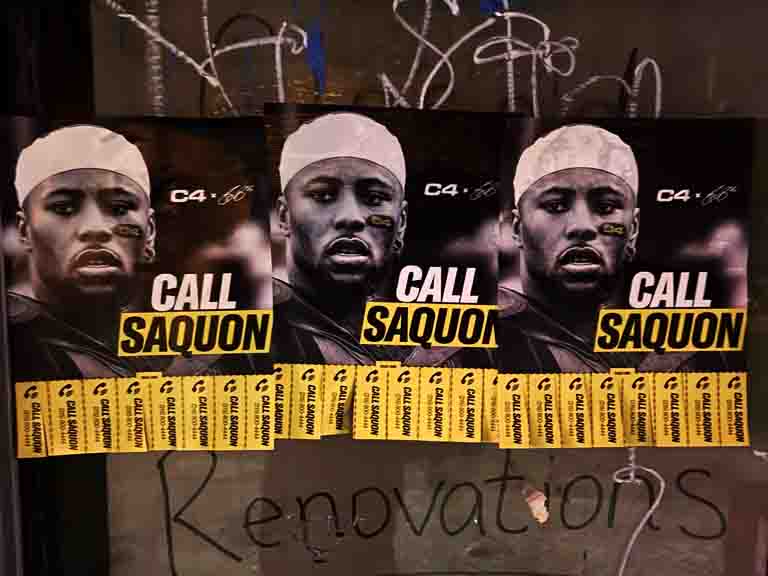
A campaign exists on paper until activation day. Campaign activation is the execution phase where strategy meets the street — the live programs that put your brand in direct contact with consumers in the real world.
Every marketing campaign has a strategy. Most of them live entirely in digital and media channels: paid social, search, OOH placements, email, content. Those channels reach consumers who are consuming media. Campaign activation reaches consumers who are living their lives — walking to the subway, buying lunch, attending a festival, navigating a neighborhood they know. The distinction is not just about channels. It is about the nature of the consumer encounter itself.
Campaign activation is the physical execution phase of a marketing campaign: the live programs, events, street operations, and experiential moments that bring the campaign’s message into direct contact with consumers in real environments. When it is designed well and executed precisely, campaign activation creates the kind of consumer engagement that passive media exposure cannot — trial, memory, advocacy, and social content that extends the campaign’s reach far beyond its media buy.
What Campaign Activation Actually Covers
The term is broad, but campaign activation in practice covers a defined set of physical marketing formats that share one characteristic: the brand and the consumer are in the same physical space at the same time, creating a direct encounter.
Street Team Operations
Street team programs deploy brand representatives into the target consumer’s physical environment — neighborhoods, transit hubs, retail corridors, entertainment districts — to create direct brand contacts through conversation, product distribution, and information exchange. A well-run street team operation is not random foot soldier deployment. It is a precision logistics program with defined routes, geographic targets based on consumer movement data, conversion protocols, and real-time management.
We have run street team programs in New York’s Financial District for financial services brands targeting young professionals during lunch and commute hours. We have deployed teams in Chicago’s West Loop for consumer packaged goods brands reaching the professional lunch crowd. We have operated in Venice and Silver Lake in Los Angeles for fashion and wellness brands targeting the creative professional demographic. Each program is designed around the specific consumer’s actual movement pattern in the specific market.
Pop-Up Activations
A pop-up activation claims a physical space for a defined period and transforms it into a brand environment. This can range from a well-designed branded cart in a high-traffic corridor to a fully built-out immersive installation in a vacant retail space. The pop-up format works for almost every consumer category because it creates a defined, visible brand presence that passersby encounter as part of their normal environment.
Sampling Programs
Product sampling programs are a foundational campaign activation format, particularly for food, beverage, health, beauty, and personal care categories. The mechanics are straightforward: place the product in the hands of the target consumer at the right moment and in the right context. The execution variables — who, where, when, with what conversation protocol — determine whether the program changes purchase behavior or simply distributes free product.
Event-Based Activations
Events create concentrated moments of brand engagement: product launches, community events, brand-sponsored experiences within existing events. Event-based campaign activations are typically higher production investments with higher per-capita impact. The focused nature of an event allows for deeper brand immersion and more complex experience design than street-level programs.
Stunt and Earned Media Programs
Some campaign activations are designed primarily to generate earned media and social content rather than direct consumer trial. A well-executed brand stunt in a high-visibility public location, a surprising brand intervention in an unexpected context, or a visually distinctive outdoor installation that captures public attention can generate coverage and social sharing that reaches audiences far beyond the physical footprint. These programs live and die by their concept quality — a mediocre stunt in a prominent location earns nothing. A genuinely surprising or beautiful brand moment in the right context earns coverage that a media buy cannot replicate.
| Activation Format | Primary Objective | Typical Budget Range | Reach Profile |
|---|---|---|---|
| Street team operations | Trial, awareness, conversion | $5,000 – $40,000 | High volume, direct contact |
| Pop-up activation | Brand affinity, trial, content | $20,000 – $150,000 | Medium volume, high quality |
| Product sampling program | Trial, purchase conversion | $8,000 – $50,000 | High volume, targeted |
| Event-based activation | Brand experience, advocacy | $40,000 – $300,000 | Medium volume, deep engagement |
| Stunt / earned media program | PR, social content, awareness | $15,000 – $100,000 | Physical: limited; earned: large |
Planning a Campaign Activation
Campaign activation planning should start with the same question that drives all good marketing: what specific change in consumer behavior or perception are we trying to create? The answer drives every downstream decision about format, market, timing, and execution approach.
Objective Setting
Campaign activations serve different objectives depending on where the brand sits in its market cycle. A new brand entering a market needs awareness and trial — the consumer cannot buy what they do not know exists, and their first experience with the product should be positive. An established brand in a competitive category needs differentiation and loyalty — the activation should remind loyal consumers why they choose this brand and give new prospects a reason to switch. A brand with a specific product launch needs concentrated attention and purchase intent around the new item.
Each objective drives different format choices. Awareness at scale favors high-volume street programs. Trial quality favors experiential sampling with conversation protocols. Loyalty and community building favor intimate events and curated gatherings. Product launches favor controlled events with influential guests.
Market Selection
Not every market deserves equal investment in campaign activation. The most productive approach is identifying the markets where the target consumer is most concentrated, where the brand has the most room to gain share, and where local cultural dynamics support the activation concept. Deploying activation resources in three high-index markets typically produces better overall returns than spreading the same budget across eight markets at inadequate scale.
We use consumer movement data, demographic mapping, and direct field knowledge of specific neighborhoods to identify the specific streets, locations, and times of day where the target consumer density is highest in each market. That precision — knowing that a specific corner in Chicago’s West Loop captures more of the target demographic at lunch on a Thursday than any other block within a mile — is what separates efficient activation deployment from guesswork.
Timing and Duration
Campaign activation timing should align with the broader campaign media schedule. When activation launches at the same time as media, the combined effect is stronger than either component alone. Consumers who have seen the campaign in media and then encounter the brand in person have a significantly more engaged reaction than consumers who encounter the activation cold. And consumers who experience the activation and then encounter the campaign in media recognize and engage with it more actively.
The activation and the media plan are not separate programs. They are complementary elements of one campaign. When they are timed and targeted to reinforce each other — same markets, same timing, same creative language — the combined effect exceeds the sum of the parts. When they are planned independently, each works at a fraction of its potential. We always build the activation plan in coordination with the media plan, not as a separate workstream.
Execution: What the Field Actually Looks Like
Campaign activation execution has realities that are not visible in planning documents. Understanding them helps set accurate expectations and build contingency capacity into every program.
Location Performance Varies
The location that tests well in planning does not always perform as expected in execution. Foot traffic at a specific location can be dramatically lower than expected on a given day because of weather, local events, construction, or simply the natural variation in pedestrian patterns. We build flexibility into every activation deployment — the ability to shift a street team to a more productive location in real time, to extend a pop-up’s hours on a strong day, or to pivot an outdoor element to a covered location if weather changes.
Staff Performance Declines Over Long Days
Event staff who are executing well at hour two are not automatically executing well at hour eight. Energy, engagement quality, and conversion performance all decline with fatigue. We build shift rotations into long-day activations, use real-time performance monitoring to identify when a staff member needs a break or coaching, and brief on energy management as part of the pre-activation training. Maintaining consistent quality across a full activation day is an operational discipline, not something that happens automatically.
Content Capture Is Active Work
Great content from a campaign activation does not appear by itself. It requires a photographer or videographer who is moving through the space throughout the day, capturing the moments that are worth sharing — not just setting up in one spot and waiting. The content brief specifies the shots needed: staff interactions, product moments, environmental shots, crowd dynamics. That brief is briefed to the content team before the activation starts so they know what to look for.
Post-Activation: Closing the Loop
The activation day is the midpoint of the campaign activation program, not the end. Post-activation work determines how much of the value generated on the day is captured and extended.
Publish content within 24 hours. The social audience that saw your campaign content in the days before the activation will engage most with post-activation content while the program is still in their recent memory. Waiting 48 to 72 hours to publish event content loses that engagement window.
Analyze performance data against objectives. How did attendance or contact volume compare to targets? How did conversion conversations compare to baseline estimates? Where did the program perform above expectations, and where below? This analysis builds the brief for the next activation iteration.
Send follow-up communications to captured contacts. If the activation included a data capture element — contest entry, email sign-up, app download — follow-up communications within 48 hours produce significantly higher engagement rates than communications sent more than a week later. The activation’s brand memory is still fresh. Use it.
Campaign Activation Strategy: Connecting the Physical to the Digital
The most effective campaign activation programs are not standalone physical events. They are the live layer of an integrated campaign that connects physical consumer encounters to digital and media channels in a way that each element amplifies the others. Understanding how to design this integration is one of the most valuable things a campaign activation partner can bring to a client’s program.
The integration works in three directions. Before the activation, digital media builds awareness and anticipation in the target market — not just awareness of the brand, but awareness that something is happening in the physical world that is worth showing up for. This pre-activation awareness campaign drives attendance, which increases the physical program’s value, and it primes the consumer to be more receptive when they encounter the brand in the street.
During the activation, the content being generated in real time — staff photographers, consumer sharing, live social posting — becomes the asset for immediate digital amplification. The brand should be posting in real time from the activation, which creates a feedback loop: consumers in the area who see the brand’s live posts are drawn to the activation, which increases attendance, which generates more content, which drives more attendance.
After the activation, the content library generated during the live program becomes the creative engine for the post-campaign digital media. The photography from the sampling event, the video from the pop-up, the consumer testimonial clips — these perform better as paid social creative than studio-produced advertising because they document real people genuinely engaging with the brand. The live activation is the content factory for the digital campaign that follows it.
Retargeting Activation Audiences
One of the most underutilized tactics in campaign activation is retargeting the consumers who physically attended the activation through digital advertising. When consumers interact with a brand’s physical activation and then see the brand’s digital ads in the hours and days that follow, those ads land in a context of recent positive brand experience. Retargeted audiences from live activations consistently outperform cold audiences in digital advertising, often by significant margins, because they carry the positive brand memory from the live encounter.
The retargeting infrastructure can be built around data captured at the activation (email sign-ups, contest entries, app downloads) or through location data that identifies mobile devices present at the activation location during the activation window. Both approaches allow the brand to extend the positive live encounter into a digital follow-up sequence that deepens the consumer relationship.
Geographic Targeting in Campaign Activation
One of the most valuable advantages of campaign activation over mass media is the ability to concentrate marketing investment in specific geographic areas with surgical precision. A brand that activates in three high-index neighborhoods in a single city can create a level of brand saturation in those neighborhoods that a market-wide media buy at comparable cost cannot approach.
This geographic concentration serves multiple purposes. It creates the critical mass of brand encounters that produces awareness at the neighborhood level — when consumers in Wicker Park in Chicago encounter the same brand in three different contexts over a two-week period (a sampling program at their coffee shop, a pop-up on their block, a street team at their gym), the brand’s awareness level in that neighborhood rises significantly. This neighborhood-level saturation is not achievable through market-wide media buying at comparable investment.
Geographic targeting also allows the brand to select for the specific consumer demographics that index highest for its product category. Consumer movement data allows us to identify which specific blocks, at which specific times of day, carry the highest concentration of a brand’s target consumer. That precision means the campaign activation budget is deployed where it is most productive, not spread across the market based on general traffic assumptions.
Building a Campaign Activation Brief
The quality of a campaign activation program is directly determined by the quality of the brief that drives it. Here are the elements that every effective campaign activation brief should contain.
The objective. Specific, measurable, time-bound. Not “build awareness” — that is a category of objective. The specific objective might be: “Generate 8,000 direct product trial interactions in New York and Los Angeles in June, producing a post-trial purchase intent rate of at least 40 percent.”
The audience. The specific consumer who is the target of this campaign. Not a broad demographic range — the specific person: her age, her neighborhood, her job, her weekend habits, what she is currently buying in this category, and what specific gap in her current product experience this brand addresses better than the alternatives.
The markets. Which cities? Which specific neighborhoods within those cities? What is the rationale for each selection?
The timeline. When does the campaign activate? For how long? What is the relationship to the rest of the integrated marketing program?
The budget. Total program budget, with any constraints or allocations specified. An activation budget without constraints produces program designs that may be excellent but unbuildable.
The measurement framework. What specific metrics will be tracked, against what pre-campaign baselines, and what outcome constitutes campaign success?
Briefs that contain all of these elements consistently produce better programs than briefs that contain some of them. Every element that is missing gets filled by the agency with an assumption — and assumptions are worse than specified requirements.
Common Questions About Campaign Activation Formats
Clients new to campaign activation frequently have questions about format selection that are worth addressing directly.
When should a brand choose a pop-up over a street team? Pop-ups are appropriate when the brand experience requires more than 60 seconds — when a product demonstration, tasting, or immersive brand environment adds meaningful value to the trial or awareness objective. Street teams are appropriate when the objective is volume and the 60-second interaction is sufficient to drive the desired outcome. A food product with a simple, excellent taste is best sampled via a street team with a conversation protocol. A complex technology product that needs a 3-minute demonstration needs a more fixed format.
When should a brand choose a sampling program over an event? Sampling programs are about reach and conversion volume — reaching as many target consumers as possible with direct product contact. Events are about depth — creating a smaller number of high-quality brand interactions that produce stronger per-person brand memory and content generation. The choice depends on whether the campaign objective is best served by breadth or depth of engagement.
How do brands decide on activation duration? Duration should be determined by the campaign objective and the activation format’s appropriate scale. A pop-up installation in a neighborhood generates peak interest in the first 48-72 hours; after that, most of the local target consumer population has either visited or declined to. Extending a pop-up beyond the point where it is generating new visitors is poor ROI. A street team program, by contrast, can run productively for multiple weeks in the same markets if the routes are managed to reach new consumer populations each day.
Campaign Activation in New York: The Hardest Market to Get Right
New York is the most demanding market for campaign activation in the United States. The consumer base is more activation-saturated than any other American city. The logistics are more complex. The cost of venue and staffing is higher. And the competition for consumer attention from other brands, entertainment, and the city itself is more intense than anywhere else in the country.
The activation that generates strong engagement in Austin, Denver, or Nashville may be invisible in New York because the New York consumer’s filter for what is interesting in a public brand encounter is calibrated to the extraordinary. They walk past things every day that would be remarkable in other markets. To earn their attention, a New York campaign activation has to be genuinely, specifically, unmistakably worth stopping for.
New York campaign activations that work tend to share specific qualities. They are positioned in the exact right spot — not the high-traffic spot, but the spot where the specific target consumer is concentrated at the specific time of day the program is running. They are designed with a level of physical quality that communicates the brand’s seriousness. They have staff who are warm and knowledgeable enough to hold a conversation with New York consumers who are politely skeptical of brand marketing. And they offer something genuine — a real taste, a real discovery, a real service — rather than performing the appearance of a brand interaction.
What Campaign Activation Investment Should Look Like at Different Scales
Campaign activation investment scales differently than most marketing channels because the cost structure is primarily variable (staff, production, logistics) rather than fixed (as in media buying where larger audiences come at diminishing marginal cost). Understanding how the investment changes with scale helps in building programs that are appropriate for the brand’s situation and objectives.
At the test scale ($15,000 – $40,000), a campaign activation proves the concept: one market, two to five deployment days, a focused format that tests the core program elements without full national deployment. The test scale is appropriate for brands entering experiential marketing for the first time, brands testing a new format before committing to national scale, or brands validating a consumer insight before building the full program around it. The test scale data informs the full program design.
At the regional scale ($40,000 – $150,000), a campaign activation reaches two to four markets with meaningful program depth in each. Regional scale is appropriate for brands with distribution and consumer concentration in a specific geographic area, brands in the pilot phase of a national rollout, or brands whose target consumer is concentrated enough in a few markets that regional activation is as efficient as national activation at lower investment.
At the national scale ($150,000 – $750,000+), a campaign activation reaches the key consumer markets across the country with coordinated execution and integrated media amplification. National scale is appropriate for brands with broad geographic distribution, brands running campaign activations alongside national media programs, or brands with the infrastructure and management capability to maintain quality across a multi-market national deployment.
Campaign Activation in Competitive Retail Channels
Campaign activation programs designed to support retail distribution — specifically those aimed at accelerating sell-through at key retail partners — have a direct financial relationship with the brand’s commercial performance that makes them among the most justifiable marketing investments available. When the activation is tracked against retail velocity in activation markets versus control markets, the revenue attribution is direct and measurable.
The most effective retail-support campaign activation programs run in geographic proximity to the brand’s key retail distribution points. A sampling program in the neighborhood of a Whole Foods where the brand is newly listed creates brand awareness and trial among the exact consumer who shops at that store. When that consumer walks into the store a week after encountering the brand in the street, the shelf recognition is high, the brand memory is positive, and the purchase probability is significantly higher than for a consumer with no prior brand encounter.
Building the campaign activation program with this retail relationship in mind — knowing specifically which stores are the priority distribution points, which neighborhoods those stores draw from, and which consumer movement patterns place the target consumer in those neighborhoods at the highest density — allows the activation to function as a direct sales support program rather than a generic awareness play. The precision of this approach is what separates activation programs that move the retail velocity needle from those that build general awareness without a clear commercial payoff.
Earned Media as Campaign Activation Output
Campaign activations that are designed with earned media as a primary objective require a different creative approach than those designed for consumer trial or community building. The question that drives earned media-oriented program design is: what is the story here? Not what is the experience consumers will have — what is the story that a journalist or content creator would want to tell their audience about this brand and this program?
Great earned media-oriented campaign activations have a genuine narrative hook that exists independently of the brand’s marketing objectives. The brand that surprises commuters in a busy public space with an unexpected beautiful moment. The brand that transforms a familiar public location into something that makes people look differently at a space they know. The brand that creates a program that solves a real problem for a specific community in a publicly visible way. These programs have stories worth telling, and they earn coverage because journalists and content creators find them editorially interesting, not just because a brand sent a press release.
The difference between a campaign activation that earns significant coverage and one that earns a brief mention in an events roundup is almost always the strength and specificity of the story. Brands that invest in developing the earned media story as carefully as they develop the consumer experience consistently earn more and better coverage than those that rely on production quality or celebrity association to drive press interest.
Frequently Asked Questions
What is campaign activation?
Campaign activation is the live, physical execution phase of a marketing campaign — the street-level, event-based, or experiential programs that put the campaign’s message in direct contact with consumers in real-world environments. It is the translation of a marketing strategy into a tangible consumer encounter.
How does campaign activation differ from a marketing campaign?
A marketing campaign is the overall strategy and messaging framework. Campaign activation is the live execution component — the specific events, street programs, sampling operations, and physical brand moments that bring that strategy into direct contact with consumers. Not every campaign has an activation component, but those that do typically see stronger consumer engagement and conversion outcomes.
What formats does campaign activation take?
Street-level sampling and outreach, pop-up installations, product launch events, festival activations, OOH stunts, street team programs, and experiential events. The format is selected based on the campaign objective, target audience, geographic market, and budget.
How is campaign activation measured?
Measurement depends on the campaign objective. Awareness activations are measured by reach, content generated, and media coverage. Trial activations track product interactions and purchase intent. Sales activations measure conversion rates and post-activation sales velocity compared to control markets.

Ready to Run Your Campaign?
Call us or email us. We’ll tell you exactly what we can do in your market and what it costs.
Related Services
Explore similar advertising solutions offered by American Guerrilla Marketing.
American Guerrilla Marketing — Los Angeles
Street-level campaigns in Los Angeles and nationwide. Wheatpasting, LED trucks, street teams, and more.
(646) 776-2770
Related Articles
-
Street Poster Advertising Ottawa: A Complete Campaign Guide
September 17, 2026
-
Activation Marketing: How Brands Win at Street Level
September 13, 2026
-
Experiential Marketing Firms Chicago | American Guerrilla Marketing
September 12, 2026
-
Pop Up Experiential
September 12, 2026
-
Mobile Pop Up
September 12, 2026