A tour is not just a series of shows. It is a moving campaign, a brand in transit that passes through dozens of markets, each with its own audience, its own street culture, and its own set of opportunities. Tour marketing at its best takes advantage of every single city on the route, not just the headlining markets. Brand tour marketing is the practice of building a visible, street-level presence in each market a tour visits, creating an advertising push that drives ticket sales, builds fan connection, and leaves a lasting impression in each community the tour touches.
At American Guerrilla Marketing, we have spent years executing brand tour marketing campaigns for music artists, entertainment properties, consumer brands on promotional road trips, and live experience companies. We work out of Industry City in Brooklyn, but our campaigns run nationally. When a tour starts in New York and ends in Los Angeles with forty stops in between, we are there for all of them.
This guide covers what brand tour marketing actually involves, which tactics move the needle in each city, how to coordinate a campaign across dozens of markets without losing consistency, and what separates a strong tour campaign from one that just puts up a few posters and calls it done.
What Brand Tour Marketing Really Involves
Brand tour marketing is a category that gets lumped together loosely, but there are real distinctions in what it can mean. At one end, it is the promotional push that a music artist or tour promoter runs to drive ticket sales across the tour route. At the other end, it is the campaign that a sponsoring brand runs to associate itself with the tour experience and reach that audience in each market.
Both approaches share the same fundamental structure: a multi-city advertising campaign that deploys across a sequence of markets, usually timed to arrive a few weeks before each tour stop, create a spike of visibility in the days around the event, and then transition to the next city on the route. The specific tactics vary depending on budget, market size, and brand goals, but the framework is consistent.
What makes brand tour marketing different from a standard advertising campaign is the episodic, city-by-city structure. You are not launching one campaign in one place. You are launching a continuous campaign that reinvents itself in each market, adapting to local audiences while maintaining the overarching brand message. That requires a different kind of planning and execution than a single-market campaign, and it requires partners who have genuine operational reach across the markets on the tour route.
The Street-Level Tactics That Drive Results in Each Market
In each city on the tour route, the goal is to create a visible brand presence that reaches fans and potential ticket buyers in their daily environment. The tactics that work best are the ones that show up where people actually are: commuting, shopping, going out, walking to work. Digital advertising reaches people on their screens, but street-level advertising reaches them in three dimensions, in the physical spaces where the culture the tour is part of actually lives.
Our team uses several core tactics in brand tour marketing campaigns:
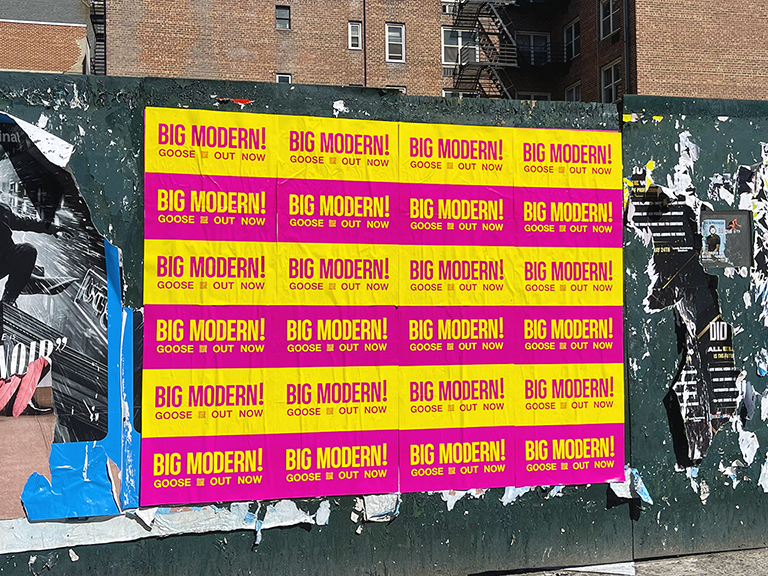
Wheatpasted poster campaigns are one of the most culturally resonant formats for tour promotion. Large-format wheatpasted posters placed on approved posting walls in music neighborhoods, arts districts, and high-foot-traffic commercial corridors create the visual language of a real tour. Fans associate poster culture with music tours, and a strong poster presence signals legitimacy and cultural weight. Our team identifies the right walls in each city and executes paste-ups that respect the existing visual culture while making the brand unmissable.
LED billboard trucks are mobile media that can be repositioned throughout each market based on where the audience is at any given time. For brand tour marketing, we often park LED trucks near venue entrances on show nights, and in the days before the show, we route them through music venues, college neighborhoods, record shops, and other high-affinity locations. The truck becomes a moving billboard that reaches the exact demographic most likely to buy a ticket.
Brand ambassador street teams add a human dimension to the campaign. Our brand ambassadors distribute promotional materials, engage fans directly, create shareable moments, and build the kind of word-of-mouth that no media buy can replicate. In each city, ambassadors work the neighborhoods, venues, and street-level locations where the tour’s audience gathers.
Sidewalk stencils are a cost-effective way to mark territory in a city. Sidewalk graphics near venues, transit stations, and music districts create a trail that leads fans toward the event while building visual presence across the market.
Building a City-by-City Campaign Architecture
The logistics of brand tour marketing are where campaigns succeed or fail. Designing great creative is the easy part. Getting it produced, shipped, approved, and installed across thirty or forty cities on a rolling schedule is where execution expertise matters.
Our team approaches multi-city tour campaigns with a master production plan that maps every element by city and by date. We work backwards from each show date to determine when materials need to arrive, when installations need to happen, and what lead time is required for any site approval applications in each market. Every city has its own requirements for exterior signage, and some markets require several weeks of advance notice for certain placements.
We build modular creative systems that allow city-specific elements (venue names, dates, local show details) to be swapped into a master design template without requiring a full redesign for each market. This keeps production efficient and costs reasonable while allowing the campaign to feel locally relevant in each city. A show in Nashville can have a design that nods to that city’s visual culture while still being unmistakably part of the same overall tour campaign.
Production logistics for a national tour campaign involve managing print runs, shipping schedules, and installation coordination across multiple time zones. Our team has existing relationships with print partners and installation crews in the major tour markets, which means we can execute without the delays that come from sourcing new vendors in every city.
Timing the Campaign for Maximum Impact
In brand tour marketing, timing is almost as important as creative quality. Put the campaign up too early and the energy dissipates before ticket buyers convert. Put it up too late and you miss the window to build awareness among people who have not yet heard about the show. The right timing varies by market size, ticket price, and how aggressively the show is already being promoted through other channels.
For most markets, we recommend a two-phase approach: a teaser phase that begins three to four weeks before the show, followed by a push phase that intensifies in the final ten days and peaks the day of the event. The teaser phase builds awareness and plants the idea. The push phase converts that awareness into ticket purchases by creating urgency and making it impossible to miss that the show is happening.
On show night, our LED trucks are positioned near venue entrances to capture the energy of people arriving and create an additional impression for people passing by who might not have tickets. Post-show content from the night becomes part of the campaign for the next city on the route, building momentum that carries through the entire tour rather than treating each city as a standalone event.
Sponsoring Brands: How to Align With a Tour Campaign
For consumer brands sponsoring a tour or a music artist, brand tour marketing is an opportunity to reach a highly engaged audience in multiple markets at once. The key is making the brand’s presence feel like a genuine part of the tour experience rather than a logo slapped on a banner.
The best brand integrations in tour marketing give the sponsor a meaningful role in the fan experience. Product sampling at venue lines, branded activation spaces near venues, and co-branded street team campaigns all create tangible interactions between the sponsor brand and the fan. When a fan receives a product sample from an enthusiastic brand ambassador while waiting in line for a show they are excited about, the brand gets the benefit of that emotional state. That is a more valuable impression than a digital ad served between Instagram posts.
Our team works with sponsoring brands to design activations that feel organic to the tour environment while clearly communicating the brand’s identity and message. The goal is for fans to walk away from the activation having genuinely enjoyed it, not just having noticed it. That distinction is what separates a brand tour marketing campaign that builds loyalty from one that just logs exposures.
Connecting Street-Level Activity to Digital Amplification
Street-level brand tour marketing is most powerful when it connects to a digital amplification strategy. Social media documentation of wheatpaste installations, LED truck placements, and street team moments extends the reach of every physical element. A striking poster wall that gets photographed by fifty fans and shared to their combined audiences of twenty thousand followers just generated an organic media value that no paid placement can match.
Our team builds social amplification into our tour campaigns from the start. We photograph every major installation with quality that makes the images shareable. We brief brand ambassadors on how to create and capture moments that fans want to share. We coordinate with clients on tagging conventions and campaign hashtags so every piece of user-generated content feeds into the tour’s overall social presence.
Geo-targeted digital advertising can also be layered on top of street-level activity in each market. When a fan sees an LED truck driving through their neighborhood and then sees a targeted ad on their phone thirty minutes later, the combination creates a stronger impression than either element alone. Our team works with clients’ digital agencies to align the physical and digital schedules so they reinforce each other.
What Strong Brand Tour Marketing Looks Like in Practice
The difference between a good brand tour marketing campaign and a great one comes down to a few things: the quality of the creative, the precision of the placement, the energy of the street teams, and the cohesion of the overall system. When all of those elements are working together, the campaign feels like a genuine cultural moment rather than a promotional push.
Great tour campaigns own the block outside the venue on show night. They create poster saturation in the neighborhoods where the target audience lives. Their brand ambassadors are knowledgeable, enthusiastic, and genuinely part of the culture the tour represents. Their LED trucks are positioned where they create maximum impact, not just parked wherever it is convenient. The entire campaign has a point of view that goes beyond just getting the dates and ticket prices in front of people.
That level of execution requires an agency that understands both the street-level marketing craft and the touring industry’s specific needs. Tour campaigns move fast, schedules change, and the ability to adapt quickly in each market is as important as the initial plan. Our team at American Guerrilla Marketing has built the operational infrastructure to handle that pace without letting quality slip.
Working With AGM on Brand Tour Marketing
When you bring us into a brand tour marketing campaign, we start by understanding the full tour schedule and your goals for each market. We identify which cities need the most support based on ticket sales pace, market size, and audience concentration. We build a campaign plan that allocates resources strategically across the full tour route rather than spreading the budget thin across every city equally.
Our planning process covers creative strategy, format selection, production timelines, site-approval planning requirements by city, installation schedules, and amplification strategy. We present a complete campaign architecture before any production begins, so the client can see exactly what will happen in each market and when. Changes to the tour schedule are handled with flexibility, because we know that tours are living things that evolve right up until opening night.
We also provide full campaign reporting at the close of each market: photo documentation of every placement, reach estimates by format, and any notable organic social activity generated by the campaign. That documentation becomes part of the tour’s overall marketing record and feeds into planning for future tours.
Frequently Asked Questions
What is brand tour marketing?
Brand tour marketing is a multi-city campaign strategy that builds brand awareness and drives audience engagement across a series of tour stops. It combines out-of-home advertising, street-level activations, brand ambassadors, and digital amplification to create a presence in each market a tour visits.
How early should brand tour marketing begin before the first show?
Street-level brand tour marketing should begin four to six weeks before the first tour date in each market. This allows time for site approval coordination, production, and enough exposure time to build awareness and ticket urgency before the event date.
What out-of-home formats work best for brand tour marketing?
LED billboard trucks, wheatpasted poster campaigns, sidewalk stencils, and brand ambassador street teams are among the most effective formats for brand tour marketing. Each format has different strengths depending on the market size and the venues being promoted.
Can brand tour marketing be coordinated across multiple cities simultaneously?
Yes. Our team manages multi-city brand tour campaigns with staggered rollouts that follow the tour route. We handle production, site-approval planning, and local execution in each market, maintaining visual consistency while adapting the street-level strategy to each city’s specific environment.
How does brand tour marketing differ from venue-based advertising?
Venue advertising reaches people already inside the venue or committed to attending. Brand tour marketing reaches people in their daily environment before they decide to buy a ticket, broadening the audience pool and driving discovery among people who were not already planning to attend.
Do you need to own the tour to run brand tour marketing?
No. Sponsors, product brands, and promotional partners can all run brand tour marketing campaigns tied to a tour they are sponsoring or partnering with. The campaign builds awareness for the sponsor brand alongside the tour event.
What cities does AGM cover for brand tour marketing?
American Guerrilla Marketing operates nationally, with strong execution capabilities in New York, Los Angeles, Chicago, Miami, Boston, Philadelphia, Washington D.C., and other major tour markets. We coordinate local teams and production partners in each city.
How early should a brand start planning?
For most campaigns, the smart move is to start planning at least two to four weeks before the launch window so production, routing, staffing, and reporting are all lined up.
What makes one market perform better than another?
Market fit depends on audience density, neighborhood behavior, route efficiency, and whether the creative belongs in that setting. The busiest city is not always the best city.
Can AGM bundle this with other services?
Yes. AGM often combines this work with supporting formats so the campaign has stronger repetition and cleaner reporting across the whole run.
How does AGM quote pages like this?
For more on this, explore our experiential marketing. We quote from official rate cards where they apply, then scope the remaining production, staffing, and routing details to the actual job.