Brand Storytelling Los Angeles | American Guerrilla Marketing
Brand storytelling in Los Angeles is not the same as brand storytelling anywhere else. This is the city where stories are the primary export. Getting it right here requires understanding both the fundamentals of good storytelling and the specific expectations of an audience that lives inside the story industry.
Brand storytelling in Los Angeles is not the same as brand storytelling anywhere else. This is the city where stories are the primary export. Angelenos have spent decades immersed in the mechanics of narrative, character, and emotional arc. They recognize authentic storytelling and they dismiss manufactured brand narrative faster than audiences in any other city. Getting brand storytelling right in LA requires understanding both the fundamentals of good storytelling and the specific expectations of an audience that lives inside the story industry.
At American Guerrilla Marketing, we approach brand storytelling differently from traditional brand strategy agencies. We do not build stories that exist only in marketing materials and media buys. We build stories that play out in physical spaces, in real neighborhoods, in front of real Angelenos who can smell a constructed narrative from ten feet away. Street-level storytelling in LA requires the same authenticity that the best films and TV shows require. It has to be real. Or it has to feel real. In LA, the difference matters enormously.
This guide covers what brand storytelling means in the LA context, what makes it work or fail in this specific market, how to translate your brand’s story into physical and community-level expressions, and what an experiential approach to brand storytelling looks like on the ground in Silver Lake, Venice, Culver City, Koreatown, and the broader LA market.
Brand storytelling is the practice of communicating a brand’s values, purpose, and personality through narrative rather than through features, claims, or promotional messages. It is marketing that gives people a story to be part of rather than a product to buy. Done well, brand storytelling creates emotional connection that drives loyalty and advocacy far more effectively than information-based advertising.
The difference between brand storytelling and regular advertising is the difference between telling someone why your brand is good and showing them a story in which your brand plays a meaningful role. One is a claim. The other is an experience. People are skeptical of claims. People remember experiences.
Brand storytelling has four essential elements regardless of the medium or market:
A character or protagonist: Usually the customer, the community, or the brand founder. Someone the audience can identify with and root for.
A genuine conflict or challenge: Something real that the character faces. Not a manufactured problem designed to sell a solution, but a real tension that the audience recognizes from their own life.
A transformation or resolution: How the story changes, how the character grows, how the conflict resolves. The brand’s role is typically as an enabler of the transformation, not the hero of the story.
Emotional truth: The story must feel emotionally genuine. In Los Angeles, where audiences are sophisticated about storytelling mechanics, emotional falseness is detected and rejected almost immediately.
Why Brand Storytelling Works Differently in Los Angeles
Every market has its own storytelling culture. New York brand stories tend to be ambitious, fast-moving, and achievement-oriented, reflecting the city’s energy and competitive character. Chicago brand stories often lean into community, neighborhood identity, and working-class authenticity. Los Angeles has its own distinct storytelling register.
LA brand stories work best when they are visually driven, community-embedded, culturally specific, and honest about the city’s complexity. The romanticized vision of LA that national brands often deploy, sunshine and palm trees and aspirational lifestyles, is the version of LA that Angelenos have been watching the world project onto their city for decades. They know it is incomplete at best. Stories that engage the real Los Angeles, the neighborhood cultures, the diverse communities, the tension between aspiration and reality, earn trust in ways that the postcard version does not.
Visually Driven
Los Angeles is a visual city. Its residents are trained by proximity to the film and television industries to have high standards for visual storytelling. Brand stories told through strong visual content, whether photography, video, or physical installation, resonate more powerfully in LA than in most other markets. The visual quality of your brand storytelling is as much a signal about your brand as the content of the story itself.
Community-Embedded
The most effective brand storytelling in LA is rooted in specific communities and neighborhoods rather than in a generalized Los Angeles identity. A story set in Silver Lake is not the same story as one set in Koreatown or Inglewood or Pacoima. The specificity is what makes it feel real. Brand narratives that claim to represent all of Los Angeles without grounding themselves in any specific part of it feel false to an audience that knows how different those communities actually are.
Honest About Complexity
Los Angeles is the city of infinite aspiration and frequent reality. Brands that engage this tension honestly, that acknowledge the gap between the dream and the day-to-day, earn a kind of loyalty that aspirational-only brand storytelling cannot generate. The audience for complexity in brand narrative is large in LA. They are tired of brands that only see the postcard version of their city.
Los Angeles Neighborhoods and Their Brand Storytelling Environments
Silver Lake
Silver Lake is the epicenter of the creative professional community in East Los Angeles. The neighborhood’s mix of artists, musicians, writers, designers, tech workers, and the service professionals who support them creates a dense and culturally active environment. Sunset Junction and the surrounding blocks are lined with independent coffee shops, vintage and independent retail, and restaurants that are genuinely good rather than merely trendy. Brand storytelling in Silver Lake needs to meet the aesthetic and ethical standards of a community that takes both very seriously. A brand that shows up in Silver Lake with a generic LA campaign will be noticed primarily for its disconnection from the neighborhood it landed in.
Venice
Venice carries two identities that sometimes conflict and always coexist: the historic beach community with its Boardwalk culture, skate parks, and street performance tradition, and the tech startup neighborhood that Google’s LA campus and dozens of smaller companies have created along the Abbot Kinney corridor and the surrounding blocks. Brand storytelling in Venice needs to navigate both versions of the neighborhood. The brands that succeed here are the ones that find the story that connects both: the creativity and physicality that runs through both the beach culture and the startup culture, the independence and originality that attract people to both sides of Venice’s identity.
Fairfax District
Fairfax Avenue between Melrose and Beverly is the highest-density streetwear and youth culture corridor in Los Angeles. The walls adjacent to the Supreme store at Fairfax and Rosewood are among the most photographed walls in the city. A brand installation in this corridor reaches a young, style-aware, socially active audience that documents and shares the visual environment they move through with extraordinary intensity. Brand storytelling in the Fairfax corridor works through the visual quality and cultural relevance of what is on the walls and in the spaces. The audience here is a highly practiced evaluator of brand authenticity.
Culver City and the Arts District
Culver City has become one of the most active media and technology markets in LA, with Apple, Amazon Studios, Sony Pictures, and dozens of smaller companies concentrated in the neighborhood. The creative professional audience here is high-income, culturally engaged, and quality-oriented. Brand storytelling campaigns in Culver City that speak to the intersection of creativity and professionalism, to the people who are building things they care about for a living, find a receptive audience.
Physical Brand Storytelling Formats That Work in LA
Commissioned Murals
A commissioned mural in the right LA neighborhood is one of the most effective brand storytelling tools available in this market. The Fairfax corridor, Melrose Hill, the Arts District in Downtown LA, and the mural-dense streets of Boyle Heights all create contexts where a well-executed brand mural can feel like a genuine addition to the neighborhood’s visual culture rather than an intrusion into it.
The key is the artist relationship. A brand mural executed by an artist with genuine credibility in the neighborhood it occupies earns community respect that a generic commissioned image does not. The artist brings the story of their own relationship to the neighborhood into the work. That provenance matters to the people who live there and document what surrounds them.
Brand Activations in Neighborhood Spaces
Pop-up activations in Silver Lake, Venice, or the Fairfax area that offer genuine value to the community they occupy, whether through product experience, entertainment, community gathering, or service, earn goodwill that passive advertising cannot generate. The standard for what counts as genuine value is high in LA. It needs to be worth the time of someone who has many alternatives for how to spend that time, and it needs to be honest about what it is. Disguised advertising fails here. Genuinely good experiences succeed.
Poster Campaigns and Wheat Paste Campaigns
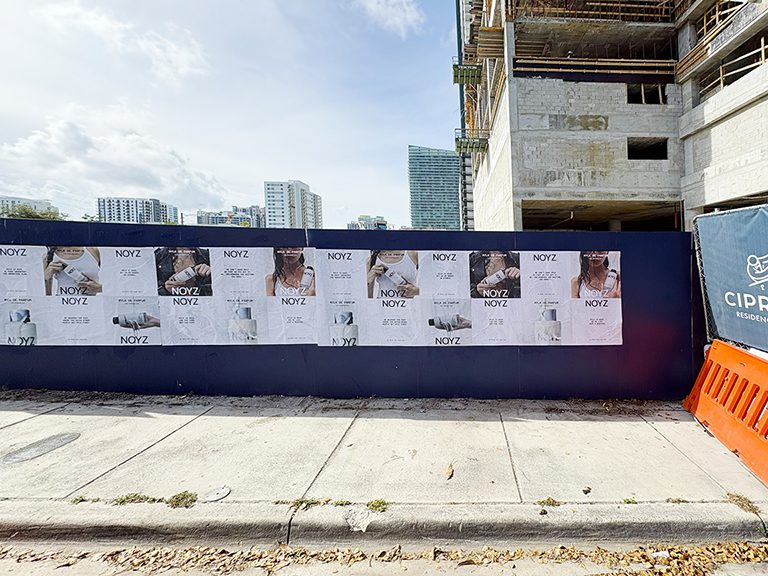
Poster campaigns and wheat paste campaigns in the visual environment of LA neighborhoods like Fairfax and Silver Lake tell ongoing brand stories across multiple contact points. When the creative sequence across a poster campaign builds a coherent visual narrative, when each piece advances the story rather than just repeating the logo, the campaign teaches the audience to pay attention because the next piece will have something new. This format rewards brands that invest in genuinely good serial creative rather than a single image repeated at scale.
Field note: The most effective brand storytelling campaigns we have run in Los Angeles shared one quality: the story was about something real that actually mattered to the audience we were trying to reach. Not manufactured brand mythology. Real brand DNA expressed through the specific cultural vocabulary of the neighborhood we were working in. LA audiences are too good at reading stories to be fooled by narrative that is not genuine.
The Role of Visual Documentation in LA Brand Storytelling
Los Angeles has a high organic documentation culture. People photograph walls, murals, activations, and interesting environmental moments and share them on social media at a rate that makes the documentation behavior itself a form of media distribution. A brand story told through a physical installation in a well-trafficked neighborhood in Silver Lake or the Fairfax District reaches the people who pass it directly, and then reaches a substantially larger audience through the social media posts of the people who photographed and shared it.
This documentation dynamic is something we plan for in every LA brand storytelling campaign we run. The physical installation or activation is the primary brand moment. The documentation that flows from it is the amplification layer. Designing the physical work to be genuinely worth documenting, not just to have a hashtag somewhere visible, is the practice that makes this amplification happen organically rather than needing to be manufactured through influencer contracts and paid promotion.
When a mural is beautiful enough that someone photographs it for their own social channels without any brand prompting, the brand story reaches an entirely new audience through the credibility of a peer recommendation rather than the recognized frame of advertising. That is the most valuable form of brand storytelling amplification available in the Los Angeles market.
Building a Brand Story Campaign Across Multiple LA Neighborhoods
Single-location campaigns are a starting point, not a brand storytelling strategy. The most effective brand narratives in Los Angeles build across multiple neighborhoods, across multiple formats, and across a timeline long enough to create genuine familiarity and community recognition.
A campaign that places a mural in the Fairfax District, runs a street activation in Silver Lake three weeks later, and follows up with a poster campaign in the Venice and Abbot Kinney area creates a story arc that the audience can follow. People move between neighborhoods. They see the Fairfax mural on Thursday and the Silver Lake activation on Saturday. The story builds for them across those encounters in a way that a single-location campaign cannot replicate.
Sequencing matters. The mural is the high-permanence anchor. The street activation is the dynamic moment. The poster campaign is the connective tissue that follows people through the neighborhoods where they move. Each format plays a different role in the storytelling architecture, and they work together far better than any of them works alone.
The Story Arc Across Formats
Brand storytelling in a multi-format campaign needs a visual and narrative thread that connects the formats. The mural’s color palette and imagery should be recognizable in the poster campaign. The street activation should express the same core brand truth that the mural expresses in a static image. The team in the field should be briefed on the story they are representing, not just on the product they are promoting.
When all of these elements are coherent, the audience builds a mental model of the brand story without being explicitly told what to think. The brand narrative lives in the environment, surfaces at multiple touchpoints, and accumulates in the audience’s memory in a way that a single format cannot achieve regardless of its scale or quality.
Timing Around LA’s Event Calendar
Los Angeles has a rich event calendar that concentrates specific audiences at specific moments. Grammy week in January brings the music industry community to specific hotels, venues, and neighborhoods. Art walk events in Downtown LA bring the contemporary arts community to the Arts District monthly. The Rose Bowl Flea Market at Pasadena draws a large and quality-conscious vintage and design community on the second Sunday of every month. Sunset Strip Music Festival in the fall concentrates the rock and live music community along the Strip.
Brand storytelling campaigns that time their most intensive moments to coincide with events that concentrate the right audience gain amplification from the event’s own momentum. The brands that understand LA’s event calendar and build their physical storytelling around it rather than ignoring it get more out of every dollar invested in street-level work.
What Makes Brand Storytelling Campaigns Fail in LA
Three failure patterns come up consistently in Los Angeles brand storytelling campaigns that do not achieve their objectives.
The first is treating LA as a monolithic market. Los Angeles is not one market. It is dozens of distinct communities with different cultural identities, different values, and different relationships to brands. A campaign designed for the city’s most aspirational identity will miss entirely in communities that do not share that aspiration, and there are a lot of communities in LA that have more complex and more interesting relationships to ambition and aspiration than the Hollywood imagery suggests.
The second failure is borrowing LA’s aesthetic without engaging LA’s communities. Brands that use the visual language of LA street culture, the mural tradition, the streetwear codes, the beach and outdoor imagery, without actually engaging the communities that created and own that cultural language, are seen as appropriation rather than participation. The difference is visible. Borrowing extracts cultural value without contributing to it. Participation involves genuine investment in the communities and artists who define the culture.
The third failure is generic casting and production. Brand storytelling in LA is surrounded by some of the best film, photography, and creative production talent in the world. Generic photography, stock imagery, and undistinguished visual production stand out as clearly amateur work in a city where high production quality is the baseline. Investment in genuinely good visual storytelling is not optional in LA. It is the cost of being taken seriously.
Brand Storytelling Documentation and Reporting in Los Angeles
Every brand storytelling campaign we run in Los Angeles is documented comprehensively for client reporting and for content use. Documentation includes photography and video of every installation and activation, route maps showing coverage across neighborhoods, and summary reports that capture the qualitative texture of how the campaign performed in the field.
We also track organic social media documentation generated by the public during campaign windows. When a mural generates bystander photography and sharing, we compile that documentation as part of the campaign record. This secondary documentation is often the most persuasive evidence of campaign resonance, because it shows the campaign working through channels the brand did not control and audiences the brand did not direct. It is the closest thing to objective third-party validation that street-level brand storytelling generates.
The documentation package delivered at campaign close includes everything needed to support both internal reporting and continued content creation. The photography from a well-executed mural installation in Silver Lake can support social media content for months after the installation itself is complete. The documentation of a brand activation in Venice can be edited into video content for paid digital campaigns that extend the street-level moment into digital channels where the same audience spends time. The physical campaign generates content. The content generates sustained reach. The combination is worth more than either element alone.
Campaign Architect — American Guerrilla Marketing
Frequently Asked Questions
What makes brand storytelling different in Los Angeles?
Los Angeles audiences are trained by proximity to the film and television industries to recognize authentic storytelling and dismiss manufactured brand narrative. Brand stories in LA must be visually compelling, community-embedded, and emotionally genuine to earn attention. Generic brand messaging is dismissed faster here than in almost any other U.S. market.
What neighborhoods work best for brand storytelling campaigns in LA?
Silver Lake, Venice, Culver City, Fairfax, and the Arts District in Downtown LA are the most active brand storytelling environments in Los Angeles. Each neighborhood has a distinct cultural character that brand campaigns need to engage authentically rather than generically.
How does AGM approach brand storytelling in Los Angeles?
We build brand narratives that play out in physical spaces across LA neighborhoods. Murals, street-level activations, brand ambassador programs, and poster campaigns each tell a chapter of the brand story in the places where the target audience lives, works, and gathers.
What is the difference between brand storytelling and standard advertising?
Standard advertising makes a claim about a brand. Brand storytelling creates an experience that gives the audience a story to be part of. In physical marketing, storytelling means placing brand moments in the community’s environment in ways that feel like genuine contributions rather than intrusions.