
September 12, 2026
Brand Installations | American Guerrilla Marketing
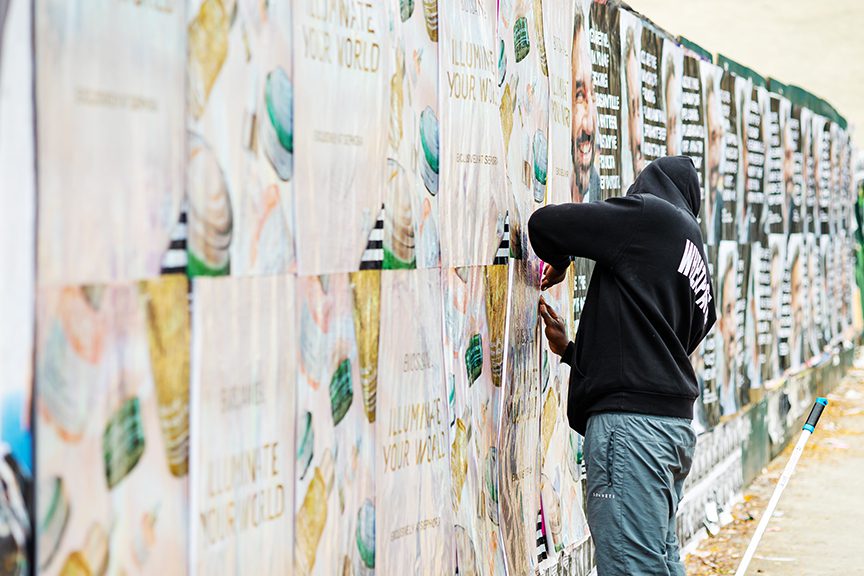
A brand installation puts consumers inside your brand’s world in a way that no ad, video, or digital campaign can replicate. When the physical environment is right, people stay, photograph everything, and tell others about it for weeks.
A brand installation is a purpose-built physical environment designed to communicate a brand’s values through direct sensory experience. It is not a display. It is not a booth. It is a space that visitors navigate, inhabit, and photograph — an environment that makes the brand’s identity tangible and present in a way that creates lasting memory.
Brand installations range from a single beautifully designed room to a multi-floor immersive environment spanning thousands of square feet. The format, duration, and location depend on the brand’s objectives, audience, and market. What unites them is the design philosophy: the consumer is inside the brand’s world, not looking at an external representation of it.
We design and produce brand installations across a range of formats and scales. Our team handles every phase from concept development through fabrication, staffing, and post-event content distribution. This piece covers what makes a brand installation work — the design decisions, the logistical realities, the content strategy, and the measurement framework that separates installations that deliver on their investment from ones that produce beautiful photos and nothing else.
What Distinguishes a Brand Installation from Other Formats
The brand installation occupies a distinct position in the experiential marketing spectrum. Understanding how it differs from adjacent formats clarifies when it is the right choice and when a different format serves the objective better.
A trade show booth is a brand installation’s most distant cousin. It shares the premise of a physical brand environment, but a trade show booth operates in a context of undifferentiated competition — dozens or hundreds of comparable environments in the same space. The consumer arrives with a transactional mindset. The environment is a sales tool.
A brand activation is broader. It includes any live brand marketing program. A sampling event is a brand activation. A brand installation is a specific type of activation — one where the physical environment is itself the primary brand communication vehicle, not just the backdrop for a sampling or demonstration program.
An experiential pop-up is the closest adjacent format. The distinction is in design depth. A pop-up can be minimally produced — a cart, a tent, a small branded setup in a high-traffic location. A brand installation implies a higher level of designed environment: architectural elements, built structures, layered sensory design, and a physical experience that could not be replicated by a simpler format.
The Elements of a Successful Brand Installation
A Clear Visual Identity Translated Into Space
The most effective brand installations take the brand’s existing visual identity — its colors, typography, materials, textures, and emotional register — and translate them into three-dimensional space. A brand that uses clean geometric forms in its design language builds a space with those qualities. A brand that values warmth and craft builds a space with natural materials and human-scale details. The space should feel unmistakably like the brand without relying on logos or signage to make that connection.
When we brief on a brand installation concept, we start by identifying the three to five sensory qualities that define the brand’s world. Not abstract brand values — specific sensory descriptions. Cool and precise. Warm and layered. Raw and honest. Urban and fast. Those qualities drive every material choice, lighting decision, and spatial arrangement in the installation design.
A Designed Visitor process
A brand installation is a story with a beginning, middle, and end. The visitor’s path through the space should be intentionally designed, not left to chance. The entry moment establishes the register — what kind of experience is this? The middle builds toward the peak moment — the hero visual, the product interaction, the reveal. The exit seals it with something memorable: a takeaway, a final view, a clear action.
Installations that feel like a collection of impressive elements rather than a narrative process produce shorter dwell times and less memorable experiences. The emotional arc is as important as any individual design element.
The Hero Photo Moment
Every brand installation should have one primary photo moment: a space, view, or interactive element specifically designed to produce a photograph that visitors want to share. This is not the same as a branded backdrop or a logo wall. It is a designed scene that makes the person in the photo look or feel exceptional — and that is visually distinct enough to identify clearly when it circulates on social media.
The hero photo moment should be visible from the entry point. If visitors cannot see it when they walk in, they may not find it. The installation’s spatial design should route visitors toward it as a natural consequence of how they move through the space.
Sensory Design Beyond the Visual
The most memorable brand installations engage senses beyond sight. A custom scent diffused throughout the space. Music at a specific tempo and volume that sets the emotional register without overwhelming conversation. Tactile surfaces that reinforce the brand’s material values. Temperature and lighting levels calibrated for comfort and photographic quality simultaneously.
Most installations over-invest in visual design and under-invest in the other sensory channels. Visitors who experience a space that is simultaneously beautiful, smells right, sounds right, and feels right at the right temperature have a qualitatively different memory of it than visitors who experienced only the visual component at the same quality level.
We track average dwell time in brand installations we produce. Installations that engage three or more sensory channels consistently produce dwell times 30 to 50 percent higher than those that deliver only visual design. Higher dwell time means more time for product discovery, more photographs taken, and stronger emotional association formed. The investment in scent, sound, and tactile design pays in dwell time.
Location Strategy for Brand Installations
Location is the first creative decision in brand installation planning, not a logistics question. Where the installation lives shapes what it communicates before anyone walks through the door.
Vacant Retail Spaces
Ground-floor vacant retail in active pedestrian corridors is the most common brand installation venue. Street-level glass frontage provides natural draw from passersby. The interior can be built out to whatever specification the installation design requires. Lease terms for short-term activations are negotiable, and property owners in many markets are open to temporary tenants during transition periods.
In New York, SoHo between Houston and Canal remains one of the strongest installation corridors — particularly the Greene and Wooster Street blocks between Spring and Prince — because the pedestrian volume, demographic composition, and existing concentration of creative retail attract the consumer profiles that most brand installations target. The same is true of Melrose Avenue and Venice in Los Angeles, Wicker Park and Fulton Market in Chicago, and Wynwood in Miami.
Gallery and White Box Spaces
Gallery spaces provide a neutral backdrop that positions the brand installation in a cultural rather than commercial context. The gallery framing signals that the installation is worth engaging as a creative work, not just as a marketing program. This framing is particularly effective for fashion, beauty, and lifestyle brands whose consumers respond to cultural legitimacy as a quality signal.
Hotel Lobbies and Public Atria
Hotels and large commercial buildings with high-foot-traffic public spaces offer installation opportunities with built-in daily audiences. The demographic composition of a specific hotel’s guest profile may align tightly with a brand’s target consumer, making a lobby installation unusually efficient at reaching the intended audience.
Outdoor and Public Spaces
Outdoor installations in parks, plazas, and public spaces have higher reach potential than enclosed installations, but are weather-dependent and typically require more strong structural design. The absence of controlled access means the installation must work for a broader audience range, and the content capture needs to account for variable light conditions.
| Venue Type | Foot Traffic | Brand Control | Production Complexity | Cost Level |
|---|---|---|---|---|
| Vacant retail – prime corridor | High | Full | Medium | Medium – High |
| Gallery / white box | Medium | Full | Low – Medium | Medium |
| Hotel lobby / atrium | Medium – High | Partial | Low | Low – Medium |
| Outdoor plaza / park | Very High | Partial | High | Medium – High |
| Event within an event | Event-dependent | Partial | Low – Medium | Low – Medium |
Production and Fabrication Realities
Brand installations require production management discipline that differs from other marketing disciplines. The physical build has a timeline, structural requirements, material lead times, and on-site logistics that must be coordinated precisely for the installation to open on time, look as designed, and operate safely throughout the run.
The most common production failures are: design finalized too late to allow proper fabrication lead time; venue conditions discovered during load-in that contradict the pre-build site assessment; technical systems (lighting, audio, digital elements) that were not tested in the venue prior to opening; and staffing gaps that result in incomplete installation operation on opening day.
Every brand installation we produce goes through a pre-build site assessment that documents ceiling heights, power access locations, load-bearing constraints, entry point dimensions, and floor plan accuracy. The fabrication drawings are validated against that documentation before fabrication begins. Technical systems are tested during the load-in window before the installation opens. Staffing is over-hired against needs so single-person attrition does not affect the consumer experience.
Content Strategy for Brand Installations
A brand installation that runs for five days and generates content that circulates for three weeks is more valuable than one that runs ten days and generates content that disappears in 48 hours. Content lifespan depends on content quality and on how deliberately the post-installation amplification strategy is executed.
The content capture brief for a brand installation covers: hero photography from multiple angles for press and paid use, video walkthrough for social and web distribution, staff and visitor interaction documentation, specific social-first content assets created on the day for immediate publishing, and high-resolution product photography within the installation environment. This content brief is developed in parallel with the installation design brief, not after the installation is built.
Post-installation, the content publishing schedule should extend the installation’s narrative arc over the days following close: day one posts during the installation run, day two behind-the-scenes and process content, day three media coverage amplification, day four user-generated content resharing, day five brand reflection and follow-up. Each piece of content extends the installation’s reach to audiences who were not physically present.
Brand Installation Design: The Process Behind the Experience
The design process for a brand installation is different from the design process for an event. Events are organized around schedules and activities. Installations are organized around spatial narratives and sensory environments. The design process begins not with a floor plan but with a sensory brief: what should the installation feel like, hear like, smell like, and look like? The answers to those questions drive every subsequent design and production decision.
Sensory Layering
The most memorable brand installations engage multiple senses simultaneously. Visual design is the most common investment — it is easy to design and photograph. But the installations that visitors remember most vividly, and describe to others most specifically, are the ones that engaged smell, sound, and touch as powerfully as sight.
Scent is the sense most directly connected to emotional memory. A brand installation with a deliberately chosen scent — one that is specific to the brand’s product or origin story — creates a sensory anchor that recalls the brand every time the visitor subsequently encounters that scent in any context. This is a significant brand equity asset that purely visual installations cannot create.
Sound sets the emotional register of a space before any other sense engages. A visitor who enters a space that is playing the right music at the right volume at the right tempo has had their emotional state primed before they see a single brand element. We brief sound with as much specificity as we brief visual design — tempo, genre, volume, whether music should be recognizable or ambient, how it should change as visitors move through different zones of the installation.
Touch reinforces quality claims. A visitor who touches a material that communicates precision, warmth, luxury, or craft is receiving a quality signal that no visual or verbal communication can replicate with the same efficiency. The texture of the surfaces in a brand installation should be specified against the brand’s positioning, not selected for generic production convenience.
Flow and Dwell Time
Average dwell time is one of the most important metrics in brand installation performance. It directly correlates with the depth of brand engagement, the amount of content captured per visitor, and the probability of social sharing. The spatial design of the installation should encourage visitors to stay longer by giving them reasons to explore: multiple zones with distinct sensory environments, interactive elements that require time to engage with, a narrative arc that reveals itself gradually as the visitor moves through the space.
We analyze projected visitor movement patterns before finalizing any installation layout. Where will people go first? What will they see from the entry point that draws them forward? Where are the natural stopping points where visitors will pause and spend time? Where is the peak visual and emotional moment in the visitor’s path? A spatial layout that answers these questions correctly produces dramatically higher dwell times than one that does not — and higher dwell time translates directly to better content quality and stronger brand memory formation.
Brand Installation Measurement
Measuring the performance of a brand installation requires a framework established before the installation opens. The post-installation report should connect specific data points to the specific objectives the installation was designed to serve.
For installations designed to generate social content and brand awareness: total attendance (measured by entry count or estimated through foot traffic observation), average dwell time (measured by sampling a percentage of visitors), total organic social content generated (monitored through hashtag tracking and direct observation), and estimated social reach from that content.
For installations designed to generate press coverage and media: placements secured, quality and depth of coverage, estimated readership reach, and whether the coverage included specific sensory details that indicate the journalist was physically present and genuinely engaged (versus coverage based on a press release).
For installations designed to drive product trial or purchase: trial units distributed, staff-documented purchase intent conversations, and where measurable, post-installation sales velocity changes in the installation’s geographic market compared to control markets running without the installation.
Pre-installation baselines for each relevant metric make the post-installation data meaningful. Without baselines, the installation report tells you what happened but not what changed.
What Makes a Brand Installation Earn Media Coverage
A brand installation earns media coverage when it is genuinely worth writing about. Not just well-produced, but editorially interesting. The question is: what is the story? A beautifully designed space is not a story. A brand that expresses its production process through a physical environment that visitors can move through and physically experience — that is a story. A brand that takes over an unexpected location with an installation that transforms how people experience that familiar space — that is a story. A brand that creates something in a neighborhood that neighbors are actively sharing with each other because it belongs there and enhances it — that is a story.
Press outreach for a brand installation should lead with the story, not the production description. The pitch should read the way a good editorial feature lead reads: with a specific, compelling narrative hook that makes the journalist understand why their readers would want to know about this. The production details come second. The story comes first.
Pre-opening exclusive preview access for key media — a specific journalist or editor who receives first access before the public opening — consistently produces the best coverage because it communicates genuine editorial consideration rather than press-list distribution. An editor who was specifically invited before anyone else was allowed in writes about the experience differently than one who attended alongside fifty other journalists at a general media preview.
Brand Installation Examples: What Strong Executions Have in Common
The brand installations that become case studies — the ones that earn media coverage, generate weeks of social content, and produce measurable brand outcome shifts — share structural characteristics that distinguish them from installations that were beautiful but ultimately unmemorable.
They express a genuine brand truth, not a brand aspiration. The most compelling installations are built around something real about the brand — its origin story, its production process, its product qualities, its community values — that can be expressed in physical form with authenticity. When the installation expresses something the brand genuinely is, rather than something the brand wants to appear to be, the result is a physical environment with a specific, palpable quality that consumers recognize as real. When the installation expresses brand aspirations that are not grounded in genuine brand identity, the result feels like brand theater — beautiful surface without substance beneath it.
They create a visitor process, not a visitor encounter. The best brand installations are not a single moment — they are an arc of moments that build toward a peak experience and recede from it toward a satisfying close. The visitor who moves through a well-designed brand installation experiences a story unfolding in physical space. The visitor who encounters a single spectacular installation element has had an impressive experience, but not a narrative one. The narrative experience produces richer memory and stronger brand association because it recruits more of the brain’s story-processing architecture.
They are designed to be inhabited, not just viewed. The difference between an installation visitors look at and one they inhabit is dwell time. An installation designed for viewing — with the visual payoff visible from the entry point and no reason to linger — generates brief encounters and quick photo moments. An installation designed for inhabiting — with elements that reveal themselves progressively, require close inspection to fully appreciate, or invite active participation — generates the long dwell times that produce deep brand memory formation.
The Post-Installation Content Strategy
The content generated by a brand installation — photographs, videos, social posts, press features — has a value lifecycle that the brand can actively extend through deliberate publishing strategy. Most brands publish installation content aggressively in the days the installation is running, then let content publishing fall off quickly after the installation closes. A more productive approach extends the content publishing arc over several weeks.
During the installation run: real-time social content, behind-the-scenes content from the build, staff-perspective content. First 48 hours after close: hero photography and video, attendee content resharing, press coverage amplification. Days 3-7: deeper brand story content inspired by the installation narrative, press feature publication, creator content from invited attendees. Days 7-14: long-form video content from the installation, brand storytelling that extends the installation’s narrative into the brand’s broader content calendar.
This extended publishing arc keeps the installation’s brand narrative active for two to three weeks beyond its physical run, reaching audiences who were not aware of it during the activation window and reinforcing the impression for those who were. The installation’s content value is fully realized only through this extended publishing discipline, not through the burst of posts on activation day.
Case Studies in Brand Installation Success
The brand installations that earn the most sustained attention and coverage share structural characteristics that can be directly applied to new program design. Examining what specifically drove each program’s success clarifies the principles at work.
A beverage brand built a three-day installation in a Prince Street space in Nolita that recreated the environment of the region where its key ingredient was sourced — not as a decorative backdrop but as a genuinely immersive environment that visitors moved through, smelled, touched, and tasted their way across. Botanical elements from the source region. Ambient soundscape from the same geography. The product served in the final room in a context that made the connection between the process and the finished product experientially clear. Average dwell time: 26 minutes. Press coverage in three national food and lifestyle publications. Social content circulating for 18 days after the installation closed.
What drove the success: the installation expressed a genuine brand truth (the sourcing story was authentic and substantive), it created a narrative arc that rewarded extended engagement, it produced a specific, visually distinctive photo moment that gave social media content a specific identity, and it was placed in the precise neighborhood and street that concentrated the brand’s target consumer at the activation’s optimal hours.
A fashion brand built a weekend installation in a West Hollywood space that recreated the setting of its fall collection’s editorial story — not as a styled photo backdrop but as a complete environmental expression of the collection’s world. Visitors moved through three rooms that progressively deepened the world, with the collection available to try on in the final room in the full context of the environment that inspired it. Dwell time averaged 19 minutes. Conversion from visit to purchase inquiry at 22 percent — extraordinary for a pure awareness activation.
What drove the success: the environment was so specific and so well-executed that it felt like entering a genuinely different world, not attending a brand marketing event. Visitors who tried the collection in that specific environment were experiencing the brand’s world aspirationally, which dramatically increased the emotional value of the product encounter relative to a retail environment.
Making Experiential Programs Work for Your Brand’s Specific Situation
Every brand faces a unique combination of objectives, consumer targets, market conditions, and budget constraints. The principles discussed throughout this article apply universally, but their specific application requires calibration to your brand’s unique situation. Here is a framework for that calibration.
Start with an honest assessment of your brand’s current consumer relationship. Are you building awareness from near-zero, converting aware non-trialists, deepening loyalty among existing customers, or defending against competitive encroachment? The answer determines which experiential format is most efficient: awareness programs need scale and content generation, trial conversion programs need context precision and conversation quality, loyalty programs need community creation and exclusivity, and competitive defense programs need direct product comparison and quality demonstration.
Then assess your current live consumer touchpoint quality. Where does your brand currently have direct physical encounters with consumers? How good are those encounters? Are they creating genuine brand exposures or simply processing consumers transactionally? The most efficient starting point for experiential investment is almost always improving the quality of existing touchpoints before creating new ones. A brand that has poor quality encounters at its existing touchpoints will create poor quality encounters at new ones unless the design discipline that determines quality is applied consistently across all of them.
Finally, build the measurement infrastructure before the first program runs. Define success with specificity. Establish baselines against which success will be measured. Specify the data that will be collected and how it will be collected during the program. Identify the analysis that will connect the data to the success definition after the program ends. This measurement discipline is the difference between a program that teaches you something and a program that just happens. The program that teaches you something produces compounding value — each program generates learning that makes the next one better. The program that just happens produces no such compounding effect.
AGM is a full-service experiential marketing and brand activation agency headquartered in New York, operating nationally. We bring the strategy, creative, production, staffing, content, and measurement capabilities that experiential programs require to every market we serve. The best time to start the conversation about your brand’s experiential program is before the next product launch, the next market entry, or the next competitive challenge puts you in a position where the program needs to happen faster than it should be planned. Contact us to discuss what the right program looks like for your brand’s specific objectives.
Frequently Asked Questions
What is a brand installation?
A brand installation is a purpose-built physical environment — temporary or semi-permanent — that immerses visitors in the brand’s visual identity, values, and product story. Unlike a trade show booth or event display, a brand installation is designed to be navigated, photographed, and experienced as a complete environment.
How long do brand installations typically run?
Brand installations typically run 2 to 14 days for pop-up formats. Some semi-permanent brand installations run for 30 to 90 days in retail or gallery spaces. Duration depends on the program objective, venue availability, and whether the concept benefits from extended run time versus concentrated urgency.
What locations work best for brand installations?
The best locations combine foot traffic from the target consumer audience, a physical context that supports the brand’s positioning, and sufficient space for the installation design. Vacant retail spaces in active pedestrian corridors, gallery spaces, hotel lobbies, and outdoor plazas are common formats.
How much does a brand installation cost?
For more on this, explore our guerrilla marketing services.
Brand installation costs range from $30,000 for a single-room pop-up to $300,000 or more for a large multi-room immersive environment. The primary cost drivers are fabrication complexity, venue costs, run duration, staffing, and content capture infrastructure.

Ready to Run Your Campaign?
Call us or email us. We’ll tell you exactly what we can do in your market and what it costs.
Related Services
Explore similar advertising solutions offered by American Guerrilla Marketing.
American Guerrilla Marketing — Los Angeles
Street-level campaigns in Los Angeles and nationwide. Wheatpasting, LED trucks, street teams, and more.
(646) 776-2770
Related Articles
-
Street Poster Advertising Ottawa: A Complete Campaign Guide
September 17, 2026
-
Activation Marketing: How Brands Win at Street Level
September 13, 2026
-
Experiential Marketing Firms Chicago | American Guerrilla Marketing
September 12, 2026
-
Pop Up Experiential
September 12, 2026
-
Mobile Pop Up
September 12, 2026