Brand Experience Agency NYC | American Guerrilla Marketing
New York rewards precision. The brand experience designed specifically for its neighborhood, its consumer, and its cultural moment will outperform anything adapted from somewhere else.
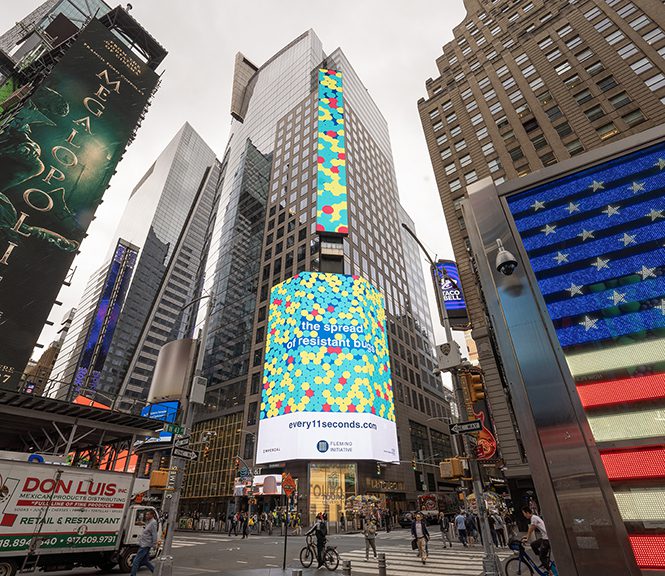
New York City is the most important brand experience market in the country. The density of consumers, the concentration of media and press, the diversity of neighborhoods with distinct cultural identities, and the global reach of what originates here — all of these make New York the market where brand experience work either builds reputations or exposes limitations. An agency that knows how to work this city delivers results that follow a brand well beyond the five boroughs. One that does not understand the market produces expensive documentation of mediocre executions.
Why New York Is the Defining Market for Brand Experience
New York has characteristics that no other US market replicates at the same scale. The pedestrian culture creates the conditions for street-level brand experiences that simply do not exist in car-dependent cities. More than 8 million residents plus millions of daily visitors create a consumer density that makes a 10-block radius in Manhattan or Brooklyn contain more target consumers than some entire US cities. The media infrastructure — the national and international press outlets, the fashion and culture publications, the advertising and marketing industry itself — means that something that happens on a block in Soho can become a story that reaches a global audience by the same afternoon.
The neighborhood diversity creates a range of brand experience contexts that is unmatched. The Meatpacking District is not Greenpoint. Lower East Side is not the Upper West Side. Crown Heights is not Park Slope. Each neighborhood carries specific cultural associations, specific consumer demographics, and specific standards for what kind of brand presence belongs there. Agencies that have produced work across multiple New York neighborhoods understand these distinctions in ways that agencies without that experience cannot replicate from a map.
AGM was founded in New York and has built its core capabilities in this market. The neighborhood-by-neighborhood knowledge that drives our strategy for New York clients is the product of more than a decade of on-the-ground execution experience in this city.
The New York Neighborhoods That Define Brand Experience Work
Lower East Side and the adjacent blocks of the East Village have been central to street-level brand experience work for two decades. The concentration of independent retail, food and beverage culture, nightlife, and creative businesses creates a pedestrian environment with genuine engagement density. The aesthetic standards are high — this is a neighborhood that has seen every brand activation format in the book — and the consumers are selective about what gets their attention. Concepts that genuinely fit the neighborhood’s creative character perform well. Generic branded pop-ups do not.
Williamsburg, Brooklyn has shifted from the arts neighborhood it was in the early 2000s to a more mainstream consumer destination, but it retains a cultural engagement that makes it productive for brand experience work targeting younger, creative, and design-conscious consumers. The Bedford Avenue corridor and the surrounding blocks have high foot traffic on weekends and a consumer who is actively engaged with the retail and cultural environment around them.
Soho remains the center of premium retail brand experience work in New York. The consumer traffic on Prince Street, Spring Street, and Broadway is extraordinary, and the concentration of international brands in the area means that the standards for what looks premium are genuinely high. Pop-ups and brand experiences in Soho need to be executed at a level that can hold their own in proximity to flagship stores of the world’s leading brands.
The Meatpacking District is the right context for nightlife-adjacent brands, fashion brands, and any brand targeting a consumer who moves between professional and social worlds in an urban setting. The proximity to the High Line creates additional foot traffic from the city’s most-visited public space. Brands that activate here need to be designed for the evening and weekend traffic patterns that define this neighborhood.
Crown Heights and Bed-Stuy in Brooklyn represent the growing importance of Brooklyn’s historically Black neighborhoods as brand experience contexts for brands with genuine connection to Black culture and community. These neighborhoods have well-developed filters for brands that show up in good faith versus those exploiting cultural proximity without investment. AGM approaches work in these neighborhoods with the same rigor and respect that we bring to any culturally specific context.
New York rewards precision. The brand experience that is designed specifically for its neighborhood, its consumer, and its cultural moment will outperform one that is adapted from somewhere else. This is not a market for generic playbooks.
The New York Media Amplification Opportunity
The global media concentration in New York creates an amplification opportunity for well-executed brand experience work that does not exist in other markets. A brand activation in Soho or Williamsburg that is genuinely impressive — that creates a moment worth covering — can be in New York Magazine, the New York Times, Hypebeast, Complex, or any number of trade and consumer publications by the next morning. That earned media reach extends the investment far beyond the people who were physically present at the activation.
Designing for media coverage requires understanding what makes something worth covering. Journalists and editors have seen every brand activation format dozens of times. What gets covered is what is genuinely surprising, what is genuinely well-executed, or what tells a genuinely interesting story about the brand. Generic activations, however large or expensive, are not worth covering. Specific, creative, high-quality executions in the right context generate the media relationships that amplify the brand investment.
AGM’s relationships with New York media are built on years of producing work that has been worth covering. We approach each activation with media amplification potential as a design criterion, not an afterthought.
Operational Realities of New York Brand Experience Work
New York has specific operational requirements that agencies without deep NYC experience regularly underestimate. Street-level activations require coordination with the city’s Department of Transportation and, in some cases, with community boards that have jurisdiction over specific neighborhood commercial strips. Union labor requirements apply at specific venue types. The density of competing brand activity — particularly during Fashion Week, the US Open, New York Art Week, and other marquee events — means that the competition for consumer attention can be intense even without any specific competitors to your brand.
Load-in and logistics in Manhattan require specific planning for the realities of the city: limited staging areas, restricted loading zones, elevator capacities that constrain what can be brought into certain buildings, and the timing constraints of city streets that are never empty of traffic. AGM’s New York operational team has built the knowledge and relationships required to navigate these realities efficiently rather than discovering them as problems on installation day.
NYC Neighborhood
Best Brand Experience Type
Primary Consumer
Key Consideration
Lower East Side / East Village
Creative pop-up, street-level
Creative, 20-35, culturally engaged
High aesthetic standard required
Williamsburg
Pop-up, retail-adjacent activation
Young professional, design-conscious
Weekend focus, high foot traffic
Soho
Premium pop-up, launch event
Premium consumer, international visitor
Extremely high production standard
Meatpacking District
Event, launch, nightlife-adjacent
Fashion, professional, social
Evening and weekend timing critical
Midtown / Flatiron
Commuter-adjacent, office-district activation
Professional, 25-45
Weekday focus, lunch and commute hours
The Long-Term View in New York
The brands that get the most value from New York brand experience work are the ones that treat the city as a long-term presence rather than a one-time activation. Showing up in the same neighborhood year after year, building relationships with the community and the media who cover it, and becoming a recognized presence in the city’s cultural environment creates a brand position that a single activation cannot.
AGM has managed multi-year brand experience programs in New York for clients who understand this principle. The compound value of repeated, high-quality presence in the city builds a brand foundation that is more durable than any single campaign. Each successive campaign builds on the recognition established by previous ones, rather than starting from zero every time.
Planning, Timing, and the Strategic Calendar
Campaign planning in experiential marketing requires building the timeline backward from the activation date rather than forward from when the brand is ready to start. The date the brand wants to activate determines the date by which fabrication must be complete, which determines the date by which design must be approved, which determines the date by which the brief must be finalized. Working this sequence forward — starting with the brief and estimating the production timeline from there — consistently underestimates the lead time required and creates compressing deadlines that force compromises in quality.
A realistic production timeline for a high-quality activation builds in review cycles between stages rather than treating design, fabrication, and logistics as sequential tasks with no overlap. Design review with the client takes time. Revisions after the review take time. Pre-production material procurement has lead times that are outside the production team’s control. These are known variables that need to be in the timeline from the beginning, not surprises discovered when they cause delays.
The strategic calendar — the brand’s broader marketing calendar and the external events that create activation windows — needs to be part of the planning conversation from the start. An activation planned for a specific neighborhood during a specific season needs to account for what else is happening in that neighborhood and city at that time. Competing brand activity, local events that either complement or compete with the activation, and seasonal patterns in consumer behavior all affect what the activation can accomplish in its specific window.
Lead time investment pays a disproportionate return. The activation planning process that starts six months before the event date has dramatically more flexibility to respond to site survey discoveries, client feedback cycles, and vendor constraints than one that starts six weeks out. The same budget invested with adequate planning time produces a better result than the same budget rushed through an abbreviated timeline.
Staff Development and Brand Ambassador Quality
The brand ambassadors who represent the brand during an activation are not a logistics commodity — they are the primary driver of the consumer experience quality. A beautifully fabricated activation space with mediocre staff will underperform a simpler space with excellent staff, every time. The investment in identifying, training, and managing the right people for a specific activation is one of the highest-return investments in the activation budget.
Identifying the right staff for a specific activation requires defining what “right” means for that specific brand, that specific consumer audience, and that specific cultural context. The staff member who is perfect for a premium fragrance brand activation in a Soho pop-up is not the same person who is right for a high-energy sampling program at a summer music festival. The hiring criteria need to be written for the specific activation, not for a generic brand ambassador profile.
Training needs to go beyond product knowledge to include brand story, consumer profile, and the specific goals of the activation. A staff member who knows the product but does not understand why the brand is activating in this specific neighborhood at this specific time cannot make the judgment calls that distinguish excellent consumer interactions from adequate ones. Context knowledge enables performance that knowledge of facts alone cannot produce.
On-site staff management during the activation itself is a specific production function. The person managing the activation on the ground needs authority to make real-time decisions — adjusting staff positioning as consumer flow patterns emerge, managing wait times, handling unexpected situations, maintaining team energy through long shifts. This is a leadership role, not just a supervisory one, and it needs to be filled by someone with the judgment and authority to act decisively.
Post-Campaign Learning and Program Iteration
Every activation generates data and observations that should inform the next one. The challenge is capturing those learnings systematically rather than relying on individual team members’ memories of what worked and what did not. A formal post-campaign review process — covering what was planned, what happened, and what the team would do differently — is the mechanism by which campaigns improve over time rather than repeating the same mistakes or missing the same opportunities.
The post-campaign review should be structured around the original brief’s objectives rather than around general exposures of how the activation went. Did the activation accomplish what it was designed to accomplish? If yes, what specifically drove that success, and how can it be replicated or scaled? If no, what gap existed between the plan and the reality, and what does that gap reveal about either the brief or the execution?
Documentation from the activation — the photos, the staff logs, the consumer interaction records — is the evidence base for this review. Teams that document activations rigorously have more to work with in the post-campaign review than those that rely on memory and impression. The documentation investment is also an investment in the quality of future campaigns.
AGM conducts post-campaign reviews for all programs and shares the findings with clients in a format that informs future planning. The learnings from a Sacramento activation in September become part of the strategic input for the Sacramento program the following spring. The patterns across markets — which location types consistently outperform, which staffing approaches produce the best consumer interactions, which timing windows generate the most organic documentation — accumulate into operational knowledge that improves the quality of every subsequent program.
Building Consumer Relationships Through Repeated Activation
The consumer who encounters a brand once in an experiential context and then never encounters it again forms a weak relationship. The consumer who encounters it three, five, or ten times across different contexts — a street activation in their neighborhood, a sampling program at a market they attend regularly, a sponsored moment at an event they go to every year — develops a cumulative relationship with the brand that is qualitatively different from any single interaction could produce.
This is the argument for activation programs as opposed to individual activations. A program that deploys the brand across multiple touchpoints, contexts, and occasions over an extended period builds the kind of familiarity that changes how consumers make purchase decisions. When a brand has established genuine presence in a consumer’s life — not through media saturation but through real physical encounters in contexts the consumer chose for other reasons — it earns a different kind of consideration than brands that exist only in advertising.
The operational investment in sustained presence is not proportionally larger than the investment in individual activations. After the first activation in a market, many of the setup costs — vendor relationships, staff relationships, venue familiarity, operational knowledge of specific locations — carry forward and reduce the cost and friction of subsequent activations. The first activation is the highest-cost learning event. Everything after it benefits from what was learned.
Program documentation compounds in value over time. A brand that has three years of activation documentation in a specific market has a different quality of strategic insight into that market than one working from a single activation’s data. The patterns — which locations perform best at which times of year, which consumer profiles respond most strongly to which activation formats, which seasonal and cultural calendar moments create the most productive activation windows — emerge only from comparative data across multiple programs.
The Brief as the Foundation of All Activation Success
The quality of the brief that initiates an activation campaign is the single greatest determinant of the quality of the campaign’s results. A brief that is specific about the target consumer, precise about the behavioral goal, honest about the budget, and clear about the success criteria creates the conditions for excellent creative and strategic work. A brief that is vague, aspirational, and internally inconsistent produces concepts that may be visually compelling but are strategically adrift.
Writing a genuinely useful brief requires the brand team to have genuine clarity about what they are trying to accomplish — clarity that is often harder to achieve than it appears. “We want to build brand awareness” is not a brief; it is a category of goal. “We want to convert consumers in the 25-to-35 demographic who are familiar with our brand but have never purchased, in the Seattle and Portland markets, by creating a physical encounter that demonstrates the product’s primary point of difference before the holiday retail season” is a brief. The specificity of the second version allows every downstream creative and production decision to be tested against a clear standard.
AGM’s briefing process is designed to extract this specificity even from clients whose initial brief is vague. The questions we ask in the briefing process are designed to surface the specific consumer behavior the brand is trying to influence, the specific market context it is operating in, and the specific constraints — budget, timeline, operational requirements — that the campaign needs to work within. Getting to a genuine brief before any creative work begins is not a bureaucratic step; it is the work that makes excellent creative possible.
The brief also needs to be shared fully with everyone involved in the campaign’s execution, not just the strategic and creative leads. Staff who know only what they are supposed to do, without knowing why the brand is activating in this specific place at this specific time for this specific consumer, cannot bring the judgment and context-awareness to their work that makes consumer interactions genuinely excellent rather than merely adequate.
Technology and Data in Modern Brand Activations
The integration of technology into brand activations has moved from novelty to baseline expectation in many categories. QR codes, registration systems, NFC interactions, digital screens, interactive displays, and social sharing mechanics are now standard elements that consumers encounter in brand activation contexts and have formed expectations around. The brands that use these tools effectively are the ones that integrate them in service of the consumer experience rather than in service of the brand’s data collection needs.
The consumer’s willingness to engage with technology at a brand activation is governed by the same value exchange principle that governs all experiential marketing: they will do it if there is something genuinely valuable on the other side. A QR code that leads to an interesting brand story, a limited offer, or a personalization experience will be scanned. A QR code that leads to a generic product page will be ignored. The technology integration is only as strong as the experience it connects to.
Data collection at activations has become more sophisticated as brands have recognized the direct relationship between their physical consumer touchpoints and their digital marketing programs. Registration flows that capture consumer information accurately and connect it to the brand’s CRM system allow the activation to be the beginning of a consumer relationship rather than a one-time encounter. This integration requires technology planning that is part of the activation brief from the start, not a bolt-on after the physical experience is designed.
Frequently Asked Questions
Why is New York the most important brand experience market in the country?
The pedestrian culture enables street-level brand experiences that car-dependent cities cannot support. Consumer density puts more target consumers within a 10-block radius than many entire US cities. The global media concentration means a well-executed NYC activation can reach a worldwide audience. No other US market offers this combination.
Which New York neighborhoods are most important for brand experience work?
Lower East Side for creative and culturally engaged consumers, Williamsburg for young professionals and design-conscious audiences, Soho for premium brand positioning, Meatpacking for fashion and nightlife-adjacent brands, and Midtown and Flatiron for professional audiences during work hours.
How does media amplification work for brand experiences in NYC?
The concentration of national and international media outlets, fashion publications, and trade press in New York means genuinely impressive brand experiences get covered — and that coverage reaches global audiences. The design of the activation needs to create something worth covering, not just something that looks good in a press release.
What are the biggest operational challenges for brand experience work in NYC?
Street-level activations require city coordination. Union labor requirements apply at certain venues. Load-in and logistics require specific planning for Manhattan’s density. The competition for consumer attention during major events is intense. AGM’s NYC team has built the operational knowledge to navigate all of these.
Does AGM specialize in New York brand experience work?
Yes. AGM was founded in New York and has built its core capabilities in this market. Our neighborhood-by-neighborhood knowledge, media relationships, and operational infrastructure in New York are the product of more than a decade of on-the-ground execution experience in the city.